India Signs Javelin Missile Deal With US: Why Buy It When MPATGM Exists?
The Army is adding a combat-proven tank killer, but the limited purchase does not mean India has abandoned its indigenous anti-tank missile programme.
India’s decision to acquire the American Javelin has immediately raised a larger question: if DRDO already has the indigenous MPATGM, why is the Army importing another man-portable anti-tank missile? The answer lies in the difference between possessing a promising technology and fielding a mature weapon in sufficient numbers.
The agreement was confirmed by the US Embassy in India, which described it as a milestone in bilateral defence cooperation. Javelin is jointly produced by Lockheed Martin and RTX and is already used by the US armed forces and several international customers.
Although the signed LOA’s precise contents have not been publicly detailed, it appears connected to the US State Department’s November 2025 approval of a possible $45.7 million package for India. That notification covered 100 FGM-148 rounds, one fly-to-buy missile and 25 Lightweight or Block 1 Command Launch Units, together with trainers, simulation rounds, spares, technical assistance and lifecycle support. A congressional notification is a maximum authorised package; the final signed agreement may differ.
What is the Javelin anti-tank missile?
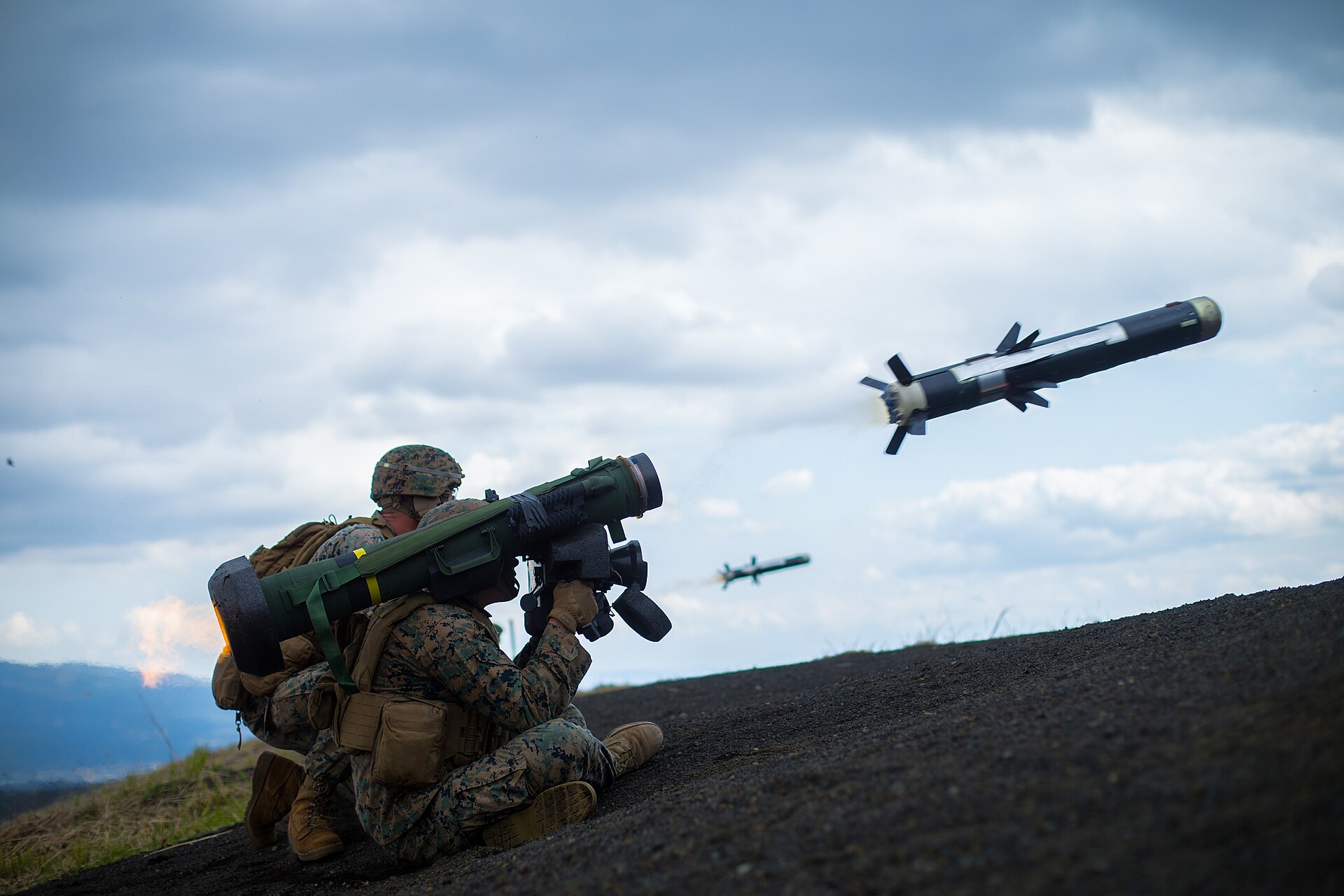
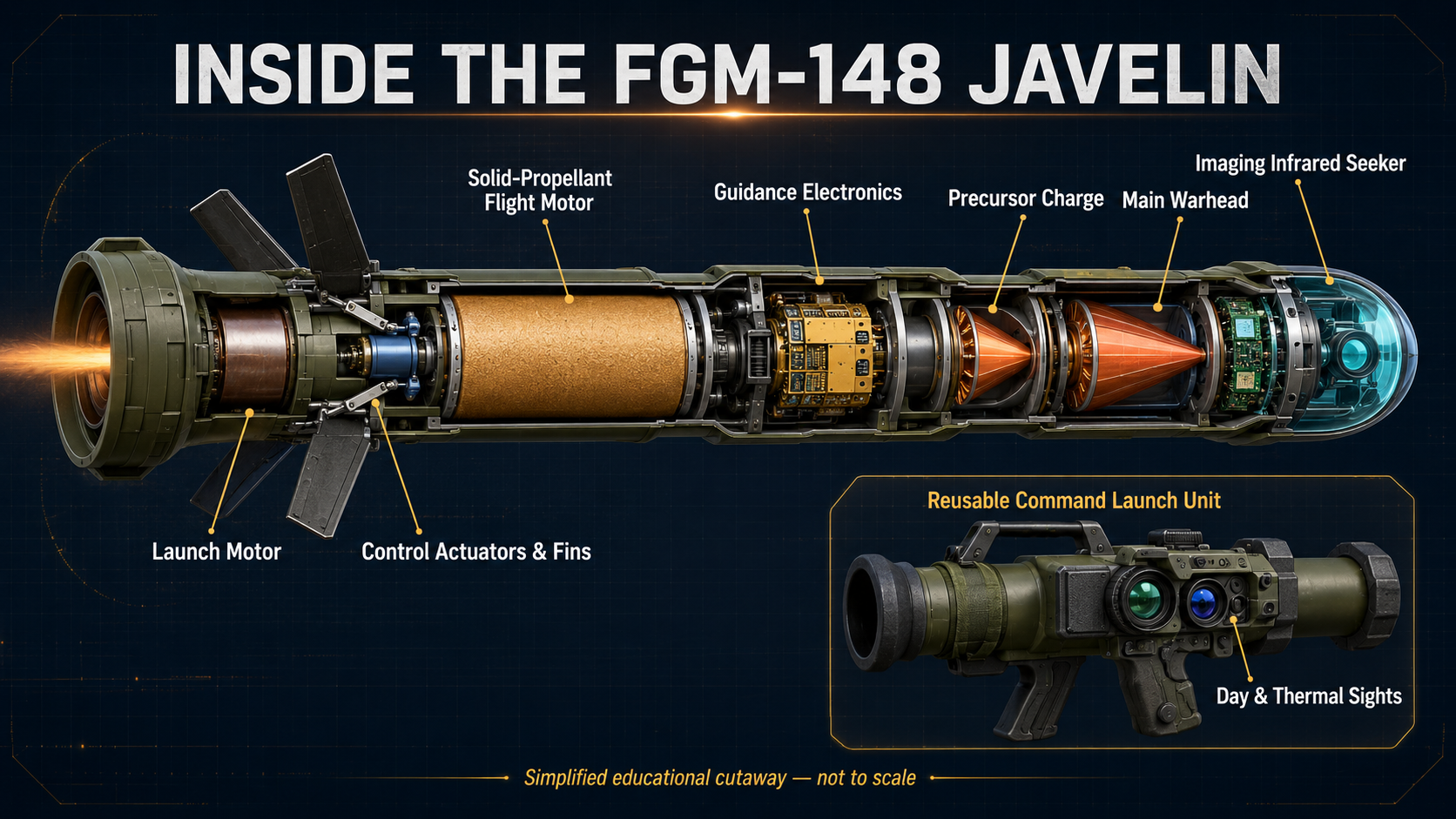
The FGM-148 Javelin is a portable, lock-on-before-launch anti-tank guided missile. Its gunner locates a target through the reusable Command Launch Unit, locks the missile’s imaging infrared seeker and fires. After launch, the weapon guides itself, allowing the team to move, reload or engage another threat instead of remaining exposed while tracking the missile to impact.
1Find and lock
The Command Launch Unit provides day and thermal observation, while the missile’s infrared seeker locks onto the selected target before launch.
2Soft launch
An initial launch stage ejects the missile before its flight motor takes over, reducing the immediate blast around the firing position.
3Self-guided flight
The weapon autonomously follows the locked target, which is why Javelin is described as a fire-and-forget system.
4Top or direct attack
Top attack is intended for armoured vehicles; direct attack can be used for targets under cover, buildings and other battlefield positions.
How Javelin attacks heavily armoured tanks
In top-attack mode, Javelin climbs after launch and dives towards the tank’s roof, where protection is generally lighter than across the frontal arc. Its tandem HEAT warhead uses a precursor effect intended to disrupt explosive reactive armour before the main effect attacks the armour beneath.
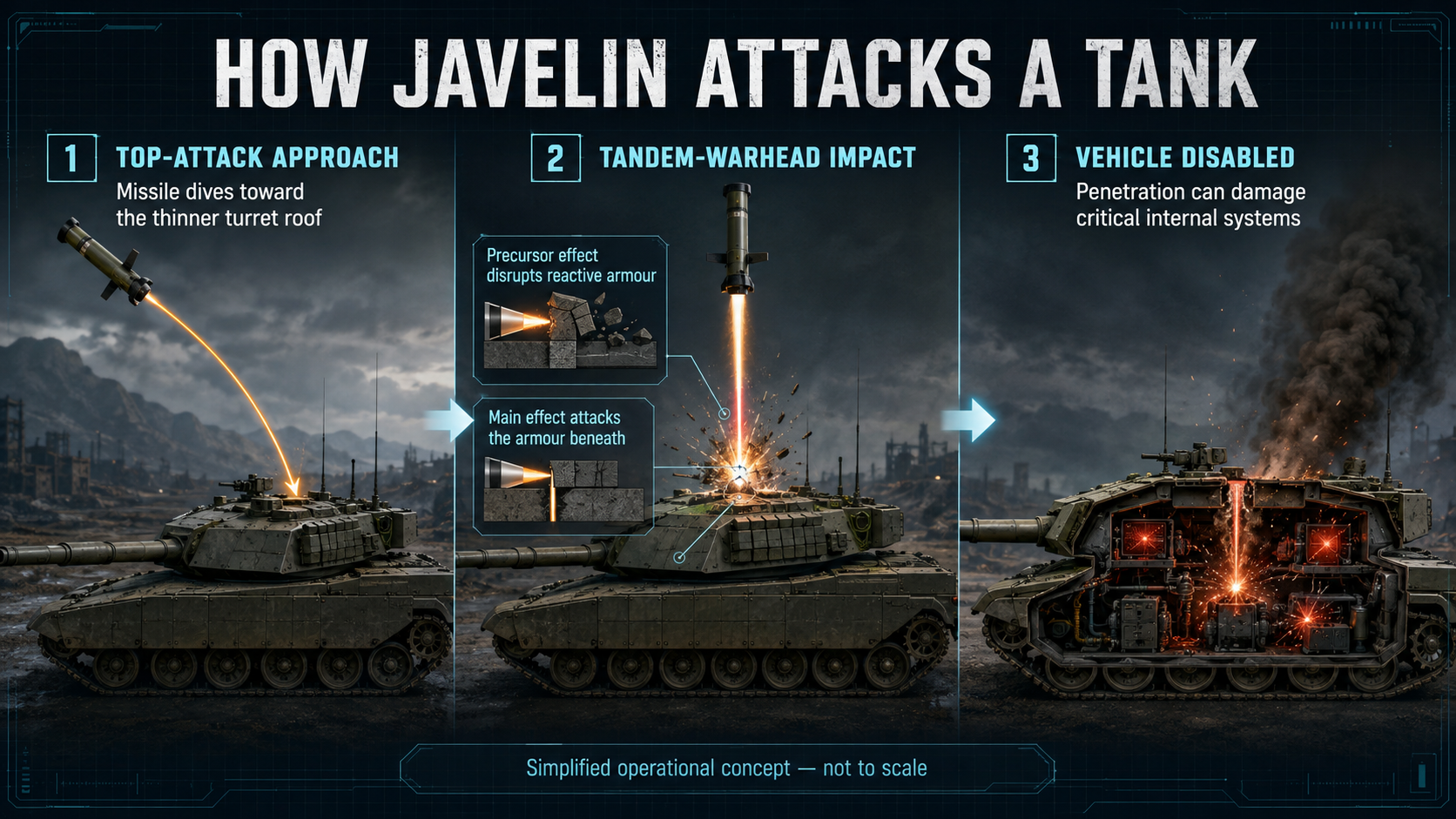
A hit does not always produce a dramatic explosion
The operational objective is to defeat or disable the vehicle. Depending on where the missile strikes, damage could affect the crew compartment, ammunition, optics, engine, turret mechanism or other critical systems. Penetration, a mobility kill and complete destruction are different outcomes.
Does India already have its own anti-tank missiles?
Yes. India operates and develops multiple anti-tank systems, but they are not identical or interchangeable. The Army has long used licence-produced Milan-2T and Konkurs missiles. India also fields or is progressing systems from the indigenous Nag family and has acquired limited numbers of Israel’s Spike missiles for urgent requirements.
The closest Indian equivalent to Javelin’s infantry role is DRDO’s Man-Portable Anti-Tank Guided Missile, or MPATGM. It is designed as a third-generation, day-and-night, fire-and-forget weapon with top-attack capability and a tandem warhead.
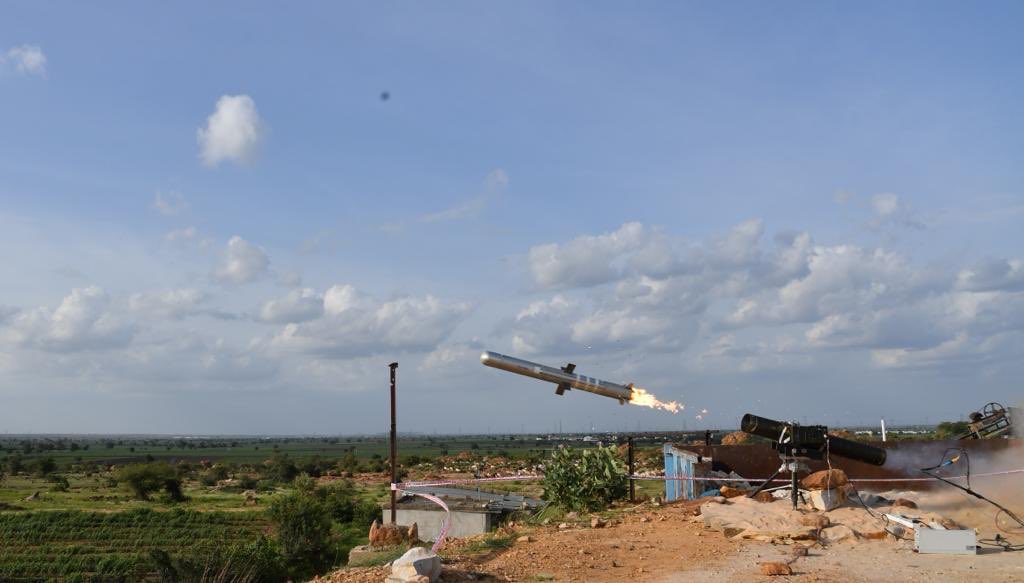
Javelin versus India’s MPATGM
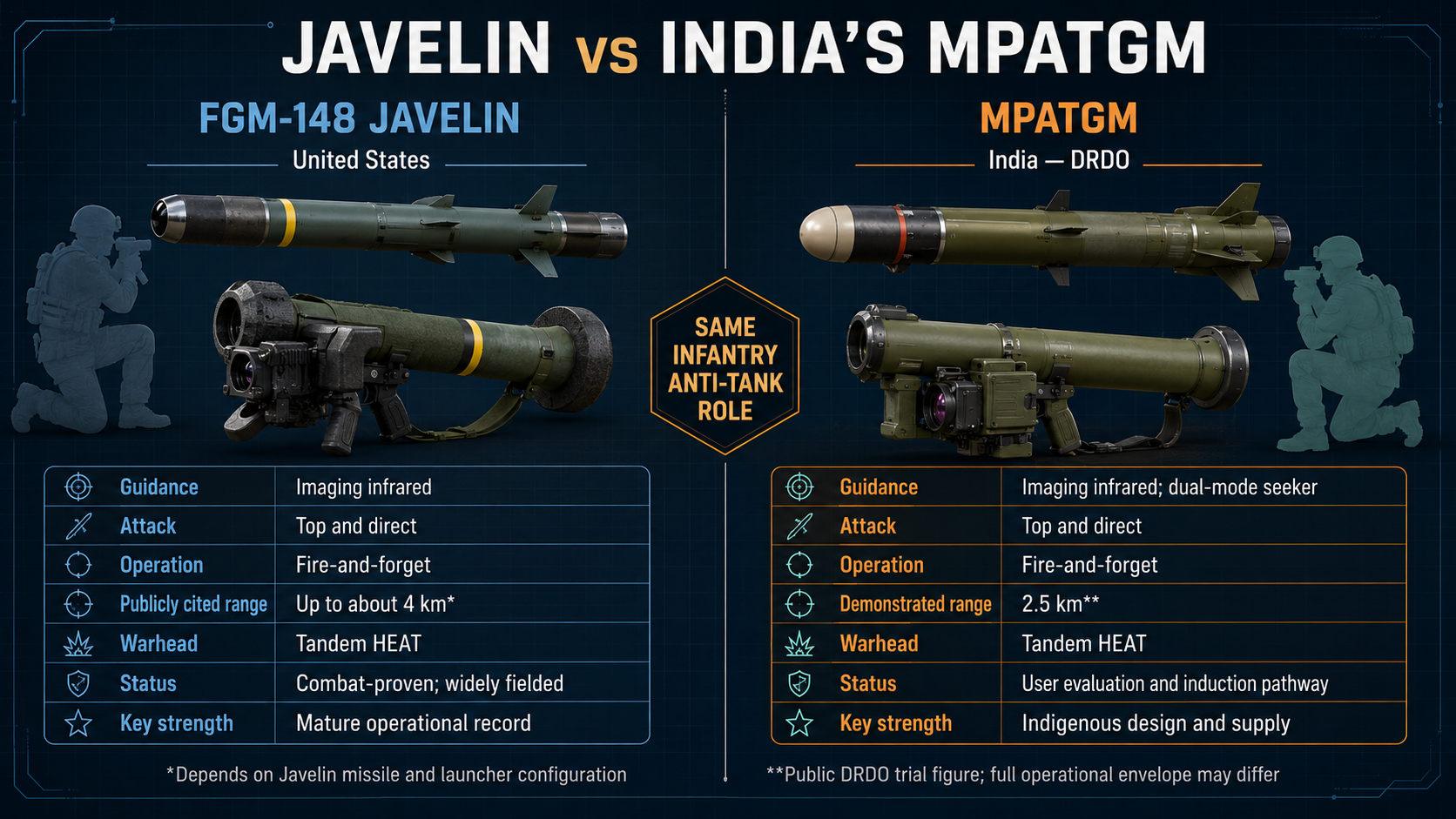
| Characteristic | FGM-148 Javelin | India’s MPATGM |
|---|---|---|
| Origin | United States | India; developed by DRDO |
| Primary role | Portable infantry anti-tank missile | Portable infantry anti-tank missile |
| Guidance | Imaging infrared; lock-on before launch | Imaging infrared with publicly described dual-mode seeker capability |
| Operation | Fire-and-forget | Fire-and-forget |
| Attack profiles | Top attack and direct attack | Top attack and direct attack |
| Warhead | Tandem HEAT | Tandem HEAT |
| Public range reference | Up to about 4 km with newer launcher configuration; variant-dependent | DRDO publicly reported a 2.5 km trial; complete operational envelope may differ |
| Maturity | In service since the 1990s and used in multiple conflicts | Technology demonstrated; progressing through user evaluation and induction pathway |
| Main advantage | Mature, widely fielded and combat-proven | Indigenous ownership, production potential and supply security |
Why India is buying Javelin despite MPATGM
1. An immediate operational capability
Successful development trials do not instantly create large frontline inventories. A limited Javelin purchase can provide selected formations with a proven weapon while MPATGM completes acceptance, production scaling, training and delivery.
2. The Army still uses older guided missiles
Milan and Konkurs remain useful, but their older guidance methods generally require the operator to keep tracking the target until impact. A fire-and-forget missile allows the team to relocate sooner and reduces exposure to counter-fire.
3. A benchmark for indigenous development
Operating Javelin gives the Army a mature reference for thermal sighting, seeker behaviour, portability, training, reliability and employment doctrine. Those lessons can help define expectations for MPATGM without replacing it.
4. The announced scale is limited
A package of around 100 rounds cannot replace the Army’s much larger anti-tank inventory. It is more consistent with urgent deployment, training, evaluation or selective issue than a complete shift away from Indian weapons.
5. Supply diversification and industrial cooperation
Modern wars can consume guided weapons rapidly. Maintaining more than one qualified supply route creates flexibility. US officials have also spoken of future defence-industrial cooperation, although co-production has not yet been confirmed as part of the present acquisition.
What other options did India examine?
Israel’s Spike was the most prominent foreign alternative. India previously negotiated a much larger Spike purchase involving hundreds of launchers, thousands of missiles and proposed local production. That process was repeatedly reconsidered as the indigenous MPATGM programme advanced. The Army later obtained limited Spike stocks under emergency procurement.
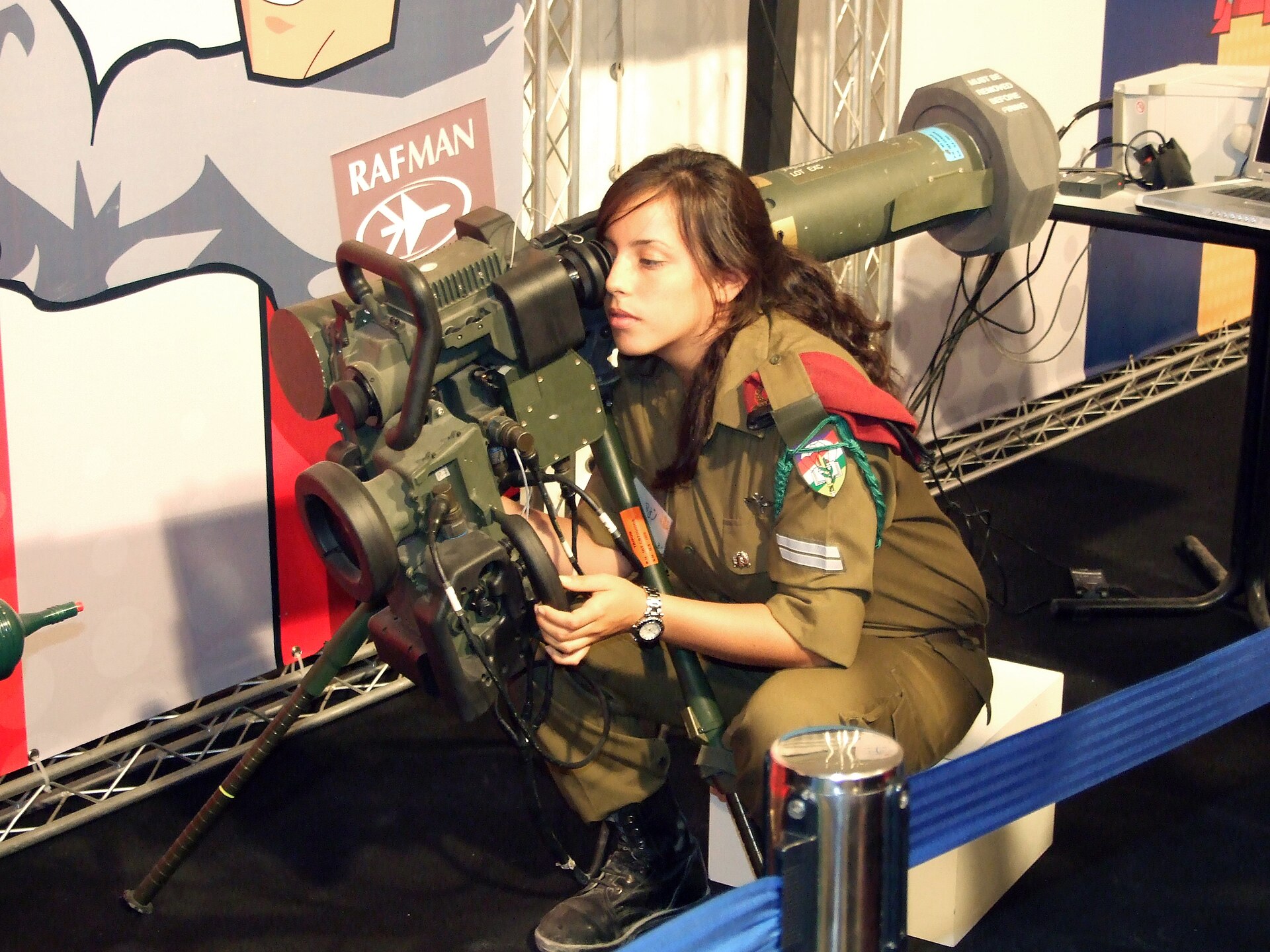
Spike LR2 offers a longer publicly stated ground-launch range and a man-in-the-loop option that can permit operator intervention after launch. Javelin emphasises a mature lock-on-before-launch, shoot-and-relocate concept. The current acquisition should not automatically be presented as the outcome of a fresh, full-scale Javelin-versus-Spike competition; it is a limited government-to-government purchase.
India’s wider indigenous anti-tank missile family
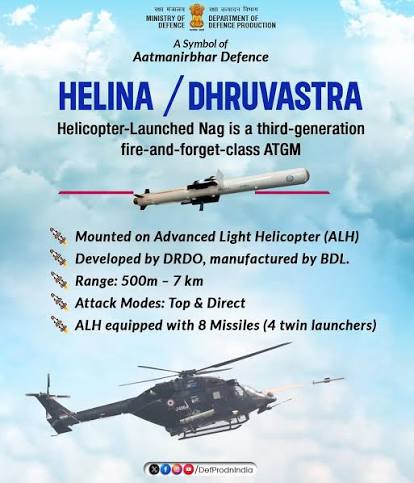
MPATGM is only one part of India’s anti-armour ecosystem. The Nag family also includes vehicle- and helicopter-launched weapons designed for different platforms and battlefield distances. HELINA, with the Dhruvastra designation associated with the Air Force version, is designed for helicopter launch rather than dismounted infantry use.
Pulse India assessment
The Javelin deal is best understood as a limited capability purchase and potential industrial bridge, not proof that India lacks anti-tank missile technology. Javelin supplies maturity and immediate availability; MPATGM remains strategically more important for replacing ageing weapons at scale without long-term foreign dependence.
The decisive test will be what follows: whether India rapidly orders and produces MPATGM in meaningful numbers, and whether any expanded Javelin cooperation delivers genuine manufacturing or technology benefits.
Frequently asked questions
Has India completed the Javelin purchase?
The Indian Army has signed a Letter of Offer and Acceptance under the US Foreign Military Sales process. Implementation, delivery schedules and the final item mix follow through the government-to-government process.
How many Javelin missiles is India buying?
The latest announcement did not disclose the final quantity. A November 2025 US notification authorised a possible package containing 100 rounds, one fly-to-buy missile and 25 command launch units. The signed contract may differ from that ceiling notification.
Is MPATGM the Indian equivalent of Javelin?
It is the closest indigenous system in the same broad portable infantry anti-tank category. Both are described as fire-and-forget weapons with top-attack capability and tandem warheads, but Javelin has a much longer operational record.
Will Javelin replace MPATGM?
The publicly known scale is far too small to replace MPATGM or the Army’s full anti-tank inventory. The two systems can coexist while India expands indigenous production.
Why is top attack important?
A tank’s roof is generally less heavily protected than its frontal armour. A top-attack trajectory attempts to exploit that difference, though effectiveness still depends on the target’s protection and the precise impact point.
Sources and reporting notes
Editorial note: Performance figures are based on publicly available government and manufacturer information and can vary by missile, launcher, test conditions and configuration. Illustrations are explanatory and are not engineering drawings.