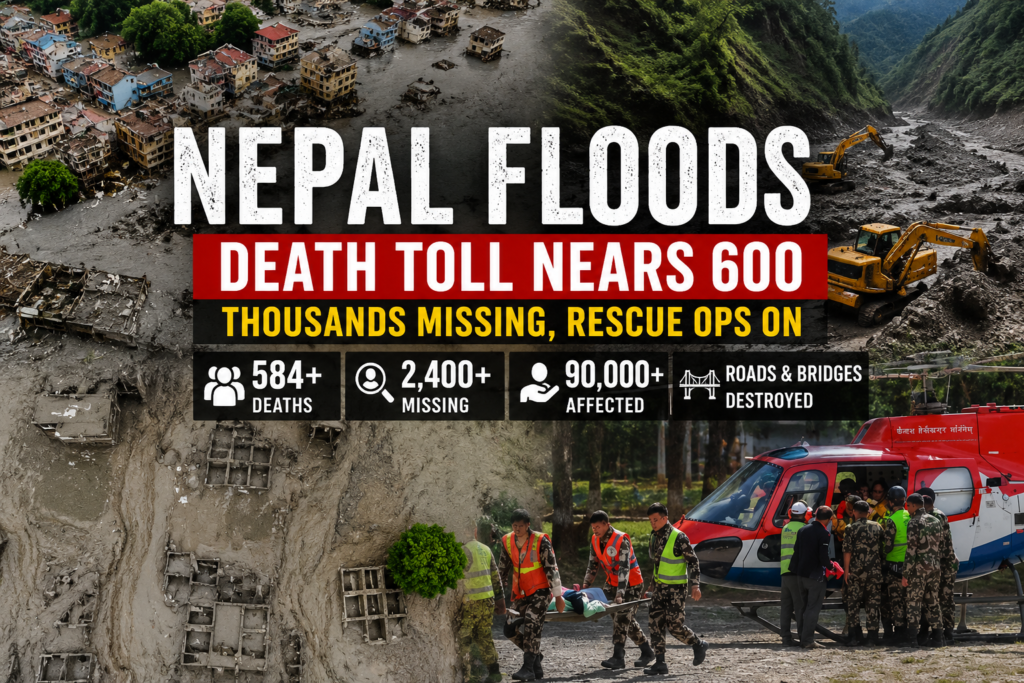
A catastrophic Himalayan flood triggered by a glacier collapse along the Nepal-China border has killed nearly 600 people, while thousands remain unaccounted for and rescue teams continue searching devastated mountain communities.
The latest Reuters update on August 28 said at least 579 people had been confirmed dead in Nepal and five in Tibet. Nearly 1,924 people remained missing in Nepal and another 558 in Tibet, while more than 90,000 people had been affected by the disaster.
Glacier Collapse Triggered Catastrophic Flood
The disaster began on August 26 when a massive collapse involving glacier ice, rock and debris in the high Himalayas sent a powerful surge into river systems flowing toward Nepal.
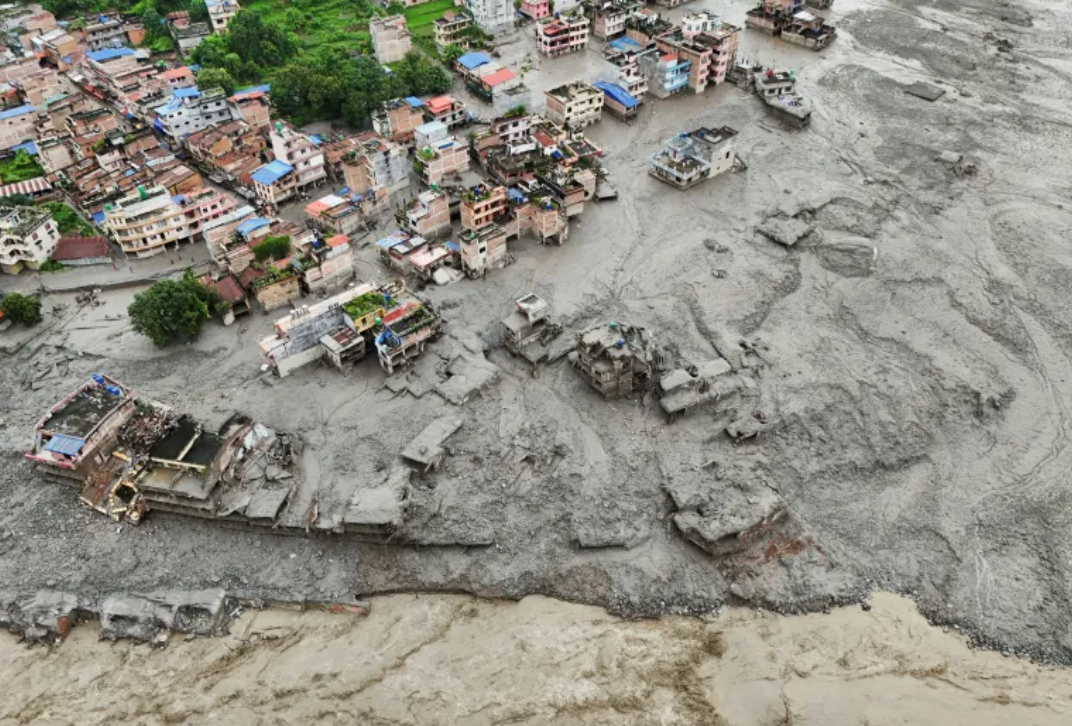
Satellite imagery and preliminary scientific assessments indicate that a glacier and underlying rock mass collapsed near the Nepal-Tibet border, generating an avalanche that entered the river valley and rapidly transformed into a destructive flood carrying mud, boulders and debris downstream.
The flood struck with extraordinary speed. Settlements, roads, hydropower infrastructure, bridges and border facilities were overwhelmed before many residents had sufficient time to evacuate.
The initial glacier and rock collapse created a cascading chain of hazards — an avalanche, debris flow, sudden river surge and widespread downstream flooding — through steep Himalayan valleys.
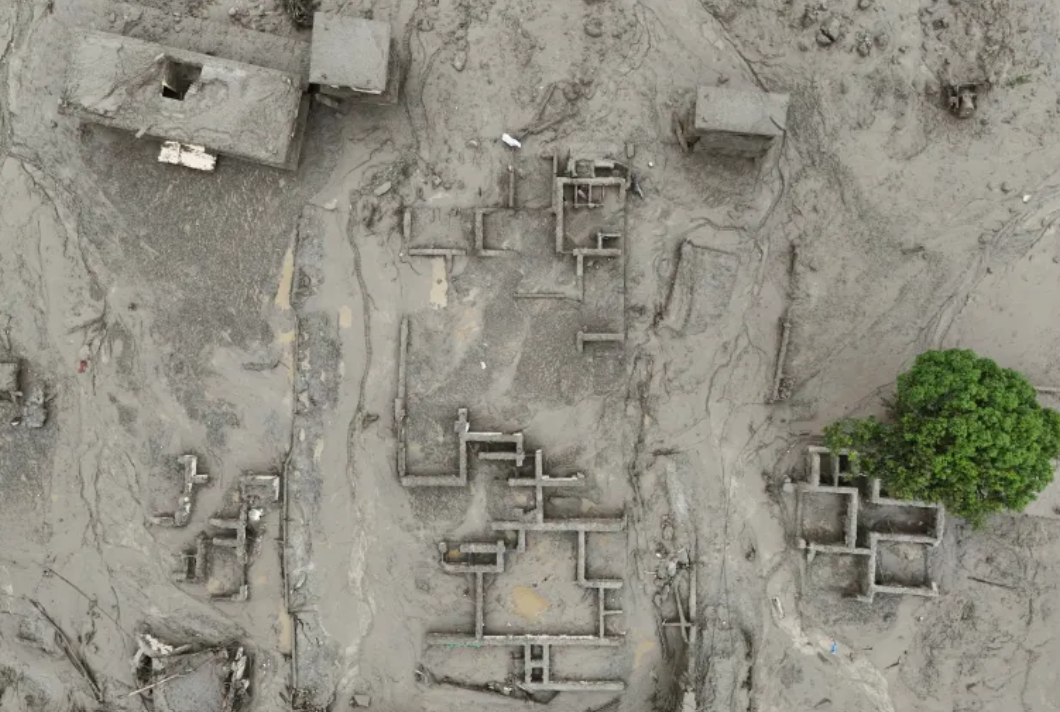
Roads and Bridges Destroyed
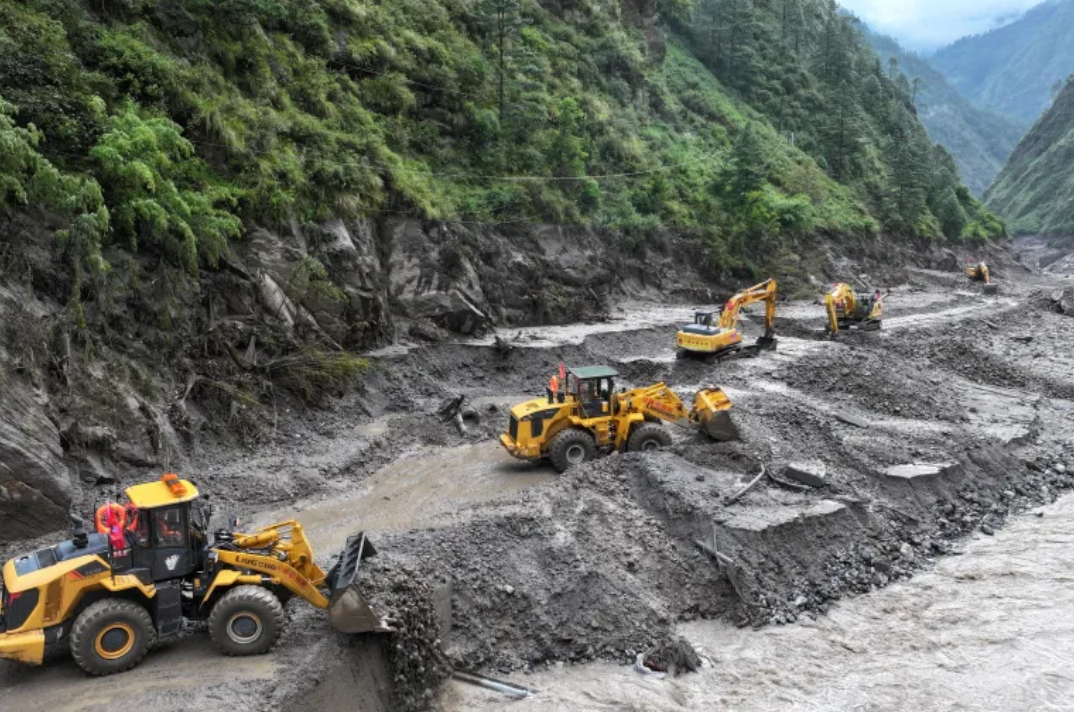
Infrastructure damage is severely complicating rescue operations. Earlier assessments reported that dozens of bridges had been destroyed and nearly 40 kilometres of roads damaged across affected areas.
In mountainous terrain, the loss of even a small number of bridges can isolate entire valleys. The destruction has forced authorities to rely heavily on helicopters, drones, excavators and military rescue teams.
Road restoration has therefore become one of the most urgent priorities on both sides of the Nepal-China border.
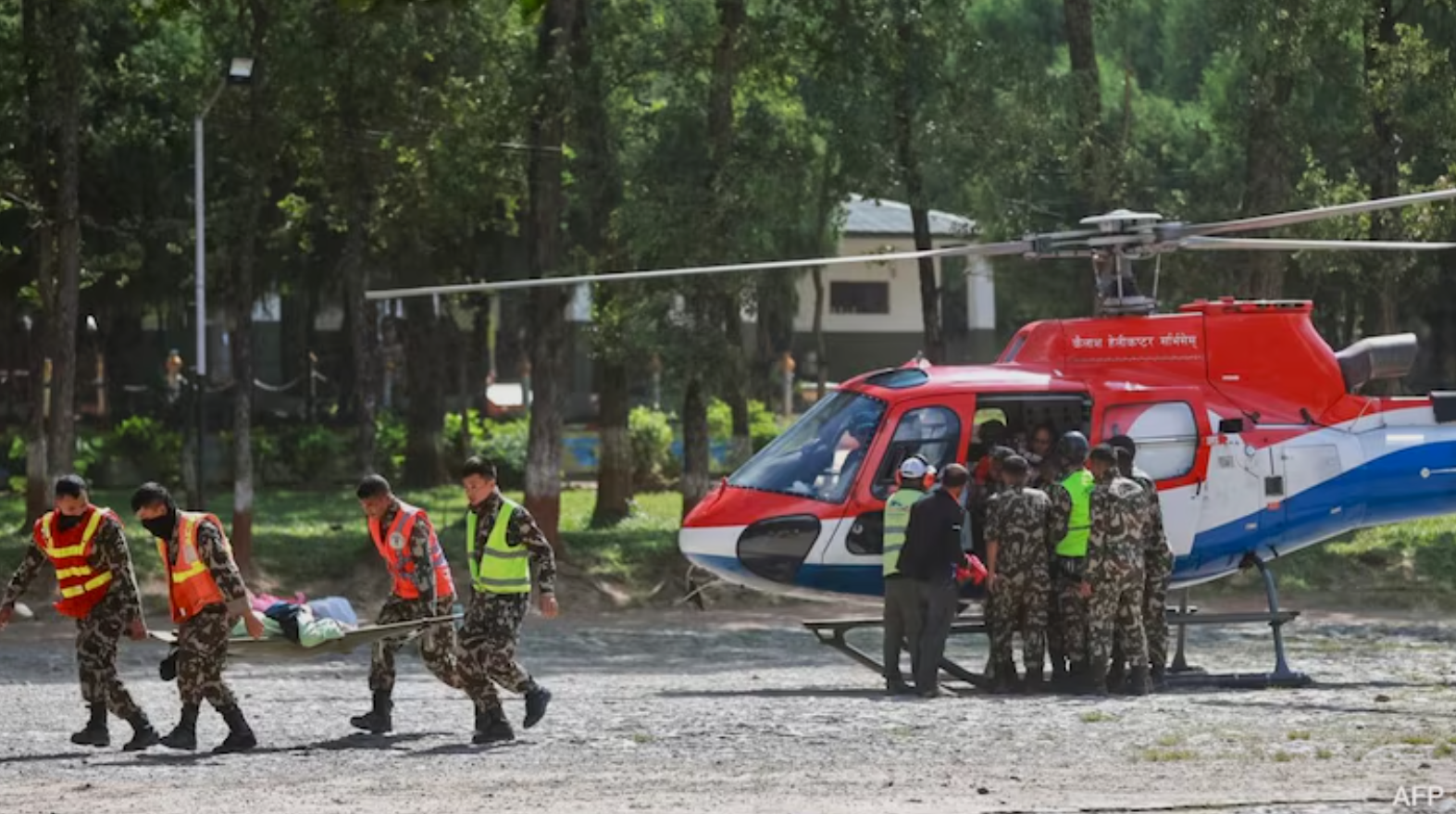
Helicopters Evacuate Injured and Stranded Survivors
Helicopters have become essential for transporting injured people and reaching communities cut off after roads and bridges were destroyed.
Emergency personnel are also using aircraft to deliver food, medicines and other critical supplies to areas inaccessible by road.
The Associated Press reported that rescuers were pulling survivors covered in thick mud from affected areas while helicopters continued lifting stranded residents to safety.
Hundreds of Foreign Nationals Among Missing
The disaster has taken on a major international dimension because large numbers of tourists, trekkers and pilgrims were travelling through the Nepal-Tibet border region when the flood struck.
Reuters reported on August 28 that approximately 260 foreign nationals were among those still missing in Nepal. The Associated Press separately reported that around 90 Americans remained unaccounted for following the disaster.
Many travellers were heading toward or returning from the Mount Kailash region, an important pilgrimage destination for Hindus, Buddhists, Jains and followers of the Bon tradition.
Fresh Barrier Lakes Raise New Flood Fears
Rescue efforts briefly faced another serious threat after flood debris created unstable natural dams and new lakes upstream.
Authorities temporarily suspended some rescue activity because of concerns that an overflowing lake could suddenly release another surge downstream. Operations later resumed after officials assessed the immediate risk as manageable.
Nepal continues monitoring at least two upstream barrier lakes. Satellite observations indicate that changes in their size and water levels could create additional hazards for downstream settlements and rescue teams.
Key Facts: Nepal–Tibet Flood Disaster
- The disaster struck on August 26, 2026.
- A glacier, rock and ice collapse is believed to have triggered the flood.
- At least 579 deaths have been reported in Nepal and five in Tibet.
- More than 2,400 people were still reported missing across Nepal and Tibet in the latest Reuters figures.
- More than 90,000 people have been affected.
- Roads, bridges, villages, health facilities and border infrastructure have suffered extensive damage.
- Newly formed barrier lakes continue to pose secondary flood risks.
Climate Change and Growing Himalayan Glacier Risks
Scientists caution that Himalayan communities are increasingly exposed to complex disasters involving glaciers, unstable rock slopes and rapidly changing mountain lakes.
Reuters reported that climate change is creating conditions that can destabilise mountain ice and rock by accelerating glacier retreat and thawing permafrost. However, scientists say detailed study will still be required before determining exactly how much climate change contributed to this particular collapse.
The Hindu Kush Himalayan region contains tens of thousands of glaciers that supply major Asian river systems. As temperatures rise, researchers warn that monitoring glaciers, high-altitude lakes and unstable slopes will become increasingly important.
Humanitarian Needs Growing
The disaster is rapidly evolving from a rescue operation into a major humanitarian emergency.
The International Federation of Red Cross and Red Crescent Societies estimates that more than 90,000 people require assistance. UNICEF has warned that around 17,000 children urgently need humanitarian support, while schools and healthcare facilities have been damaged or destroyed.
Authorities and humanitarian organisations are focusing on temporary shelter, clean drinking water, medical assistance, sanitation and restoring access to isolated communities.
Search for Survivors Continues
Despite the scale of destruction, rescue teams continue searching through mud, collapsed buildings and debris fields for survivors.
Heavy machinery is reopening roads while helicopters and drones survey areas that remain inaccessible from the ground.
With thousands still unaccounted for and unstable lakes remaining upstream, the final scale of the Nepal-Tibet flood disaster may not become clear for several days.