📅 May 10, 2026 | By Pulse India News Desk
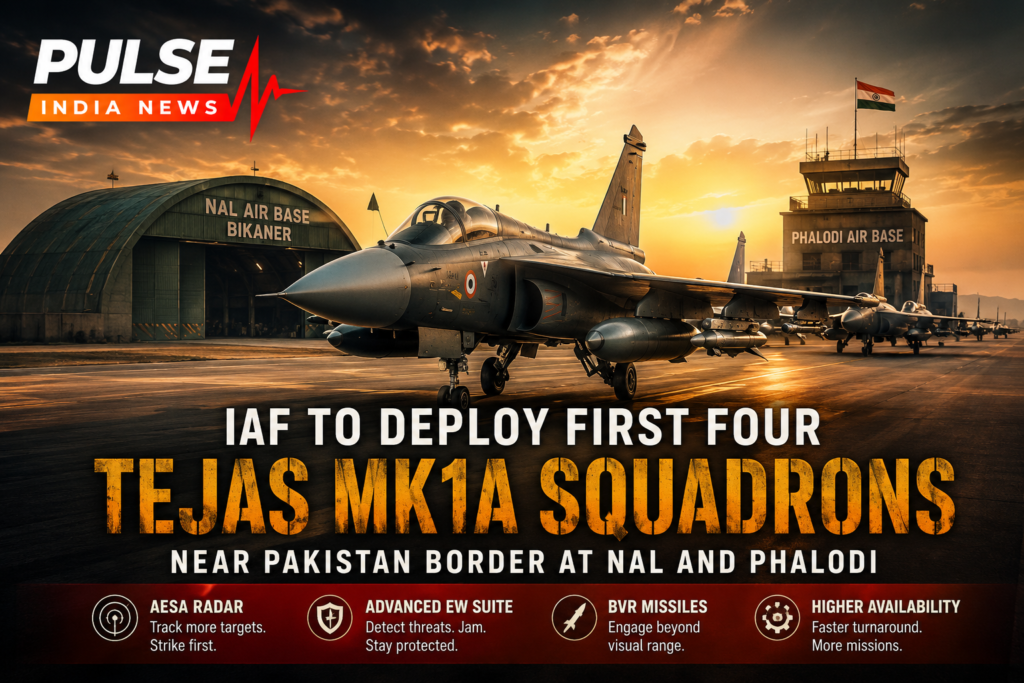
The Indian Air Force (IAF) is preparing to deploy its first four squadrons of the indigenous Tejas Mk1A fighter aircraft near the Pakistan border, marking a major milestone in India’s air combat modernisation programme.
According to defence reports, the advanced light combat aircraft are expected to be stationed at the strategically important Nal Air Base in Bikaner and Phalodi Air Base in Rajasthan. The move is being seen as a major boost to India’s western air defence posture as the IAF gradually replaces ageing MiG-21 fighter squadrons with a more modern and lethal indigenous platform.
The deployment also signals growing confidence within the IAF in the combat capabilities of the Tejas Mk1A, which has evolved into a far more advanced aircraft than the original Tejas variants.
Why Nal and Phalodi Matter Strategically
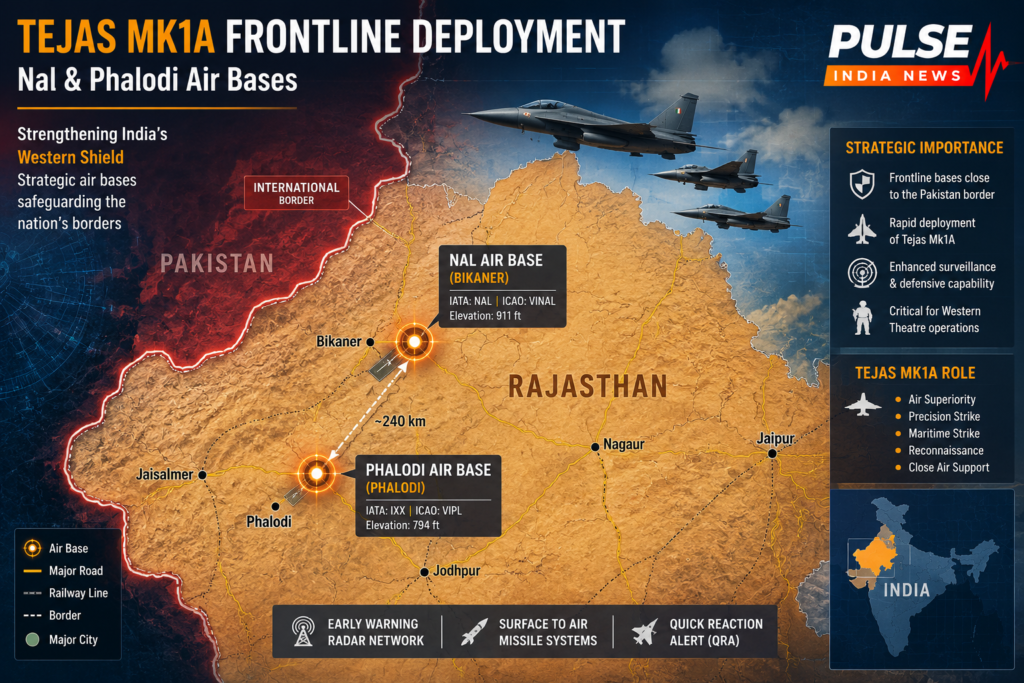
The choice of Nal and Phalodi air bases carries major operational significance.
Both bases are located close to India’s western frontier and allow the IAF to rapidly respond to aerial threats, border tensions or emergency operational requirements across the Rajasthan sector.
🔰 Nal Air Base
Nal Air Base near Bikaner has long been associated with the IAF’s transition from MiG-21 fighters to Tejas aircraft. Its location allows rapid deployment toward multiple western sectors while supporting both defensive and offensive operations.
🔰 Phalodi Air Base
Phalodi is one of the IAF’s key forward operating bases in Rajasthan. Positioned relatively close to the Pakistan border, the base provides strategic depth for interception missions, combat air patrols and quick-reaction deployments during periods of heightened tensions.
Together, Nal and Phalodi create a strong operational belt that improves India’s air defence coverage across the western theatre.
Why the Tejas Mk1A is More Lethal
The Tejas Mk1A is not just a minor upgrade over earlier Tejas variants. It has been designed as a significantly more capable fighter aircraft with improved radar systems, electronic warfare capabilities, modern weapons integration and better operational efficiency.
The aircraft is built for modern network-centric warfare environments where sensor fusion, electronic dominance and rapid decision-making are critical for survival.
🔹 AESA Radar
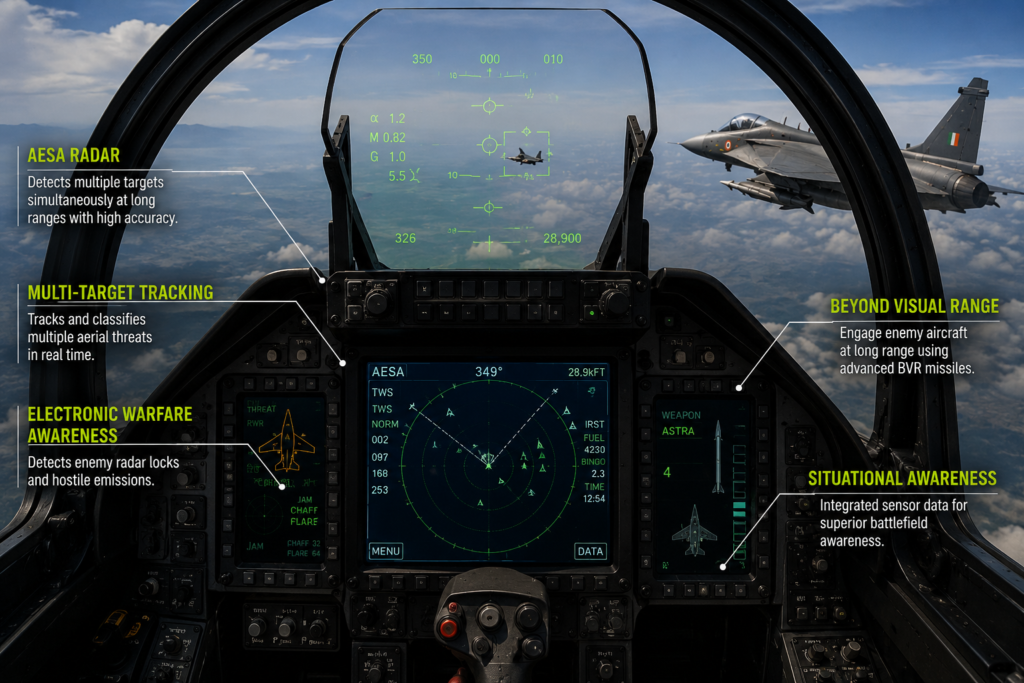
One of the biggest upgrades on the Tejas Mk1A is its Active Electronically Scanned Array (AESA) radar. Unlike older mechanically scanned radars, AESA systems can track multiple targets simultaneously with much faster response speeds. The radar also offers better detection range, improved target accuracy and stronger resistance against enemy jamming attempts, giving pilots a major situational awareness advantage during combat missions.
🔹 Advanced Electronic Warfare Suite
The Tejas Mk1A is equipped with a modern electronic warfare suite designed to improve survivability in high-threat environments. The system can detect hostile radar emissions, warn pilots about enemy targeting activity and automatically deploy countermeasures when needed. It can also jam or confuse enemy radar systems, making the aircraft far more difficult to track and engage during aerial combat operations.
🔹 Beyond Visual Range (BVR) Combat Capability
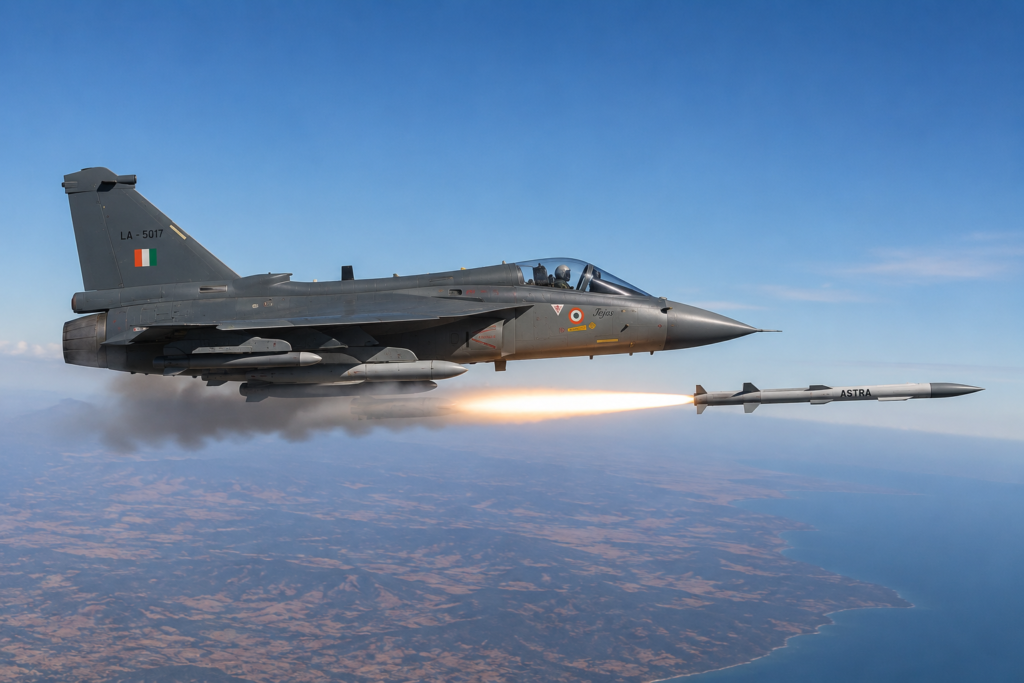
The aircraft is built for modern beyond-visual-range warfare, allowing it to engage enemy fighters long before pilots make visual contact. Equipped with advanced BVR missiles such as Astra and Derby variants, the Tejas Mk1A can strike targets at significant distances while maintaining tactical separation. This gives the IAF a stronger first-shot capability, which is increasingly critical in modern air combat scenarios.
🔹 Faster Maintenance and Higher Availability
The Tejas Mk1A was specifically redesigned to reduce maintenance time and improve operational readiness. HAL introduced easier access panels, modular systems and quicker component replacement features to ensure faster turnaround between sorties. This means more aircraft can remain mission-ready during prolonged operations, giving the IAF higher fleet availability compared to older fighter platforms.
Weapons and Features
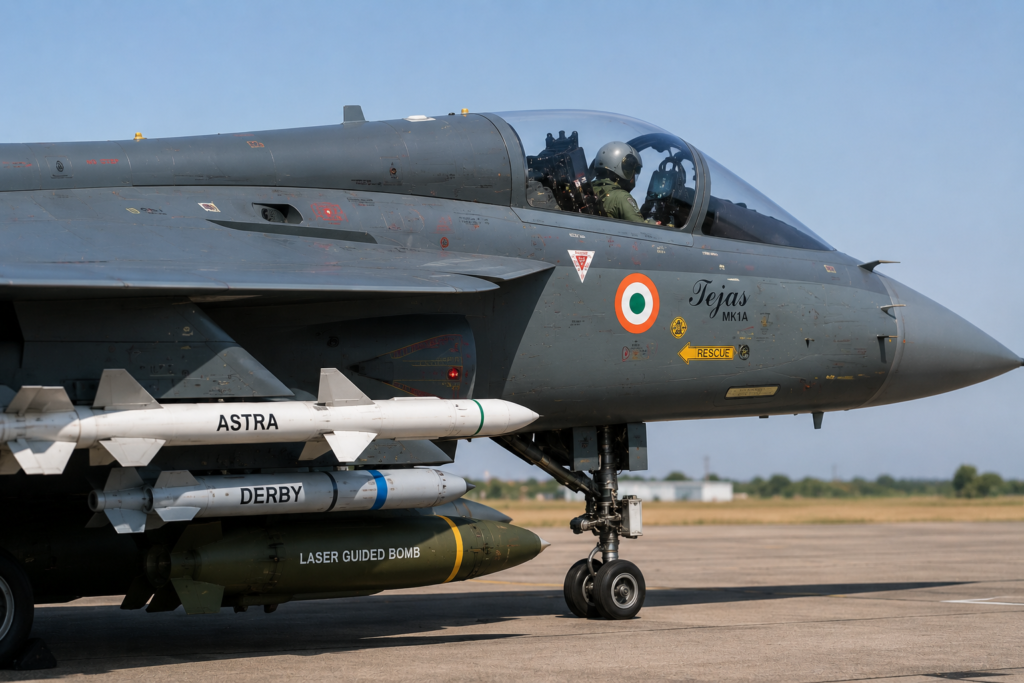
The Tejas Mk1A is designed as a multi-role fighter capable of handling air superiority, interception and precision strike missions. The aircraft combines advanced weapons, modern avionics and network-centric combat systems to improve both offensive and defensive capabilities on the battlefield.
🔹 Air-to-Air Weapons
The Tejas Mk1A can carry a range of advanced air-to-air missiles for close combat as well as long-range engagements. Its integration with the indigenous Astra BVR missile significantly boosts long-range strike capability, while Python and Derby missiles provide strong short and medium-range combat performance. Together, these weapons allow the aircraft to engage enemy fighters across multiple combat scenarios with greater flexibility and lethality.
🔹 Air-to-Ground Capability
Apart from air combat, the Tejas Mk1A is also capable of precision ground strike missions. The aircraft can deploy laser-guided bombs, precision-guided munitions and smart weapons against strategic targets with high accuracy. This gives the IAF the ability to conduct targeted attacks on enemy infrastructure, radar stations and military positions while reducing collateral damage.
🔹 Mid-Air Refuelling Capability
One of the major operational advantages of the Tejas Mk1A is its air-to-air refuelling capability. This allows the aircraft to stay airborne for longer durations and extend its operational range during combat missions. The feature is especially important for long-distance patrols, sustained air defence operations and deep strike missions.
🔹 Digital Cockpit and Helmet-Mounted Display
The Tejas Mk1A features a fully digital glass cockpit designed to reduce pilot workload and improve combat awareness. The aircraft also uses a Helmet-Mounted Display system, allowing pilots to lock onto targets simply by looking at them. This significantly improves reaction time during close-range dogfights and high-speed aerial engagements.
🔹 Secure Data Links and Mission Computer
The aircraft is equipped with secure communication and data link systems that allow it to share battlefield information with other aircraft and ground stations in real time. Its advanced mission computer processes large amounts of combat data quickly, helping pilots make faster tactical decisions during operations.
🔹 Reduced Radar Signature
Although not a full stealth fighter, the Tejas Mk1A incorporates design improvements that help reduce its radar visibility compared to older aircraft. Its smaller airframe, composite materials and aerodynamic shaping make it harder for enemy radar systems to detect and track, improving survivability during contested missions.
Bigger Strategic Picture
The deployment of the first Tejas Mk1A squadrons near the Pakistan border reflects a much larger shift within the Indian Air Force.
For years, the IAF has faced declining fighter squadron strength due to the retirement of ageing MiG-21 aircraft. The Tejas Mk1A programme is intended to reverse that decline while strengthening India’s indigenous aerospace and defence manufacturing ecosystem.
Positioning the aircraft in frontline western bases also sends a strategic message that India now sees the Tejas Mk1A as a serious operational combat platform capable of defending sensitive sectors during real conflict scenarios.
The deployment further supports India’s long-term goal of reducing dependence on imported fighter aircraft and building a self-reliant defence industrial base under the “Make in India” initiative.
Final Analysis
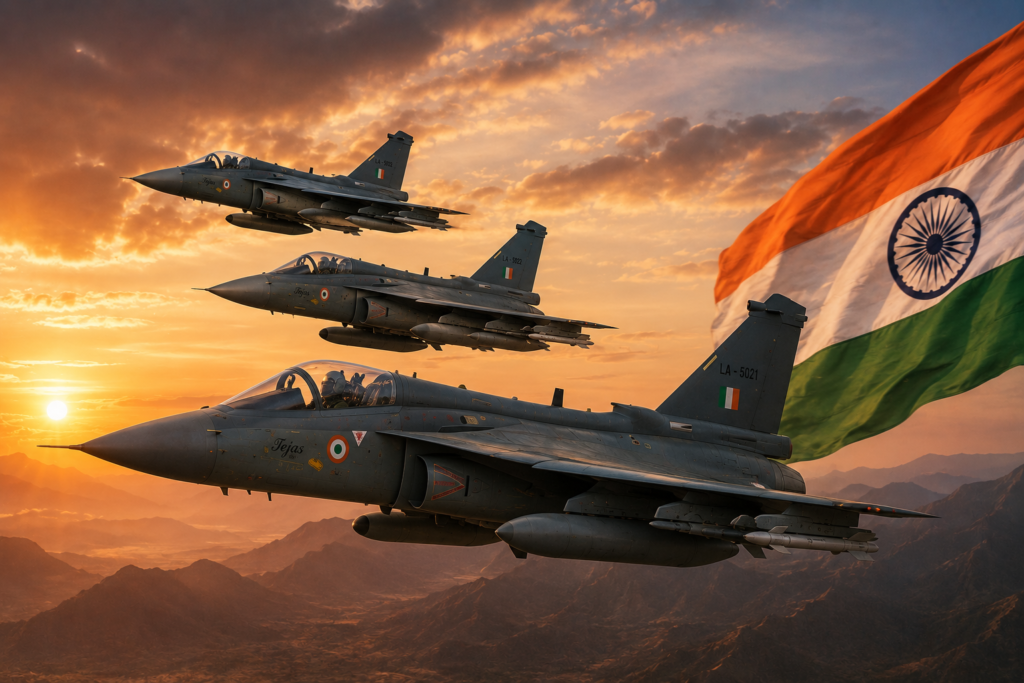
The deployment of the first four Tejas Mk1A squadrons at Nal and Phalodi could become one of the most significant milestones in India’s indigenous fighter aircraft journey.
More than simply replacing ageing MiG-21s, the move reflects the IAF’s transition toward a modern, network-enabled and domestically supported combat fleet.
With advanced radar systems, electronic warfare capabilities, BVR combat power and improved operational readiness, the Tejas Mk1A is expected to become a key pillar of India’s western air defence strategy in the coming years.
🔗 Related News
- HAL ALH Mk III Helicopters Strengthen Indian Coast Guard’s Maritime Security
- IAF’s 60-Aircraft MTA Deal: C-130J vs C-390 and India’s Make-in-India Push
- G20 Satellite Expected to Launch in 2027: ISRO Chief Explains Mission Capabilities
- PM Modi Hyderabad Visit: ₹9,400 Crore Projects to Boost Telangana Infrastructure