📅 May 10, 2026 | By Pulse India News Desk
Intro
India is preparing for a major transformation in its armoured warfare capability through Project Ranjeet, a next-generation combat vehicle programme designed to replace the ageing T-72 tank fleet of the Indian Army.
The move comes as modern warfare rapidly evolves with the rise of drones, precision-guided missiles, electronic warfare and AI-enabled battlefield systems. Military planners now believe future tanks must be smarter, more connected and far more survivable than previous generations.
Project Ranjeet is therefore being viewed not just as a tank replacement programme, but as part of India’s broader push toward a future-ready and indigenous armoured warfare ecosystem.
What is Project Ranjeet?
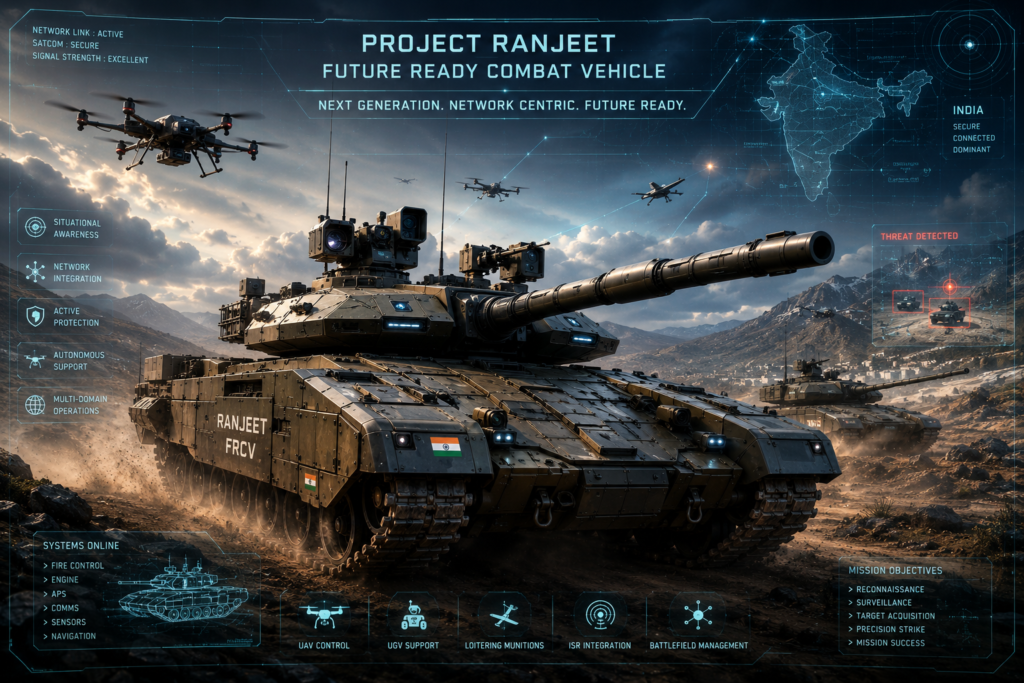
Project Ranjeet is linked to the Indian Army’s proposed Future Ready Combat Vehicle (FRCV) programme aimed at developing a completely new generation of main battle tanks.
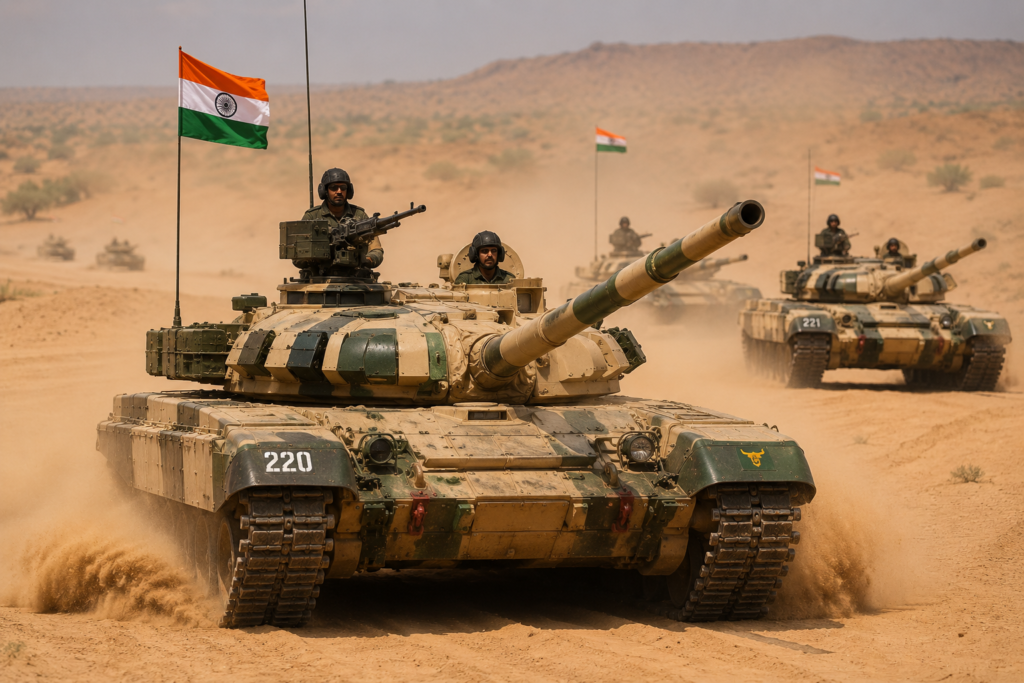
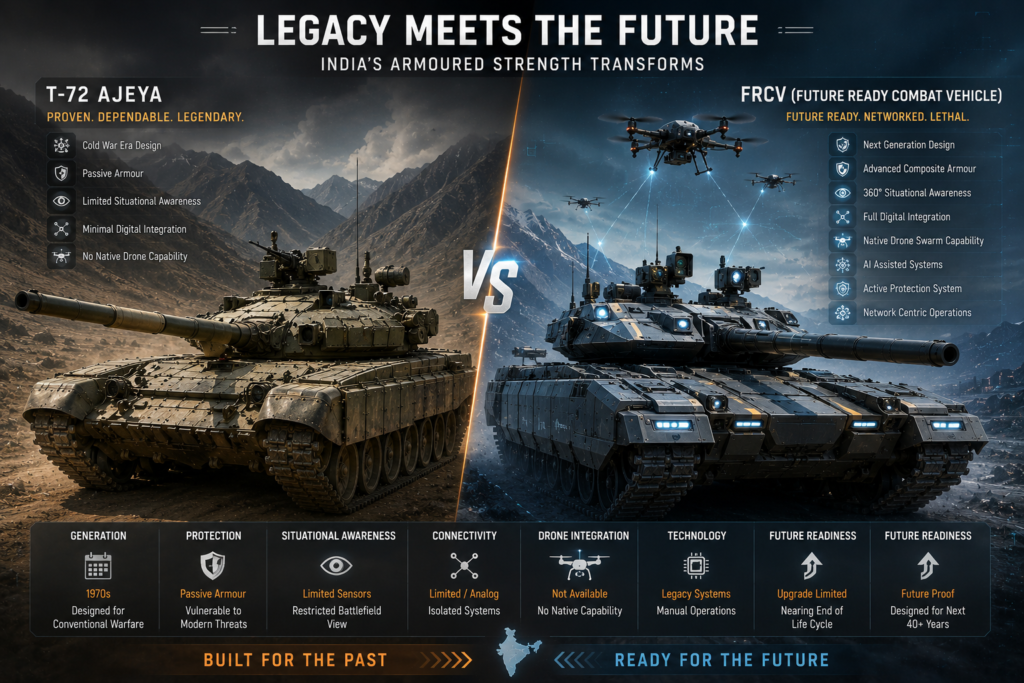
The platform is expected to eventually replace a large section of India’s Soviet-origin T-72 Ajeya fleet, which has served for decades as the backbone of the Army’s mechanised forces.
Unlike older tanks designed mainly for direct combat, the future vehicle is expected to operate as a digitally connected battlefield platform integrated with drones, surveillance systems and advanced command networks.
The tank is likely to feature advanced firepower, active protection systems, anti-drone capability, 360-degree battlefield awareness and AI-assisted combat management systems.
The programme is also expected to support India’s “Make in India” defence manufacturing strategy with significant indigenous participation.
Why the T-72 is Being Replaced
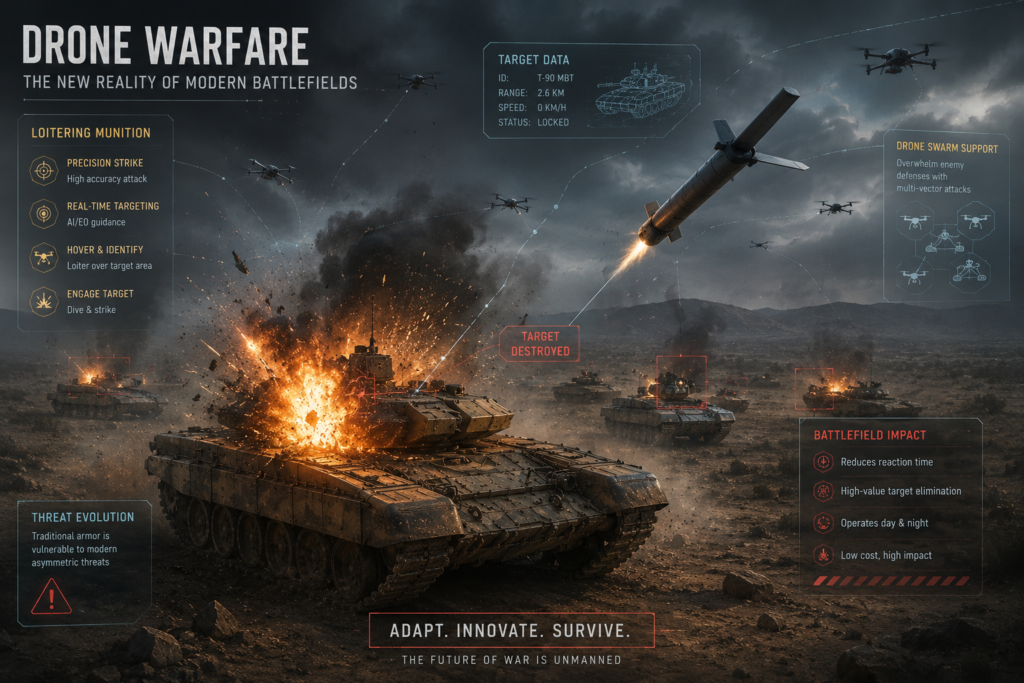
India inducted the T-72 tanks during the late 1970s and 1980s, but warfare has changed dramatically since then.
Modern conflicts have shown how vulnerable conventional tanks can become against anti-tank missiles, kamikaze drones and loitering munitions. Even upgraded T-72s face limitations in areas such as survivability, battlefield networking and anti-drone protection.
The Russia-Ukraine war has especially highlighted the need for tanks equipped with advanced protection systems, better sensors and real-time battlefield awareness.
India also faces a unique two-front challenge.
Along the western border, tanks remain critical for rapid strike operations in desert terrain. At the same time, tensions with China require platforms capable of operating in high-altitude and technology-driven warfare environments.
Project Ranjeet is expected to address these challenges by creating a future-ready combat vehicle designed specifically for modern battlefield conditions rather than upgrading older Cold War-era platforms further.
Current Status of Project Ranjeet
Project Ranjeet, the Indian Army’s Future Ready Combat Vehicle (FRCV) programme, received Defence Acquisition Council approval in September 2024 with an estimated cost of nearly ₹57,000 crore.
The programme is being developed under the “Make I” procurement model, where the government will fund 70% of the project while industry partners will fund the remaining amount. The Army is expected to shortlist two companies for prototype development after the Expression of Interest (EoI) and Request for Proposal (RFP) stages.
Prototype development is expected to take around 3–4 years, followed by user trials, with induction likely around 2030.
India plans to procure nearly 1,700–1,800 next-generation tanks over the next 10–15 years to gradually replace the ageing T-72 fleet.
The future platform is expected to feature advanced battlefield networking, drone and loitering munition integration, AI-assisted systems, anti-electronic warfare capability, 360-degree situational awareness sensors and NavIC-supported hybrid navigation systems.
The FRCV is also expected to operate as part of a network-centric warfare ecosystem integrated with drones, ISR platforms and battlefield management systems.
Meanwhile, Russia has reportedly offered technology transfer of the T-14 Armata platform along with an India-specific variant under the Make in India initiative in partnership with CVRDE.