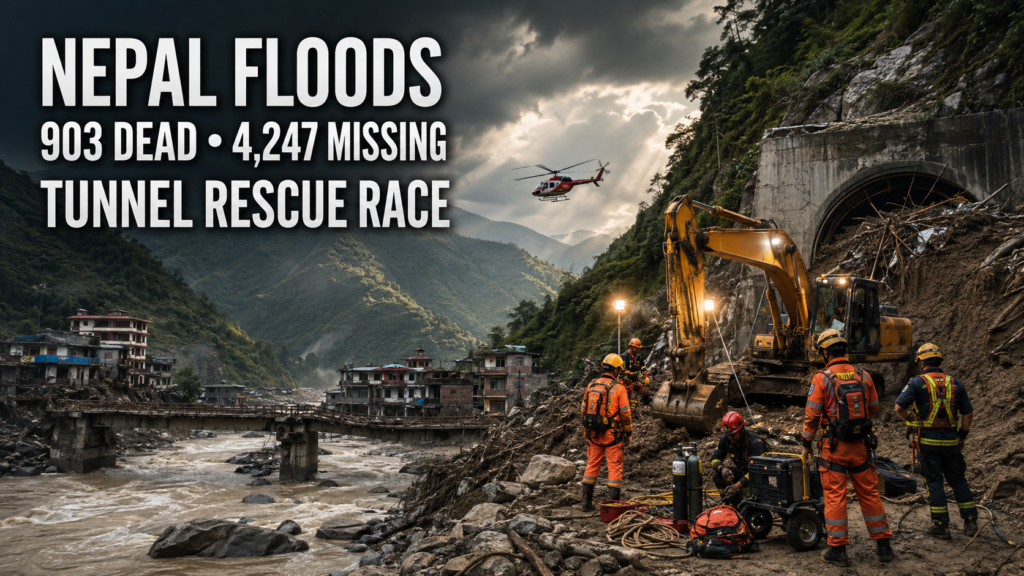
More than 4,200 people remain unaccounted for in Nepal, while specialised teams battle deep mud, unstable ground and blocked tunnel entrances.
KATHMANDU: Nepal has intensified one of the most difficult rescue operations in its history as emergency teams attempt to reach hundreds of workers believed to be trapped inside tunnels and underground sections of flood-damaged hydropower projects.
The death toll from the catastrophic August 26 flash flood has reached 903 in Nepal, while government figures show that 4,247 people remain unaccounted for. Tibet has separately reported 16 deaths and 546 missing, taking the combined Nepal–Tibet toll to at least 919 deaths and 4,793 missing.
- Nepal reports 903 deaths and 4,247 people missing.
- Another 16 deaths and 546 missing have been reported in Tibet.
- Approximately 933 hydropower workers remain unaccounted for.
- More than 500 workers are feared trapped in tunnels and underground facilities.
- Nearly 21,000 Nepalese security personnel are involved in rescue operations.
- India’s latest consolidated update confirmed 149 nationals rescued as of Sunday evening.
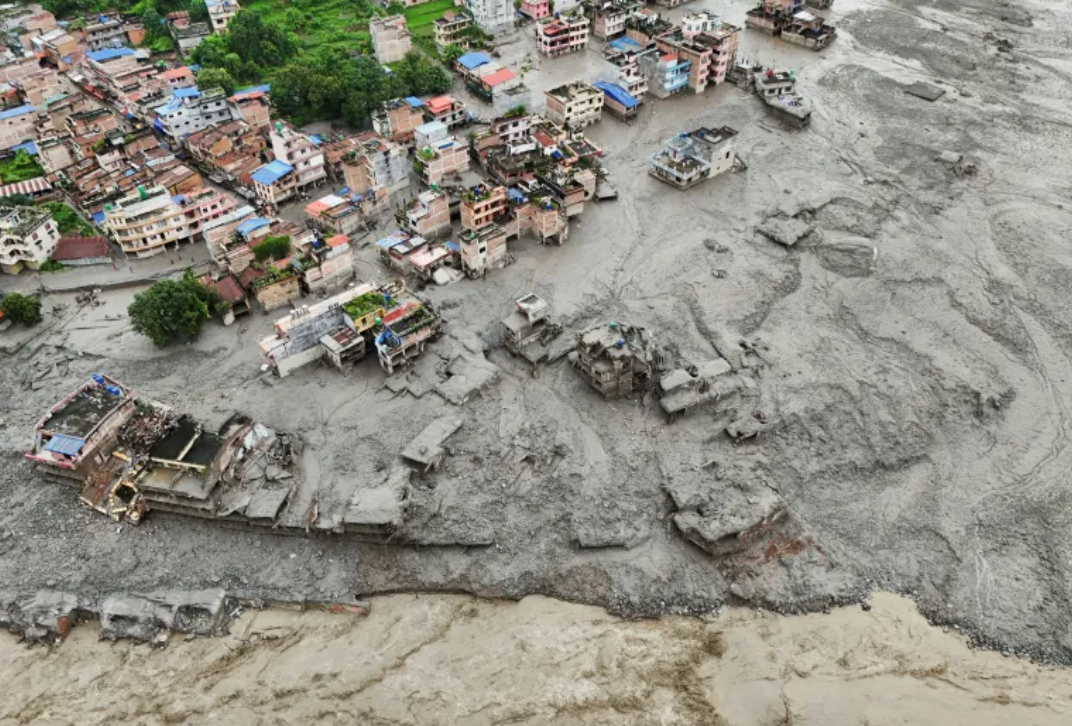
Race to reach workers trapped in hydropower tunnels
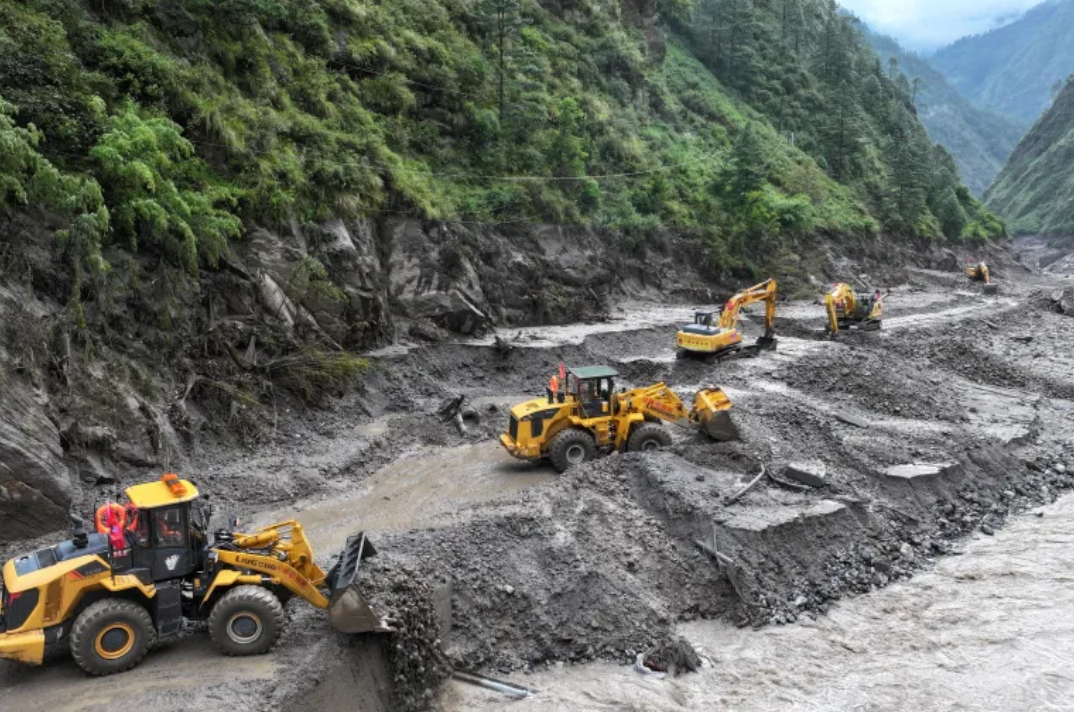
Rescuers are concentrating on hydropower projects in the badly affected Rasuwa and Nuwakot districts. Authorities believe hundreds of missing workers may have taken shelter inside tunnels when the flood surged through the valley.
Other workers could have become trapped after flood debris sealed tunnel entrances. Thick layers of mud, boulders and twisted construction material have made it dangerous for rescue personnel to enter.
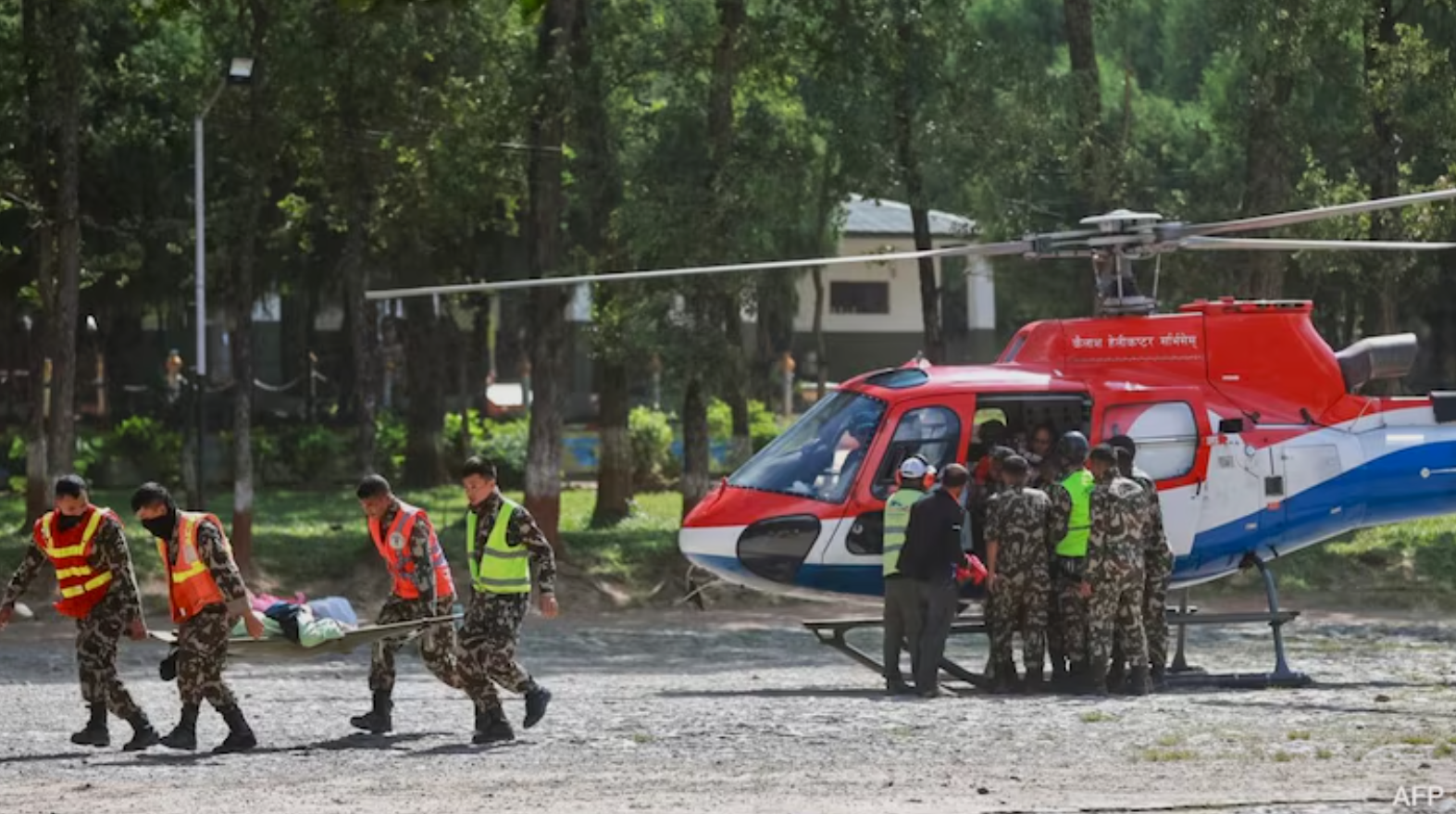
Teams are using excavators, drilling equipment, oxygen supplies, cameras and life-detection technology. Heavy machinery has been transported to remote project sites, while specialised tunnel teams from India and China are supporting Nepal’s operation.
At the Trishuli hydropower complex, rescuers reportedly reached one tunnel entrance and began carefully removing debris. Officials hope workers may have survived inside internal chambers where pockets of air and elevated sections could have offered temporary protection.
However, every additional hour increases the danger from oxygen depletion, contaminated water, structural instability and further landslides. Authorities have avoided giving definite survival estimates while search teams attempt to open safe access routes.
Why the missing-person count increased sharply
The number of missing people has risen as authorities receive employment records from hydropower companies, passenger lists from tourism operators and reports from remote settlements.
Nepal’s latest figures include approximately 933 workers associated with hydropower projects and 592 foreign nationals. Hundreds of truck drivers, customs workers, residents, pilgrims and tourism-sector employees are also believed to have been in the affected corridor.
The flood destroyed communication towers and isolated several communities, making it difficult to determine whether people were swept away, trapped or simply unable to contact authorities and relatives.
More than 300 tourists have reportedly been rescued. Rescue and verification teams are continuing to compare hotel registers, immigration records, tour-company lists and embassy reports.
Latest update concerning Indian nationals
India’s Ministry of External Affairs said that 149 Indian nationals had been rescued as of 5:30 p.m. on August 30. Three Indian nationals and a Nepalese colleague were subsequently reported rescued from Chilime village on Monday, although the MEA had not yet issued a newer consolidated total at the time of publication.
The last detailed MEA update said 275 Indian nationals remained uncontactable and 128 persons of Indian origin holding other nationalities were also missing.
India has sent specialised tunnel-reconnaissance personnel, rescue equipment, medical supplies, temporary shelters, food, water-purification material and forensic support to Nepal.
| India-related update | Latest reported position |
|---|---|
| Indian nationals rescued | 149 in the latest consolidated MEA list |
| Indians previously listed as uncontactable | 275 in the last detailed MEA update |
| Persons of Indian origin uncontactable | 128 |
| Indian nationals whose contact was restored | Around 50 |
| Indians who crossed from China into Nepal | 598 reported by the MEA by Saturday |
Combined Nepal–Tibet disaster toll
Authorities in Tibet have reported 16 deaths and 546 missing. China says 261 foreign nationals from 23 countries are among those unaccounted for on its side of the border.
Combining the separately reported figures produces a regional toll of at least 919 deaths and 4,793 missing. These totals are indicative rather than fully reconciled because Nepal and China maintain separate casualty and passenger records.
China has mobilised more than 2,100 rescue workers and allocated approximately 220 million yuan—around $33 million—for emergency operations and reconstruction. Beijing has also deployed aerial surveillance and life-detection equipment.
Barrier-lake threat remains under observation
The disaster created unstable lakes where ice, rocks and flood debris blocked natural waterways. One lake began draining after overflowing, temporarily forcing rescuers to withdraw from exposed areas.
Authorities continue monitoring upstream water accumulation, unstable slopes and river levels. Further rainfall or another slope collapse could produce renewed flooding or landslides in areas where the ground has already been severely weakened.
The Bhote Koshi reportedly rose again on Sunday, prompting new warnings for rescue teams and downstream communities. Cameras, sensors and satellite imagery are being used to monitor changes where ground-based access is limited.
How the disaster unfolded
Scientists believe a huge mass of ice and rock collapsed near a Himalayan glacier on August 26. The falling material entered the river system and generated a destructive surge containing water, mud, ice, boulders and sediment.
The flood travelled through the Bhote Koshi, Trishuli and Narayani river systems, destroying settlements and carrying victims and debris hundreds of kilometres downstream.
Water levels reportedly rose by several metres within minutes in some locations, leaving residents, travellers and project workers with little time to escape.
Infrastructure and economic damage
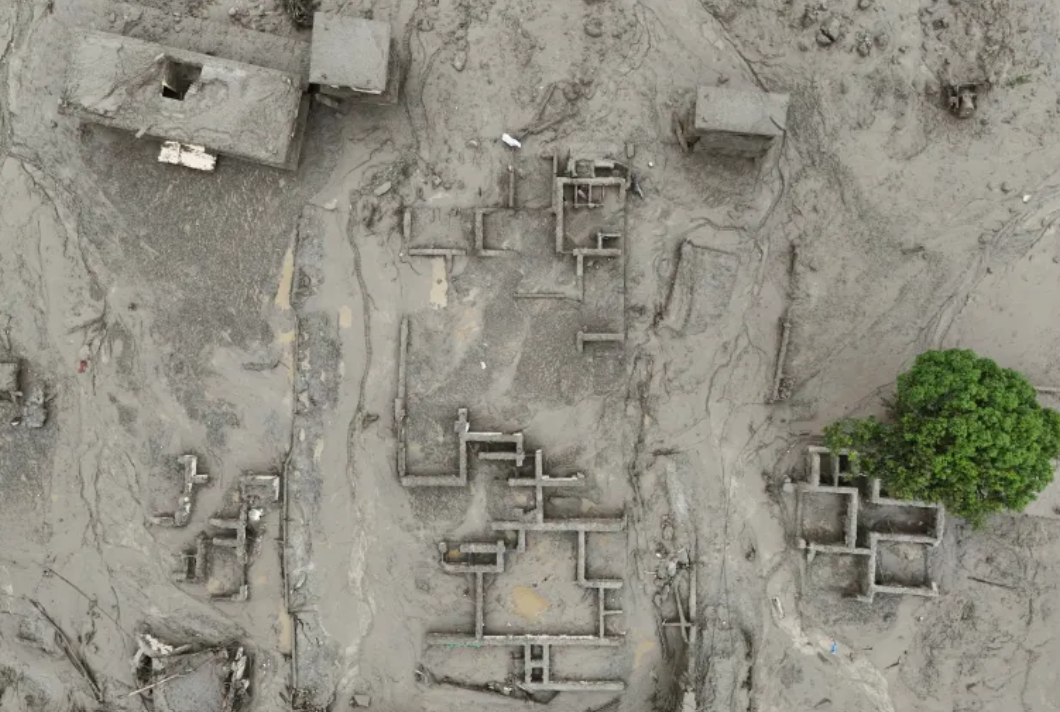
Approximately 40 kilometres of roads were swept away, while dozens of bridges and communication facilities were damaged or destroyed. Although access has been restored along some routes, many communities and project locations remain difficult to reach.
The floods affected at least 11 hydropower facilities and disrupted an estimated 10% of Nepal’s electricity generation. Damage to plants under construction could delay projects, increase financing costs and affect employment.
The destruction of border infrastructure has also disrupted trade between Nepal and China. Tourism faces a significant setback because many of the missing foreigners were pilgrims, trekkers and organised-tour passengers.
Nepal begins identification and burial process
Bodies and human remains have been recovered from districts far downstream from Rasuwa. Hospitals and morgues have struggled with limited refrigeration and storage capacity.
Authorities are collecting photographs, personal records and DNA samples before burial to support later identification. India and other countries have offered forensic expertise and equipment.
Families searching for missing relatives have been advised to provide passport information, recent photographs, travel-company details, medical or dental records and DNA reference samples where requested.
International rescue and relief assistance
Nepal initially said its domestic security agencies could manage the emergency response. As the scale of the tunnel-rescue and victim-identification challenge became clearer, the government accepted limited foreign technical assistance.
India has provided rescue specialists and multiple consignments of humanitarian supplies. China has deployed engineering and rescue teams, while several other governments and international organisations have offered funding, medical assistance and forensic support.
Nearly 21,000 Nepalese security personnel, along with volunteers, health workers and local residents, are now participating in rescue, relief and recovery operations.
Emergency contacts for Indians
MEA 24×7 Control Room, New Delhi
+91 11 2308 8718
+91 11 2308 8719
+91 11 2301 2113
WhatsApp: +91 99682 91988
Email: situationroom@mea.gov.in
Embassy of India, Kathmandu
+977 98513 16807
+977 97091 07500
Embassy of India, Beijing — WhatsApp
+86 185 1428 4905
What happens next?
The immediate priority is opening blocked tunnels, locating missing workers, supplying isolated communities and monitoring unstable lakes and mountain slopes.
Once rescue operations enter the recovery phase, Nepal will face the enormous task of rebuilding roads, bridges, homes, power projects, communications and the Rasuwagadhi trade corridor.
The disaster is also expected to intensify calls for better cross-border glacier monitoring, real-time data sharing, automatic warning systems and stricter safety assessments for Himalayan infrastructure projects.