📅April 15, 2026 | By Pulse India News Desk
India has become one of the world’s biggest digital payments markets. From roadside tea stalls to large shopping malls, UPI has already changed the way Indians pay. But now, another term is slowly entering public conversation — the Digital Rupee, also written as e₹.
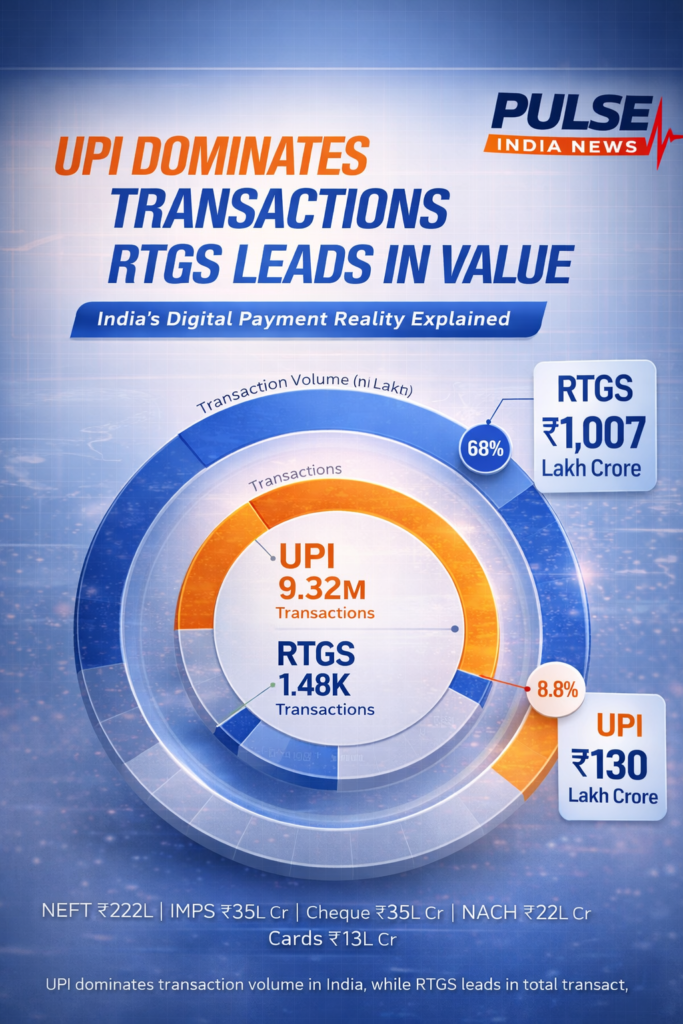
Many users think the Digital Rupee is just another name for UPI. It is not.
The difference is simple: UPI is a payment system, while the Digital Rupee is actual money in digital form issued by the Reserve Bank of India. The RBI says e₹ is India’s Central Bank Digital Currency, issued in digital form and designed to offer features similar to physical cash.
What is the Digital Rupee?
The Digital Rupee (e₹) is India’s official Central Bank Digital Currency (CBDC). That means it is a digital version of the rupee issued by the RBI, just as paper currency is issued by the central bank. The RBI says it is stored in a user’s digital wallet and can be used to send money, receive money, and make payments, much like physical cash.
In very simple words, think of it as:
cash, but on your phone
That is also close to the RBI’s own public positioning of the product. According to the RBI’s updated FAQ, the Digital Rupee is currently being used in pilot mode in both retail and wholesale segments, with the retail version meant for public-facing payments.
How does the Digital Rupee work?
The RBI explains that users can hold e₹ in an e₹ wallet offered by participating banks and non-banks. These wallets work like a digital purse. Users can load money into the wallet, use the balance for transactions, and redeem it back when needed. The RBI also says there is no minimum balance requirement and no interest is paid on wallet balances, because e₹ is designed to behave more like cash than a savings deposit.
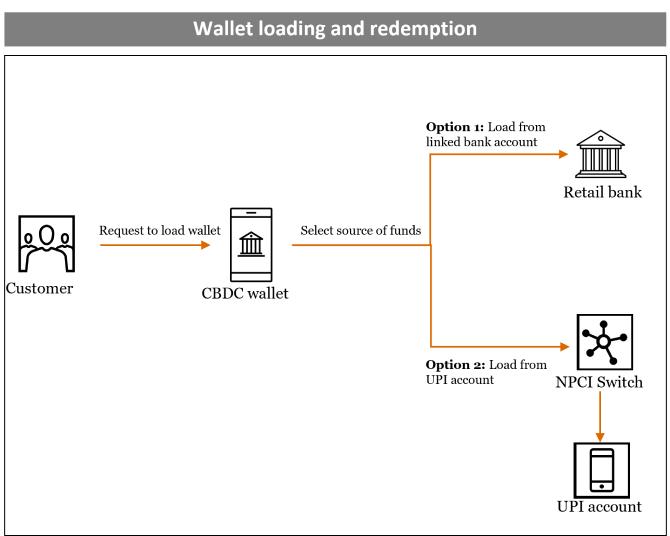
Another important point is that the Digital Rupee is available in denominations similar to physical currency, so users get a more familiar experience. The RBI also says features such as automatic change for transactions are supported within the wallet environment.
Then what exactly is UPI?
UPI, or Unified Payments Interface, is not money by itself. It is an instant payment system developed by the National Payments Corporation of India (NPCI), an RBI-regulated entity. NPCI says UPI allows users to link multiple bank accounts in one app and make instant transfers using mobile phones.
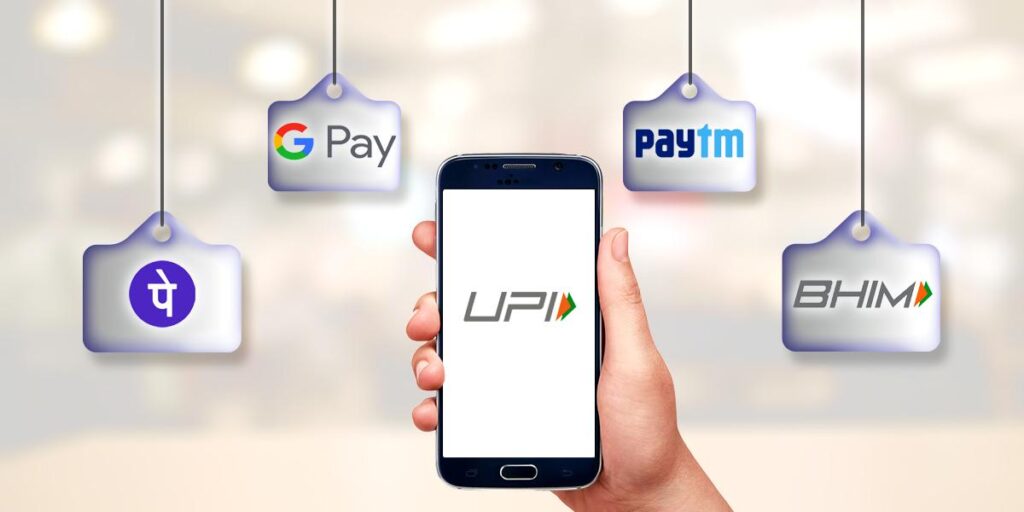
That means when you use PhonePe, Google Pay, Paytm, BHIM, or another UPI-enabled app, you are usually moving money from one bank account to another bank account. UPI is the rail or system that carries the transaction. It is not the rupee itself.
Digital Rupee vs UPI: the easiest way to understand it
💳 Digital Rupee vs UPI
| Feature | Digital Rupee | UPI |
|---|---|---|
| What is it? | Digital currency issued by RBI | Instant payment system |
| Stored in | e₹ wallet | Bank account |
| Issued / run by | Reserve Bank of India | NPCI payment network |
| Works like | Digital cash | Bank-to-bank transfer tool |
| Interest | No | Depends on bank account |
Here is the most practical way to think about it:
- Digital Rupee = money
- UPI = a payment method
If you pay a shopkeeper through UPI, the money moves from your bank account to the shopkeeper’s bank account.
If you pay using the Digital Rupee, the transaction can happen between two e₹ wallets. The RBI says such wallet-to-wallet CBDC transactions are settled instantaneously without passing through users’ bank accounts in the same way as a standard UPI bank transfer.
At the same time, the RBI also says users can scan UPI QR codes from an e₹ app, although those transactions follow UPI settlement timelines in that flow. That is one reason many people get confused between the two.
🧠 Why This Matters
For everyday users, UPI will likely remain the fastest and most familiar payment option.
But the Digital Rupee introduces something different – an RBI-backed form of digital cash that can sit in a wallet and be used more like money in hand.
That is why the future may not be Digital Rupee vs UPI, but Digital Rupee + UPI.
For most people, UPI already feels seamless. Open app, scan QR, enter PIN, done.
So why does India need the Digital Rupee too?
The answer is that the two systems are designed for different roles.
UPI is excellent for linking bank accounts and enabling fast transfers. The Digital Rupee is meant to act more like digital cash, offering an RBI-backed digital store of value that can sit in a wallet. The RBI’s framework also points to future possibilities such as programmability and continued exploration of features like offline use cases.
For ordinary users, this could eventually mean:
- a new form of government-backed digital money,
- more payment choices,
- and potentially smoother transactions in certain use cases.
Is the Digital Rupee replacing UPI?
Not right now, and probably not in the way many fear.
Based on the current official structure, the Digital Rupee is being tested in pilot mode and is better seen as a complement to India’s existing payment ecosystem, not a direct replacement for UPI. UPI remains the dominant day-to-day payment method for millions of Indians, while e₹ is still being gradually expanded through pilot participation.
In fact, the RBI’s own FAQ explicitly draws a distinction between e₹ and UPI rather than presenting them as rivals.
A simple real-life example
Imagine you buy groceries worth ₹500.
If you pay through UPI:
Your bank account sends ₹500 to the shopkeeper’s bank account.
If you pay through Digital Rupee:
You transfer ₹500 worth of e₹ from your wallet to the merchant’s wallet, similar in spirit to handing over digital cash. This is the simplest user-level way to understand the difference, based on the RBI’s wallet-based explanation of e₹.
The final takeaway
India’s payment future is becoming more layered.
UPI has already changed how money moves.
The Digital Rupee could change what digital money itself looks like.
For the average mobile user, the easiest line to remember is this:
UPI helps you pay. Digital Rupee is what you may pay with.
As India continues testing and expanding the e₹ ecosystem, users may slowly start seeing both systems work side by side rather than one replacing the other.
🔗 Related News
- India’s Forex Reserves: How They Protect the Economy in Global Crises
- India’s Russian Oil Imports Surge: What It Means for Energy Security
- ₹5 Trillion Power Grid Push: Why India’s Infrastructure Boom Matters
- India’s 1,000-Km Quantum Communication Breakthrough Explained Simply
- Future Warfare Explained: AI, Drone Swarms & Next-Gen Military Tech