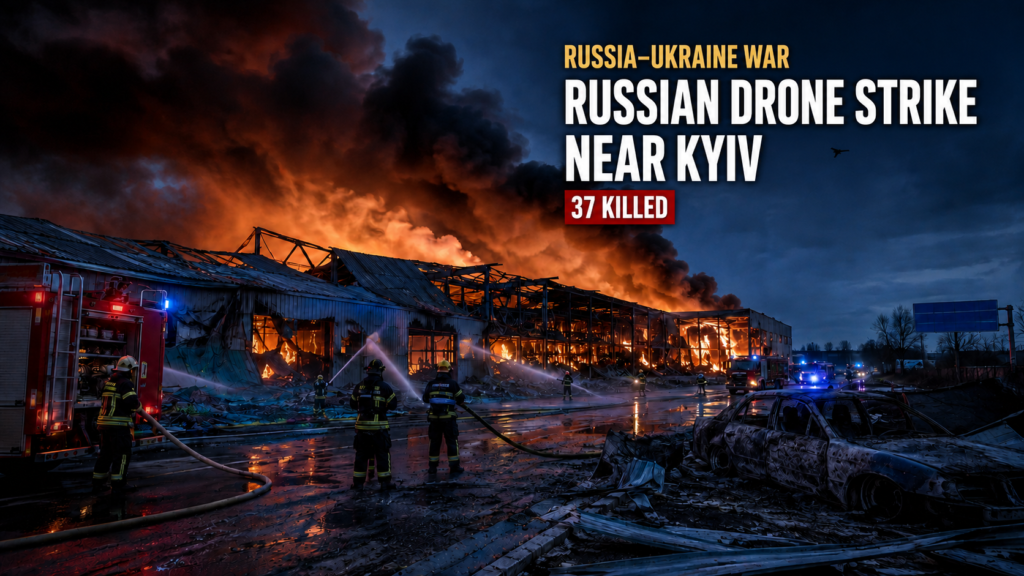
A Geran-4 drone hit an ammunition storage site in Myla, setting off secondary explosions that killed at least 37 people, devastated nearby buildings and exposed a growing gap in Ukraine’s low-cost air-defence network.
A Russian jet-powered attack drone struck a military warehouse in the village of Myla, west of Kyiv, on the evening of Friday, 28 August, igniting a large fire and a chain of ammunition explosions that tore through the surrounding area. By Saturday, the disaster had become one of Ukraine’s deadliest attacks of 2026 and a serious military, humanitarian and political setback for Kyiv.
What happened in Myla?
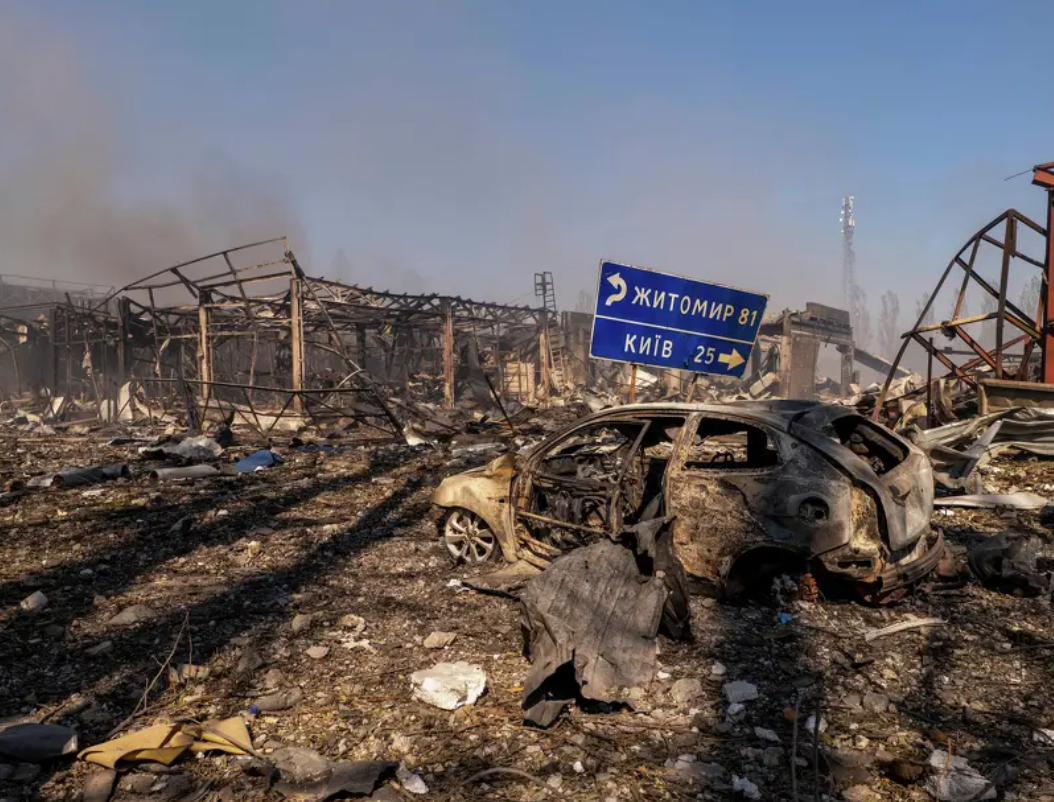
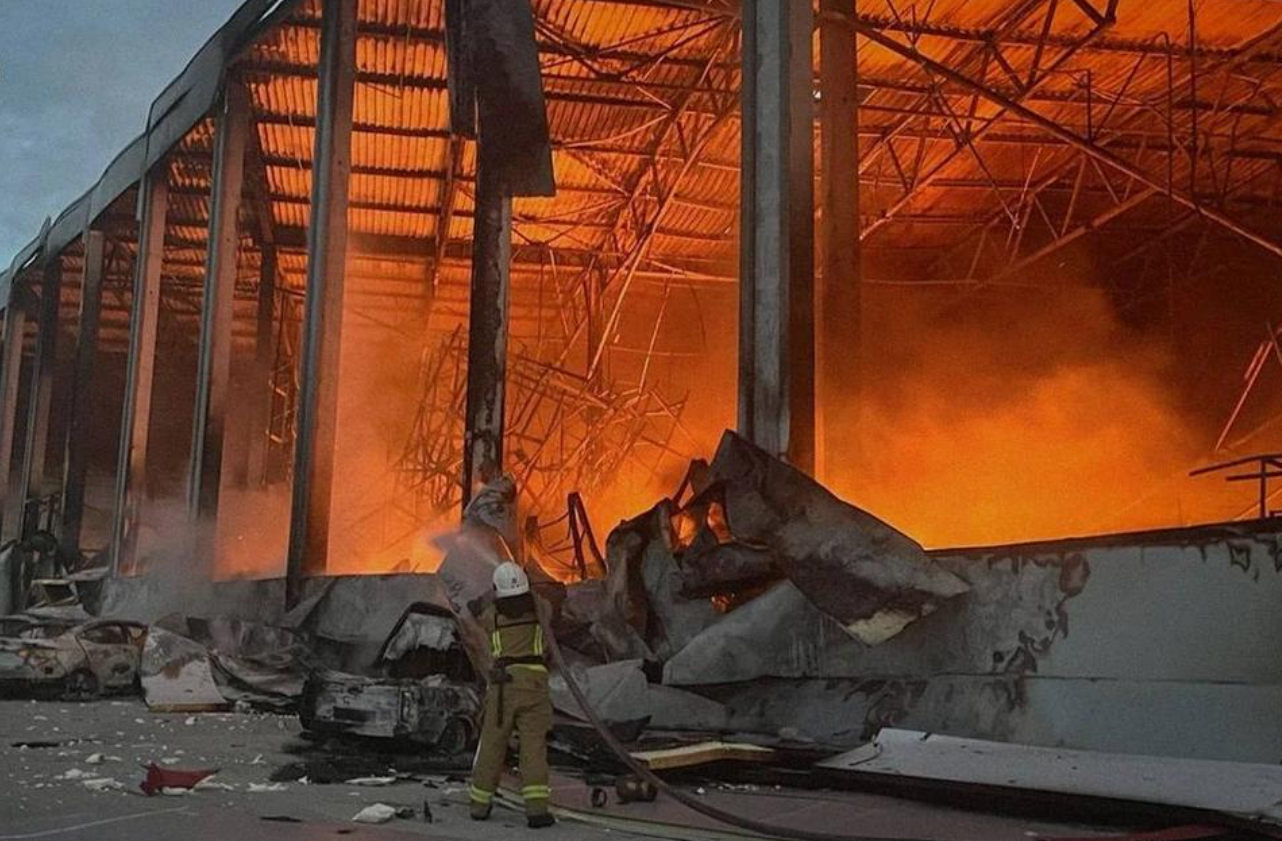
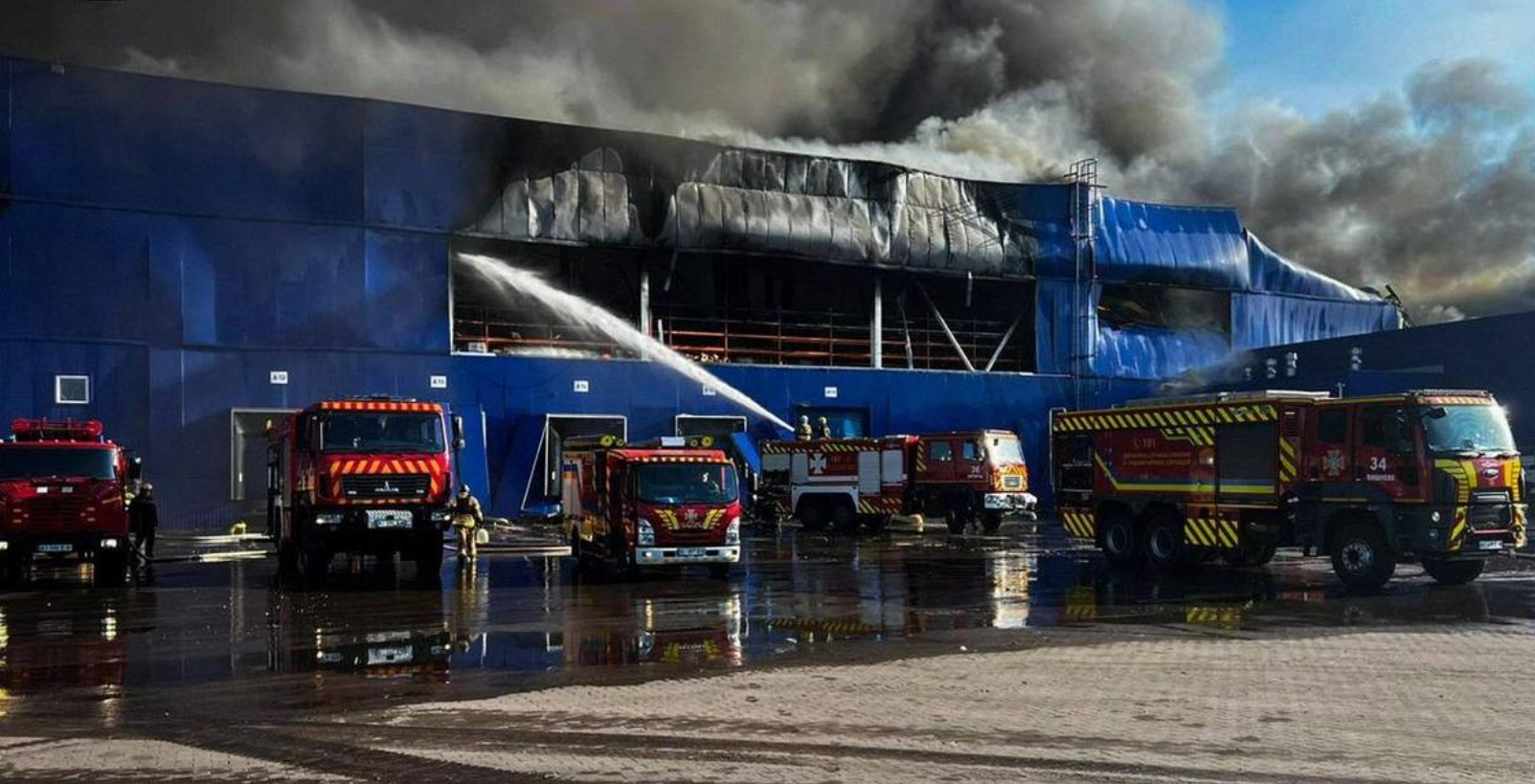
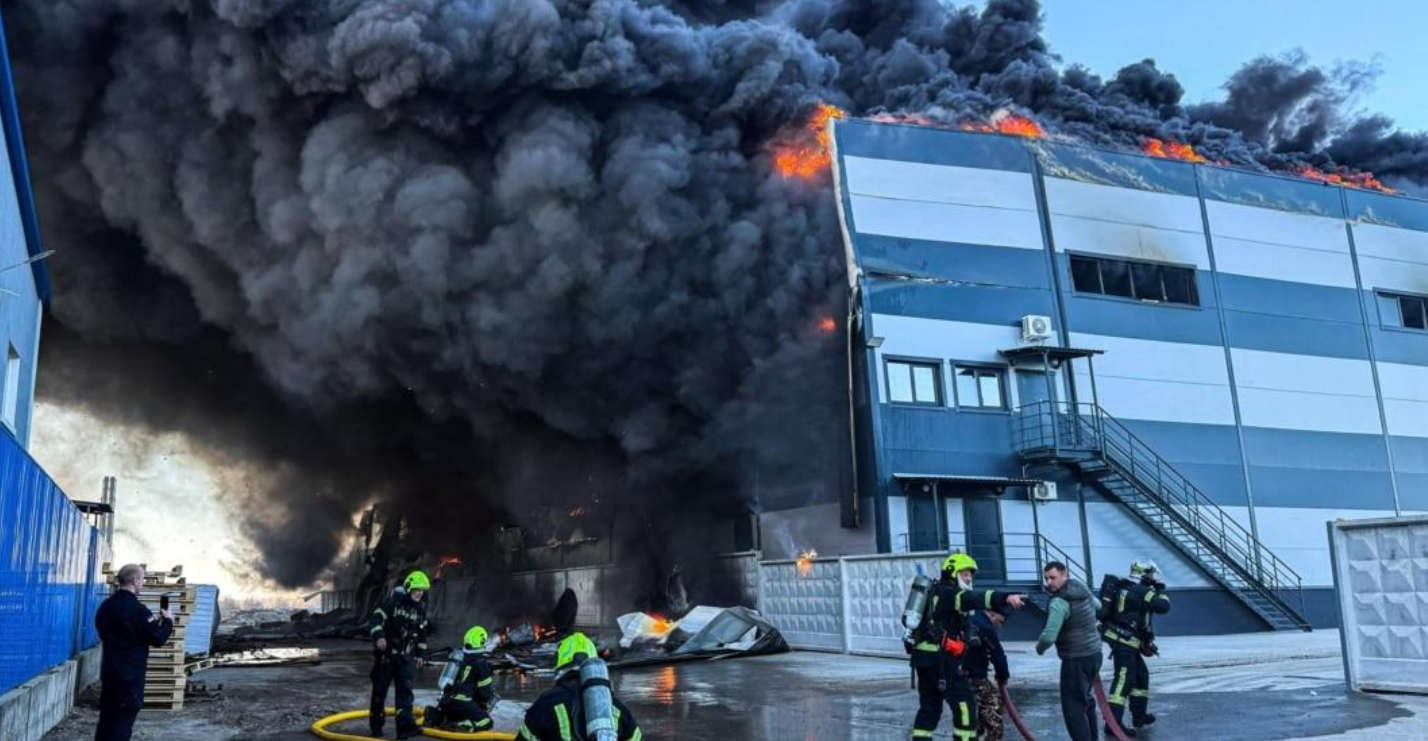
Ukrainian investigators said the attack occurred at approximately 8:10 p.m. local time on 28 August. A Russian unmanned aircraft struck—or came down on—the premises of an enterprise in Myla, in the Bucha district of the Kyiv region. Fire spread rapidly through the warehouse complex before stored explosives began detonating.
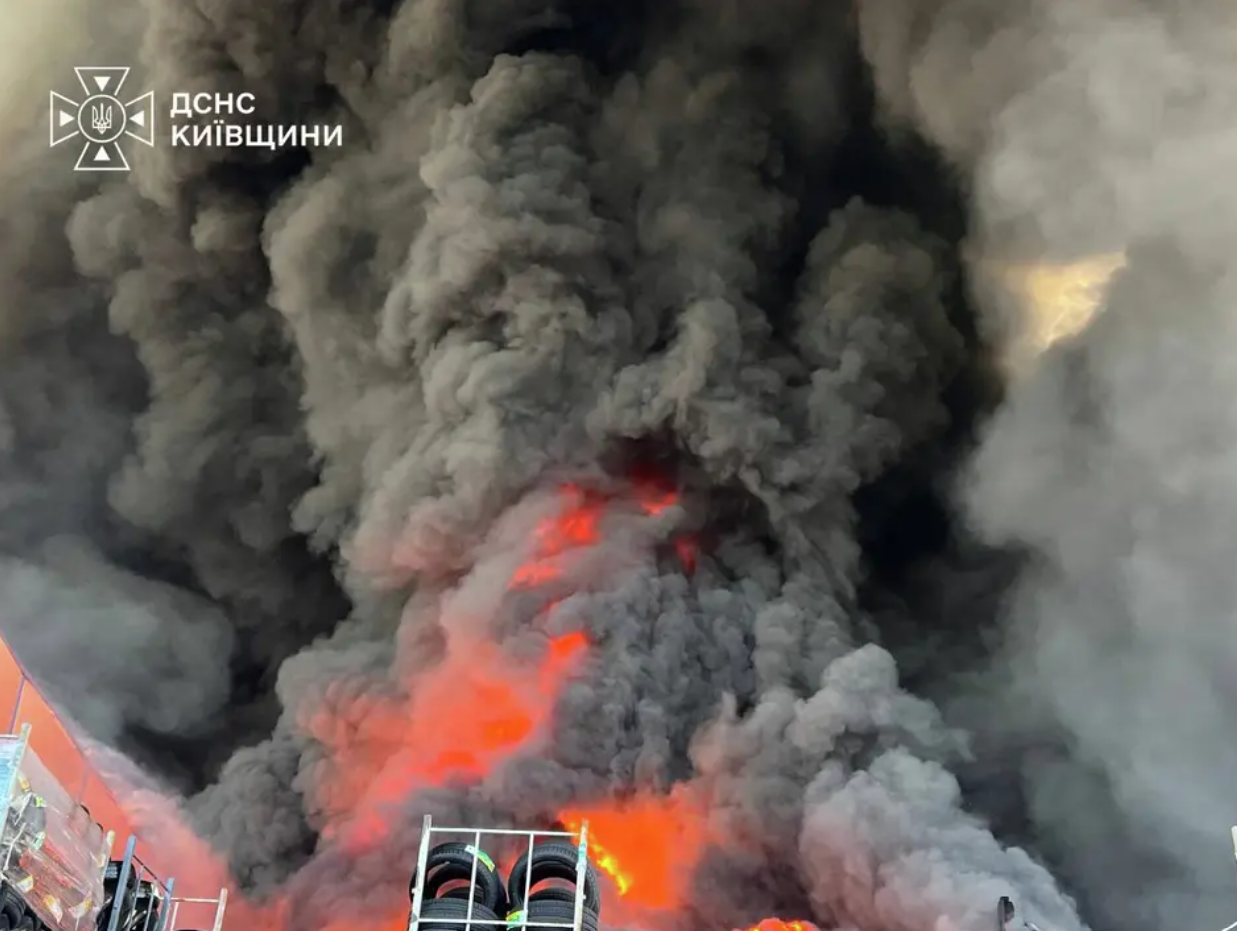
Ukraine’s Security Service, the SBU, later identified the weapon as a Geran-4 jet-powered drone. The initial impact was destructive, but the ammunition inside the facility multiplied the damage. Shells, mines, other munitions and drones exploded in succession, producing fires, blast waves and flying debris across the neighbouring community.
A Russian drone hits the warehouse site in Myla. A large fire begins and is followed by repeated secondary explosions.
Emergency services establish a danger zone, evacuate hundreds of residents and restrict traffic while ammunition continues to detonate.
The death toll rises to 37. Search teams continue identifying victims and looking for missing residents as investigators examine the storage site.
Deadly secondary explosions devastate nearby homes
The blast did not remain confined to the military storage site. Fires and debris damaged homes, vehicles, a restaurant complex and other civilian structures. A residential care facility for elderly people and persons with disabilities was also hit. Local reporting cited the regional governor as saying that 34 of the victims were residents of the care facility.
Police said around 130 homes across several streets were damaged. Some residents were unable to leave basements without assistance, while emergency tents were established to provide shelter, psychological support and help with replacing documents lost in the destruction.
Among those killed was a neighbouring community leader who reportedly went to the site to help. The Kyiv region declared 30 August a day of mourning as rescuers continued extinguishing hotspots and searching dangerous sections of the complex.
Why the destroyed warehouse is a major blow to Ukraine
President Volodymyr Zelenskyy acknowledged that the location was used by Ukraine’s defence forces to store shells, mines, other ammunition and drones. Russia’s Defence Ministry said it had targeted a warehouse containing components and launch boosters for Ukrainian long-range drones. The precise contents and quantities have not been independently established.
Even without a confirmed inventory, the scale and duration of the secondary detonations indicate that the site held a significant volume of explosive military material. Its destruction therefore represents more than the loss of a building.
- Immediate stockpile loss: ammunition and drones intended for training, defence or onward movement may have been destroyed.
- Logistics disruption: Kyiv must inspect surviving stock, find alternative storage and redistribute supplies through a safer network.
- Operational delays: removing damaged ordnance and securing the area could prevent the site from being used for an extended period.
- Intelligence exposure: the successful strike suggests Russia had located or identified a sensitive military logistics point near the capital.
- Forced nationwide review: Ukraine’s Defence Ministry ordered an audit of weapons-storage locations, potentially requiring rapid and costly relocations.
A serious loss—but its battlefield impact cannot yet be measured
The warehouse’s destruction is a substantial tactical and logistical setback because it removes stored munitions and forces Ukraine to divert people, vehicles and secure locations to rebuild the supply chain. However, neither Kyiv nor independent monitors have disclosed the size of the stockpile. Claims that the loss will decisively change frontline operations would therefore go beyond the available evidence.
The Geran-4 threat: Why jet-powered drones are harder to stop
The SBU’s identification of a Geran-4 makes the attack strategically important. Russia’s earlier Shahed-family attack drones relied largely on piston engines and travelled slowly enough for Ukraine to develop a layered, relatively low-cost interception system using mobile gun teams, electronic warfare and interceptor drones.
Jet propulsion changes that equation. A faster drone reduces the time between detection and impact, gives mobile units less opportunity to position themselves and can outrun some interceptor drones designed for slower targets. When several fast drones approach from different directions or fly alongside missiles and decoys, air-defence crews must make rapid decisions with limited resources.
| Feature | Conventional Shahed-type drone | Jet-powered Geran-4 threat |
|---|---|---|
| Propulsion | Piston engine and propeller | Jet engine |
| Engagement window | Longer warning and tracking time | Compressed warning and response time |
| Low-cost interception | Ukraine has developed effective gun and interceptor-drone tactics | Existing interceptor drones are not yet consistently effective |
| Likely response | Mobile fire teams, electronic warfare and interceptors | Faster interceptors, MANPADS, point defence or aircraft |
| Strategic effect | Mass attacks can exhaust local defences | Speed adds pressure and raises the cost of defence |
Pavlo Palisa, deputy head of Ukraine’s presidential office, said the number of jet-powered Russian drones is likely to increase because Moscow has observed their effectiveness. He acknowledged that current Ukrainian interceptor drones capable in theory of engaging such targets have not yet delivered the expected results. Ukraine is testing faster jet-powered interceptors, but those systems are still being developed and combat-tested.
Ukraine investigates negligence over ammunition storage
The attack has produced two separate questions of responsibility. Russia launched the drone that hit the site. At the same time, Ukrainian authorities are investigating why explosive military material was stored so close to homes and a care facility, where a single strike could cause an uncontrolled chain reaction.
Zelenskyy called the placement of explosives beside civilians a grave act of negligence and promised accountability. The SBU opened proceedings covering Russia’s war of aggression and possible military negligence. Investigators are examining permits, storage rules, official decisions and whether the location violated an existing order prohibiting ammunition depots near civilian development.
The scrutiny is particularly intense because a strike in Vyshneve the previous month also triggered secondary explosions at an ammunition site and damaged surrounding homes. Ukrainian leaders said the earlier disaster should already have forced stricter safeguards.
Part of a sustained Russian campaign against Kyiv
The Myla strike came during a third consecutive day of heavy Russian attacks on Kyiv and its surrounding region. Ukrainian officials described almost continuous waves of drones, including newer jet-powered models, intended to exhaust air defences and disrupt everyday life.
Other warehouses, retail distribution sites, homes and transport infrastructure were hit during the wider campaign. In separate incidents, a 14-year-old girl was killed in the Boryspil district and a two-year-old child died in Kyiv after debris from a downed drone fell in the capital. Those deaths were reported separately from the Myla toll.
The UN Human Rights Monitoring Mission said it was collecting information to verify the circumstances and civilian casualties. International humanitarian law requires attacking forces to avoid disproportionate civilian harm and defending forces to take feasible precautions, including avoiding the placement of military objectives near densely populated areas.
The bottom line
The Myla disaster combines a successful Russian strike, the destruction of a meaningful Ukrainian ammunition stockpile, severe civilian casualties and a warning about the next phase of drone warfare. Jet-powered drones are not invulnerable, but they are narrowing Ukraine’s response time and weakening the cost-effective interceptor network built against slower Shahed-type weapons. Kyiv must now strengthen air defence while urgently moving explosive stockpiles away from civilians.