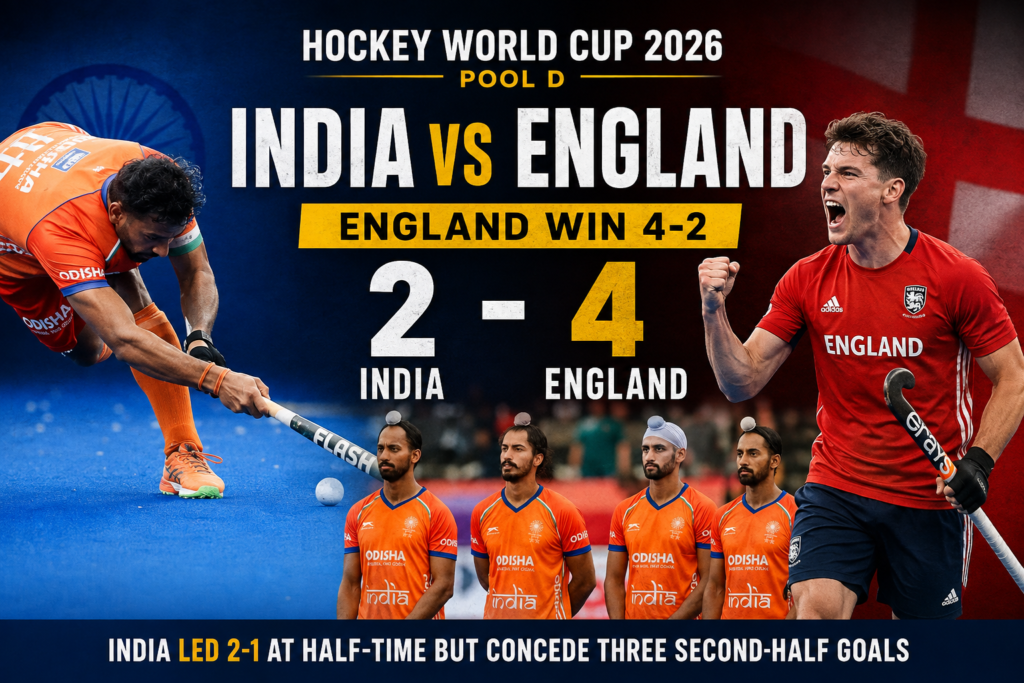
India surrendered a 2-1 half-time lead as England struck three times after the break to claim a 4-2 victory in a dramatic Pool D encounter in Amstelveen, leaving India’s qualification hopes resting on their final match against Pakistan.
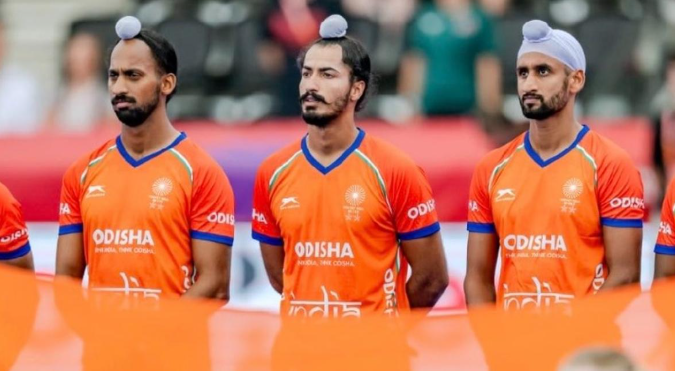
India experienced a painful reversal in their second Pool D match of the FIH Men’s Hockey World Cup 2026, falling 2-4 to England despite entering half-time with a 2-1 advantage.
Harmanpreet Singh and Dilpreet Singh had put India in a commanding position after Nicholas Bandurak’s early opener, but England transformed the contest after the interval. Three second-half goals turned India’s advantage into defeat and extended their long wait for a World Cup victory over England.
The result leaves India with three points from two matches and makes the final Pool D clash against Pakistan a high-pressure encounter with qualification implications.
England Strike First, India Respond With Authority
The opening quarter was played at a high tempo, with both teams attempting to press aggressively through midfield and create early circle entries.
England landed the first blow in the 13th minute when Nicholas Bandurak found the breakthrough to make it 1-0.
India responded almost immediately.
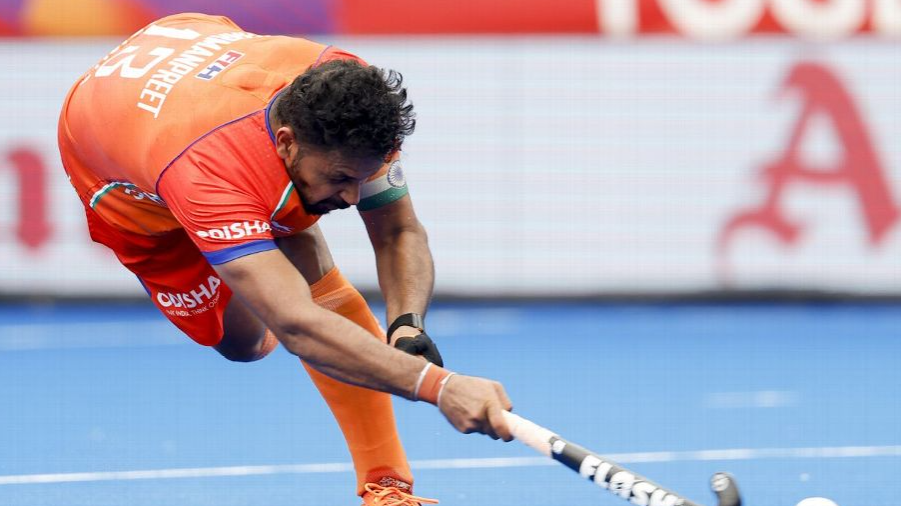
Captain Harmanpreet Singh stepped forward at a penalty corner in the 16th minute and converted to restore parity at 1-1, ensuring India did not allow England to build momentum from their opening goal.
Dilpreet Sends India Into Half-Time Ahead
India’s strongest phase of the match followed the equaliser. Their midfield started winning more second balls, England were pushed deeper and India’s attacking rotations created increasing pressure around the circle.
The reward arrived in the 24th minute.
Dilpreet Singh produced the finish that gave India a 2-1 advantage and completed an impressive turnaround after England had scored first.

India carried that advantage into the break and appeared well positioned to take control of Pool D.
India vs England Match Timeline
England make the breakthrough through Nicholas Bandurak and take an early lead.
Harmanpreet Singh converts from a penalty corner as India respond quickly to England’s opener.
Dilpreet Singh finishes India’s attacking move to put the team ahead before half-time.
England increase the intensity after the restart and Stuart Rushmere restores parity.
England turn the match around as Henry Croft scores their second goal in quick succession.
Bandurak converts a penalty corner for his second goal and gives England a decisive two-goal cushion.
England complete a second-half comeback and take all three points from the Pool D contest.
India’s first-half performance showed why they remain dangerous when they play vertically and commit numbers around the opposition circle. Harmanpreet’s set-piece threat and Dilpreet’s movement allowed India to recover quickly after conceding first.
The problem emerged after half-time. England increased the tempo, pressed India’s exits more aggressively and found greater space during transitions. India’s midfield became increasingly stretched, allowing England to attack the circle before India’s defensive structure could fully reset.
Once Rushmere equalised, the momentum changed sharply. England continued attacking rather than settling for control, and Croft’s goal only four minutes later turned India’s lead into a deficit.
England Change the Match After Half-Time
India entered the third quarter with the advantage, but England emerged from the interval with noticeably greater urgency.
Their press became more aggressive and India’s ability to retain possession through midfield declined. England began generating repeated entries around the Indian circle, forcing Harmanpreet, Jugraj and the deeper midfield line to defend under sustained pressure.
In the 38th minute, Stuart Rushmere brought England level at 2-2.
Just four minutes later, Henry Croft struck to make it 3-2.
In the space of a few minutes, a match India appeared to be controlling had been completely reversed.
India Push for Equaliser, Bandurak Delivers Final Blow
India were forced to chase the game in the final quarter and attempted to increase the pressure through their forwards and penalty-corner routines.
A penalty corner in the 47th minute offered Harmanpreet another opportunity, but England survived and continued to protect the central defensive areas effectively.
With India committing players forward, the contest became increasingly stretched.
England then earned a penalty corner in the 55th minute, and Nicholas Bandurak converted for his second goal of the match to make it 4-2.
That strike effectively ended India’s comeback hopes.
- Second-half drop: India were unable to maintain the control and intensity shown before half-time.
- Transition defence: England repeatedly found space when India lost possession higher up the pitch.
- Momentum swing: Rushmere and Croft scored within four minutes, completely changing the match.
- Missed chance to consolidate: India led 2-1 but could not turn that advantage into sustained control.
- England’s penalty-corner quality: Bandurak’s late conversion removed any realistic chance of an Indian comeback.
The Biggest Concern: Three Goals After Half-Time
The most worrying element for India was not simply the defeat, but the manner in which the match changed.
India had demonstrated composure after conceding the opening goal and deservedly moved ahead. However, their shape became progressively less compact after the break as England accelerated the movement of the ball across the flanks and attacked the spaces between India’s midfield and defence.
At World Cup level, allowing an opponent to score three unanswered goals after half-time is rarely recoverable.
India will therefore need to improve game management, particularly when protecting a lead against teams capable of rapidly changing tempo.
32-Year Wait Against England Continues
The defeat also extended India’s long wait for a Hockey World Cup victory over England.
India’s previous World Cup win against England came in 1994, when they won 1-0 in the fifth-sixth-place playoff in Sydney.
The statistic will be frustrating, especially because India entered half-time in this match with a genuine opportunity to end that sequence.
Men’s Pool D Points Table
| Pos | Team | P | W | D | L | Pts | GD |
|---|---|---|---|---|---|---|---|
| 1 | England | 2 | 2 | 0 | 0 | 6 | +3 |
| 2 | India | 2 | 1 | 0 | 1 | 3 | 0 |
| 3 | Pakistan | 2 | 0 | 1 | 1 | 1 | -2 |
| 4 | Wales | 2 | 0 | 1 | 1 | 1 | -2 |
What the Result Means for India
England now sit on six points from two matches and have taken firm control of Pool D.
India remain second with three points, but the defeat means their final pool fixture against Pakistan has become significantly more important.
A victory would remove most of the uncertainty around India’s progression. A draw could also prove sufficient depending on the final pool calculations and the England-Wales result.
Defeat against Pakistan, however, would put India’s campaign in serious danger and could allow Pakistan to move above them in the standings.
India vs Pakistan Now Becomes the Defining Pool Match
Few fixtures in international hockey carry the emotional intensity of India against Pakistan, but this meeting now has major sporting consequences as well.
India need to reproduce the aggression and composure they displayed during the first half against England while avoiding the defensive instability that followed after the break.
Maintaining midfield compactness, improving possession under pressure and converting penalty corners efficiently will be central to India’s chances.
Above all, India cannot afford another extended period in which the opposition dictates the tempo.
India’s 2-4 defeat to England was a match of two sharply contrasting halves.
For 30 minutes, India showed discipline, attacking intent and the composure to recover from an early setback. Harmanpreet Singh’s penalty-corner equaliser and Dilpreet Singh’s finish put India in an excellent position at the interval.
What followed exposed the margins that decide World Cup matches. England increased the tempo, India lost control of transitional spaces and three unanswered second-half goals transformed the contest.
The defeat hurts, but India’s campaign remains alive. Their response against Pakistan will now determine whether this match is remembered as a damaging turning point or merely a setback on the road to the next stage.