Asian Games 2026 · Men’s Cricket · Match Review
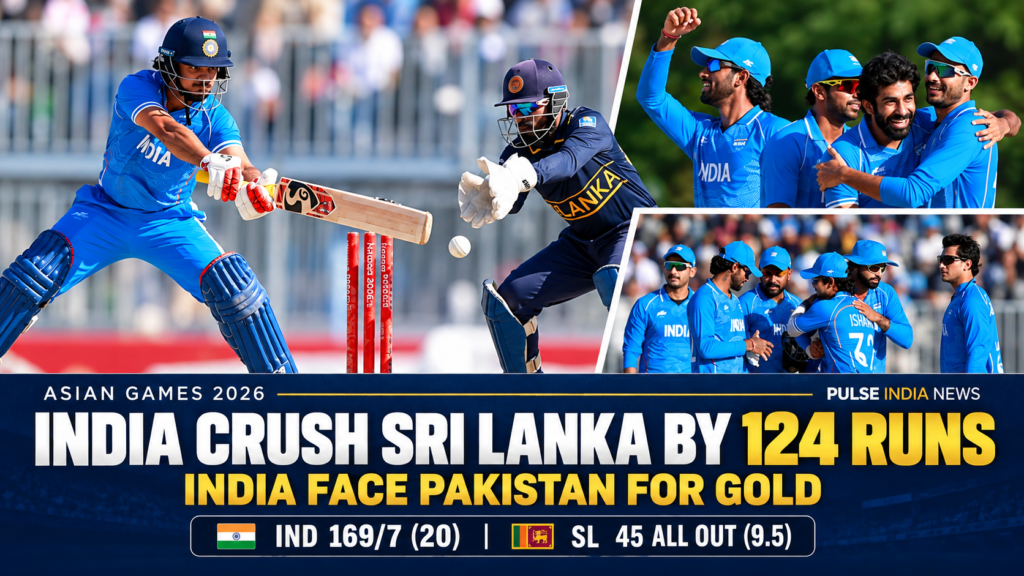
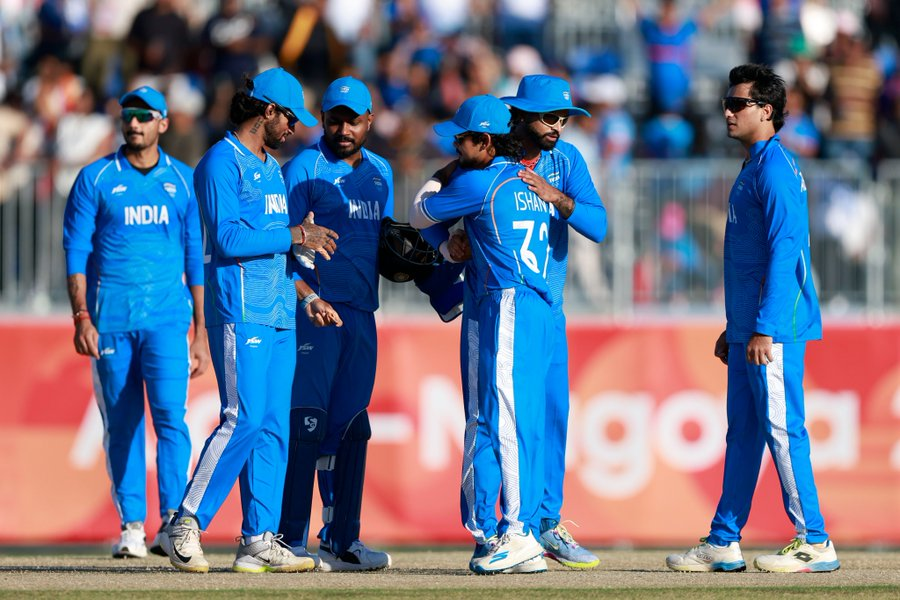
India booked their place in the Asian Games men’s cricket final with a commanding 124-run victory over Sri Lanka. Ishan Kishan mastered a difficult surface with an unbeaten 80 before India’s bowlers dismissed Sri Lanka for just 45 in Nisshin.
Second semi-final · Korogi Sports Park, Nisshin
India won by 124 runs
The winning margin told the story of India’s bowling dominance, but their innings was far from straightforward. After being asked to bat on a surface offering turn and variable bounce, India needed early aggression from Vaibhav Sooryavanshi and an outstanding innings from Kishan to reach a formidable total.
Jasprit Bumrah then struck twice in the opening over of Sri Lanka’s chase. The spinners and three run-outs completed a collapse that sent India into Saturday’s gold medal match against Pakistan. Sri Lanka will face Bangladesh for bronze.
Sooryavanshi attacks as India lose early wickets
Sri Lanka made early progress when Abhishek Sharma and Sanju Samson were dismissed for seven apiece, leaving India at 24/2. With the ball gripping the surface, rebuilding without allowing the scoring rate to stall was an immediate challenge.
Sooryavanshi responded with an attacking 38 off 21 deliveries. His six fours and two sixes helped India reach 58 during the powerplay, ensuring that the early wickets did not hand Sri Lanka complete control.
Sahan Arachchige ended the teenager’s innings with India at 59/3. Captain Shreyas Iyer contributed a run-a-ball 13 before departing at 87/4, leaving Kishan to guide the innings through the middle overs.
Kishan turns a difficult innings into a winning total
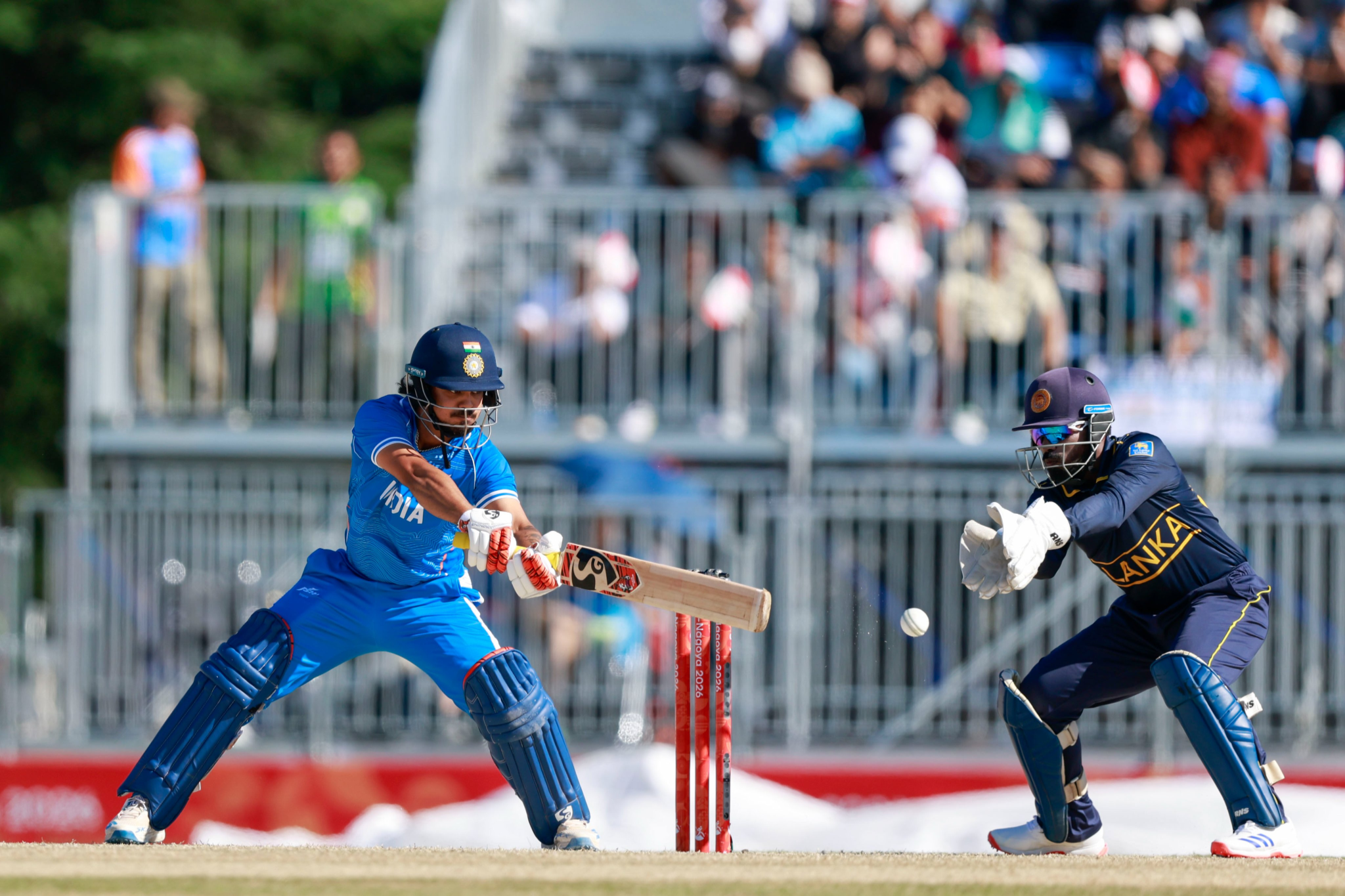
Kishan’s innings was the defining contribution of the match. While several teammates struggled to score freely, the left-hander found a way to keep India moving without surrendering his wicket. He combined controlled batting through the middle overs with powerful hitting towards the finish.
Axar Patel made eight from 13 balls, Tilak Varma scored two, and Shivam Dube managed three from nine deliveries. Those returns illustrated how demanding the conditions were and made Kishan’s acceleration particularly valuable.
Kishan finished with four fours and five sixes, scoring almost half of India’s total himself. Washington Sundar added an unbeaten seven from three balls as India closed on 169/7.
Axar’s assessment after the match was that India had initially viewed 140–150 as a potentially winning score. Reaching 169 therefore gave the bowlers a substantial cushion on a pitch already showing signs of assistance for spin.
Bumrah’s opening over shatters Sri Lanka’s chase
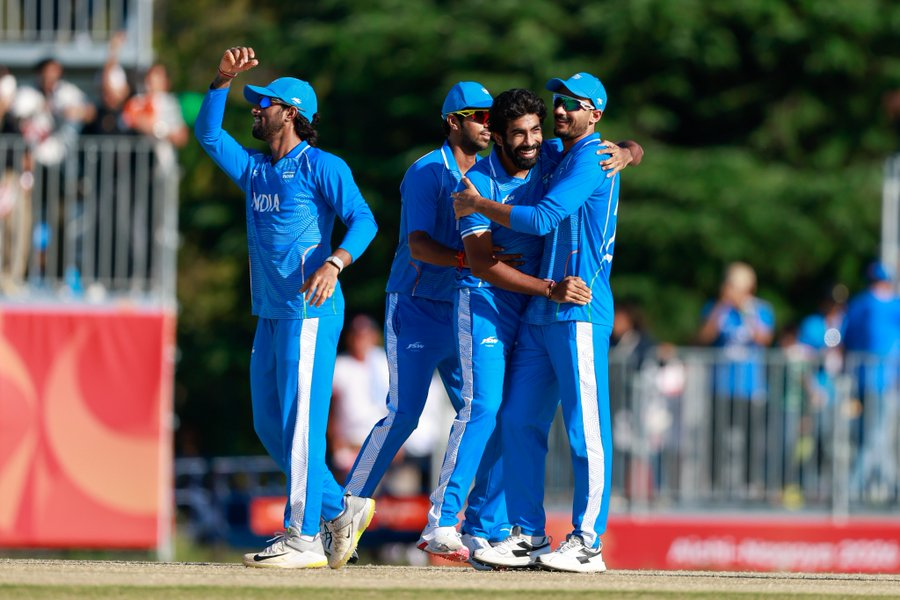
Any hope of a competitive chase depended on Sri Lanka negotiating the opening overs. Bumrah removed that possibility almost immediately, trapping Sineth Jayawardena lbw and having Sohan de Livera caught by Sanju Samson before Sri Lanka had scored.
Lasith Croospulle was then run out without facing a delivery, leaving Sri Lanka at 2/3. India had seized control inside seven legal balls.
Nuwanidu Fernando briefly counterattacked with two sixes in his 15 from 11 deliveries. He was the only Sri Lankan batter to reach double figures, but his effort could not reverse the damage caused by the early wickets.
Spinners and run-outs complete the collapse
Axar dismissed captain Arachchige for nine and Ashen Bandara for a duck in the same over. Fernando’s run-out soon followed, reducing Sri Lanka to 31/6 before the end of the powerplay.
Sundar removed Wanuja Sahan, while Bishnoi conceded only four runs in his over. Sri Lanka struggled to rotate the strike or establish a partnership as India maintained pressure from both ends.
Tilak’s run-out of Tharindu Ratnayake brought the eighth wicket. Abhishek then had Chamika Karunaratne stumped before bowling Binura Fernando with the next delivery, ending the innings at 45 in 9.5 overs.
Five dismissed Sri Lankan batters failed to score. Alongside seven wickets taken by the bowlers, India’s three run-outs highlighted the fielding contribution to the result.
India’s bowling figures
| Bowler | Overs | Runs | Wickets |
|---|---|---|---|
| Jasprit Bumrah | 2 | 7 | 2 |
| Axar Patel | 3 | 8 | 2 |
| Washington Sundar | 3 | 18 | 1 |
| Ravi Bishnoi | 1 | 4 | 0 |
| Abhishek Sharma | 0.5 | 2 | 2 |
Why India were so far ahead
The difference was India’s ability to adapt in both innings. Kishan showed that runs were available with careful shot selection and well-timed aggression. Sri Lanka, by contrast, lost wickets too quickly to develop a response to the conditions.
Bumrah’s first-over strikes also allowed India to deploy their spinners against batters already under severe scoreboard pressure. Axar and Sundar offered control, while Abhishek supplied the finishing blows.
India will still want more sustained partnerships in the final. Kishan carried much of the batting effort, and several middle-order players struggled to find rhythm. A stronger collective contribution would reduce that dependence against Pakistan.
Axar welcomes India’s response after the wait
Reflecting on the performance, Axar praised the team for staying ready despite rain and the wait for competitive action. He also said the final’s pitch had not yet been confirmed, although he expected similar behaviour across the venue’s available surfaces.
Axar described the Asian Games experience as different from a conventional cricket tour, particularly the opportunity to share the Games environment with athletes from other sports. Winning gold for India, he said, would be a proud personal moment.
Brief scores: India 169/7 in 20 overs (Ishan Kishan 80*, Vaibhav Sooryavanshi 38; Sahan Arachchige 2/28, Tharindu Ratnayake 2/32) beat Sri Lanka 45 all out in 9.5 overs (Nuwanidu Fernando 15; Jasprit Bumrah 2/7, Axar Patel 2/8, Abhishek Sharma 2/2) by 124 runs.