India Weighs RVV-BD Missile Integration for Su-30MKI Fleet
The proposed very-long-range air-to-air weapon could allow Indian fighters to threaten enemy AWACS, surveillance aircraft and aerial tankers from hundreds of kilometres away.
India is considering a major modification of its Sukhoi Su-30MKI fighter fleet to integrate Russia’s RVV-BD very-long-range air-to-air missile, a move that could significantly expand the Indian Air Force’s ability to engage high-value enemy aircraft far beyond conventional visual range.
The proposal was expected to be placed before the Defence Acquisition Council, chaired by Defence Minister Rajnath Singh, according to reports citing defence sources. More than 260 Su-30MKIs are in Indian service, making the aircraft one of the most important combat platforms in the country’s air-power structure.
If approved, the programme would involve modifying the Su-30MKI’s avionics, weapons-control software and targeting architecture to carry and employ the Russian-origin missile. Integration would also require extensive ground, captive-carriage, separation and live-firing trials before the weapon could enter operational service.
The RVV-BD is not merely another missile for fighter-versus-fighter combat. Its principal value is the ability to threaten airborne early-warning aircraft, surveillance platforms, electronic-warfare aircraft and tankers—the assets that enable an opponent’s fighters to detect, coordinate and operate effectively across a large battlespace.
What is the RVV-BD?
The RVV-BD is the export member of Russia’s R-37M family of long-range air-to-air missiles. The large, high-speed weapon was developed to engage aircraft at distances considerably greater than those covered by standard medium-range air-to-air missiles.
Its guidance architecture is publicly described as combining inertial navigation, radio-linked mid-course corrections and active radar homing during the terminal phase. This allows the launch aircraft-or potentially a wider network of friendly sensors, to update the missile as it closes on a distant and moving target.

Indian reports have referred to a maximum engagement range of approximately 300 kilometres and a speed near Mach 6. However, Rosoboronexport’s publicly available specification for the RVV-BD lists a maximum range of up to 200 kilometres.
The difference may reflect the missile version, export restrictions, launch altitude, aircraft speed, target profile or the use of the R-37M and RVV-BD names interchangeably in public reporting. Until the exact configuration offered to India is officially disclosed, the 300-kilometre figure should be treated as a reported maximum rather than a guaranteed operational range.
Why is India looking at the missile?
Modern air combat increasingly depends on who detects, identifies and engages the opponent first. A fighter carrying a longer-range missile can create a larger threat zone, but the decisive advantage comes from combining the weapon with powerful radars, airborne surveillance aircraft, secure data links and electronic-warfare support.
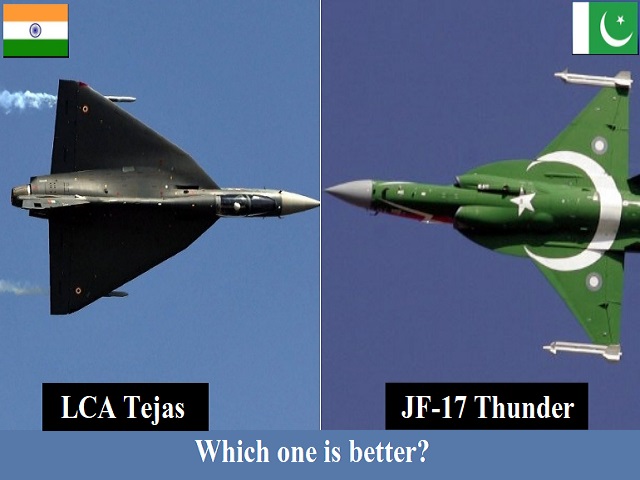
India faces a rapidly changing regional environment. China has introduced increasingly capable beyond-visual-range weapons for aircraft including the J-20, J-16 and J-10C. Pakistan operates Chinese-origin J-10CE fighters and has displayed the PL-15E missile, while its JF-17 Block III fleet is also being developed around modern radar and networked air-combat capabilities.
Against this backdrop, the RVV-BD could provide the IAF with a specialised “counter-enabler” weapon. Instead of concentrating only on enemy fighters, Su-30MKIs could attempt to push vulnerable support aircraft farther away from the frontline.
- Enemy AWACS aircraft could be forced to operate at greater stand-off distances, reducing the depth of their radar coverage.
- Aerial tankers might need to remain farther from contested airspace, limiting the endurance and reach of enemy fighters.
- Electronic-warfare and reconnaissance aircraft would face a larger threat envelope.
- Combat air patrols could gain a long-range weapon against non-stealthy, high-value aircraft with comparatively limited manoeuvrability.

RVV-BD compared with India’s Astra family
The proposed Russian missile would not replace India’s indigenous Astra programme. The two weapon families occupy related but different layers of the IAF’s future air-to-air combat architecture.
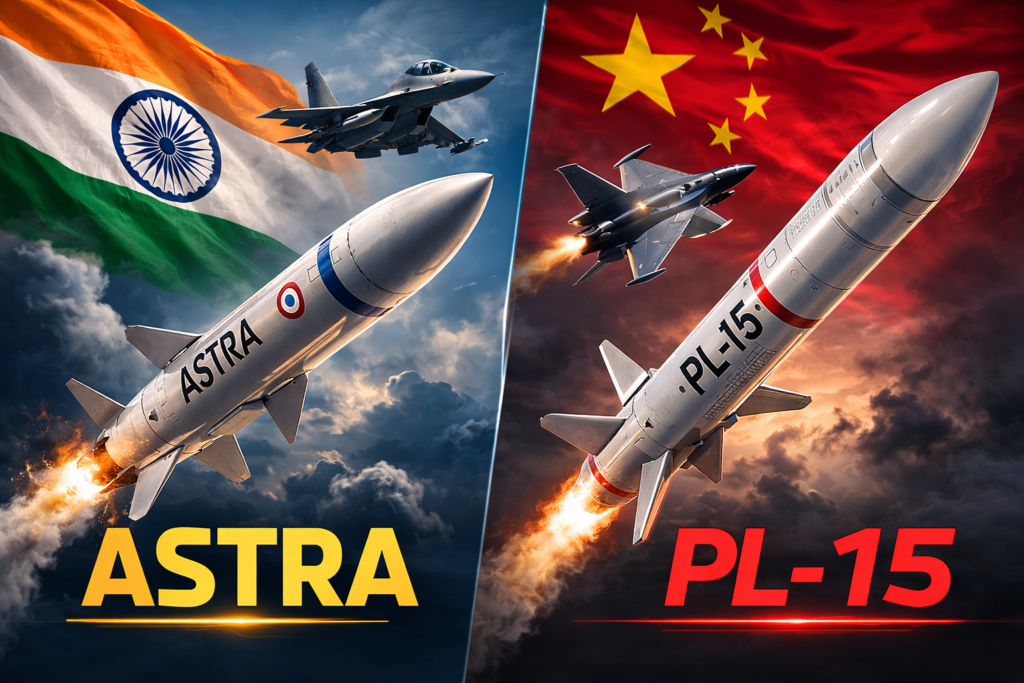
Astra Mk-1 is already associated with the Su-30MKI and is intended for regular beyond-visual-range engagements against agile combat aircraft. Public Indian information places its range at roughly 100 to 110 kilometres, depending on the engagement and launch conditions.
The longer-range Astra Mk-2 is being developed to extend India’s reach beyond Astra Mk-1, while further Astra-family variants are expected to address increasingly demanding long-range requirements. These indigenous weapons remain essential because they give India greater control over production, software, upgrades, stockpiles and long-term supply.
The RVV-BD, by contrast, is a much larger specialist missile optimised for extended-range engagements. It could serve as an interim or complementary weapon while India develops and matures its own longer-range Astra variants.
| Missile | Operator/Origin | Publicly reported range | Likely operational role |
|---|---|---|---|
| Astra Mk-1 | India | About 100–110 km | Indigenous BVR weapon for engagements against fighter aircraft and other manoeuvring aerial targets. |
| Astra Mk-2 | India | Longer-range variant under development | Intended to expand indigenous BVR reach beyond Astra Mk-1. |
| RVV-BD / R-37M family | Russia | Export specification up to 200 km; Indian reports cite a 300-km-class capability | Very-long-range attack against AWACS, tankers, reconnaissance aircraft and other high-value targets. |
| PL-15E | China / Pakistan export variant | Publicly cited at approximately 145 km | Long-range active-radar BVR combat from J-10CE and compatible platforms. |
| PL-15 | China | Often assessed above 200 km | Long-range BVR combat for Chinese fighters including the J-20 and J-16. |
| PL-17 | China | Exact performance remains unconfirmed publicly | Very-long-range weapon believed to be intended for high-value support aircraft. |
Range figures are not directly comparable. Maximum advertised range is influenced by launch altitude and speed, target direction, manoeuvring, guidance support and the amount of energy required during the terminal phase.
Would RVV-BD give India an advantage over rival missiles?
If India receives a variant capable of operating at the upper end of the reported range, the RVV-BD could outrange Pakistan’s publicly known PL-15E export missile and give the IAF a stronger ability to threaten large support aircraft from stand-off distances.
This would not automatically make every Su-30MKI dominant in long-range combat. The missile must first receive an accurate target track. At distances of 200 kilometres or more, a fighter may depend on information from AWACS aircraft, ground radar, other fighters or space-based and electronic-intelligence systems.
The target can also manoeuvre, descend, employ electronic countermeasures or retreat after detecting the launch. A missile’s maximum aerodynamic reach is therefore different from its practical “no-escape zone” the smaller area in which the target has limited ability to evade.
Potential Indian advantages
- A larger stand-off engagement envelope against Pakistan’s airborne early-warning and tanker fleet.
- A credible counter to China’s expanding family of long-range air-to-air weapons.
- The Su-30MKI’s size and payload capacity make it better suited than smaller fighters to carry a heavy missile of this class.
- The weapon could complement Astra rather than delaying India’s indigenous missile programme.
- Its presence alone could force enemy support aircraft to adopt more conservative operating patterns.
Important limitations
- The RVV-BD is substantially larger and heavier than normal medium-range air-to-air missiles, potentially reducing the number carried.
- External carriage increases aerodynamic drag and may affect the fighter’s range and performance.
- Very-long-range attacks require reliable surveillance, identification and mid-course targeting support.
- Indian integration, testing, maintenance and stockpile costs have not been officially disclosed.
- Dependence on a foreign supplier remains a strategic concern, reinforcing the need to continue the Astra programme.
Why the Su-30MKI is the logical launch platform
The Su-30MKI combines long endurance, a large weapons payload and a powerful radar with a two-person cockpit that can support complex long-range missions. Its heavy-class design makes it the most practical fighter in the Indian inventory for carrying a missile of the RVV-BD’s size.
The aircraft has also demonstrated India’s ability to integrate weapons from different origins. The Su-30MKI already carries the indigenous Astra missile, while selected aircraft have been modified to launch the air-launched BrahMos supersonic cruise missile.
Integrating the RVV-BD would nevertheless be a demanding engineering task. Mission computers, radar interfaces, cockpit displays, launchers, software, data links and weapons-release logic would all need to work together under operational conditions.
Part of a wider Su-30MKI transformation
The missile proposal comes alongside India’s wider effort to modernise the Su-30MKI fleet. Planned improvements include a more capable radar, upgraded mission computers, new electronic-warfare systems, modern cockpit equipment, improved communications and greater compatibility with Indian weapons.
India is also pursuing overhaul and support arrangements for the aircraft’s AL-31FP engines. Improving domestic engine-overhaul capacity would help increase availability and sustain a fleet expected to remain central to the IAF for years.
The combination of an upgraded sensor suite, secure networking and very-long-range weapons could turn the Su-30MKI into more than a conventional heavy fighter. It could serve as a long-range interceptor and weapons carrier supporting a wider network of Indian airborne and ground-based sensors.
What happens next?
Even if the Defence Acquisition Council grants an initial Acceptance of Necessity, several stages would remain before the missile could be deployed. These could include technical evaluation, commercial negotiations, government approvals, contracting, aircraft modification, software integration and multiple flight-test phases.
The final capability will depend on the precise missile variant offered to India, the degree of local integration and whether the weapon can receive targeting updates from India’s broader air-defence network.
If those challenges are successfully addressed, the RVV-BD could give the Indian Air Force a valuable new option: the ability to attack the airborne command, surveillance and refuelling platforms that make an adversary’s fighter force effective—without first having to defeat every fighter protecting them.