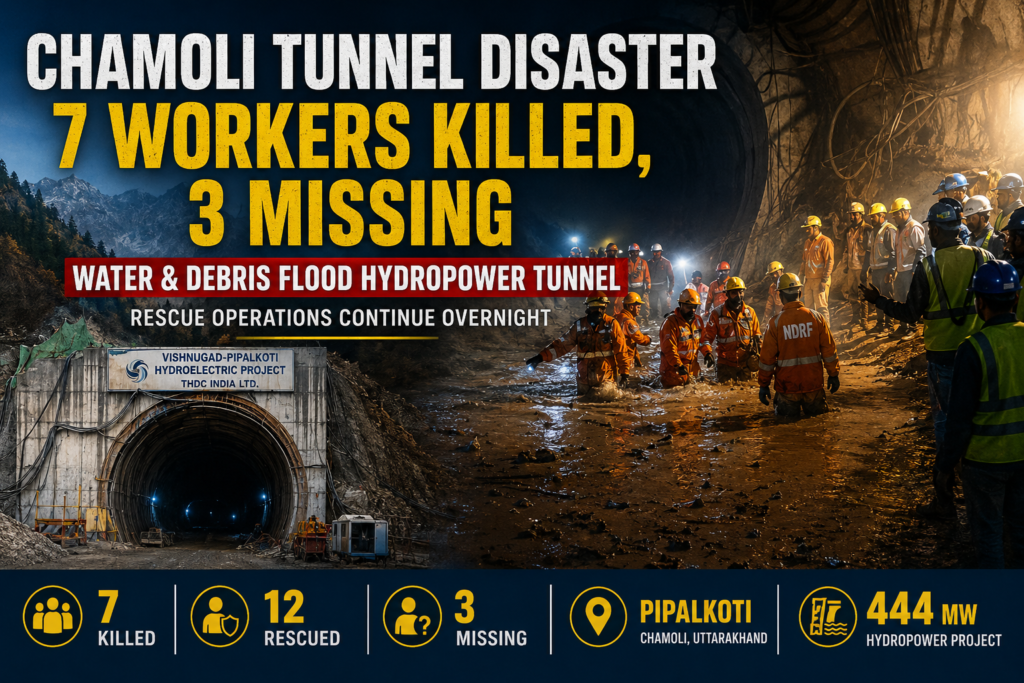
At least seven workers have been killed and three remain missing after a sudden surge of water, mud and debris entered an under-construction hydropower tunnel in Uttarakhand’s Chamoli district, triggering a major overnight rescue operation.
By Pulse India News Desk
The accident occurred at the Vishnugad-Pipalkoti Hydroelectric Project near Pipalkoti, where workers were inside the tunnel when water and debris suddenly rushed into the underground construction area.
Rescue teams continued working through difficult conditions involving standing water, mud, debris and limited visibility as authorities searched for the workers who remained unaccounted for.
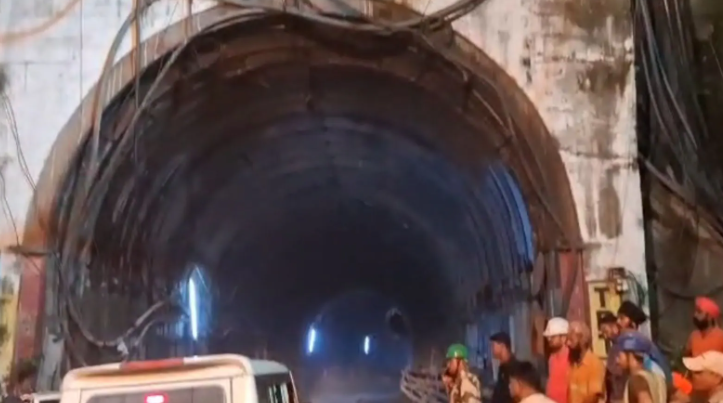
What happened inside the Chamoli tunnel?
The incident occurred on Thursday evening when a large quantity of water and debris suddenly entered the tail race tunnel of the Vishnugad-Pipalkoti Hydroelectric Project.
Workers were carrying out construction activities inside the tunnel when conditions deteriorated rapidly.
The sudden inflow brought water, mud and debris into the underground structure, leaving workers with very little time to react.
Emergency teams were deployed soon after the incident, while operations continued through the night to reach affected sections of the tunnel.
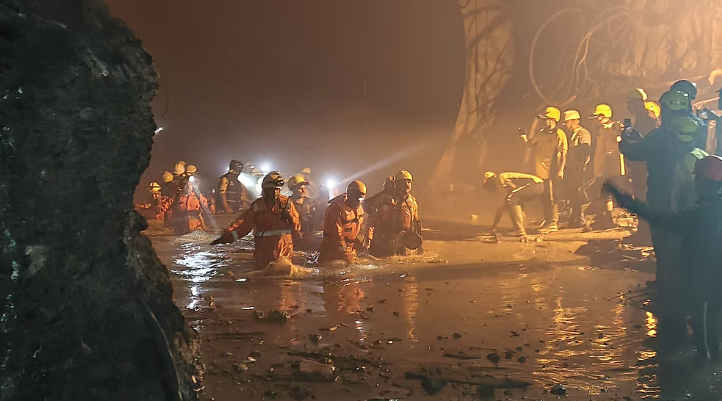
Rescue operation continues in difficult conditions
Teams from disaster-response agencies and local authorities have been deployed at the site as rescuers attempt to move further into affected portions of the tunnel.
The operation has been complicated by water accumulation, mud, debris and difficult underground conditions.
Pumping equipment and other machinery are being used to remove water and improve access for rescue personnel.
Water accumulation: Standing water inside sections of the tunnel is slowing the movement of rescue teams.
Mud and debris: Rescuers must clear material carried into the tunnel before reaching deeper areas.
Limited visibility: Underground conditions make movement and search operations more difficult.
Worker safety: Teams must continue the operation without exposing rescuers to further geological or structural risks.
What is the Vishnugad-Pipalkoti Hydropower Project?
The Vishnugad-Pipalkoti Hydroelectric Project is a major hydropower development being constructed on the Alaknanda River in Chamoli district.
The project is being developed by THDC India Limited and has a planned installed electricity-generation capacity of 444 MW.
It includes extensive underground infrastructure required to carry water to and from the generating units.
Why is the Chamoli tunnel accident significant?
The accident occurred in one of India’s most environmentally and geologically sensitive regions.
The Himalayan terrain is characterised by steep slopes, unstable geological formations, landslide risks, seismic activity and complex underground water movement.
Such conditions can make large underground construction projects particularly challenging.
Worker safety under renewed scrutiny
The deaths are likely to bring renewed attention to safety practices at major hydropower construction sites, particularly those involving extensive underground tunnelling.
Investigators are expected to examine whether adequate systems were in place to monitor groundwater movement, geological instability and other conditions that could create risks for workers.
Emergency evacuation procedures, communication systems and access routes inside the tunnel could also become part of the investigation.
Uttarakhand’s history of tunnel and hydropower disasters
The latest accident comes against the backdrop of previous major infrastructure emergencies in Uttarakhand.
2023 Silkyara tunnel collapse
In November 2023, 41 workers were trapped for 17 days inside the Silkyara-Barkot road tunnel in Uttarkashi after part of the tunnel collapsed.
All 41 workers were eventually rescued following a prolonged multi-agency operation.
2021 Chamoli disaster
Chamoli district was also devastated in February 2021 when a massive flash flood travelled through the Rishiganga-Dhauliganga river system and struck hydropower infrastructure.
The disaster caused extensive destruction and resulted in significant loss of life.
What investigators will need to determine
Once rescue operations are completed, attention is expected to shift towards establishing exactly why water and debris entered the active construction tunnel.
- What triggered the sudden inflow of water and debris?
- Were geological warning signs present before the incident?
- Did monitoring equipment detect abnormal groundwater or pressure conditions?
- Were workers given adequate warning?
- Did the tunnel’s drainage systems operate as designed?
- Were emergency evacuation procedures properly implemented?
The answers could determine whether additional safety requirements are introduced not only at the Vishnugad-Pipalkoti project but also at other hydropower and tunnel construction sites across the Himalayan region.
What’s next?
1. Search for the missing workers
The immediate priority remains locating the workers who are still reported missing.
2. Clear water and debris
Rescue teams will continue pumping water and removing debris to gain access to deeper sections of the tunnel.
3. Technical investigation
Authorities are expected to inspect the surrounding geology, tunnel structure, drainage systems and construction procedures to determine the cause of the accident.
4. Review of safety procedures
Worker evacuation systems, emergency response procedures and geological monitoring practices could come under detailed review.
5. Wider implications for Himalayan projects
Depending on the findings, the accident could lead to broader scrutiny of safety standards at tunnels, hydropower projects and other major infrastructure developments being constructed across Uttarakhand.
The Chamoli tunnel tragedy has claimed at least seven lives while rescue teams continue searching for workers who remain missing inside the Vishnugad-Pipalkoti Hydroelectric Project.
The immediate focus remains on rescue and recovery, but the accident is also likely to trigger a detailed examination of worker protection, geological monitoring and emergency preparedness at large underground infrastructure projects.
For Uttarakhand, the disaster once again highlights the difficult balance between infrastructure development and managing the exceptional geological risks of the Himalayan region.
Rescue and recovery operations are continuing at the Vishnugad-Pipalkoti Hydroelectric Project in Chamoli district. Casualty and missing-person figures may change as authorities release further information.