World | Russia–Ukraine War
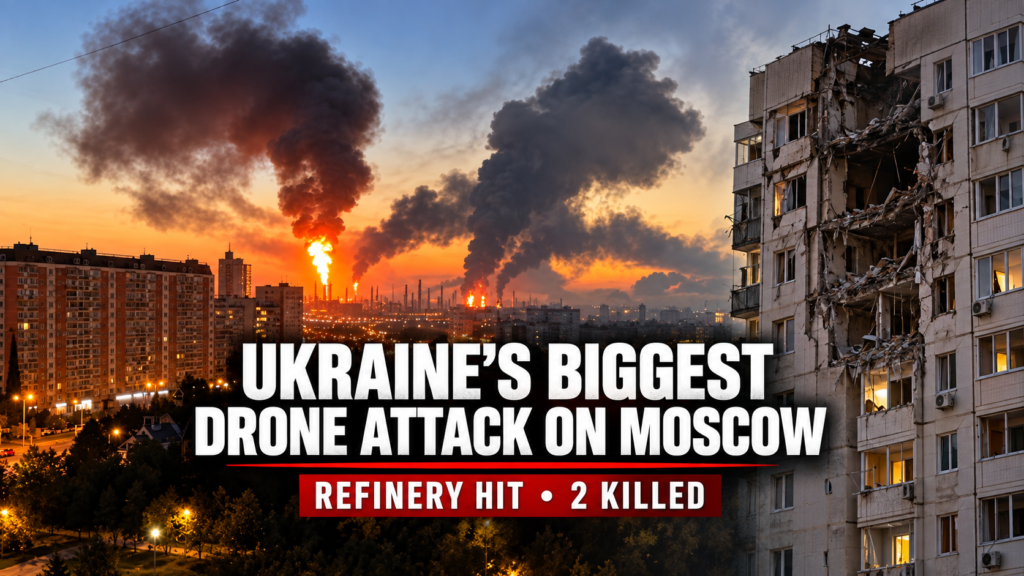
Ukraine has carried out the largest reported drone attack on Moscow since the war began, striking during the final day of Russia’s parliamentary election and extending its campaign against the country’s energy infrastructure deep inside Russian territory.
Russian authorities said two people were killed in the Moscow region and part of the capital’s oil refinery was damaged. Several drones reached the refinery grounds, while another struck an apartment building. Ukraine had not formally commented on the specific attacks at the time of publication.
What happened in Moscow and the surrounding region
Moscow Mayor Sergei Sobyanin described the operation as an unprecedented attack and said Russian air defences had repelled most of it. The numbers are official Russian claims made during an active conflict and could not be independently confirmed.
Reuters witnesses reported hearing explosions and seeing smoke rising from the Moscow refinery. The plant has been attacked previously and processed 11.6 million tonnes of crude oil in 2024, producing 2.9 million tonnes of petrol and 3.2 million tonnes of diesel, according to the latest cited operating data.
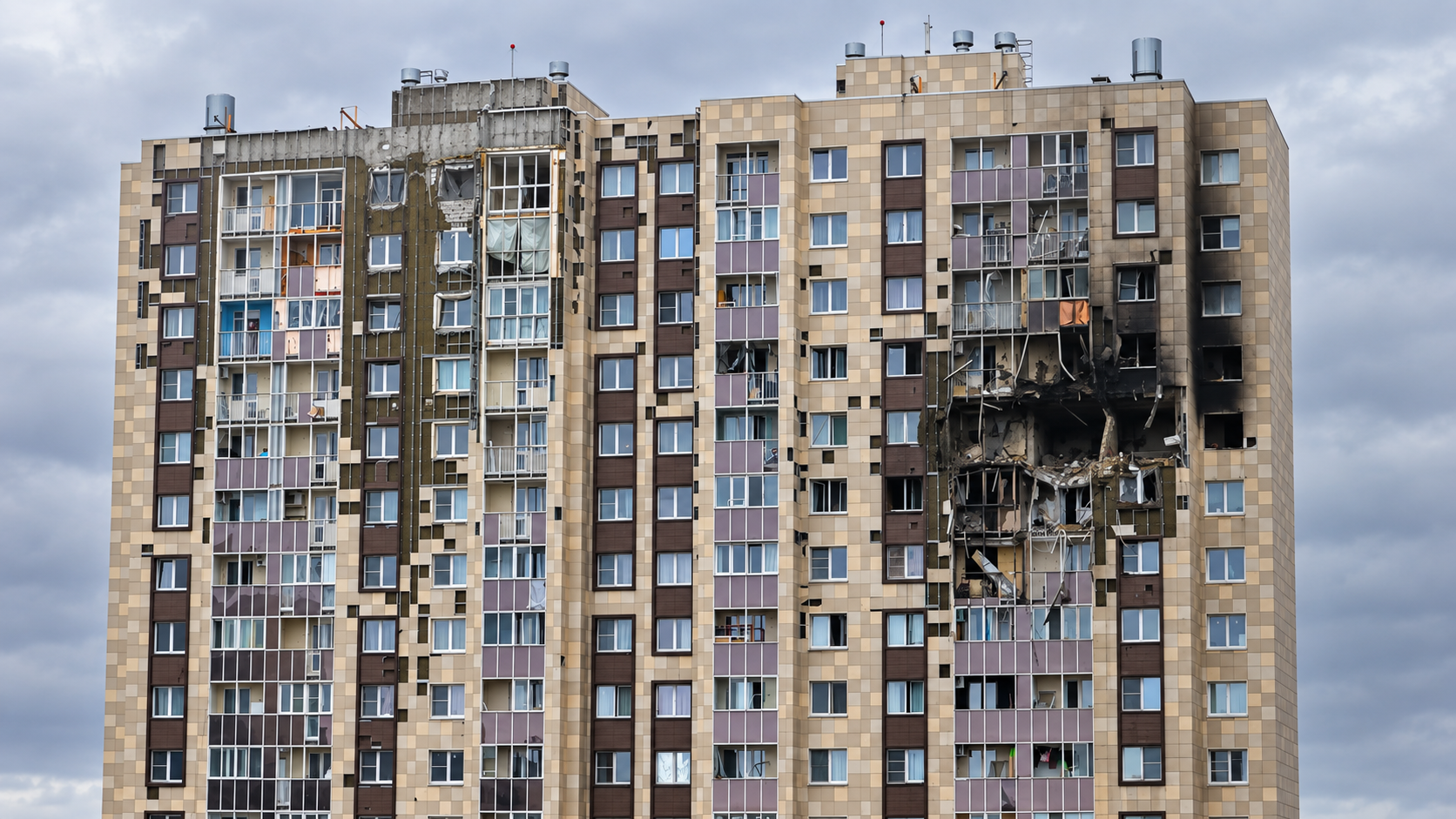
In Sofyino, south of Moscow, a drone strike damaged an apartment block and killed a resident. Elsewhere in the region, another person was reported dead. Authorities evacuated hundreds of residents from a high-rise in Ramenskoye after damage was reported.
Two further deaths were reported in the Russian-controlled part of Ukraine’s Kherson region, including an election official. Those casualties were separate from the two deaths recorded in the Moscow region.
Attack coincides with Russia’s parliamentary election
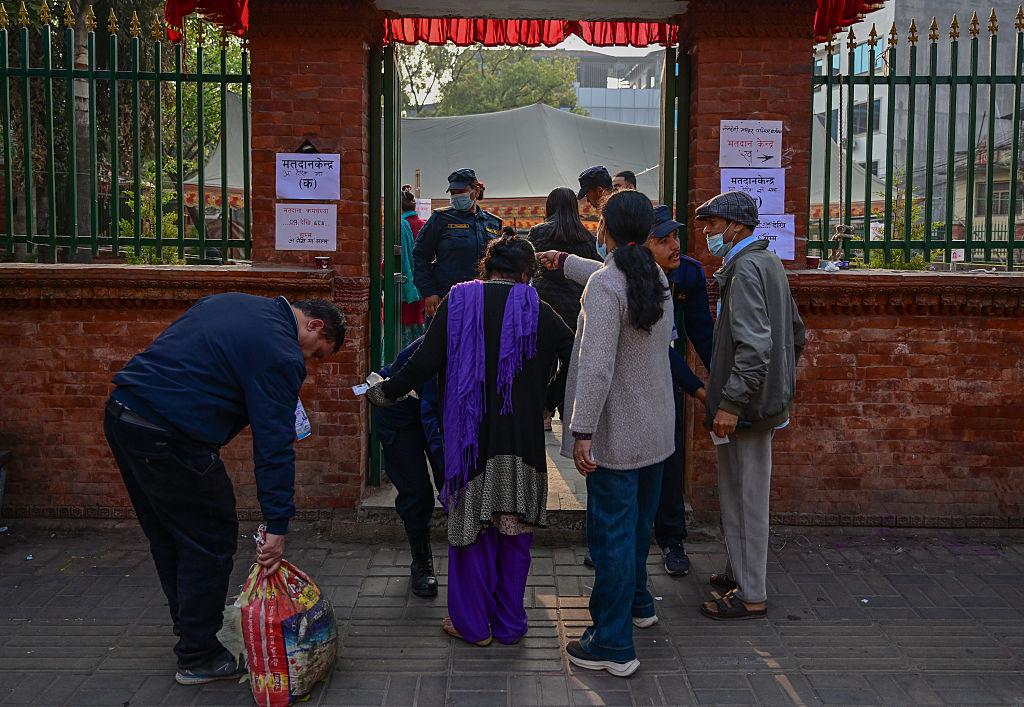
The assault came on the final day of Russia’s first State Duma election since the full-scale invasion of Ukraine in February 2022. President Vladimir Putin had presented the vote as a demonstration of public support for the military campaign, while the ruling United Russia party was expected to retain its dominance.
Sobyanin alleged that the drone operation was intended to disrupt voting. Ukraine had not publicly confirmed that political objective. Most prominent anti-war candidates were barred from standing, and the election also took place in Russian-controlled areas of Ukraine, which Kyiv rejects as illegitimate.
Why Ukraine is targeting Russian oil infrastructure
Ukraine has increasingly attacked refineries, fuel depots and other energy assets that it says finance or supply Russia’s war effort. The strategy is designed to reduce fuel availability, disrupt military logistics and impose economic costs far from the front line.
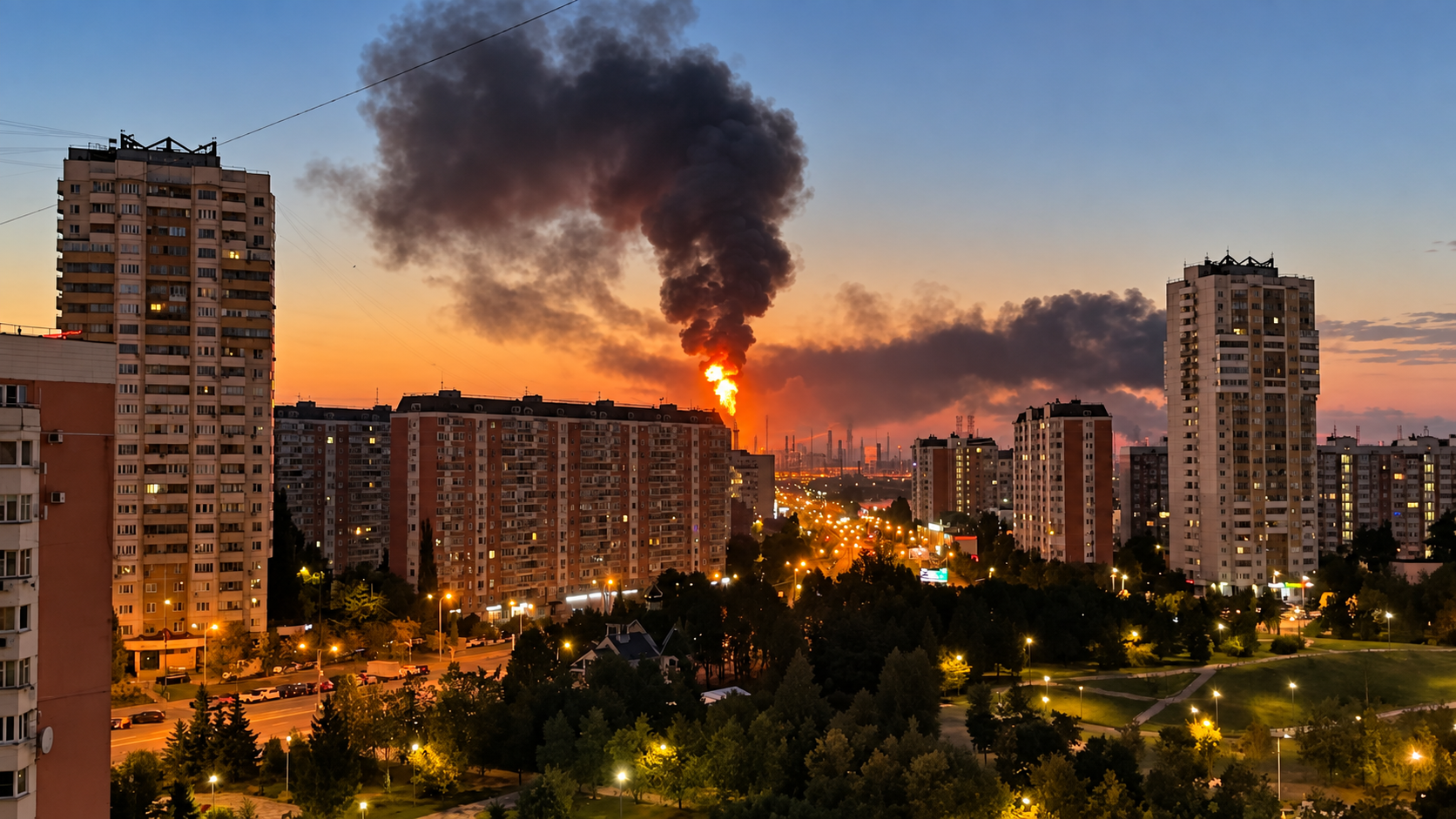
Repeated strikes have already removed a significant share of Russian refining capacity from service at different times, contributing to shortages, higher fuel prices and queues in several regions. The Moscow refinery is strategically important because it supplies the capital and produces substantial volumes of petrol and diesel.
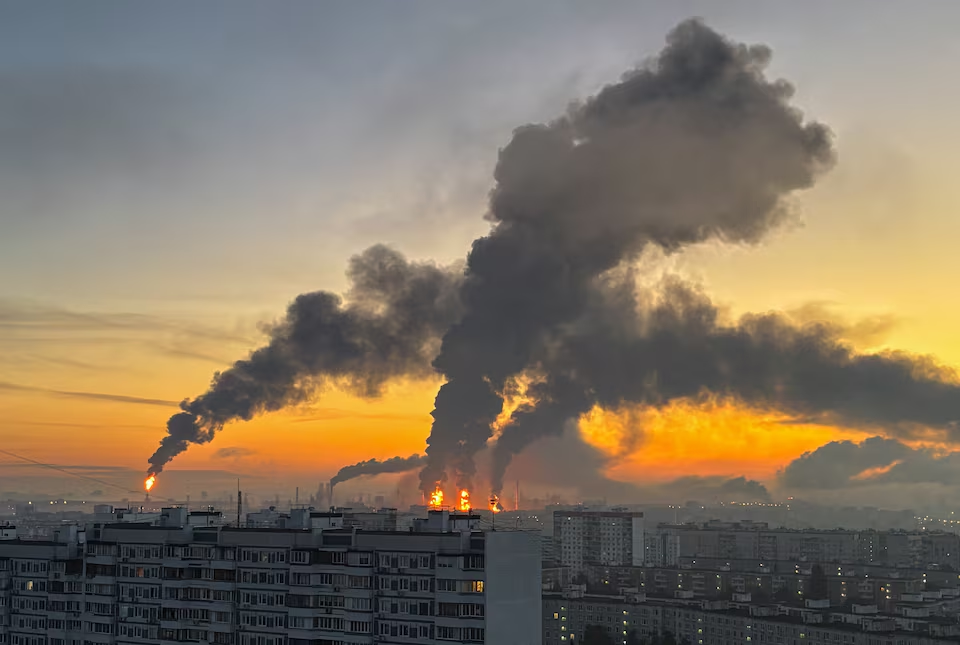
The scale of Sunday’s operation also demonstrates an expanding Ukrainian capacity to coordinate long-range attacks and challenge air defences around one of Russia’s most protected cities. Yet the damage to homes and civilian deaths shows the human danger when large drone formations are launched over populated areas, whether through direct impacts, malfunction or falling debris.
Could Russia retaliate with a larger attack on Ukraine?
A forceful Russian response in the coming days is a serious risk, but it is not certain and should not be reported as a confirmed plan. Moscow has repeatedly described major strikes as retaliation for Ukrainian operations, even as its broader air campaign follows its own military timetable.
Ukraine is already under sustained pressure from Russian missile and drone attacks on homes, energy facilities, transport networks and industrial sites. A new wave could further strain limited air-defence interceptors, repair crews and the power system as colder weather approaches.
Ukraine’s economic and infrastructure dilemma
The concern that Ukraine should prioritise basic necessities is understandable. Years of war have damaged power generation, homes, hospitals, transport links and employment, leaving the government heavily dependent on foreign financial and military support.
However, defence spending and civilian relief are not always directly interchangeable. Some drones are domestically produced for military purposes, while much of Ukraine’s budget support is externally financed and earmarked for salaries, pensions, repairs and public services. Stopping long-range operations would therefore not automatically move the same money into food, electricity or housing.
The real policy question is whether the military value of each strike outweighs the financial cost, the risk to civilians, the prospect of retaliation and the resources needed to protect Ukraine’s own population. Targeting a refinery linked to fuel supply can have a clearer strategic purpose than symbolic attacks, but civilian harm and politically timed mass raids can weaken diplomatic support and expose Ukrainians to greater danger.
What to watch next
- Russian retaliation: whether Moscow launches a larger missile-and-drone barrage against Kyiv, energy sites or defence-production facilities.
- Refinery disruption: the extent of damage and whether production at the Moscow plant is reduced.
- Election narrative: how the Kremlin uses the attack to justify tighter security controls or mobilise political support.
- Western reaction: whether Ukraine’s partners publicly support the energy-targeting strategy or raise concerns about escalation and civilian risk.
- Civilian toll: any revision to casualties or damage as emergency teams complete assessments.
The Moscow attack marks a significant expansion in the scale of Ukraine’s deep-strike campaign. It may pressure Russian fuel logistics and demonstrate technological reach, but it also deepens a cycle in which both countries strike infrastructure while civilians face the consequences. The immediate test will be whether the operation produces measurable military gains, or triggers another costly escalation.
Continue Reading