World | Russia–Ukraine War
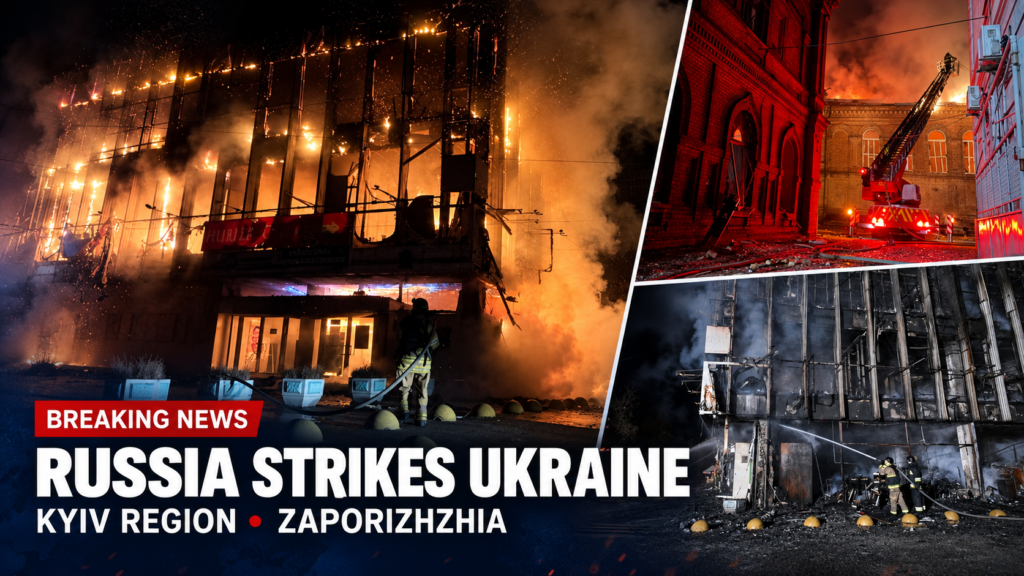
Russian drone attacks have killed a woman and three children in the Kyiv region, while firefighters in southern Ukraine battled a major blaze at Zaporizhzhia National University after a separate strike, deepening fears of a widening aerial escalation.
The deadliest incident occurred when a drone struck a private home in the Kyiv region. Local authorities said a mother and her twin three-year-old children were killed. A girl injured in another district later died in hospital, taking the confirmed toll in the region to four.
- Four civilians, a woman and three children were killed in the Kyiv region.
- A mother and her twin three-year-old children died when their home was hit.
- At least 24 locations were affected in Fastiv district.
- Homes, industrial premises and agricultural facilities were damaged.
- Zaporizhzhia National University suffered a major fire following a reported Russian drone strike.
Family killed in Kyiv region
The attack struck several districts around the Ukrainian capital. The Fastiv district sustained the broadest reported damage, with local authorities recording impacts or falling debris at more than two dozen locations.
Residential properties were among the structures damaged, alongside industrial and agricultural sites. Emergency teams searched affected buildings, extinguished fires and assessed the extent of the destruction.
Separate Russian attacks elsewhere in Ukraine were also fatal. A strike near an apartment building in Sumy killed one person and injured another, while another civilian was reported killed in Kramatorsk in the eastern Donetsk region.
Fire engulfs Zaporizhzhia National University building
In Zaporizhzhia, a Russian drone strike was reported to have set part of the National University complex on fire. Images from the scene show flames moving through a multi-storey structure as firefighters directed water onto the building during the night.
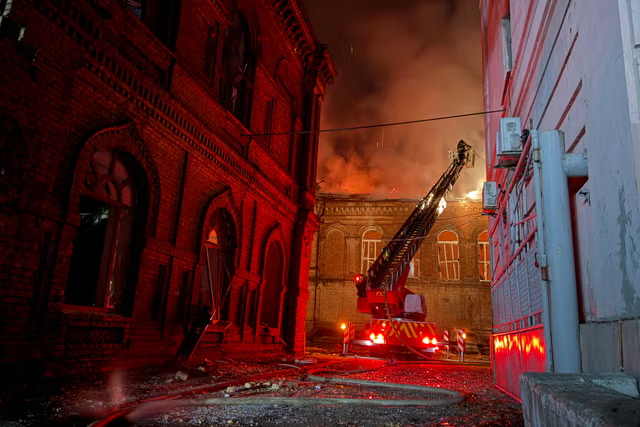
The photographs show extensive damage to exterior walls, windows and internal sections of the building. Smoke continued to rise as emergency crews operated close to unstable and burned structural elements.
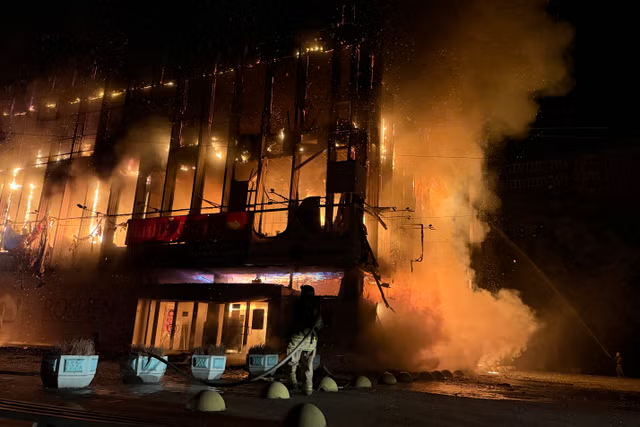
Another view shows fire crews spraying the blackened façade after the main flames were brought under control. Debris surrounded the building, while sections of the exterior appeared burned through and exposed.
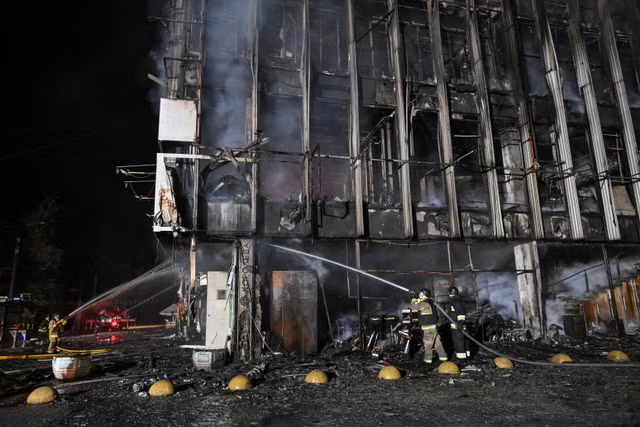
No independently verified casualty figure for the university incident was available at the time of publication. The visible damage nevertheless illustrates how strikes on urban areas can disrupt education and endanger surrounding residential neighbourhoods even when an institution is not operating at full capacity overnight.
Escalation follows unprecedented Moscow attack
The latest Russian attacks came as the conflict entered another intense cycle of long-range strikes. A day earlier, Ukraine carried out the largest reported drone assault on Moscow since the full-scale war began, damaging an oil refinery and residential property and killing civilians in the Moscow region, according to Russian authorities.
Russian officials subsequently said attacks on military targets in Kyiv would be intensified. The timing places the latest violence within a rapidly escalating exchange, although it does not independently prove that every Russian strike was ordered as direct retaliation for the Moscow operation.
Pressure on Ukraine’s civilian infrastructure
Universities, hospitals, power facilities and homes have repeatedly been damaged during the war. Even when a strike does not cause mass casualties, the destruction of educational buildings carries longer-term costs: classes are displaced, laboratories and archives may be lost, and already strained public budgets must absorb reconstruction expenses.
Ukraine also faces the challenge of protecting a wide network of cities with limited air-defence systems. Large and repeated drone attacks can force defenders to choose between using expensive interceptors, relying on electronic warfare or accepting the risk that some aircraft will reach their targets.
What happens next
- Casualty updates: authorities may revise the number of people injured as searches and damage assessments continue.
- University damage: officials are expected to determine whether the affected building can be stabilised and when academic activity can resume.
- Further strikes: Ukraine remains alert for additional Russian drone and missile attacks after Moscow’s warning of intensified operations.
- Diplomatic pressure: renewed attacks are likely to feature in international discussions on air defence, sanctions and possible de-escalation.
The deaths of a mother and three children and the burning of a university building underline the civilian cost of the expanding drone war. As Russia and Ukraine increase their ability to strike deep into each other’s territory, the risk is that retaliation becomes a self-sustaining cycle with civilians and public infrastructure absorbing much of the damage.
Continue Reading