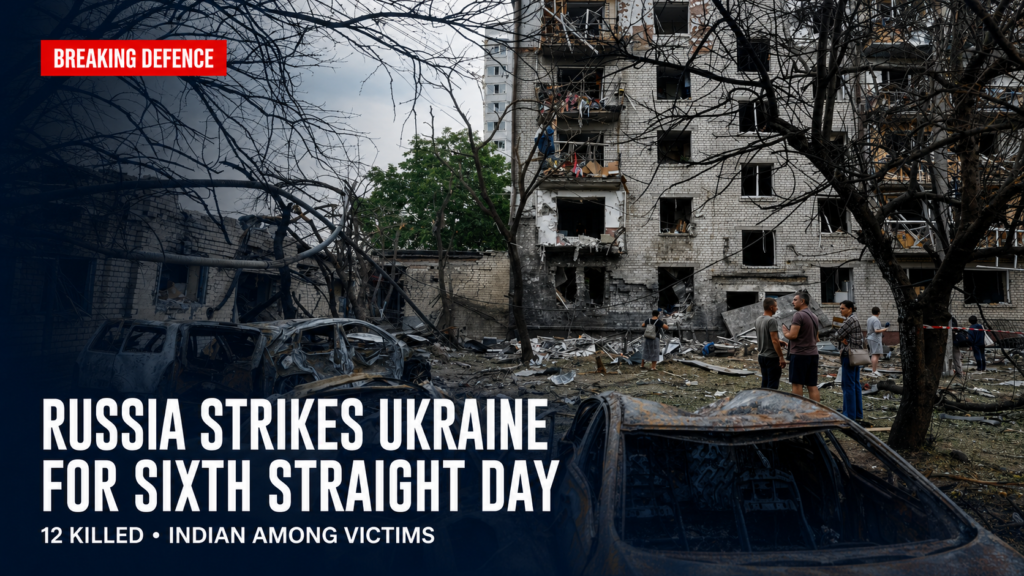
An overnight barrage of 218 drones and decoys, backed by cruise and ballistic missiles, hit Kyiv, Boryspil and Odesa as faster jet-powered UAVs stretched Ukraine’s air-defence network.
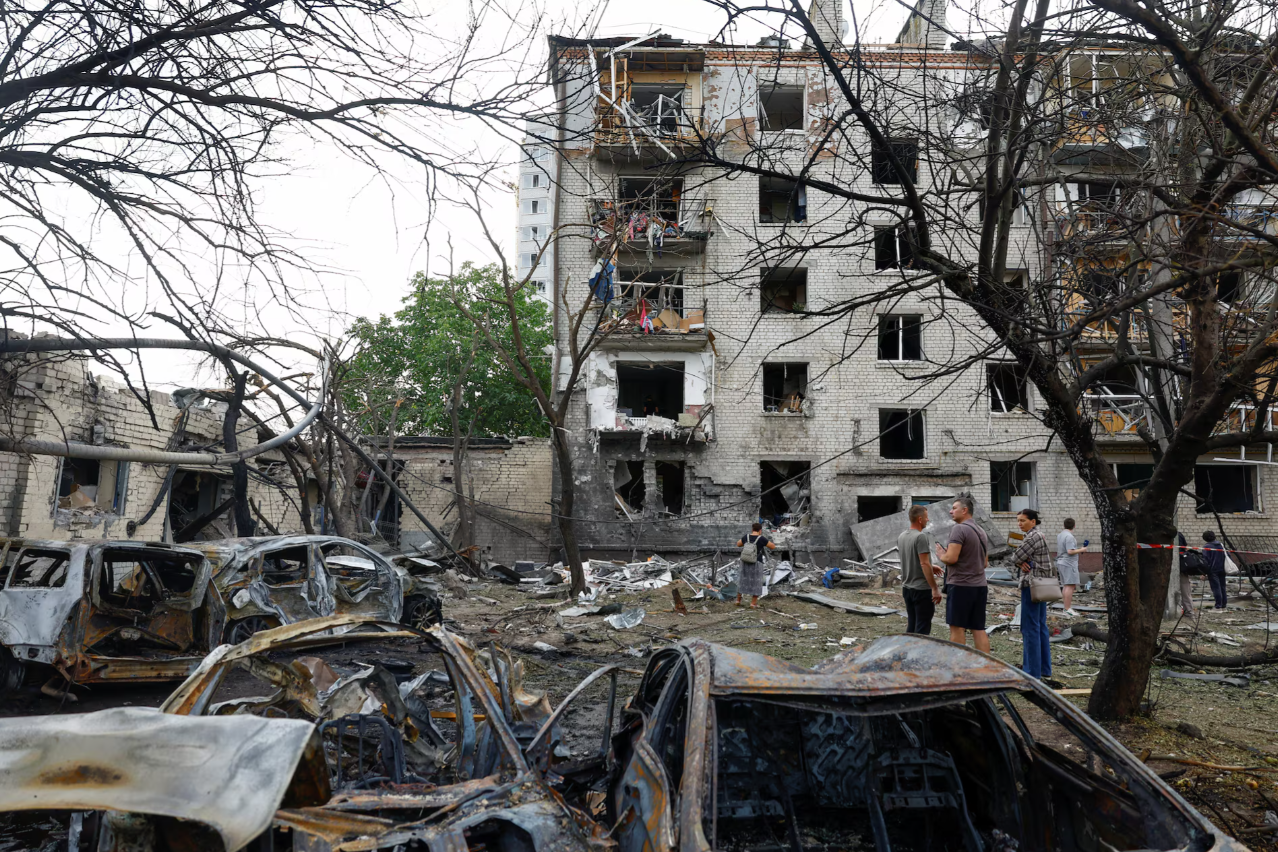
This developing story follows the deadly warehouse explosion at Myla, outside Kyiv, after an earlier Russian drone strike.
Read the Myla investigation →KYIV: Russia launched another complex, large-scale aerial assault on Ukraine from the evening of 31 August into 1 September, killing at least 12 people and injuring more than a dozen others. The strike combined swarms of one-way attack drones and decoys with ballistic, cruise and anti-radiation missiles—forcing Ukrainian defenders to confront threats moving at very different speeds and altitudes at the same time.
The main targets were Kyiv and the surrounding region, including Boryspil, along with port and energy infrastructure in Odesa near Ukraine’s border with Romania. Officials said the dead included railway employees and an Indian citizen whose identity had not been publicly released at the time of publication.
What happened, in one sentence
A more than 12-hour Russian barrage used 218 drones and decoys plus several missile classes to overwhelm and probe Ukraine’s defences, producing deadly impacts in the capital region and damaging a vital export corridor on the Danube.
What happened and when
The attack began at about 6 p.m. on Monday, 31 August, and continued into Tuesday. Ukraine’s Air Force reported 218 unmanned aerial vehicles of various types, including decoys, alongside ballistic and cruise missiles. Ukrainian officials said 199 aerial targets were destroyed or electronically suppressed, while impacts were recorded at 28 locations.
Those figures should not be read as 199 drones physically shot down. Ukraine’s tally combines weapons destroyed in the air with threats diverted or neutralised by electronic warfare, and the overall count included more than drones alone.
The attack begins with waves of drones and decoys, extending air-raid pressure through the night.
Ballistic, cruise and anti-radiation missiles join the drone waves as Kyiv and other regions come under attack.
Rescue teams search damaged buildings in Kyiv and Boryspil while Odesa reports damage to power, port and border infrastructure.
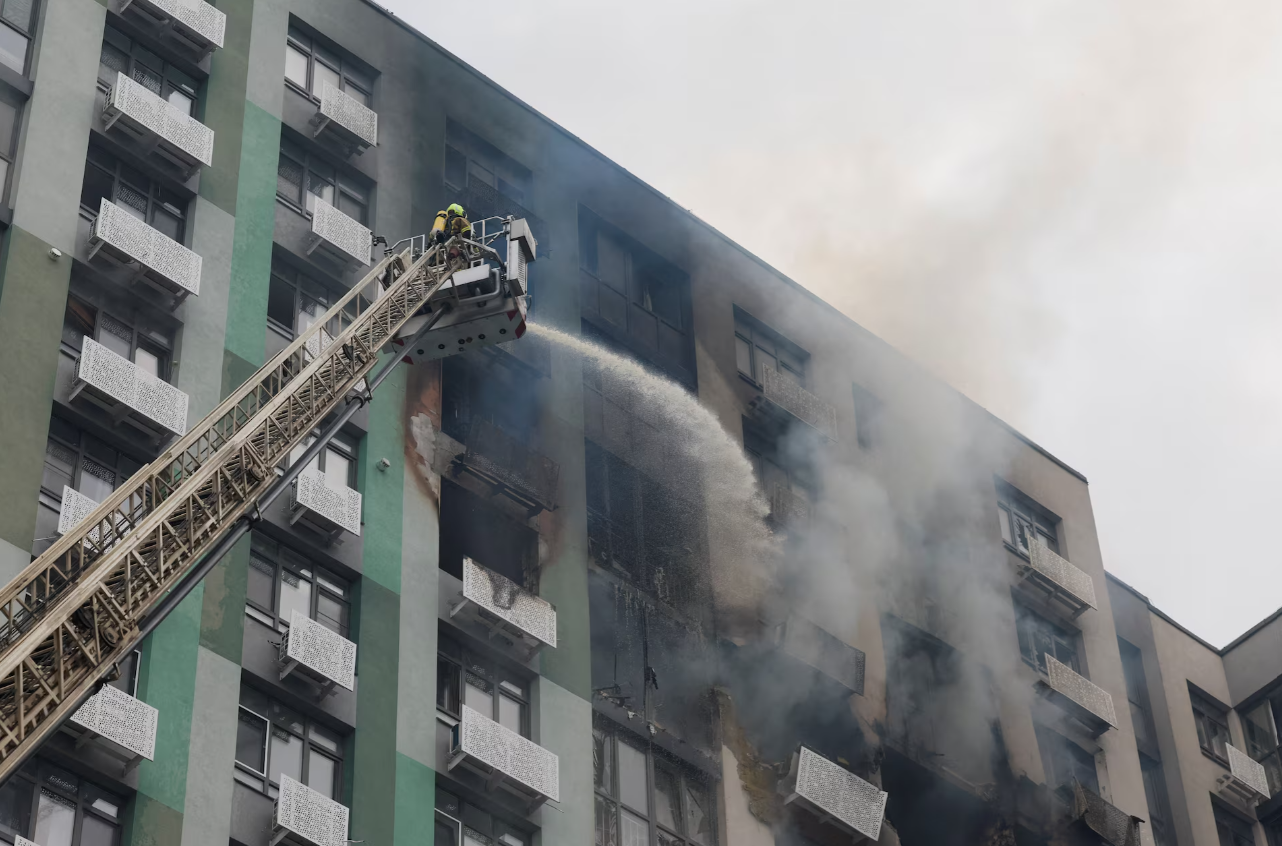
A subsequent drone attack in Kyiv injures three more people and causes a fire in an apartment building.
Kyiv, Boryspil and Odesa: the toll by location
| Location | Human toll | Reported damage |
|---|---|---|
| Kyiv | Eight people killed; six were railway employees. Further injuries were reported in a later daytime strike. | Railway facilities and civilian property were hit; an apartment fire followed a later drone attack. |
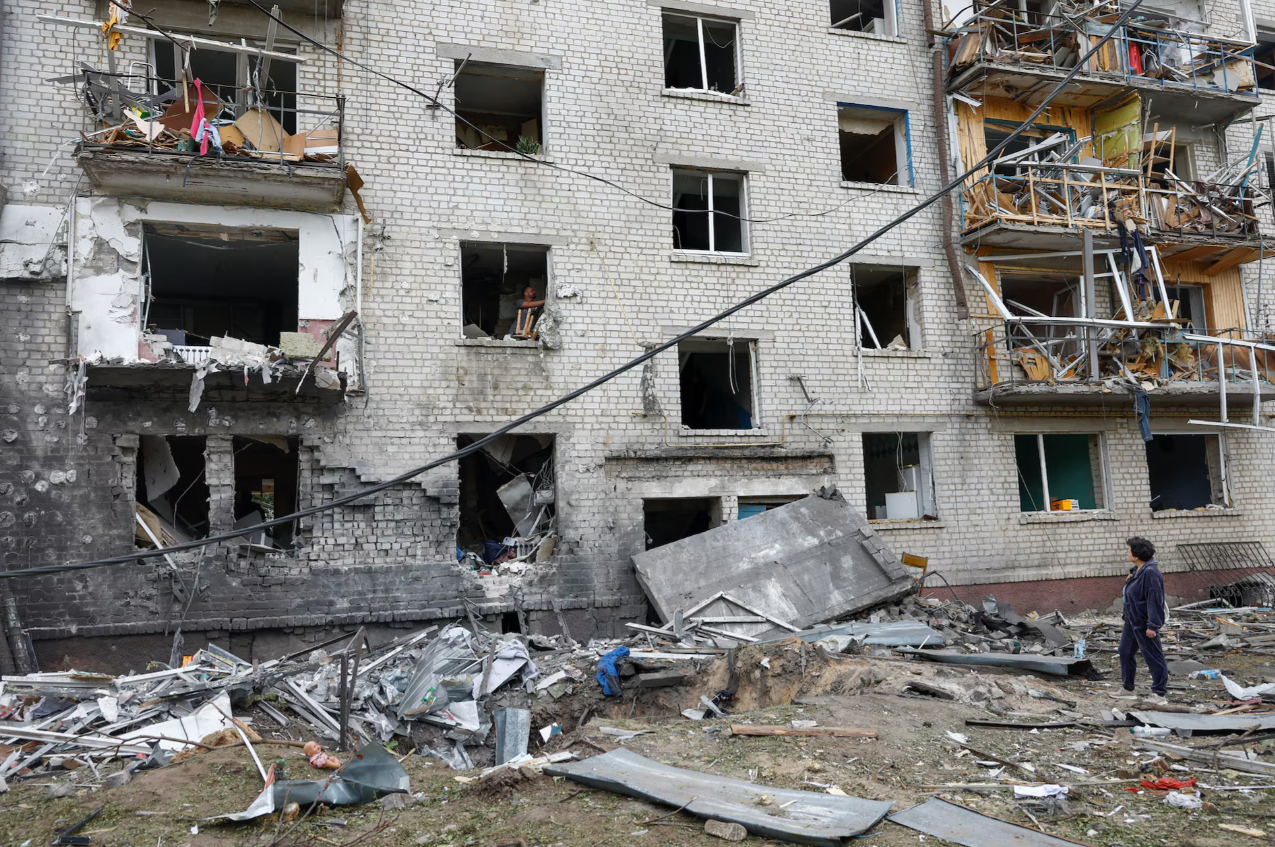
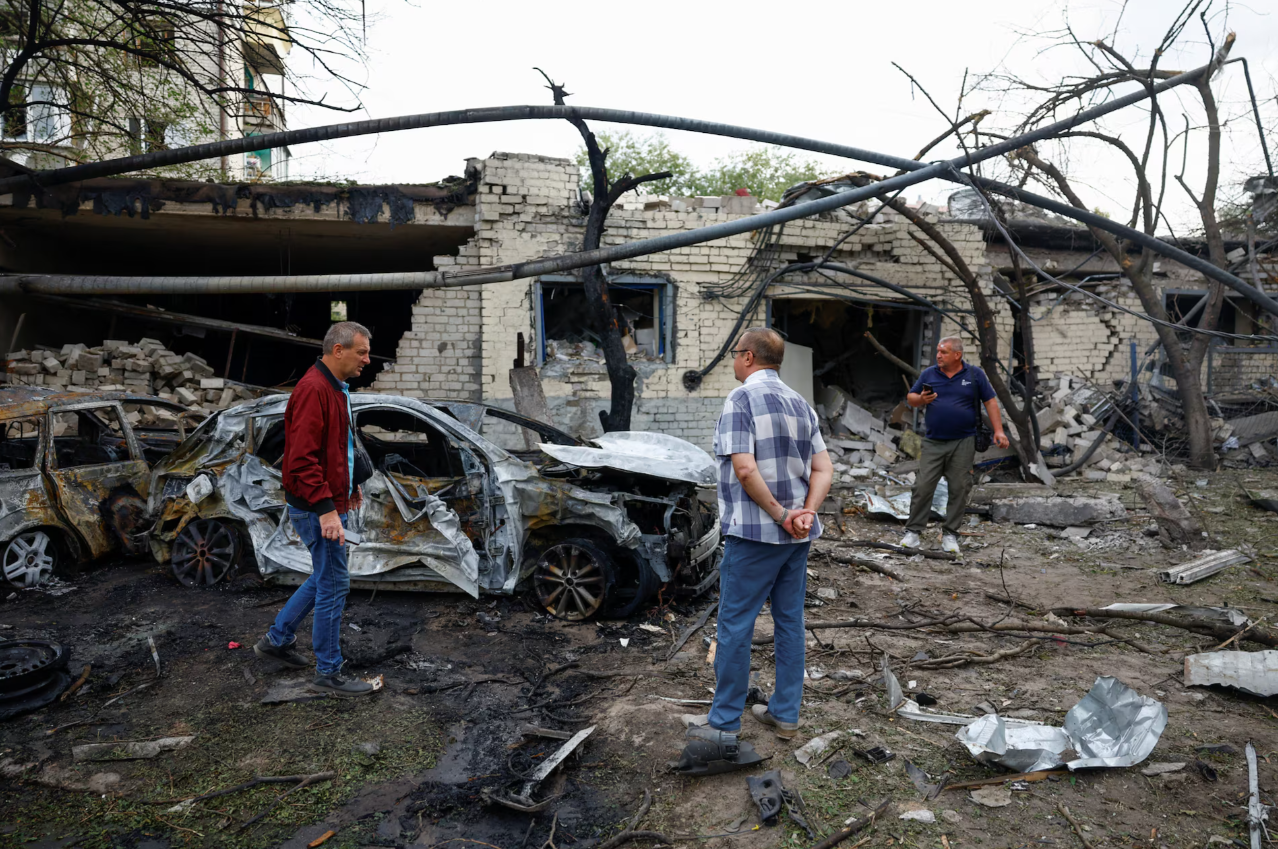
| Boryspil | Four killed, including an Indian citizen; 13 injured. About 50 residents were evacuated. | A five-storey residential building and nearby businesses were damaged. |
| Odesa region | At least one person reported injured; thousands left without electricity. | Port and export facilities, the Orlivka ferry checkpoint and a combined heat-and-power plant were damaged. |
| Other regions | Casualty reporting remained under assessment. | Industrial, warehouse, residential and energy sites were reported damaged across multiple oblasts. |
Indian citizen among the dead
Ukrainian authorities confirmed that an Indian citizen was among the four people killed in Boryspil. No reliable public report had identified the victim by name or provided further personal details when this article was prepared. Pulse India News will not speculate on the victim’s identity.
The death gives the assault an immediate Indian dimension. It also came as Prime Minister Narendra Modi told Russian President Vladimir Putin that the war must end for humanity’s sake. Any confirmation from India’s Ministry of External Affairs or its embassy should be treated as the authoritative source for the victim’s identity and consular arrangements.
Important accuracy note
The official total was 218 drones and decoys, accompanied by missiles. The reported one-third share of jet-powered systems refers to the drone force, not to all 218 objects being identical attack drones.
Why jet-powered drones are harder, but not impossible to stop
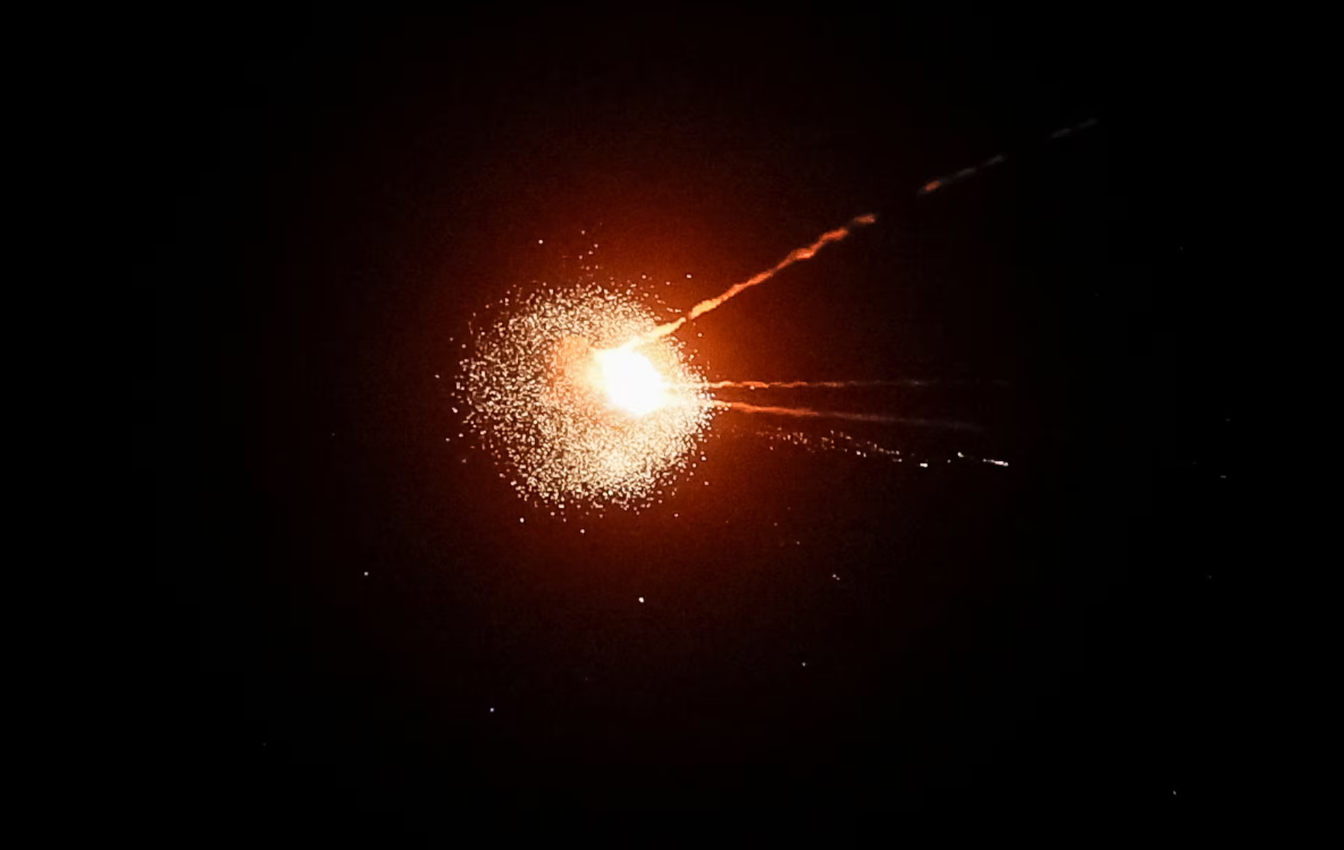
Ukrainian officials said roughly one-third of the drones used in the assault were newer jet-powered variants. Their greater speed compresses the time between detection and impact. It also makes the small, inexpensive interceptor drones Ukraine increasingly uses against slower propeller-driven Shahed-type weapons less dependable.
That does not mean the new systems cannot be intercepted by existing technology. Fighter aircraft, surface-to-air missiles, mobile gun teams and other point-defence systems can still engage them. The problem is economic and operational: a fast target may require a scarcer, more expensive interceptor, while massed waves force defenders to decide which threats receive priority.
Reuters reported that Russia launched more than 2,800 jet-powered drones at Ukraine during August. The increasing volume suggests these weapons are becoming a routine element of Russia’s campaign rather than an occasional experiment.
A mixed strike designed to exhaust the shield
Ukraine reported a broad weapons package that included Iskander-M or KN-23 ballistic missiles, S-400 missiles used in a ground-attack role, Zircon missiles, Kalibr cruise missiles, Kh-31P anti-radiation weapons, Banderol missile-drones and multiple UAV types. Each presents a different defensive problem.
| Threat type | Operational challenge | Why it matters |
|---|---|---|
| Ballistic missiles | High speed and steep terminal flight. | Places heavy demand on Ukraine’s limited high-end interceptors, including Patriot ammunition. |
| Kalibr cruise missiles | Low flight paths and flexible routing. | Can exploit gaps and approach from less predictable directions. |
| Kh-31P anti-radiation missiles | Designed to home on emitting radars. | Pressures operators to move, limit or briefly shut down sensors. |
| Jet-powered UAVs | Faster than conventional propeller drones. | Shortens response time and reduces the advantage of cheap drone-on-drone interception. |
| Decoys | Force identification and tracking. | Consume radar attention and can provoke costly defensive launches. |
Ukraine said it intercepted five ballistic missiles during the attack, evidence that its current defences remain capable. But officials also say stocks of U.S.-made Patriot interceptors are critically low, even after a recent small delivery. Repeated raids can therefore be strategically effective even when most incoming targets are stopped: every defensive launch draws down an arsenal that is difficult and expensive to replace.
Odesa strike brought the war close to NATO’s frontier
In Odesa region, Russian weapons damaged port and export infrastructure and the Orlivka ferry checkpoint on the Danube opposite Romania. Operations at the crossing were temporarily suspended. A combined heat-and-power facility was also hit, and thousands of people lost electricity.
The attack occurred on Ukrainian territory. There was no confirmed report that Romania or another NATO member had been struck. However, the proximity matters: repeated attacks near the alliance’s boundary increase the risk of debris, navigation errors or escalation through miscalculation.
Odesa’s Danube corridor is also economically important. After attacks disrupted Ukraine’s Black Sea ports, smaller ports and overland routes became alternative channels for agricultural and other exports. Damaging those nodes raises transport costs, threatens export revenues and increases pressure on Ukraine’s wartime economy.
Why railway workers and logistics sites are being hit
Six railway employees were among those killed in Kyiv, according to the latest reporting. Ukraine’s rail system carries civilians, military supplies, humanitarian cargo and exports across a country where commercial aviation is largely closed. That dual civilian and logistical role makes railway facilities strategically significant, and makes attacks on them particularly costly to daily life.
Russia said its forces targeted military, energy and weapons-related facilities. Ukrainian officials reported deaths and destruction at residential and civilian sites. As with previous attacks, the full damage picture may change as emergency workers complete searches and investigators identify impact sites.
From Myla to a nationwide pressure campaign
The latest barrage follows the catastrophic blast at a warehouse complex in Myla near Kyiv, where a Russian drone strike was followed by major secondary explosions and a reported death toll of 37. Together, the incidents show how a single successful penetration can have consequences far beyond the drone’s own warhead when fuel, ammunition or other hazardous materials are concentrated at the impact site.
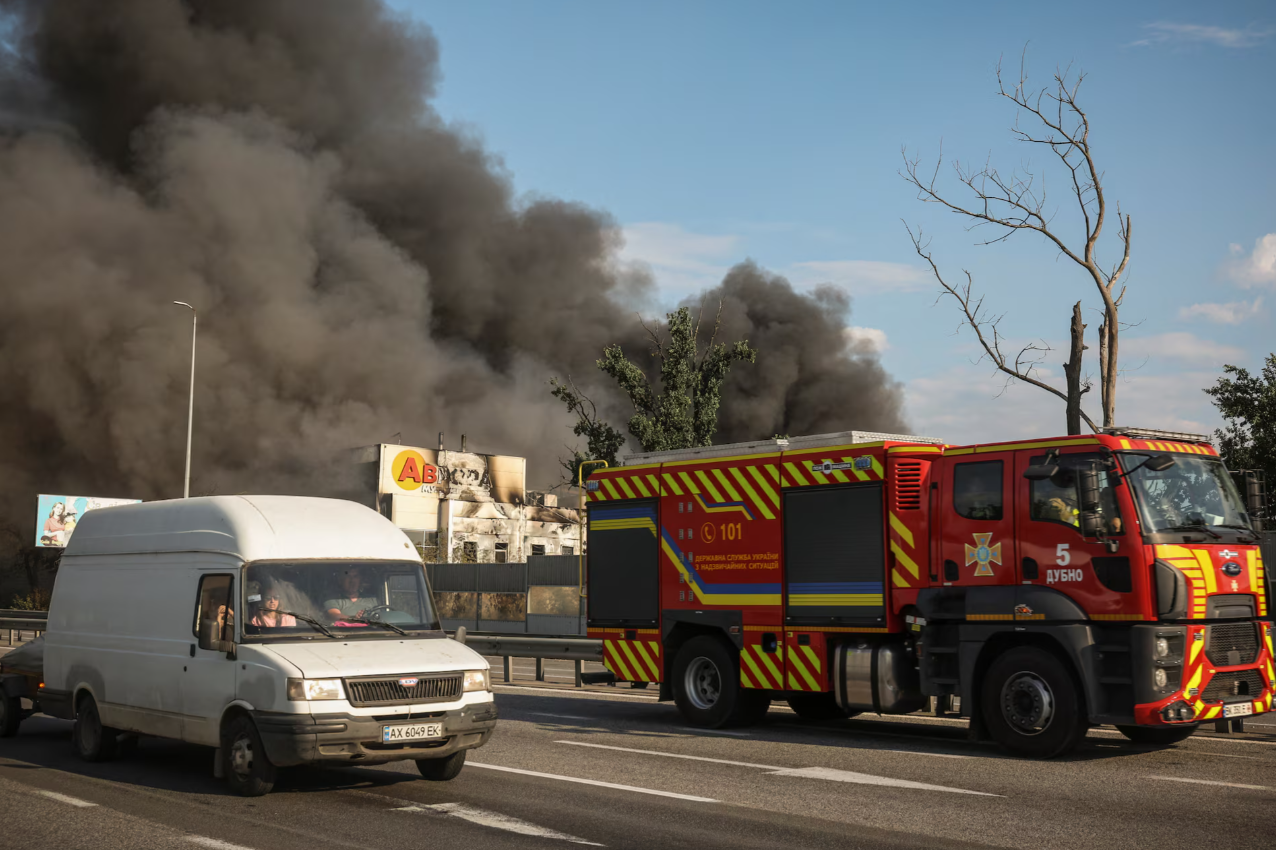
The sixth consecutive day of attacks points to a wider Russian strategy: maintain constant alerts, make air-defence crews operate without respite, expose radar positions, deplete interceptor stocks and repeatedly test whether critical infrastructure has been dispersed or hardened.
What to watch next
The bottom line
Russia’s sixth straight day of major air attacks was not simply another drone raid. It was a layered assault intended to stretch Ukraine’s sensors, crews and ammunition across multiple regions and threat types. The newer jet-powered drones add speed to that pressure, but they are not technologically invulnerable. The decisive question is whether Ukraine can obtain—and economically sustain—enough effective interceptors to meet the growing scale of the campaign.