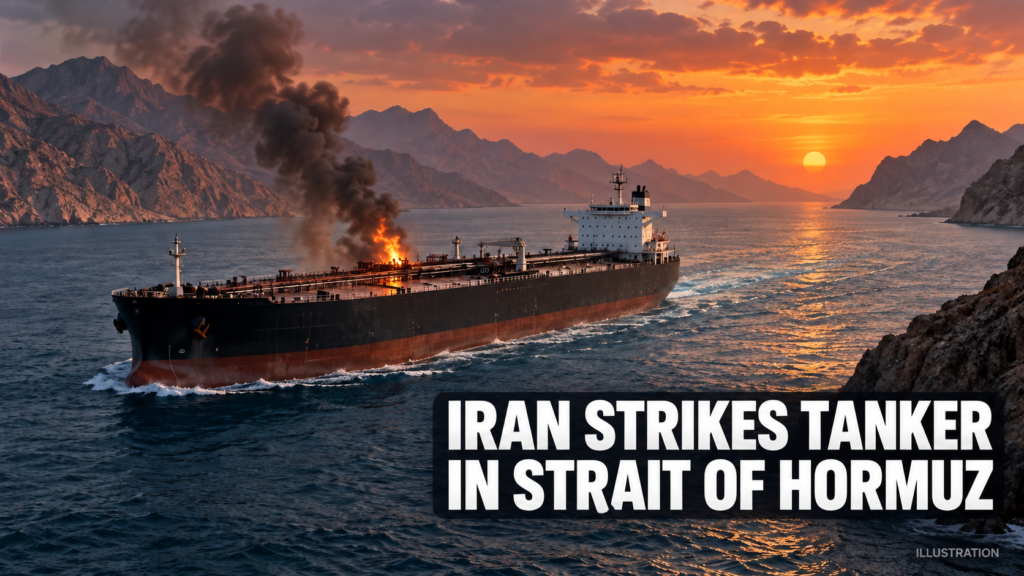
Iran’s Islamic Revolutionary Guard Corps says it struck and detained the Togo-flagged oil tanker Trend in the Strait of Hormuz, alleging that the ship tried to make an unauthorised passage through the waterway. A fire broke out aboard the tanker, adding a fresh threat to shipping through a route central to global energy supplies.
The Iranian account describes the passage as “illegal”, an allegation that should be attributed to Tehran rather than treated as an independently established finding. The ship’s detention, its crew’s status, the extent of any damage and the condition of its cargo require further confirmation.
- Iran’s Revolutionary Guards say they struck and detained the tanker Trend, which sails under Togo’s flag.
- A fire was reported aboard the vessel.
- UK Maritime Trade Operations separately reported a vessel struck by an unidentified projectile in the area. Its initial description alone does not establish the attacker’s identity or conclusively identify that report as referring to Trend.
- Preliminary shipping data show traffic through Hormuz remained far below its recent average before the incident.
What happened to the tanker?
According to the IRGC, the Trend attempted to cross the Strait of Hormuz without the clearance Iran says it requires. Iranian forces struck the ship, which caught fire, and then detained it. The account signals Tehran’s willingness to use force against vessels it considers to be breaching its passage rules, but it does not settle the legal status of the transit.
UK Maritime Trade Operations, which collects reports from vessels in the region, separately described a ship being hit by an unknown projectile and catching fire. The maritime report corroborates a dangerous incident in the waterway, while leaving the weapon and responsibility for that reported strike unspecified. Further updates from the vessel’s operator, flag state and maritime authorities will be important in establishing a complete account.
Why the Strait of Hormuz matters
The narrow passage between Iran and Oman connects Gulf energy exporters with the Arabian Sea. Oil and liquefied natural gas shipped from the Gulf must pass through it unless producers can use limited alternative routes. Disruption can therefore affect deliveries well beyond the immediate conflict zone.
The risk extends beyond a single cargo. A strike and fire can cause other ships to delay transit while owners assess crew safety, insurers reassess cover and charterers calculate higher transport costs. Such effects can persist even when the strait has not been completely closed.
Shipping was already under pressure
Preliminary Kpler data reported by Reuters showed six commodity vessels transited Hormuz on 16 September and four on 17 September, compared with a 10-day average of 16. These are tracked commodity-vessel movements, not a count of every ship or a direct measure of daily oil volumes. Some vessels may also switch off tracking signals, making real-time totals provisional.
The Trend incident could deepen that slowdown if shipowners postpone crossings or demand stronger security assurances. A single incident does not, however, establish that all traffic has stopped or that a lasting closure is in force.
What could it mean for India?
India buys substantial quantities of energy from overseas, so disruption to Gulf shipping can feed into its import bill through higher oil prices, shipping charges and insurance costs. Refineries may have to adjust schedules or source cargoes from other regions if deliveries are delayed. The scale of any impact depends on how long disruption lasts, the availability of alternative supplies and wider oil-market conditions.
For Indian consumers, a tanker incident does not automatically mean an immediate petrol or diesel price increase. Retail pricing depends on several factors, including international crude prices, the rupee, taxes and decisions by fuel retailers. There is no basis at this stage to attach a specific rupee-per-litre increase to the attack.
What to watch next
Key questions are whether the crew is safe, whether the fire has been extinguished, where the vessel is being held, and whether Iran issues new instructions to ships seeking passage. Updated UKMTO notices and independently tracked vessel movements will show whether the incident triggers a broader halt or only further delays.
Reporting note: Details of the strike and detention are attributed to Iran’s Revolutionary Guards. Shipping figures are preliminary and may be revised.