
📅 April 03, 2026 | By Pulse India News Desk
India has taken another major step in strengthening its maritime power with the commissioning of INS Taragiri, an advanced stealth-guided missile frigate, into the Indian Navy. The warship was formally inducted on April 3, 2026, in Visakhapatnam, marking a significant milestone in India’s push towards self-reliant defence manufacturing.
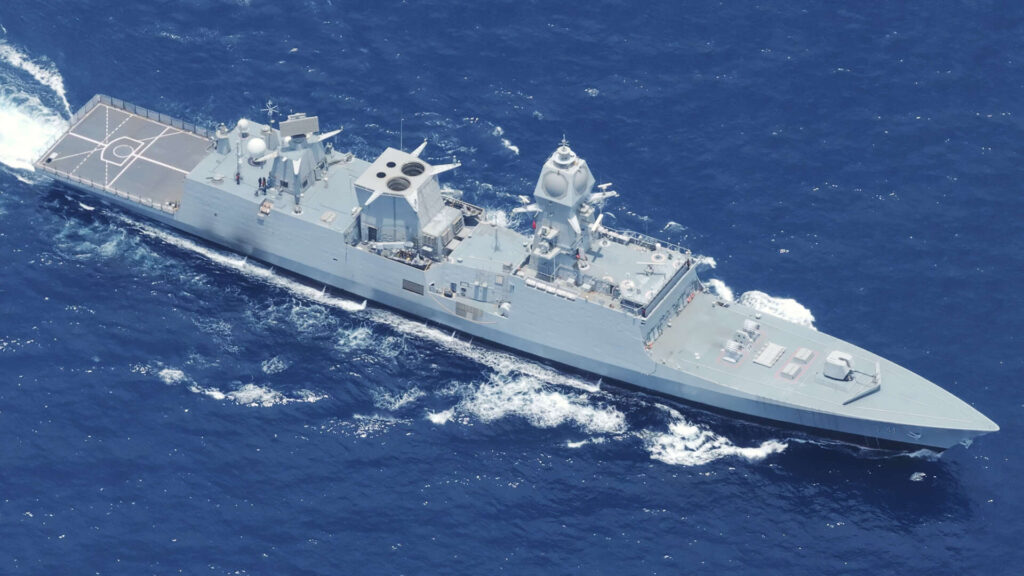
Built under the ambitious Project 17A programme, INS Taragiri is part of a new generation of stealth frigates designed to operate across multiple combat environments — from high-intensity warfare to surveillance and strategic deterrence in the Indian Ocean Region.
A Warship Built for Modern Warfare
Constructed by Mazagon Dock Shipbuilders Limited (MDL), the warship reflects India’s growing capability to design and build complex naval platforms domestically. With a displacement of around 6,670 tonnes and a length of nearly 149 metres, INS Taragiri is among the most sophisticated warships currently in service with the Indian Navy.
What sets this frigate apart is not just its size, but its ability to operate as a multi-role combat platform. It can engage enemy ships, intercept aerial threats, and hunt submarines — all within a single integrated combat system.
Long Reach, High Precision Strike Capability
At the heart of INS Taragiri’s offensive power lies the BrahMos supersonic cruise missile, one of the fastest operational cruise missiles in the world. With a strike range of up to 500 kilometres, the missile enables the warship to neutralise enemy targets — both at sea and on land — well before entering their defensive range.
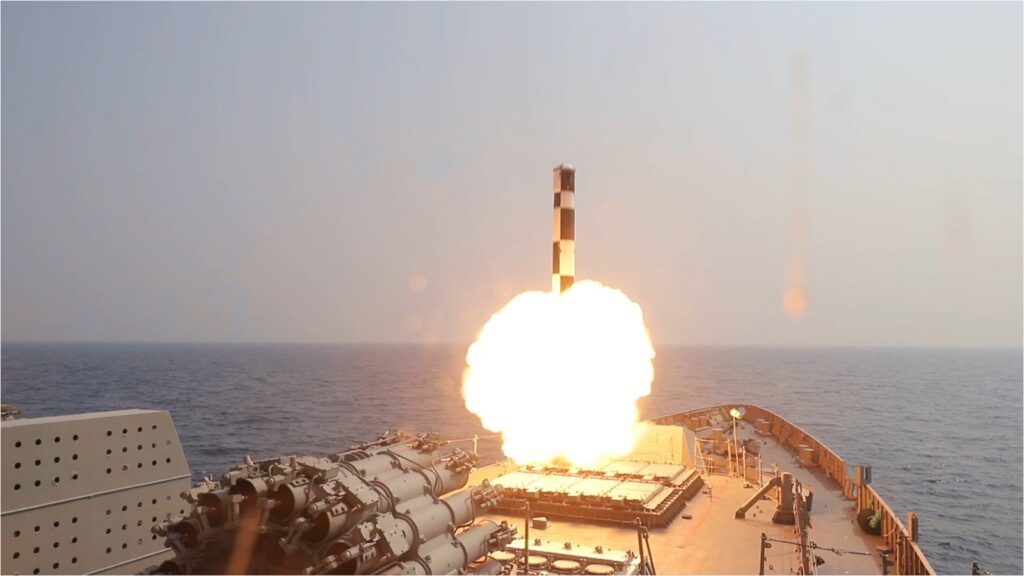
This long-range capability provides India with a critical first-strike advantage, especially in contested waters where early engagement can decide the outcome of a conflict.
Complementing this is the Barak-8 air defence system, capable of intercepting incoming aircraft, drones, and anti-ship missiles at distances of up to 100 kilometres. This layered defence ensures that INS Taragiri can protect not just itself, but also other vessels operating nearby.
Advanced Sensors and Battlefield Awareness
Modern naval warfare depends heavily on detection and tracking — and INS Taragiri is equipped accordingly. The warship features an advanced AESA multi-function radar system (MF-STAR), capable of simultaneously tracking multiple targets across air and sea.
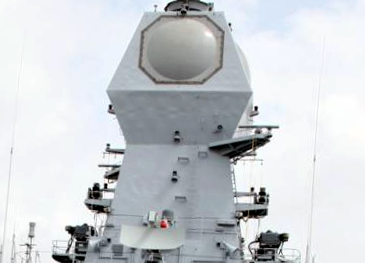
It is further supported by:
- Long-range surveillance radars
- Sonar systems like HUMSA-NG for submarine detection
- Electronic warfare suites that can jam enemy signals and deploy decoys
Together, these systems provide the crew with real-time situational awareness, enabling faster and more accurate decision-making during combat.
Designed to Stay Hidden
One of the defining features of INS Taragiri is its stealth design. The warship has been engineered to reduce its visibility across multiple detection systems – including radar, infrared, and acoustic sensors.
Its angular superstructure helps deflect radar waves, while special materials absorb signals that would otherwise reveal its position. The propulsion system is designed to minimise noise, making it harder for submarines to detect.
In practical terms, this means the warship can operate closer to enemy zones without being easily detected, giving it a decisive tactical edge.
Power and Mobility at Sea
INS Taragiri uses a Combined Diesel or Gas (CODOG) propulsion system. This allows it to switch between fuel-efficient diesel engines for long patrol missions and powerful gas turbines for high-speed combat manoeuvres.
The ship can reach speeds of over 28 knots and is designed for extended deployments across deep-sea regions, supporting India’s vision of a blue-water navy.
Anti-Submarine and Close Combat Capability
Beyond missiles and radar systems, INS Taragiri is equipped for close-range and underwater threats. It carries:
- Varunastra torpedoes for anti-submarine warfare
- RBU-6000 rocket launchers to counter underwater threats
- AK-630 close-in weapon systems (CIWS) for last-line defence against incoming missiles
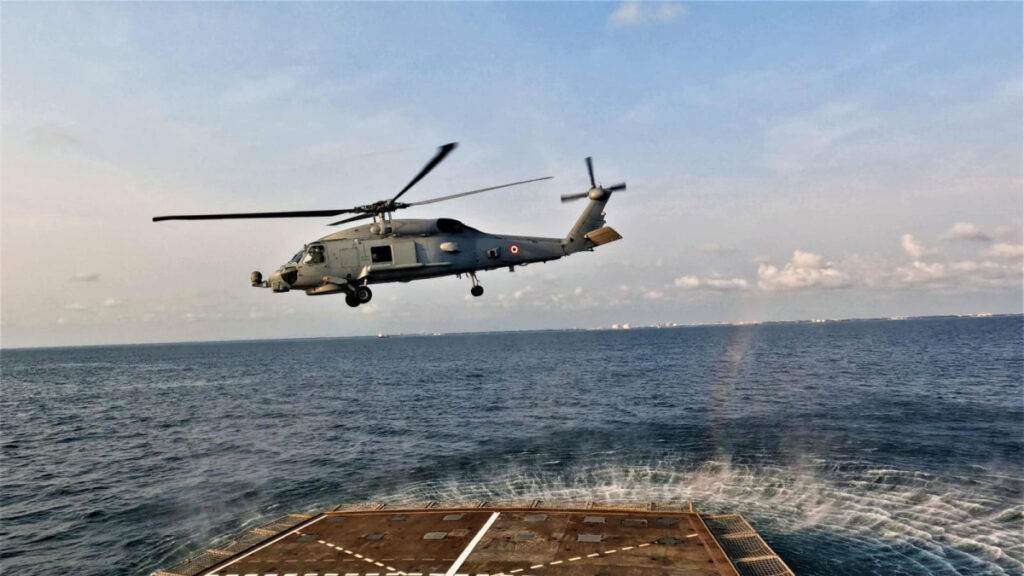
Additionally, the warship can operate two helicopters, such as the HAL Dhruv or Sea King, significantly extending its surveillance and strike range.
A Strategic Addition to India’s Naval Fleet
The commissioning of INS Taragiri comes at a time when maritime competition is intensifying in the Indo-Pacific region. With growing strategic activity in the Indian Ocean, the need for advanced, multi-role warships has become more critical than ever.
By combining long-range strike capability, advanced air defence, stealth features, and anti-submarine warfare systems, INS Taragiri enhances India’s ability to:
- Secure vital sea lanes
- Conduct power projection missions
- Respond rapidly to regional threats
Moving Towards Self-Reliance
Perhaps most importantly, INS Taragiri represents India’s progress in indigenous defence manufacturing. A significant portion of its systems and components have been developed within the country, reducing dependence on foreign suppliers.
As India continues to expand its naval fleet with similar next-generation warships, INS Taragiri stands as a symbol of both technological advancement and strategic ambition.
🔍 Quick Summary
INS Taragiri is a next-generation stealth frigate equipped with BrahMos missiles (500 km range), Barak-8 air defence (100 km), advanced AESA radar, and anti-submarine systems, making it one of the most powerful multi-role warships in the Indian Navy.