
📅 May 10, 2026 | By Pulse India News Desk
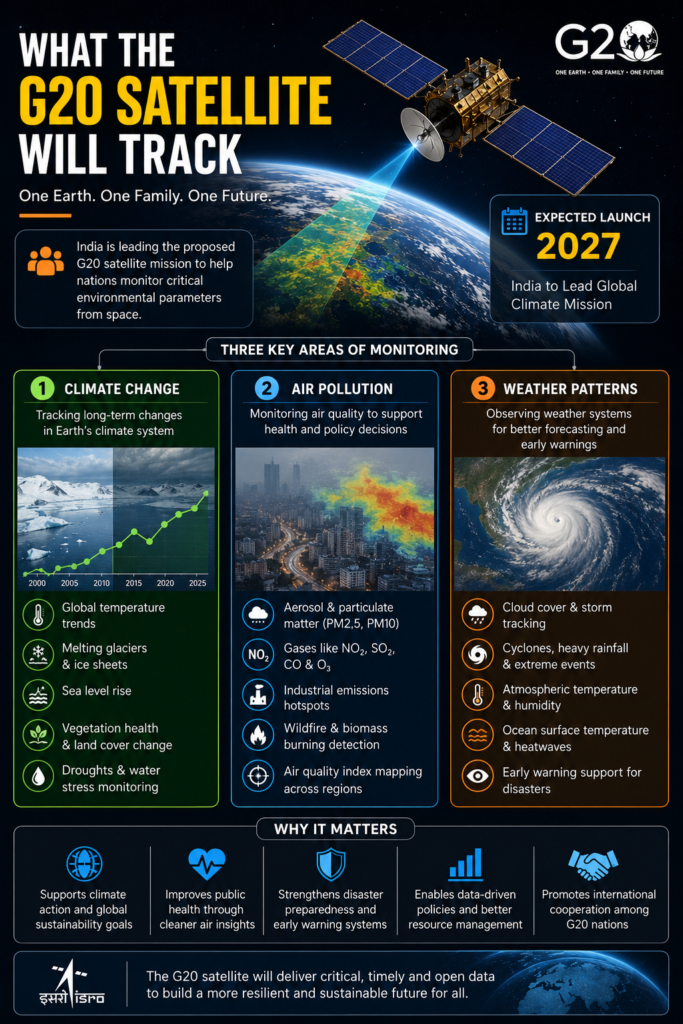
India is planning to launch a dedicated G20 satellite mission by 2027, in what could become one of the country’s most significant international space collaborations in recent years.
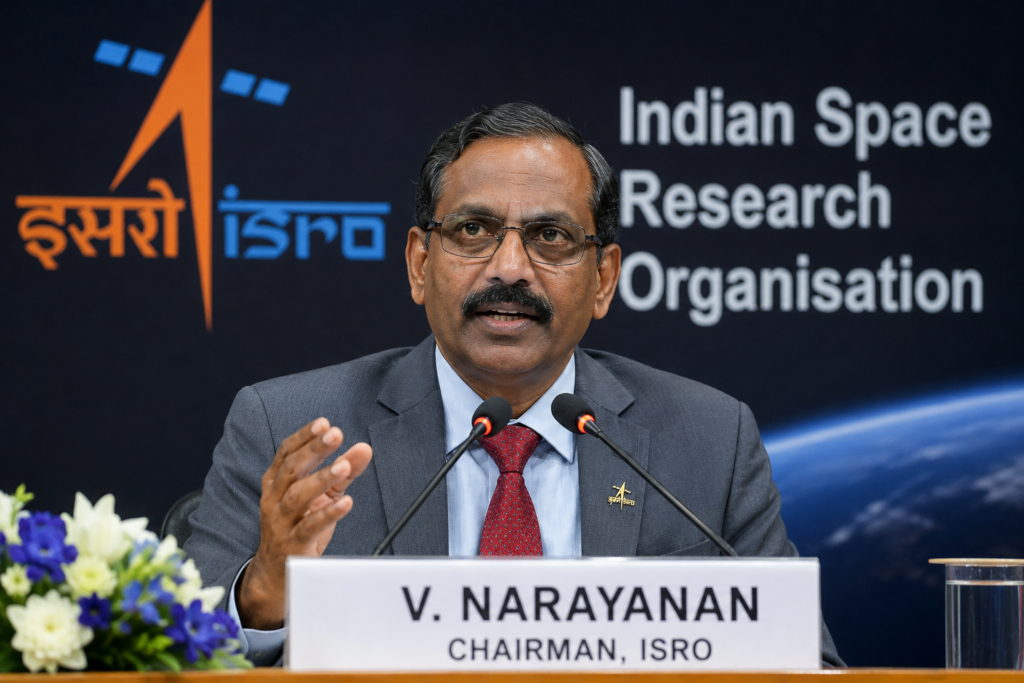
Speaking at an event in Hyderabad, Indian Space Research Organisation (ISRO) Chairman V. Narayanan said the mission would focus on climate observation, pollution tracking and weather monitoring for G20 nations.
The satellite is expected to support environmental research and disaster management efforts at a time when countries across the world are facing rising climate risks, extreme weather events and worsening air pollution.
The project also signals India’s growing ambition to position itself as a global leader in space-based scientific cooperation.
🛰️ What The G20 Satellite Will Do
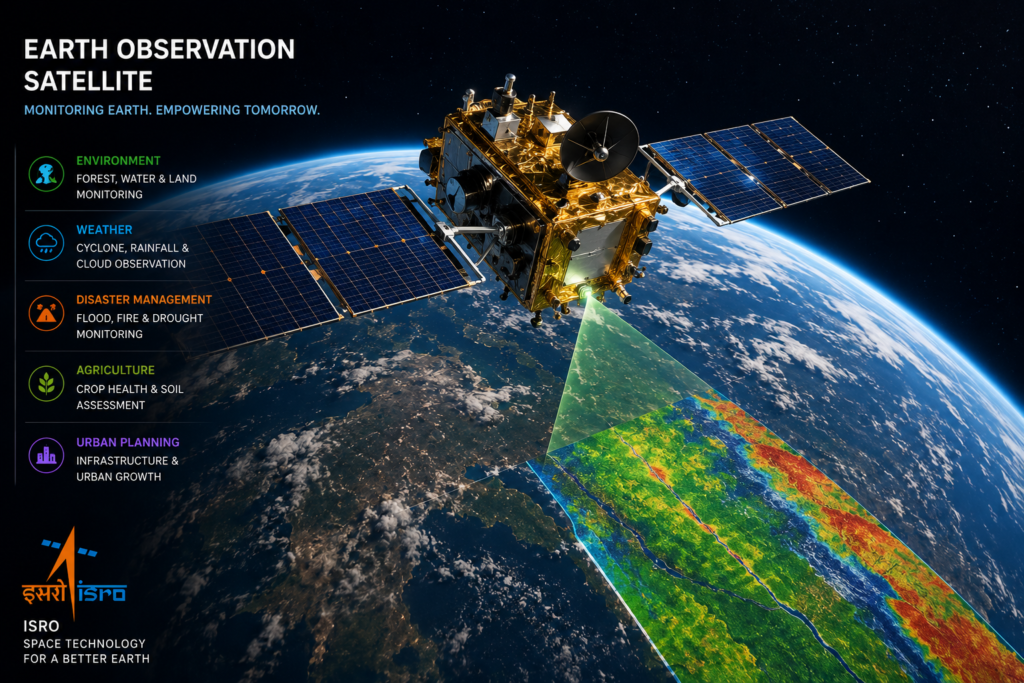
Although ISRO has not yet disclosed the final design or payload configuration, officials say the satellite will primarily focus on Earth observation and environmental monitoring.
The spacecraft is expected to collect data related to:
- Climate change patterns
- Atmospheric pollution
- Cyclones and severe weather systems
- Ocean and land observation
- Agricultural and environmental monitoring
The information gathered could help G20 nations improve forecasting systems, disaster preparedness and long-term climate planning.
📡 Expected Satellite Capabilities
Experts believe the satellite may operate in Low Earth Orbit (LEO), likely at an altitude of around 600–800 km. This would allow regular global coverage with high imaging accuracy.
The mission life is expected to be around five to seven years, depending on final payload design, orbital configuration and operational requirements.
India Taking The Lead
ISRO Chairman V. Narayanan said India would take the lead role in the project, underlining the country’s expanding global profile in the space sector.
Over the past decade, India has steadily increased its capabilities in:
- Earth observation satellites
- Deep-space missions
- Human spaceflight preparation
- Commercial satellite launches
- Navigation and communication systems
India has already launched hundreds of foreign satellites and is increasingly being viewed as a reliable low-cost space partner.
🌦️ Why The Mission Matters
Climate monitoring has become a strategic priority for many governments as extreme weather events continue to intensify globally.
A shared G20 satellite platform could help countries access:
- Faster disaster warning data
- Improved weather forecasting
- Better pollution monitoring
- Long-term climate analysis
- Agricultural and water management insights
Analysts say the mission could strengthen scientific cooperation between major economies while expanding India’s influence in global technology partnerships.
🚀 Part Of ISRO’s Bigger Vision
The proposed G20 satellite mission comes as ISRO pushes ahead with several major programmes, including:
- Gaganyaan human spaceflight mission
- Bharatiya Antariksh Station
- Chandrayaan-4 lunar mission
- Venus and Mars exploration projects
India has also outlined plans to land an Indian astronaut on the Moon by 2040.
The G20 satellite is expected to complement these ambitions by showcasing India’s ability to lead multinational scientific initiatives.
📌 Final Analysis
The proposed G20 satellite mission reflects how India’s space programme is evolving beyond national objectives toward international leadership.
If launched in 2027 as planned, the mission could provide critical environmental data to multiple nations while strengthening India’s role in climate science, disaster management and global space cooperation.
For ISRO, the satellite would represent more than a technological achievement — it would mark another step in India’s emergence as a major space power on the world stage.