📅 April 18 2026 | By Pulse India News Desk
🧾 What Is Delimitation and Why Does It Matter?
Delimitation is the process of redrawing the boundaries of parliamentary and assembly constituencies based on the latest population data.
👉 Each elected representative speaks for a similar number of citizens
👉 Representation remains fair and balanced over time
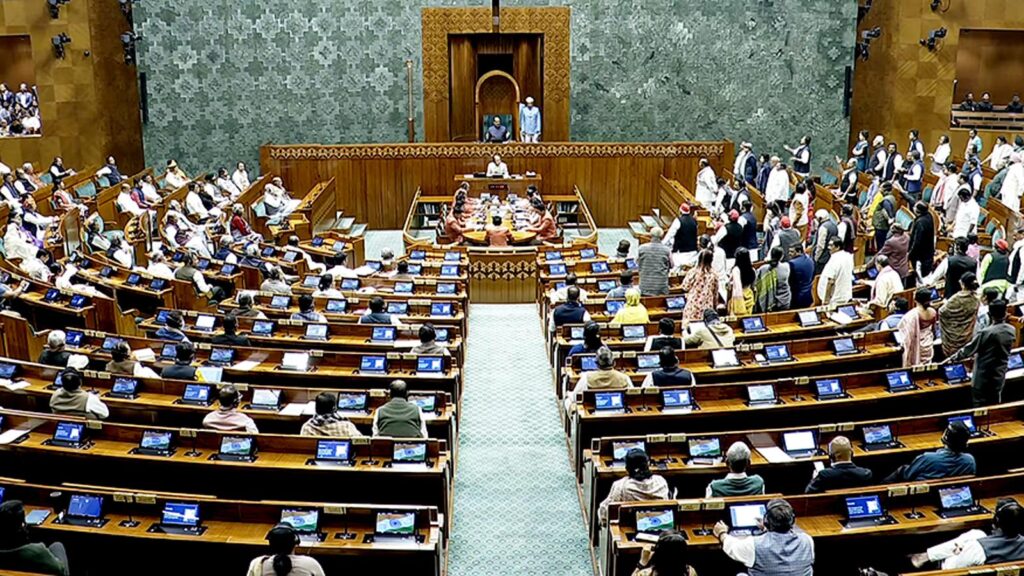
Over decades, population patterns change. Some states grow faster than others, creating an imbalance where MPs from certain regions represent far more people than others.
👉 Delimitation corrects this by aligning political representation with current demographic reality.
📜 Why Is Delimitation Becoming a Big Issue Now?
India has not conducted delimitation based on fresh population data since the 1971 Census.
This freeze was introduced to:
- Encourage population control policies
- Ensure states that reduced population growth were not penalised
However, this freeze is expected to end after the next Census, meaning India is heading toward a major political reset.
👉 That is why delimitation has suddenly become one of the most debated political issues in the country.
⚠️ South vs North Divide: The Core Conflict
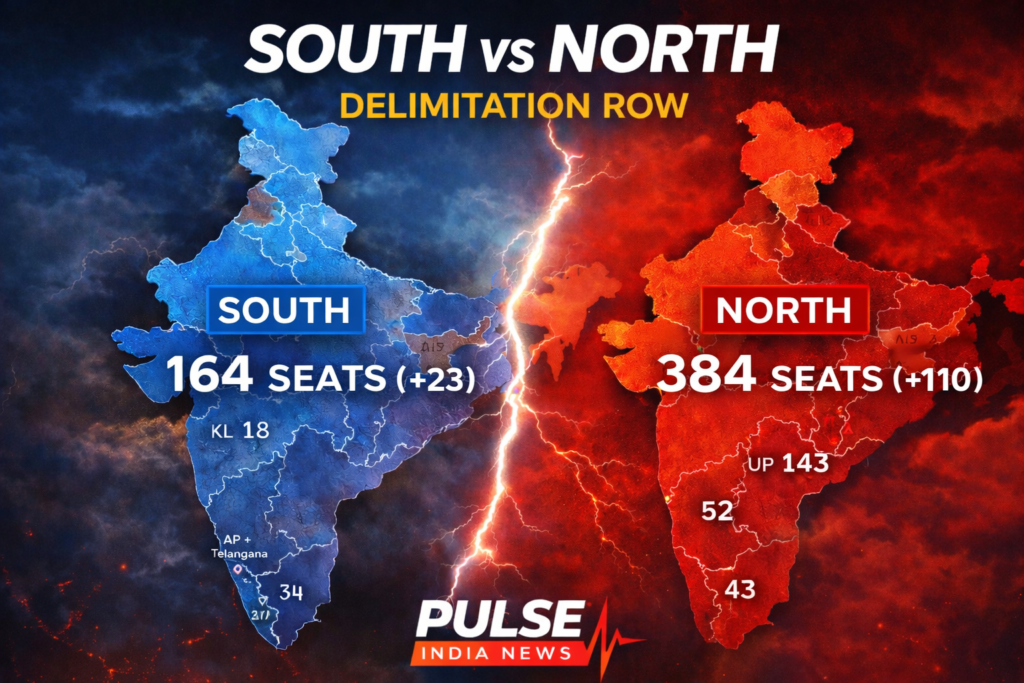
The biggest controversy around delimitation is the regional imbalance it could create.
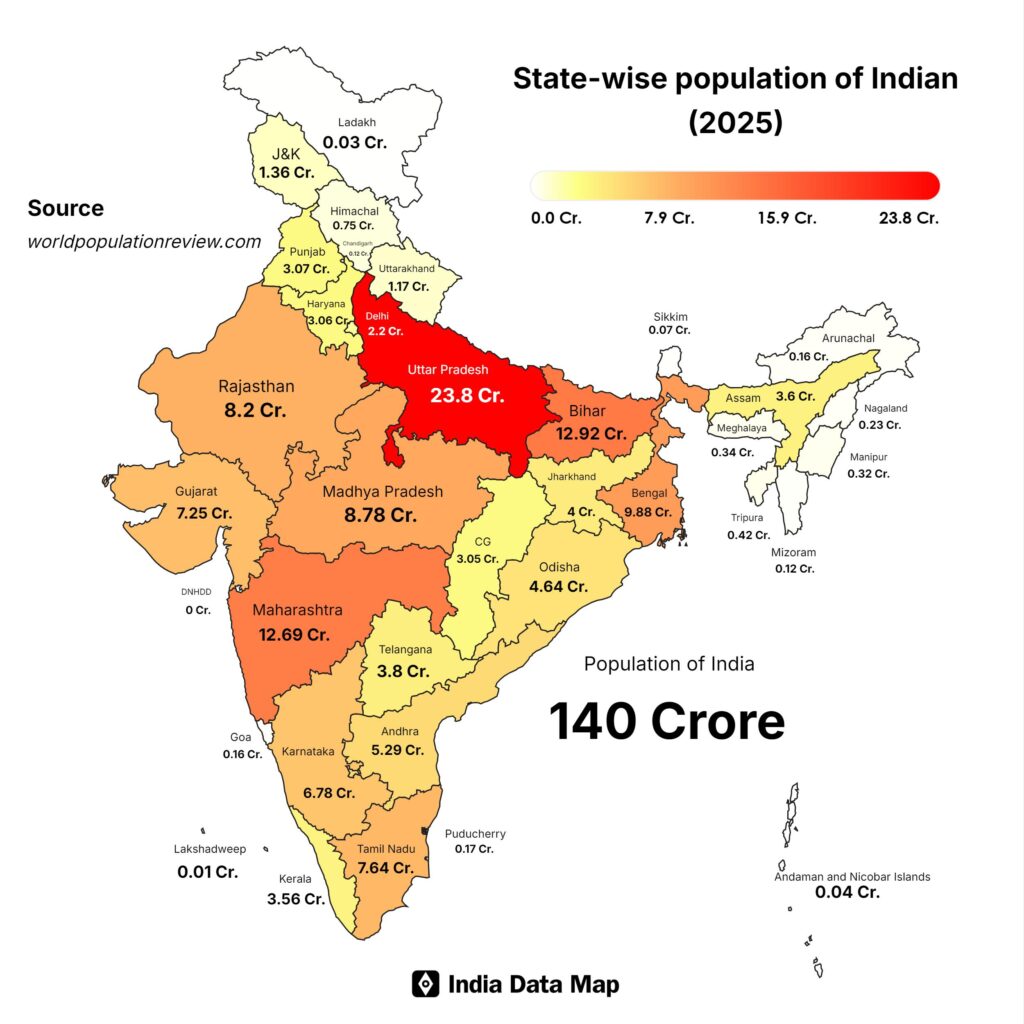
🔴 Northern States (High Population Growth)
States such as Uttar Pradesh, Bihar, and Madhya Pradesh have seen rapid population growth over the decades.
If seats are redistributed based on population:
👉 These states could gain significantly more seats in Lok Sabha
🔵 Southern States (Population Control Success)
States like Tamil Nadu, Kerala, Karnataka, and Andhra Pradesh have successfully controlled population growth through strong social policies.
However, under delimitation:
👉 Their relative share of seats could decline
🧠 The Conflict Explained Simply
👉 Southern states argue:
“We followed national population control policies — why should we lose political power?”
👉 The counter-argument:
“Democracy must reflect present population, not past policies”
🏛️ Ruling Party Stand: Why the Government Supports Delimitation
The ruling government supports delimitation as a necessary constitutional and democratic process.
Its key arguments include:
- Representation must reflect current population realities
- Delimitation ensures fairness in voting power
- Expanding Lok Sabha seats (from 543 to 800+) can reduce the impact of regional loss
👉 The government maintains that no state will lose seats in absolute terms —
but representation will become more proportionate.
However, critics argue that even if seats increase overall, relative power shift between states will still happen
⚖️ Opposition Stand: Why Parties Are Raising Concerns
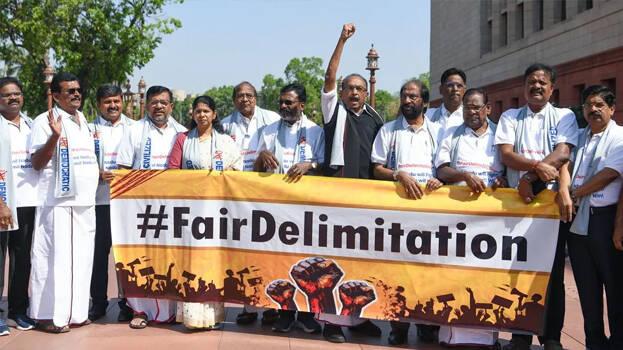
The opposition is not against delimitation itself, but against its potential consequences and current framework.
🔵 Regional Imbalance Concern
Opposition parties, especially from southern states, fear a significant loss of influence in national politics.
If seats are distributed purely based on population:
- Northern states gain more power
- Southern states lose relative voice
👉 This raises concerns about federal balance
🟣 “Punishing Success” Argument
Southern states invested heavily in:
- Education
- Healthcare
- Family planning
👉 This led to lower population growth
Now, delimitation may reduce their representation.
➡️ Opposition leaders argue:
Good governance should not lead to reduced political power
🔴 Demand for Balanced Formula
Opposition is calling for:
- A formula beyond just population
- Protection for all regions
- No drastic shift in political balance
👉 The aim is to prevent dominance by a few large states.
🟠 Political Timing Concerns
Some opposition leaders believe delimitation could be used to:
- Influence future elections
- Reshape political advantage
👉 This has increased distrust around the process.
🔗 Link with Women’s Reservation Bill
The controversy intensified when delimitation was linked to the Women’s Reservation Bill.
Opposition concern:
- It delays women’s reservation
- It combines two major structural reforms at once
👉 This linkage played a key role in the bill’s failure.
⚖️ Delimitation: Pros and Cons Explained
Delimitation is a necessary reform — but one that comes with serious trade-offs.
✅ Pros
✔️ Ensures Equal Representation
Each vote carries similar value, strengthening democracy.
✔️ Reflects Current Population
Aligns Parliament with modern demographic realities.
✔️ Improves Democratic Legitimacy
People feel fairly represented, boosting trust in the system.
✔️ Opportunity to Expand Lok Sabha
More MPs can improve governance and representation.
❌ Cons
❌ North vs South Power Shift
Could increase dominance of high-population states.
❌ Punishes Population Control
States that controlled growth may lose influence.
❌ Risk of Political Imbalance
May indirectly affect electoral outcomes and governance priorities.
❌ Federal Tensions
Could deepen regional divides and political friction.
❌ Complex Implementation
Combining delimitation with other reforms adds uncertainty.
📊 What Could Change After Delimitation?
If implemented:
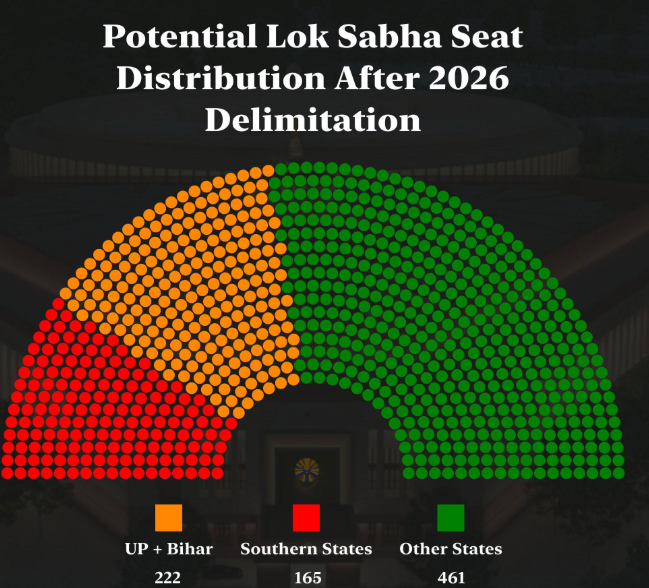
- Lok Sabha seats may increase from 543 to 800+
- High-population states gain more MPs
- Southern states lose relative bargaining power
👉 This could reshape:
- Election outcomes
- Policy focus
- National political balance for decades
🎤 Why This Debate Is So Sensitive
Delimitation is not just an administrative exercise —
👉 it sits at the intersection of:
- Democracy (equal representation)
- Federalism (state balance)
- Politics (power distribution)
👉 Any change will have long-term consequences
🔥 Final Analysis
Delimitation is not just about redrawing boundaries, it is about who holds power in India’s future
- ✔️ One side supports population-based fairness
- ❌ The other fears loss of regional voice
The real challenge is finding a balanced formula that ensures:
✔️ Equal representation
✔️ Federal fairness
Until that happens, delimitation will remain one of India’s most politically sensitive and debated reforms.