📅 May 12, 2026 | By Pulse India News Desk
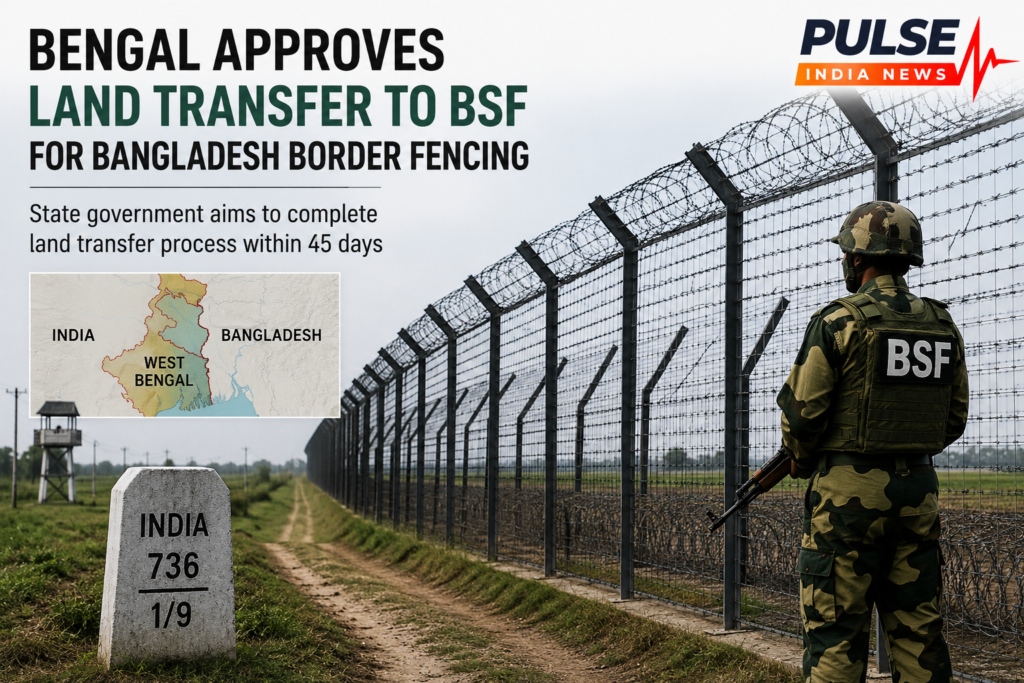
In a major move aimed at strengthening border security, the West Bengal government has approved the transfer of land to the Border Security Force (BSF) for fencing along the India–Bangladesh border. The decision was taken during the newly formed government’s first Cabinet meeting, signaling a strong push toward accelerating pending border infrastructure projects.
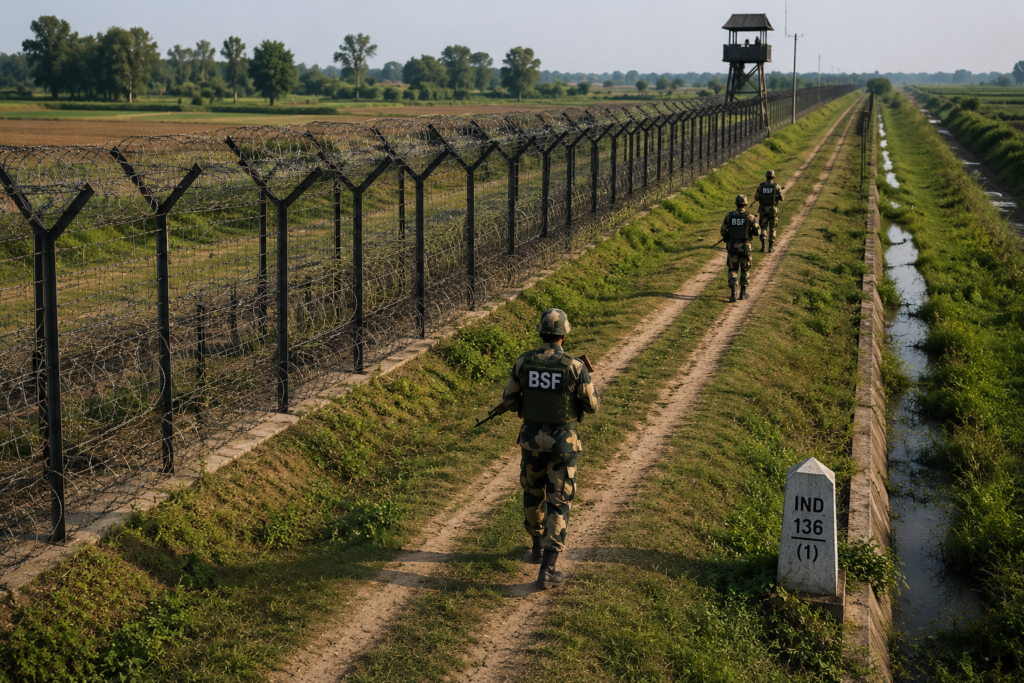
According to state government officials, the land transfer process is expected to be completed within the next 45 days. The move is likely to help the BSF fast-track fencing work in several vulnerable stretches along the international border where construction had been delayed for years due to land acquisition and administrative hurdles.
Why The Decision Matters
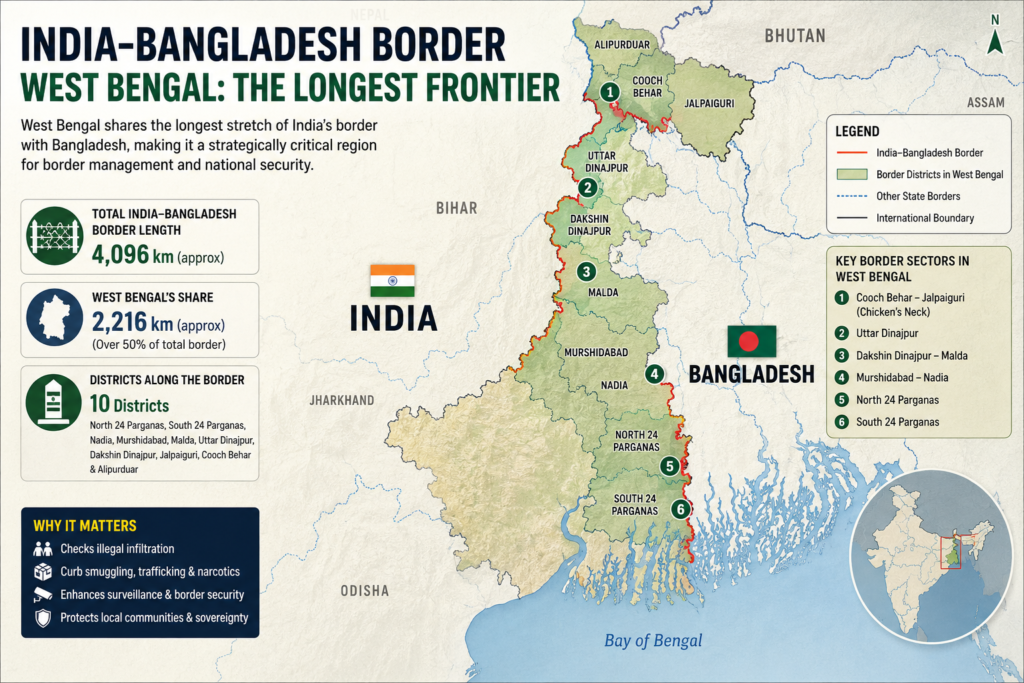
West Bengal shares the longest portion of India’s border with Bangladesh. Out of the nearly 4,096-km India–Bangladesh border, a significant stretch passes through the state, making it one of the most strategically sensitive regions in eastern India.
Security agencies have repeatedly flagged concerns over:
- Illegal infiltration
- Cross-border smuggling
- Human trafficking
- Movement of extremist elements
- Cattle and narcotics smuggling networks
Officials believe the completion of border fencing could substantially improve surveillance and operational response capabilities for the BSF.
Political Significance

The decision also carries strong political overtones. Border security emerged as a key election issue during the Bengal campaign, with the BJP repeatedly accusing previous administrations of delaying fencing projects.
State leaders said the latest approval aligns with commitments made by the Centre to strengthen national security infrastructure along sensitive international borders.
Analysts say the decision could become one of the first major administrative signals from the new Bengal government regarding its approach toward security coordination with the Centre.
Why TMC Opposed
The All India Trinamool Congress (TMC) had earlier opposed or delayed parts of the India–Bangladesh border fencing project mainly due to land acquisition challenges, humanitarian concerns, and political tensions with the Centre. Many border villages in West Bengal are densely populated, and locals feared fencing could cut access to farms, affect livelihoods, and restrict movement near the border. TMC leaders also argued that aggressive security measures could impact Bengali-speaking communities with family and trade ties across both sides of the border.
Strategic Importance Of India–Bangladesh Border
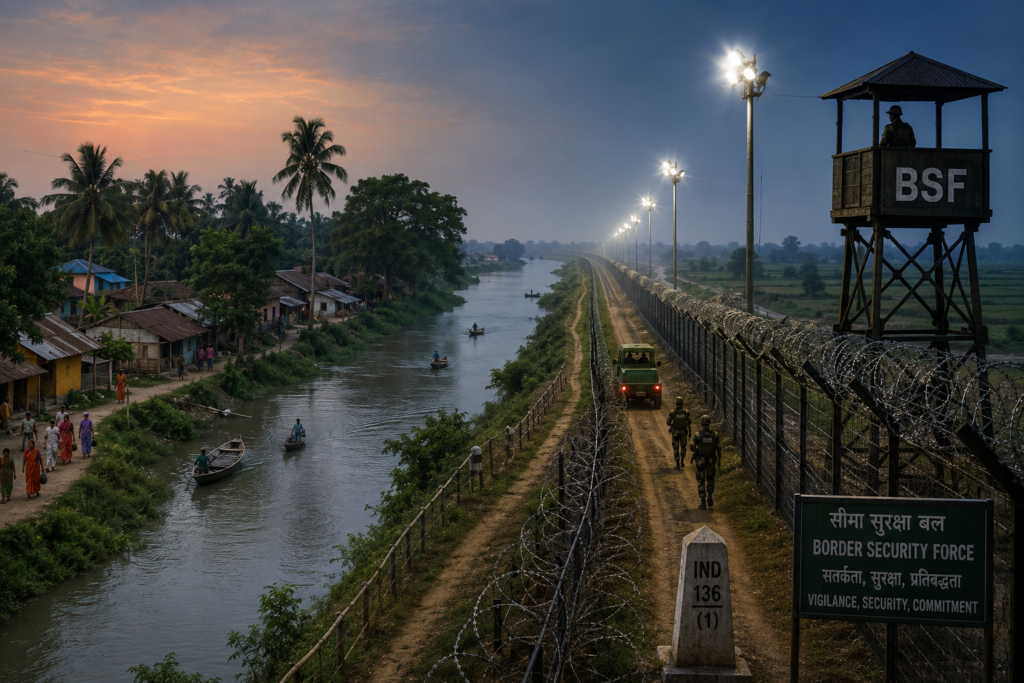
The India–Bangladesh border is among the most complex land borders in the world due to:
- Dense population along border villages
- Riverine terrain in several sectors
- Historical enclaves and disputed patches
- High civilian movement across border districts
Over the past decade, India has steadily increased fencing, floodlighting, surveillance towers, and road infrastructure in border regions to reduce illegal crossings and improve rapid troop mobility.
Bangladesh Reacts
Reports from Bangladesh indicate that officials there have taken note of India’s renewed fencing push. Some Bangladeshi media outlets quoted officials saying the country would remain alert along the border but does not view fencing as an act of intimidation.
Despite periodic tensions over border management, India and Bangladesh continue to maintain extensive cooperation in trade, connectivity, counter-terrorism, and regional security.
Bigger Picture
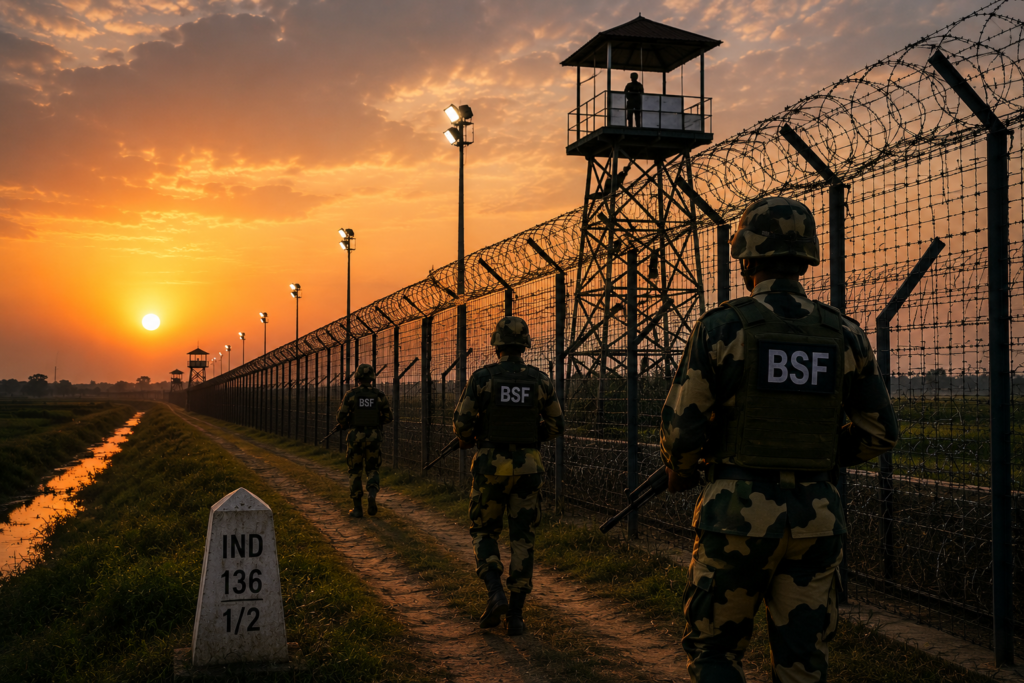
The latest decision comes at a time when India is increasingly focusing on strengthening border infrastructure across multiple fronts — from the western border with Pakistan to the northern frontier with China and eastern sectors bordering Bangladesh and Myanmar.
For the BSF, faster land transfer could remove one of the biggest bottlenecks slowing down fencing work in eastern India.
If implemented on schedule, the move could significantly enhance border management capabilities in one of India’s most sensitive geopolitical corridors.