📅 June 13, 2026 | By Pulse India News Desk
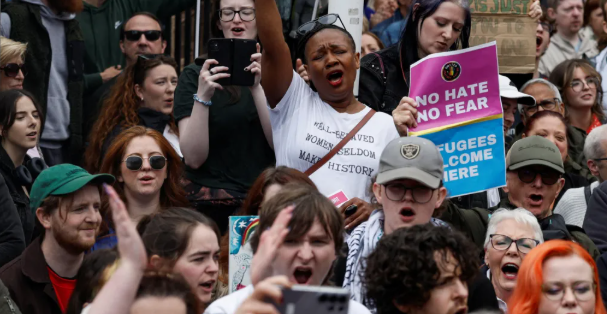
Belfast, Northern Ireland: Thousands of people marched through Belfast on Saturday in a major anti-racism demonstration following several days of disorder and attacks targeting immigrant communities across Northern Ireland’s capital.
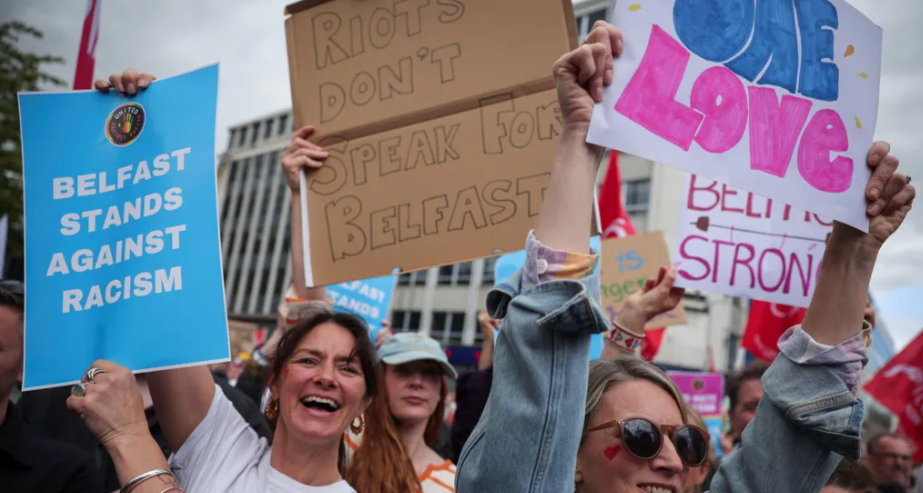
The rally, which culminated outside Belfast City Hall, was organized by community groups, trade unions, political activists and civil society organizations seeking to condemn the violence that erupted earlier this week after a high-profile stabbing incident.
Protesters carried banners reading “Refugees Welcome”, “Belfast Against Racism” and “No Place For Hate”, while speakers urged residents not to blame entire communities for the actions of one individual.
What Triggered The Unrest?
The tensions began after a local man was seriously injured in a knife attack in north Belfast on June 8. Police later charged a Sudanese asylum seeker in connection with the incident.
News of the attack spread rapidly across social media, sparking anger and concern among local residents. However, authorities say the situation quickly escalated beyond demands for justice, with anti-immigration groups using the incident to organize demonstrations.
Within days, several neighborhoods witnessed unrest, including attacks on homes believed to be occupied by migrants and asylum seekers. Some families reportedly fled their residences after properties were vandalized or targeted by mobs.
How Did The Violence Unfold?
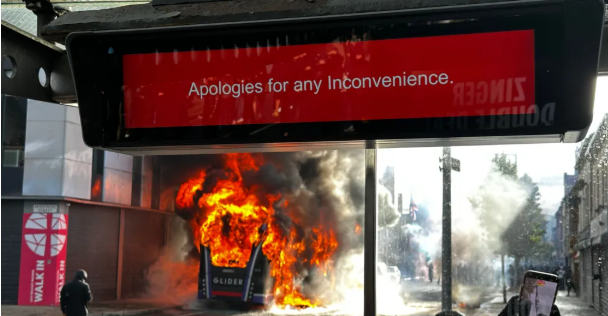
Over multiple nights, police dealt with clashes involving protesters, fires, property damage and attacks on immigrant-owned homes and businesses.
Authorities deployed additional officers and used public-order tactics to restore calm. Several police personnel were injured during the disturbances, while dozens of arrests have been made.
Community leaders said the violence created fear among many migrant families, some of whom sought temporary accommodation elsewhere amid concerns for their safety.
Why Did Thousands Take To The Streets?
Saturday’s demonstration was intended as a direct response to the unrest.
Organizers said the rally aimed to show that the actions of a violent minority do not represent the wider population of Belfast.
Many participants argued that while the stabbing incident should be investigated and prosecuted through the legal system, it should not be used to justify attacks on entire ethnic or immigrant communities.
“We cannot allow one criminal case to become an excuse for racism,” one speaker told the crowd.
Others emphasized the contribution migrants make to Northern Ireland’s economy, healthcare system and local communities.
What Are Protesters Saying?
The anti-racism demonstrators delivered several key messages:
- Criminal acts should be dealt with individually rather than collectively blaming communities.
- Migrants and refugees should not be targeted because of their nationality or ethnicity.
- Belfast should remain an inclusive and welcoming city.
- Political leaders must challenge misinformation and hate speech online.
Many protesters also expressed concern about the growing influence of anti-immigration rhetoric across parts of Europe and the United Kingdom.
What Are Anti-Immigration Groups Arguing?
Groups critical of immigration have insisted that public concerns about migration levels, asylum policies and community safety should not be ignored.
Some demonstrators linked the stabbing case to broader debates over border security and government immigration policies.
However, authorities and community organizations have repeatedly stressed that concerns about policy should not be used to justify violence, intimidation or attacks on innocent people.
What Has The Government Said?
British Prime Minister Sir Keir Starmer condemned the violence and warned that those responsible would face the full force of the law.
Northern Ireland Secretary Hilary Benn described the attacks on immigrant communities as unacceptable and said nobody should be targeted because of their race, nationality or background.
Political leaders from across Northern Ireland’s major parties also united in condemning both the stabbing incident and the subsequent disorder.
The Police Service of Northern Ireland (PSNI) has increased patrols in affected areas and vowed to continue making arrests using CCTV footage and evidence gathered during the disturbances.
Why Is The Situation So Sensitive?
Analysts say the unrest reflects deeper issues extending beyond a single criminal case.
Northern Ireland, like many parts of Europe, has experienced growing debates over immigration, housing pressures, economic uncertainty and social integration.
Experts believe the stabbing incident acted as a catalyst for frustrations that had already been building in some communities.
Social media also played a significant role, with videos, rumours and unverified claims spreading rapidly online and intensifying public emotions.
Will The Situation Calm Down?
Police say the security situation has improved compared with earlier in the week, though officers remain on alert.
The large turnout at Saturday’s anti-racism rally is being viewed by many observers as a sign that the majority of Belfast residents reject violence and support community cohesion.
However, authorities warn that tensions could persist if misinformation continues to circulate or if further incidents become flashpoints for protests.
For now, community leaders are calling for calm, dialogue and respect for the rule of law as Belfast attempts to move beyond one of its most challenging weeks in recent years.