A sector-by-sector, evidence-based review of economic growth, welfare delivery, agriculture, public services, Hyderabad’s transformation and the promises that remain unfinished.
The Congress government led by Chief Minister A. Revanth Reddy completed 1,000 days in office on September 1, 2026. The milestone presents two contrasting pictures: Telangana continues to record strong economic growth and has launched large welfare, infrastructure and institutional initiatives, but fiscal pressure, implementation delays and several unfulfilled promises prevent an uncomplicated verdict.
Explore the sector-by-sector report card
What the first 1,000 days reveal
The strongest case for the government is that it moved quickly on several visible commitments: a crop-loan waiver of roughly ₹21,000 crore, free electricity for eligible households up to 200 units, fine-rice distribution, expanded Aarogyasri cover, teacher recruitment, a caste survey, SC sub-classification, a gig-worker welfare law and a renewed public-investment pipeline.
The strongest criticism is not that nothing happened, but that delivery differs sharply across promises. The government’s report card is stronger where programmes could be implemented through direct transfers, procurement or administrative decisions. It is weaker where success requires sustained capital construction, complex land acquisition, institutional staffing, legal clearance or recurring expenditure.
| Sector | Clear positive | Central concern | Assessment |
|---|---|---|---|
| Economy | High growth and per-capita income | Debt, guarantees and budget under-utilisation | Mixed-positive |
| Agriculture | Loan waiver, Rythu Bharosa and procurement | Eligibility gaps, tenant farmers and payment grievances | Substantial delivery |
| Public services | Power relief, food coverage and Aarogyasri expansion | Staff vacancies, pension promises and reimbursement stability | Mixed |
| Social justice | Caste survey, SC sub-classification and gig-worker law | BC quota litigation and pending cash support | Institutional progress |
| Infrastructure | Metro takeover and large project pipeline | Most additional capacity is not yet open | Early-stage |
| Governance | Wider grievance and digital channels | Transparency, privacy and outcome reporting | Mixed |
1Economy and public finances
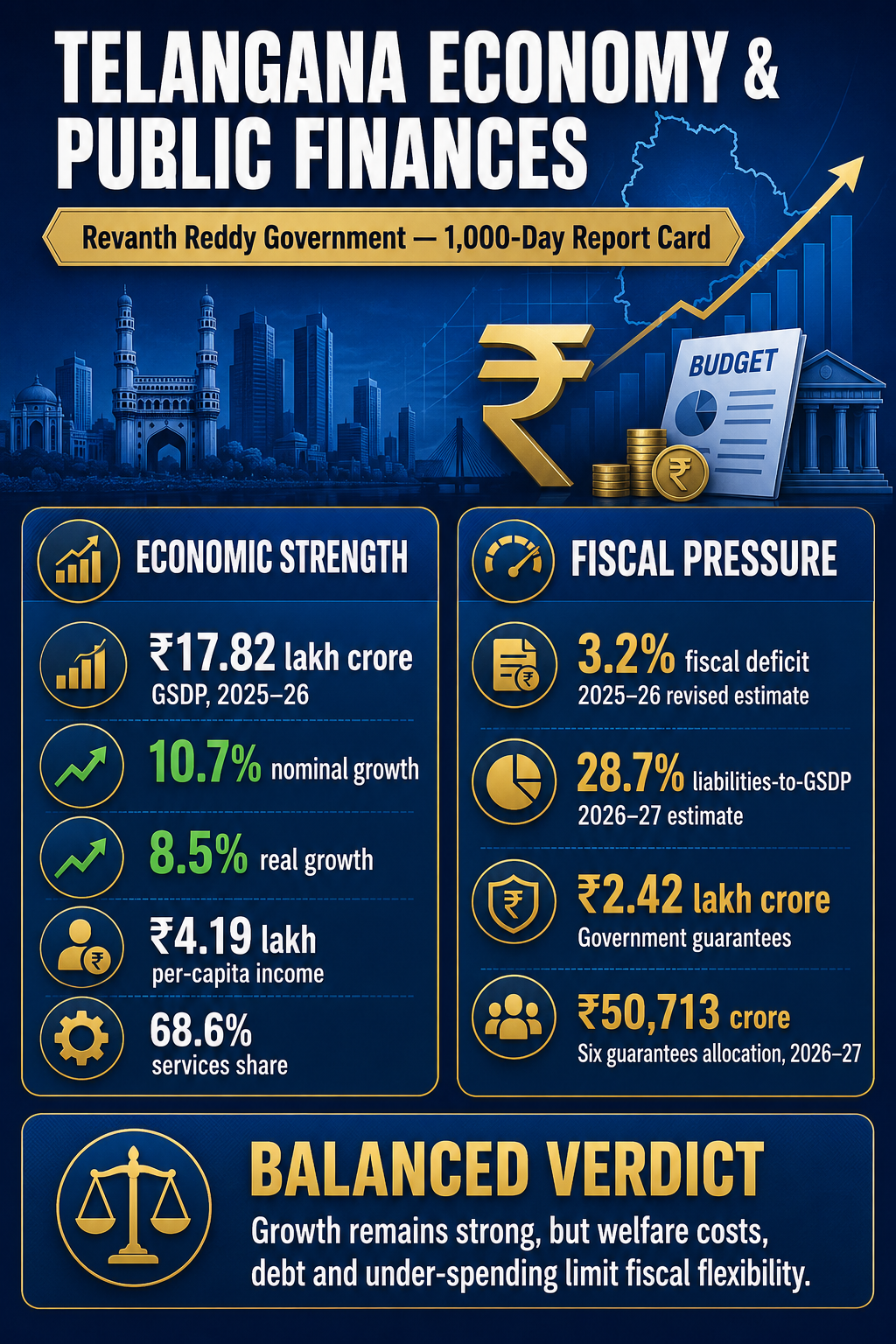
Telangana’s economy remained one of the government’s clearest strengths. The state’s investment portal reports 8.5% real GSDP growth and 10.7% nominal growth for 2025–26. GSDP at current prices was provisionally estimated at ₹17.82 lakh crore, while per-capita income crossed ₹4 lakh. Services continue to dominate the economy, showing the depth of Hyderabad’s technology, business-services, pharmaceutical and real-estate base.
However, growth cannot be credited entirely to a single 1,000-day administration. It also reflects Telangana’s inherited economic base, inflation and investments made over several governments. The fiscal picture is less comfortable: the revised fiscal deficit for 2025–26 was estimated at 3.2% of GSDP, and the CAG has raised concerns about debt, revenue performance, guarantees and under-utilisation of budget allocations. Large welfare commitments narrow the space available for capital expenditure unless revenues grow consistently.
GDP before and after the change in government
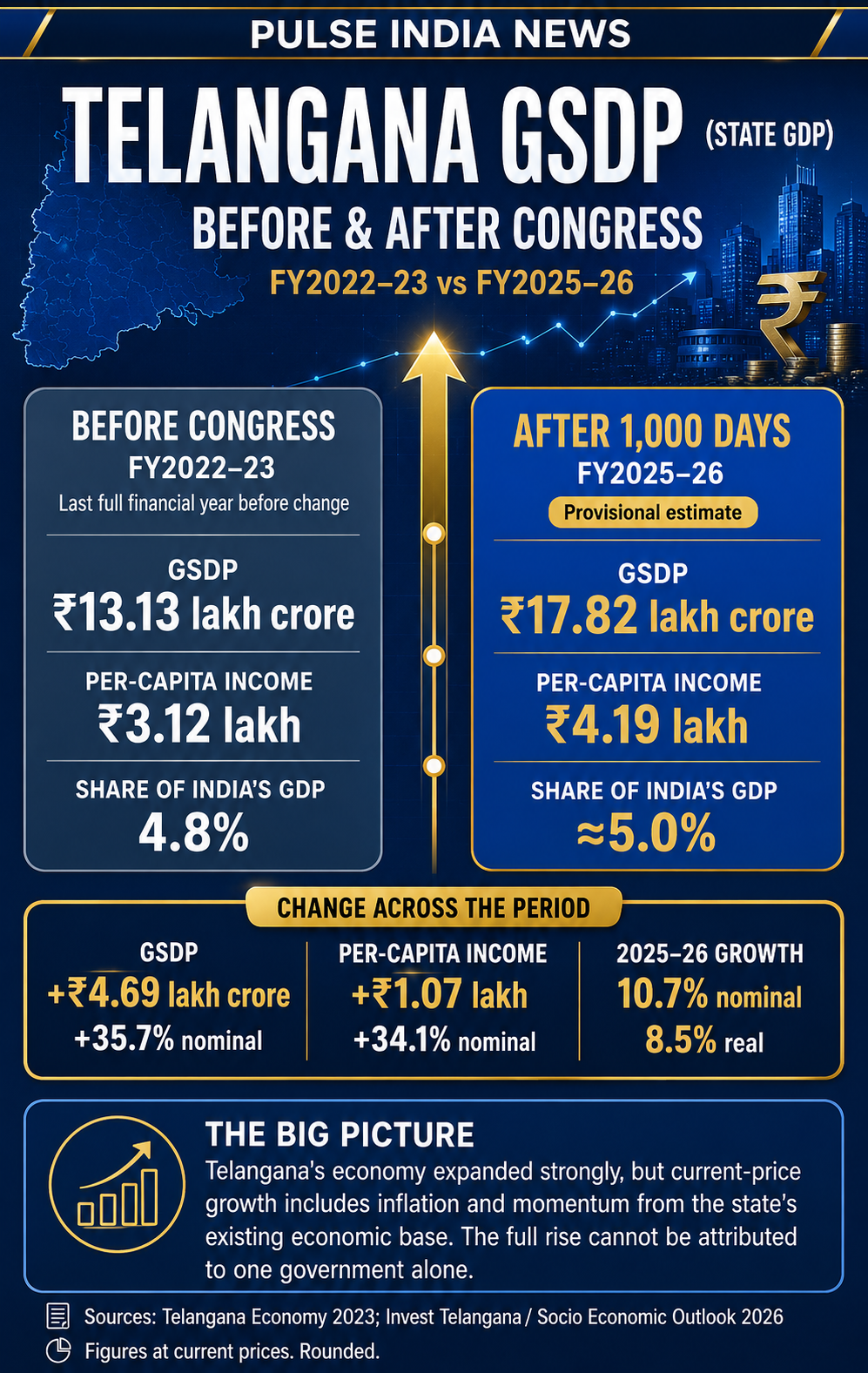
At current prices, Telangana’s GSDP rose from roughly ₹13.13 lakh crore in 2022–23—the last full financial year before the change in government—to about ₹17.82 lakh crore in 2025–26. Per-capita income increased from around ₹3.12 lakh to approximately ₹4.19 lakh. These are meaningful gains, but they are nominal figures and therefore include inflation. The comparison is useful for measuring the size of the economy, not for claiming that the full increase was created after December 2023.
Positives
- Real growth remained above the national rate cited by the state.
- Per-capita income and Telangana’s share of national output increased.
- The economy retained strong services and investment momentum.
Pressure points
- Fiscal deficit and liabilities restrict policy flexibility.
- Budget announcements must be compared with actual expenditure.
- District-level income gaps remain wide despite high statewide averages.
2Agriculture and farmer welfare
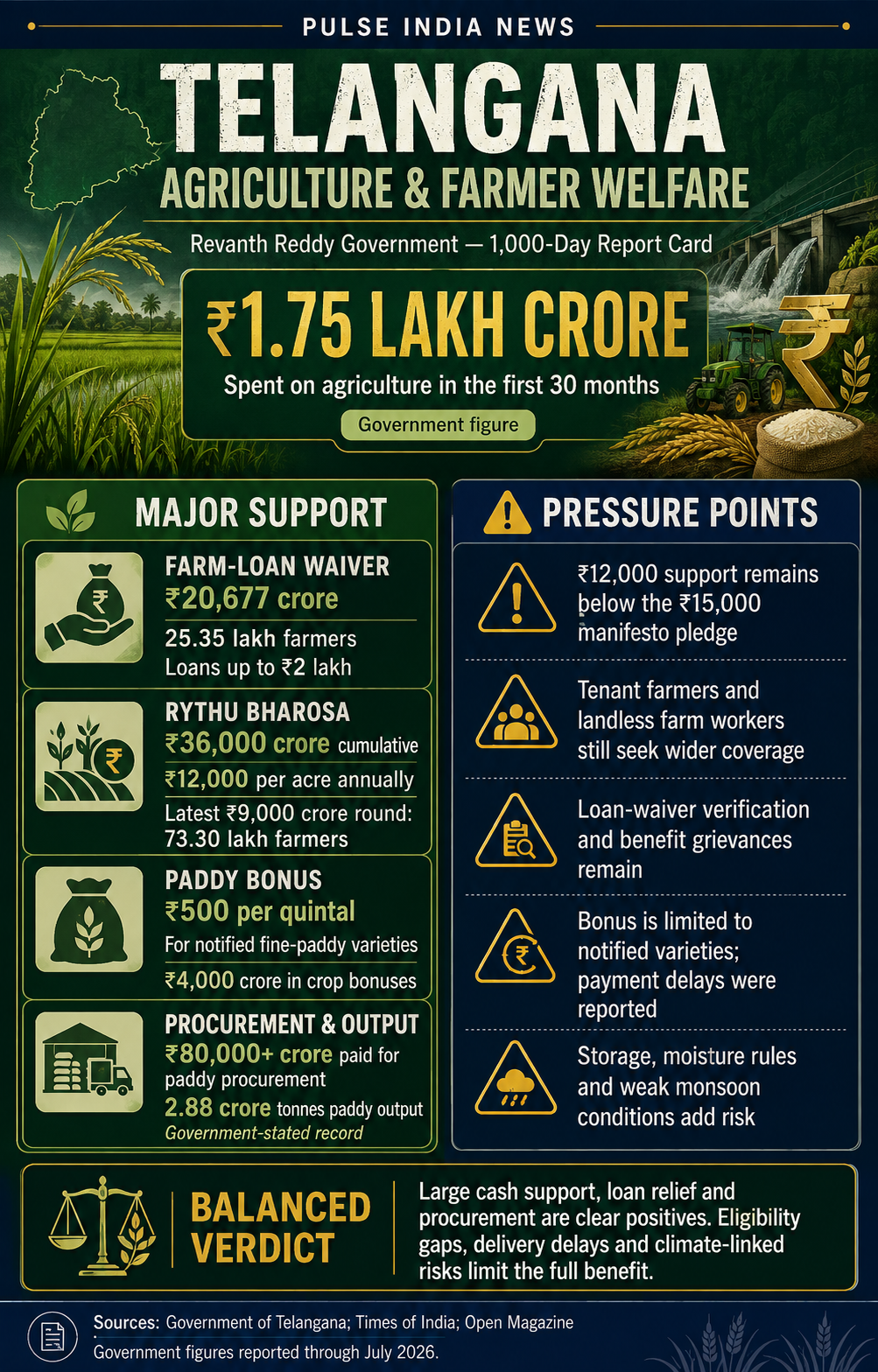
The crop-loan waiver is among the government’s most substantial completed welfare interventions. Official accounts place the waiver near ₹21,000 crore for more than 25 lakh farmers, covering eligible loans up to ₹2 lakh. Rythu Bharosa investment support, the ₹500-per-quintal fine-paddy bonus and record procurement also injected significant cash into the rural economy.
The limitations are equally important. Tenant farmers and landless agricultural workers do not benefit automatically from land-record-based support. Loan-waiver exclusions and verification complaints persisted, while bonus coverage was limited to notified fine-paddy varieties. A strong procurement year also does not remove long-term risks from groundwater stress, storage capacity, crop concentration, input costs and erratic rainfall.
3Irrigation and water management
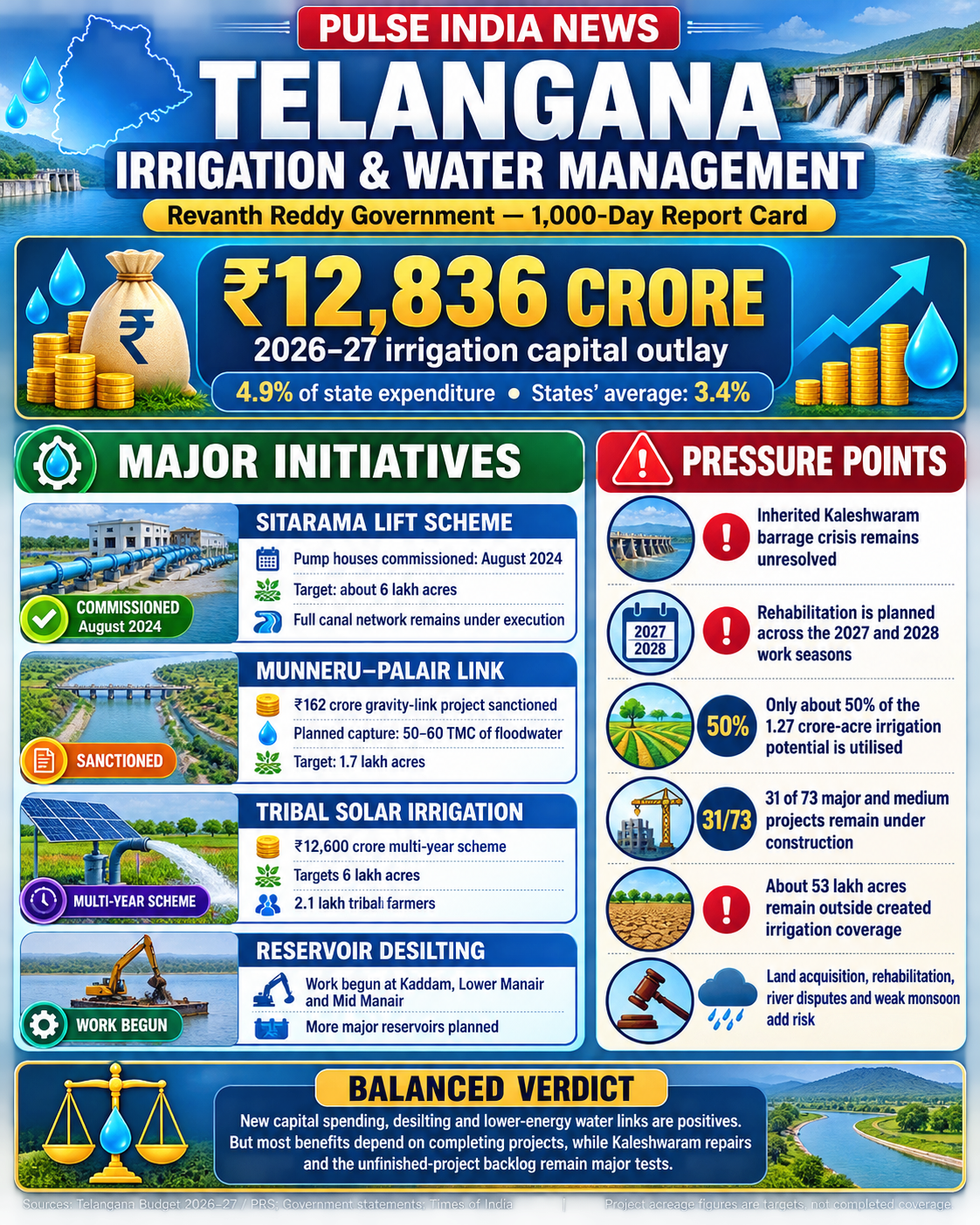
The government increased the relative emphasis on irrigation in the 2026–27 Budget, with PRS calculating a 4.9% share of expenditure against a 3.4% average across states. It commissioned pump houses under the Sitarama Lift Irrigation Scheme, sanctioned the Munneru–Palair gravity link, announced a large tribal solar-irrigation programme and began reservoir-desilting work.
Yet much of the benefit is prospective. Full canal networks remain under construction, dozens of major and medium projects are unfinished, and large areas remain outside created irrigation coverage. The inherited Kaleshwaram barrage crisis remains the sector’s biggest technical and financial challenge. Transparent rehabilitation schedules, dam-safety compliance and project-wise cost disclosures are essential.
4Electricity and renewable energy
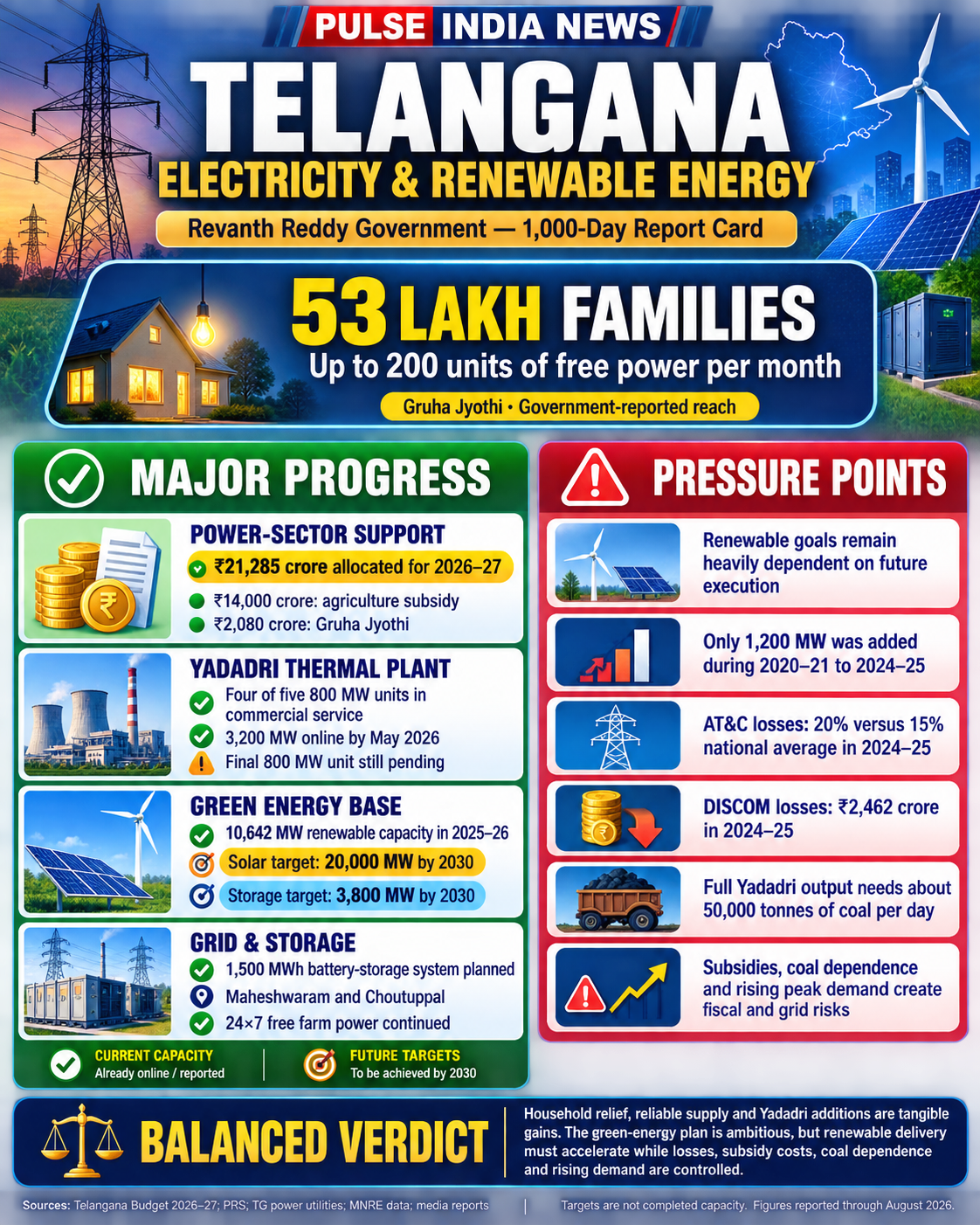
Gruha Jyothi provides up to 200 units of free monthly electricity to eligible households, while free farm power continued. Telangana also handled record peak demand without a broad supply breakdown and brought additional 800 MW units of the inherited Yadadri thermal project into service. The Clean and Green Energy Policy set a target of adding 20,000 MW of renewable generation and storage capacity by 2030.
The pressure lies in the financial and environmental model. Subsidies require timely reimbursement to distribution companies, while AT&C losses and DISCOM deficits remain high. Yadadri strengthens firm generation but increases coal dependence and fuel requirements. The renewable target is ambitious; actual annual capacity additions, storage commissioning and grid modernisation will determine whether it becomes an energy transition rather than a policy document.
5Food security, ration cards and pensions
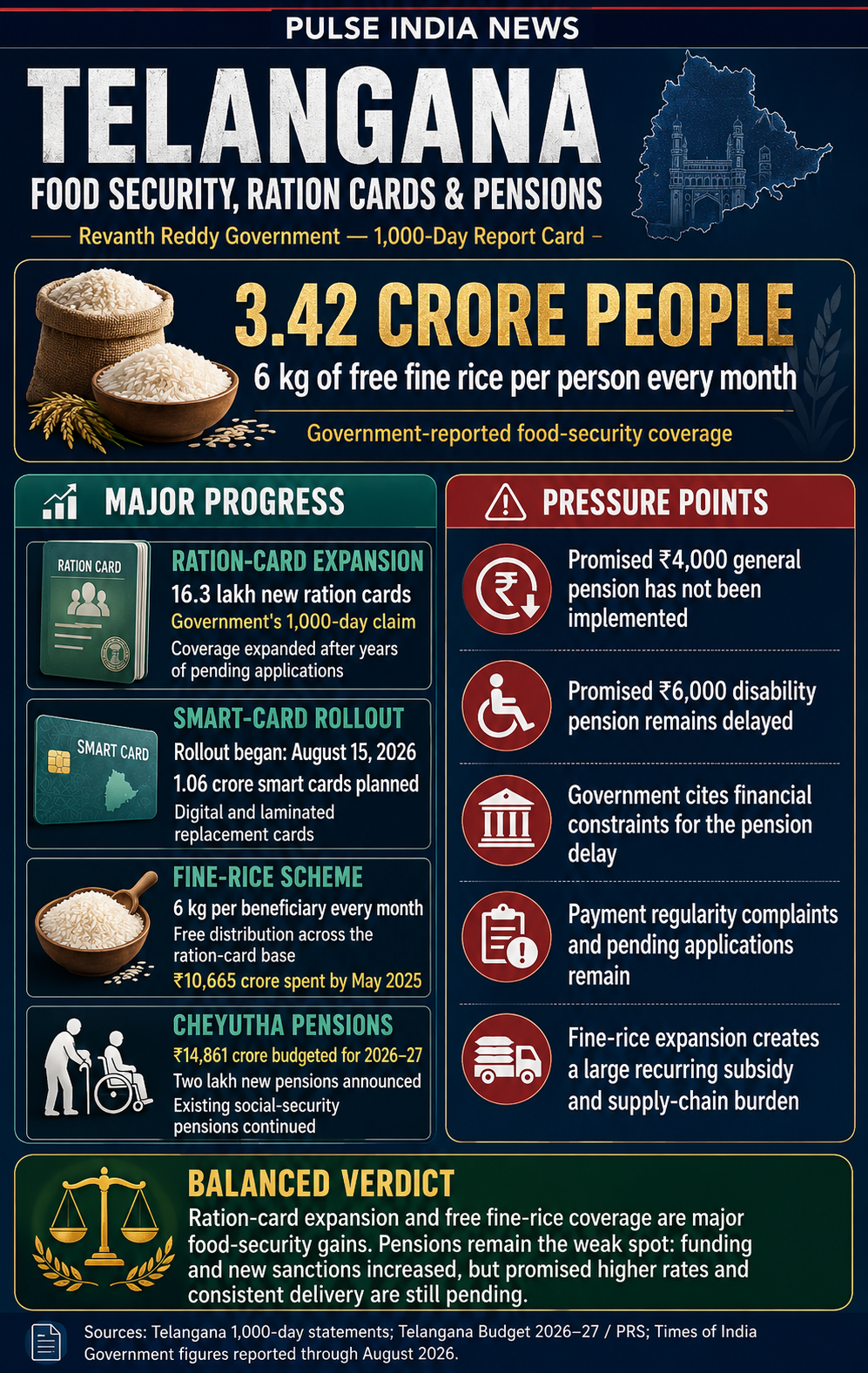
The introduction of free fine rice—six kilograms per person per month for eligible beneficiaries—and the processing of new ration cards significantly widened the government’s food-security footprint. The state’s 1,000-day account says 16.3 lakh new ration cards were issued and coverage reached about 3.42 crore people. Smart-card rollout and additional pension sanctions were also announced.
Pensions are the weaker part of this record. Existing payments continued and budget provision increased, but the promised general pension of ₹4,000 and disability pension of ₹6,000 had not been fully implemented by the milestone. The food programme also carries a large recurring subsidy and supply-chain burden, making quality, regular delivery and transparent beneficiary correction as important as the headline coverage.
6Housing
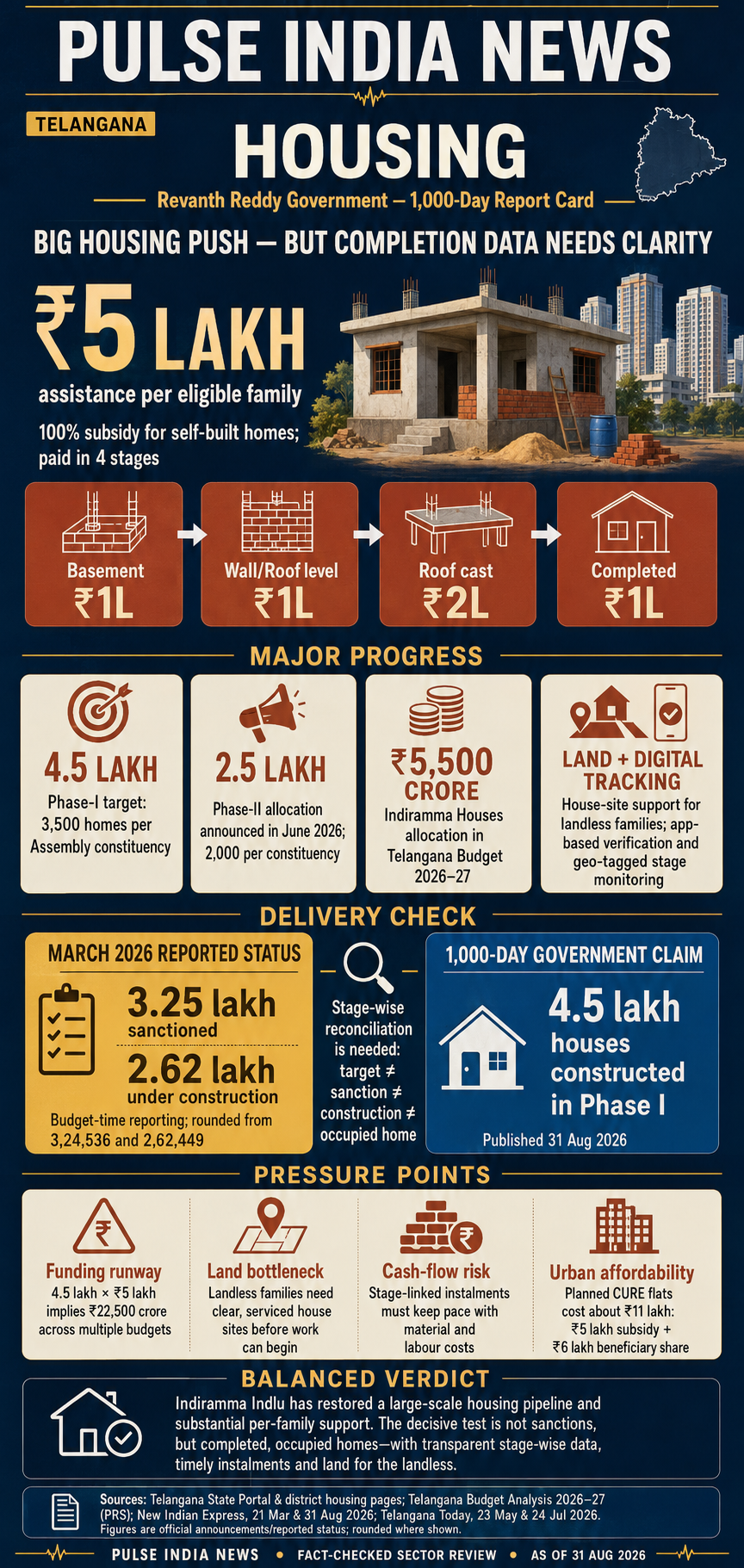
Indiramma Indlu restored a large state-supported housing pipeline. Eligible families building on their own plots can receive ₹5 lakh in four construction-linked instalments, supported by app-based verification and geo-tagging. The first phase targets 4.5 lakh homes across all 119 constituencies, with additional house-site support intended for landless families.
Housing performance must be measured carefully. Sanctioned houses, foundations started, structures roofed, homes completed and families actually occupying them are different outcomes. Land availability, beneficiary selection, timely instalments and material-cost escalation remain constraints. Allegations raised in court concerning beneficiary selection also reinforce the need for auditable lists and grievance redressal.
7Education and student welfare
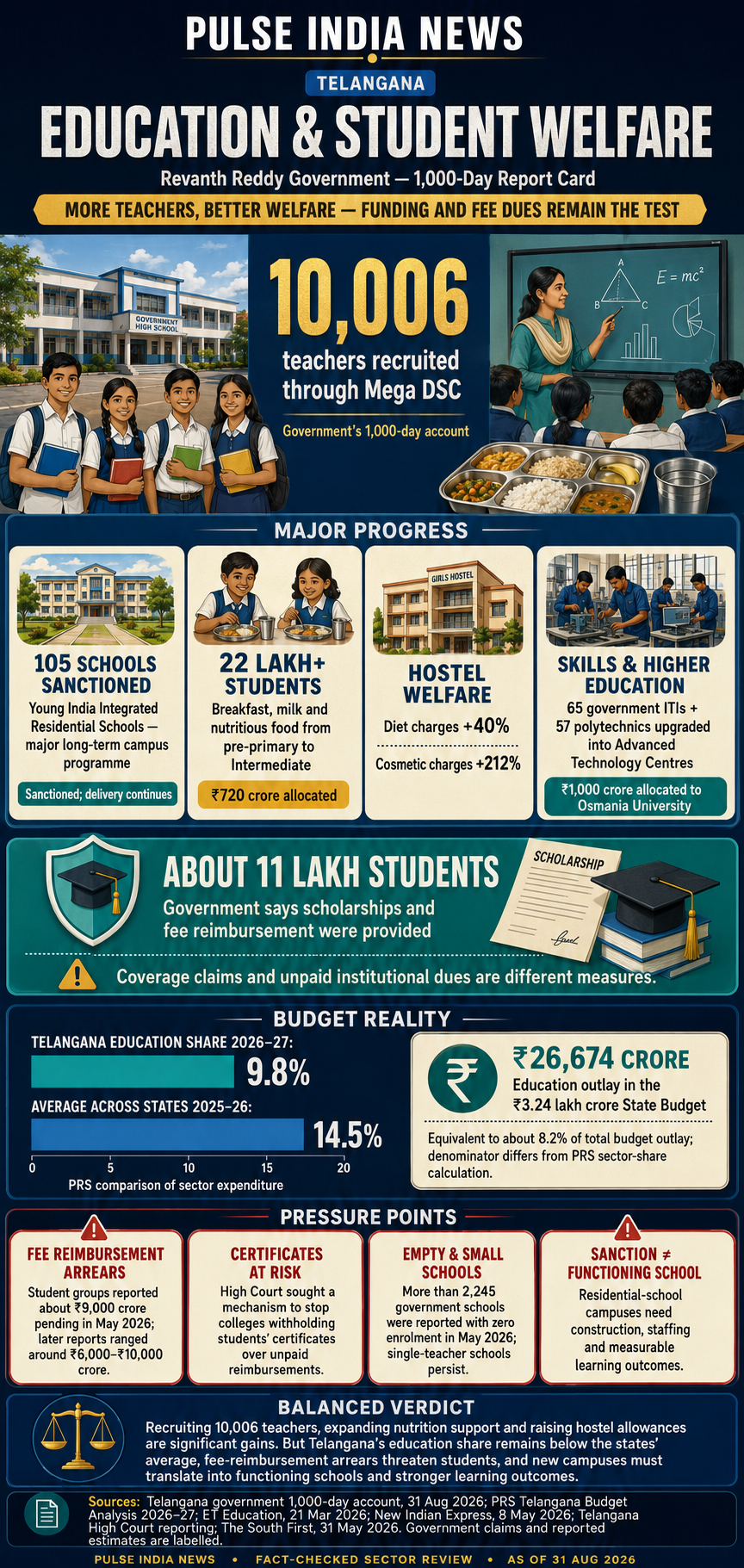
Recruitment of 10,006 teachers through Mega DSC was an important response to vacancies. The government also sanctioned 105 Young India Integrated Residential Schools, expanded breakfast, milk and nutrition support, increased hostel diet and cosmetic charges, and moved to upgrade ITIs and polytechnics as Advanced Technology Centres.
The structural weaknesses remain serious. PRS calculates that education received 9.8% of state expenditure in 2026–27, below the 14.5% states’ average. Fee-reimbursement arrears created financial stress for colleges and placed student certificates at risk. Thousands of government schools were reported with zero enrolment, while single-teacher schools persist. Buildings and recruitment matter, but learning outcomes, attendance, teacher deployment and settlement of student dues are the decisive measures.
8Healthcare
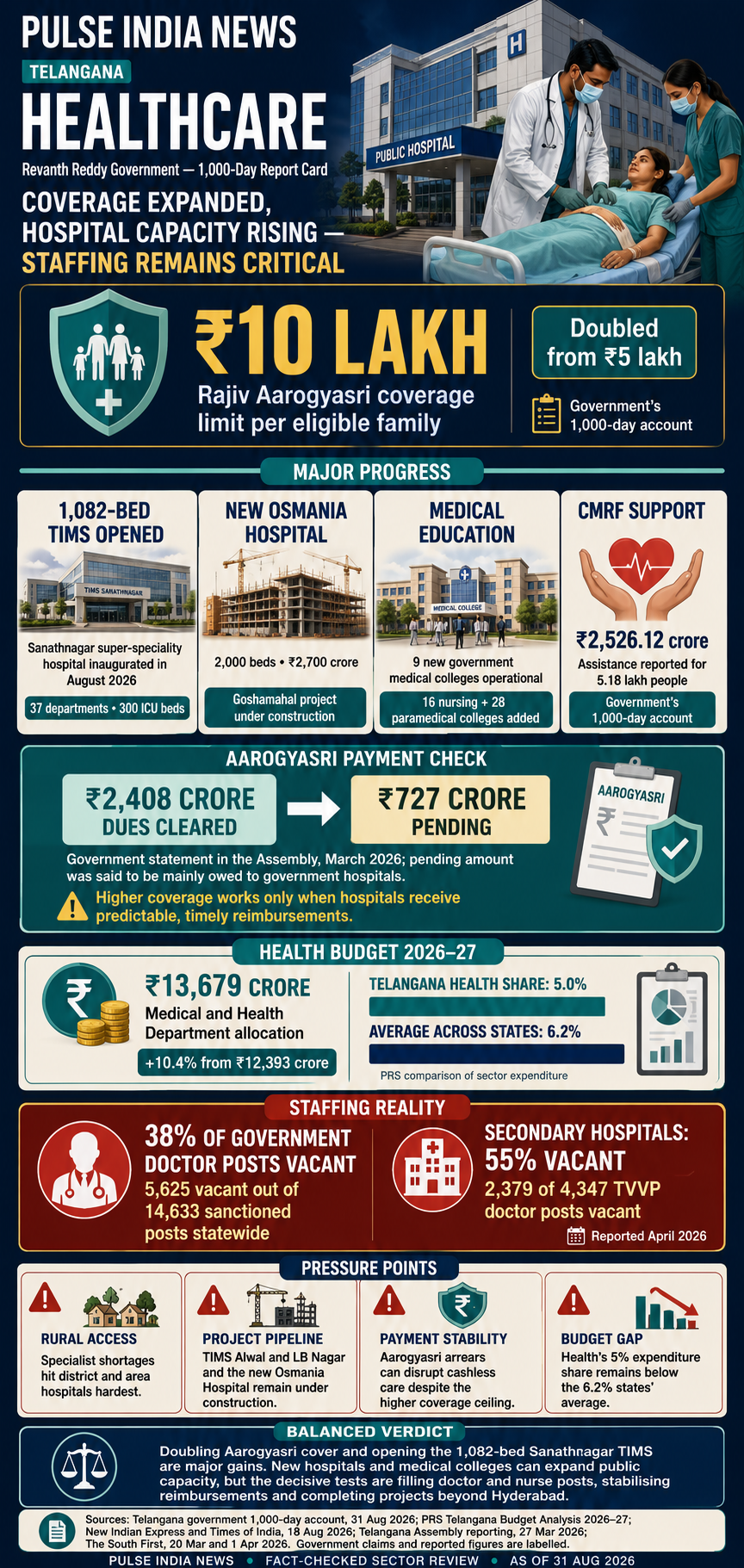
Rajiv Aarogyasri’s eligible family coverage ceiling was doubled from ₹5 lakh to ₹10 lakh. The 1,082-bed TIMS at Sanathnagar opened in 2026, nine new government medical colleges became operational according to the government, and the new 2,000-bed Osmania General Hospital moved into construction. These measures can expand public capacity and reduce pressure on existing tertiary hospitals.
The challenge is staffing and financial stability. Around 38% of sanctioned government doctor posts were reported vacant in April 2026, with the secondary hospital system facing an even higher vacancy rate. Aarogyasri arrears can interrupt cashless treatment, while projects at Alwal, LB Nagar and the new Osmania hospital still require completion. Health represented 5% of expenditure in PRS’s 2026–27 comparison, below the 6.2% states’ average.
9Social welfare and social justice
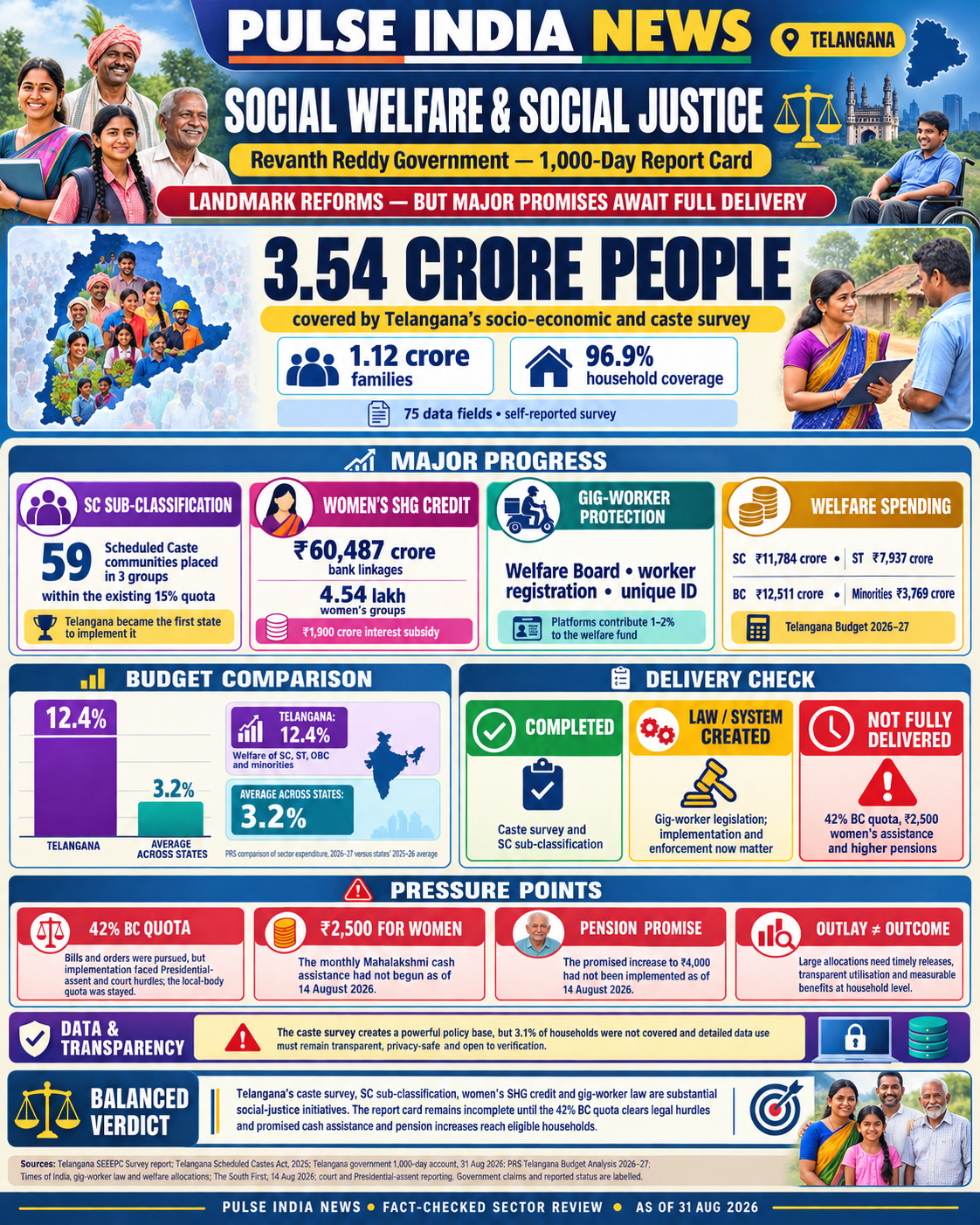
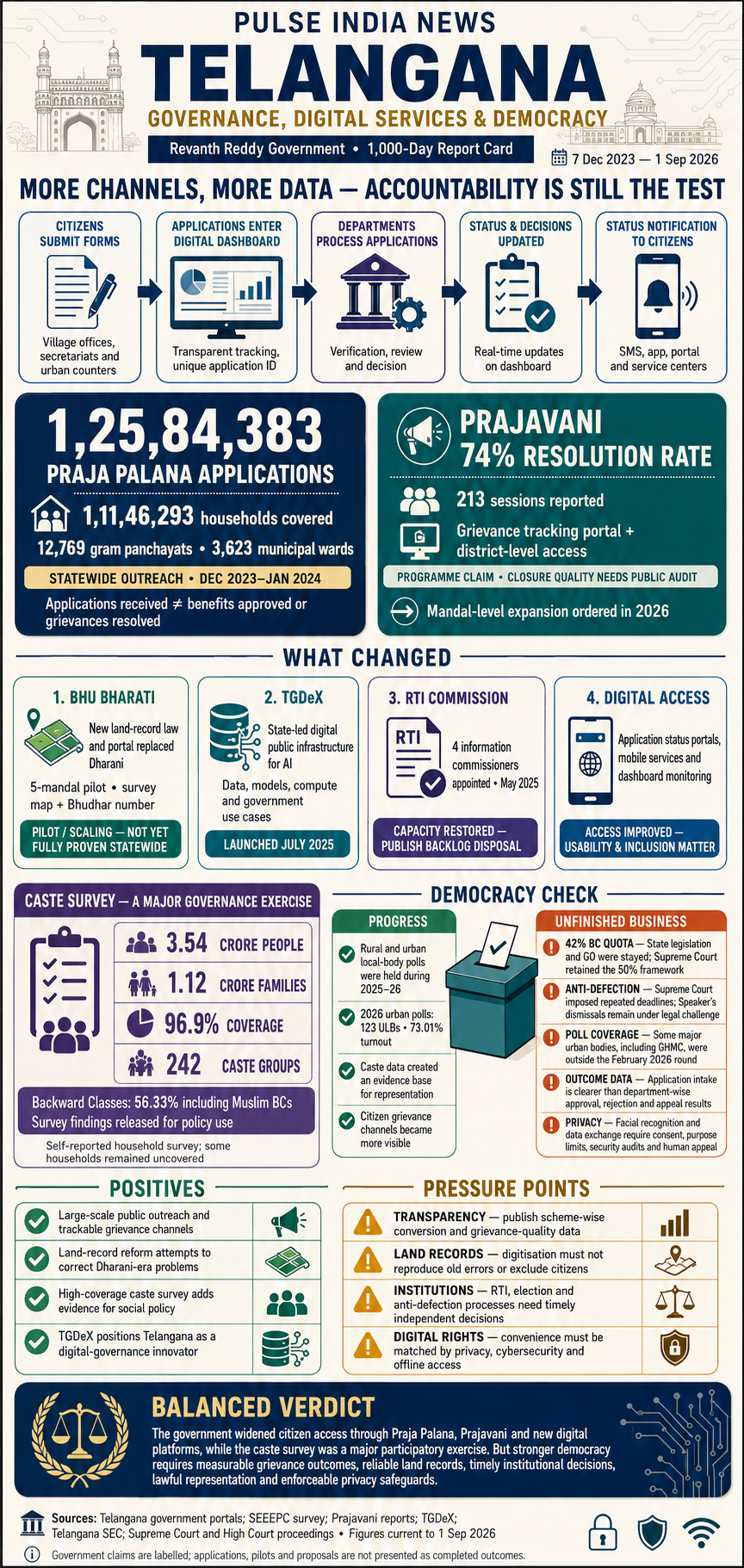
The statewide socio-economic and caste survey was a major governance exercise, covering around 3.54 crore people and 1.12 crore families, or 96.9% of households according to the state. Telangana also implemented SC sub-classification within the existing 15% quota, expanded women’s self-help-group credit and enacted a gig-worker welfare framework requiring registration, a welfare board and platform contributions.
Several politically important promises are still unresolved. The proposed 42% BC reservation encountered the constitutional 50% ceiling and judicial scrutiny. Monthly Mahalakshmi cash assistance for eligible women and the promised pension increases had not begun in full. The survey creates an unusually valuable policy database, but its legitimacy will depend on transparent use, privacy safeguards, correction options and measurable improvement for disadvantaged households.
10Industry, IT and investment
Investment promotion remained energetic. The Industries Minister told the Assembly that the 2024 and 2025 Davos visits produced 44 MoUs worth about ₹2.19 lakh crore, with potential for 68,150 direct jobs. Land had been allotted to six companies linked to proposals worth ₹81,800 crore, while additional projects were at different stages of grounding. Hyderabad retained its strength in global capability centres, technology, life sciences and data infrastructure.
The distinction between proposals and operating factories is crucial. MoUs can be revised, delayed or cancelled, and potential employment is not the same as verified payroll jobs. District IT towers have produced more modest results than Hyderabad, highlighting the regional imbalance. A credible long-term assessment requires company-wise disclosure of investment realised, construction completed, production started and direct jobs created.
11HYDRAA, environment and the Musi
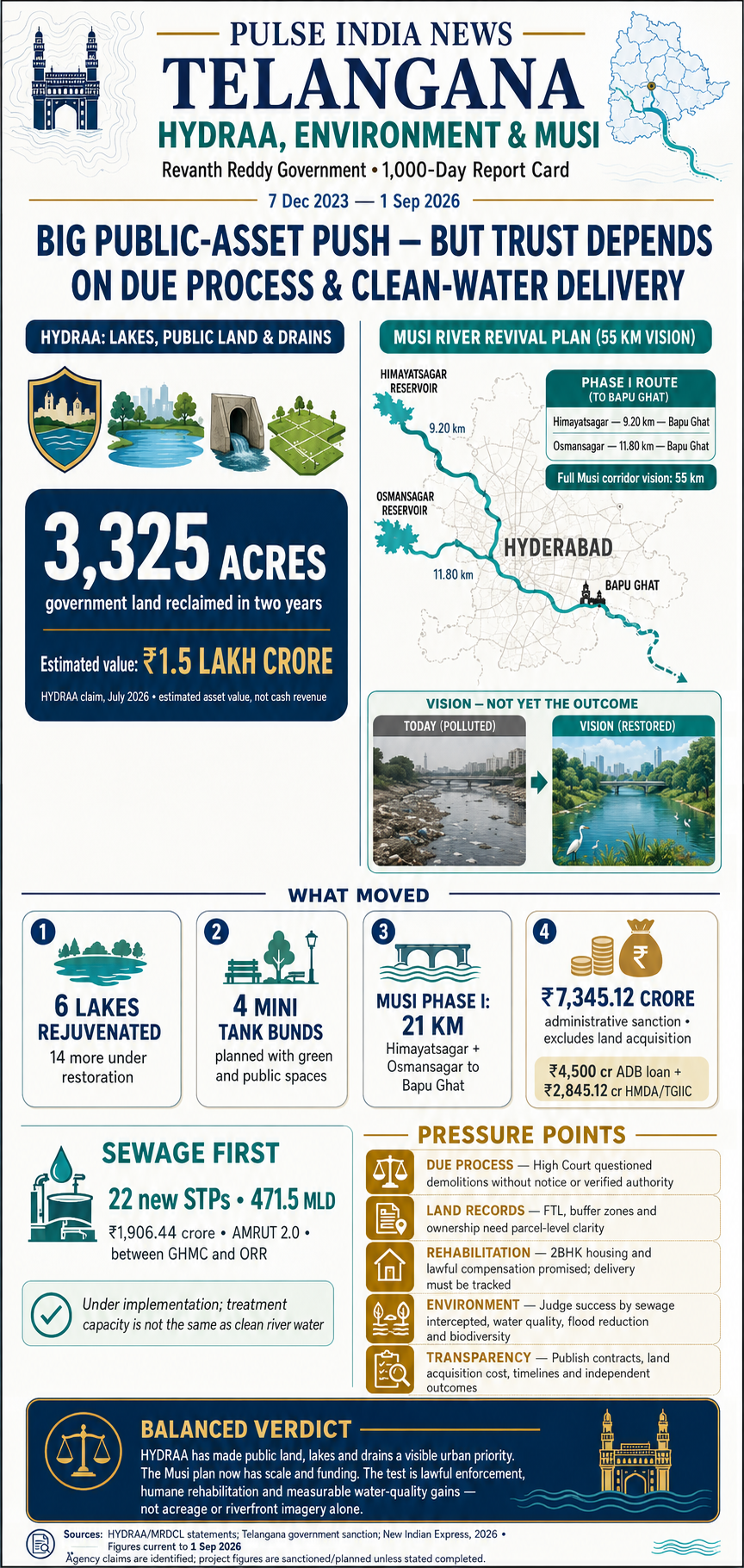
HYDRAA made encroachment on lakes, drains, parks and government land a highly visible urban issue. By July 2026, the agency said it had reclaimed 3,325 acres valued at around ₹1.5 lakh crore. That number represents an estimated asset value, not cash revenue. Six lakes were reported restored and more were under development.
The Musi programme gained an administrative sanction and a defined Phase-I funding structure, alongside 22 sewage-treatment plants with 471.5 MLD of planned capacity. But treatment capacity is not the same as a clean river. Demolitions, notice, title verification, compensation and rehabilitation generated legal and humanitarian concerns. Success should be measured through intercepted sewage, independently tested water quality, reduced flooding, restored biodiversity and fair rehabilitation—not acreage or riverfront renderings alone.
12Infrastructure, Hyderabad and Future City
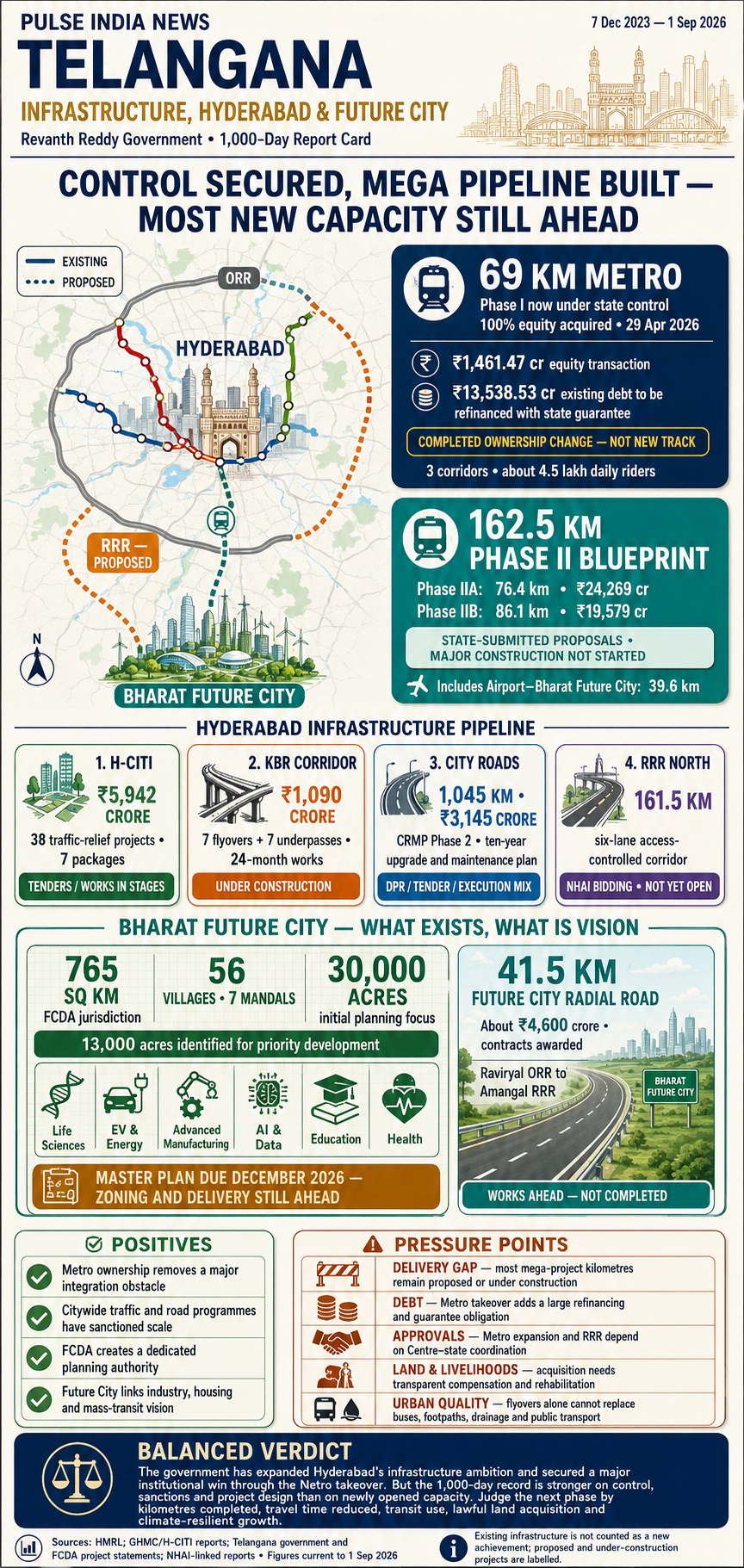
The acquisition of the 69-km Hyderabad Metro Phase-I system from L&T was a major institutional move. The state acquired the company’s equity for ₹1,461.47 crore and took responsibility for refinancing debt of ₹13,538.53 crore through a state guarantee. The decision removes an integration obstacle for the proposed 162.5-km Phase-II expansion.
The government also advanced H-CITI traffic projects, KBR-area corridors, road-maintenance packages, the northern Regional Ring Road and a large Future City planning jurisdiction. But the 1,000-day record is stronger on acquisition, sanctions, master plans and contracts than on newly opened capacity. Metro Phase II still depends on approvals and financing, while Future City raises questions about land acquisition, livelihoods, water availability and climate-resilient urban design.
13Governance, digital services and democracy
Praja Palana and Prajavani expanded channels through which citizens could apply for schemes or register grievances. The government also replaced Dharani with the Bhu Bharati land-record framework, launched the TGDeX public digital-infrastructure initiative, restored the State Information Commission’s capacity and used the caste survey as a policy-planning tool.
The quality of governance cannot be inferred from application volumes alone. The state needs scheme-wise conversion rates, grievance-quality audits, reasons for rejection and appeal outcomes. Bhu Bharati must avoid reproducing older land-record errors, while TGDeX requires enforceable privacy, cybersecurity and consent safeguards. Delayed institutional decisions, anti-defection disputes and litigation over representation also form part of the democratic record.
14Law and order
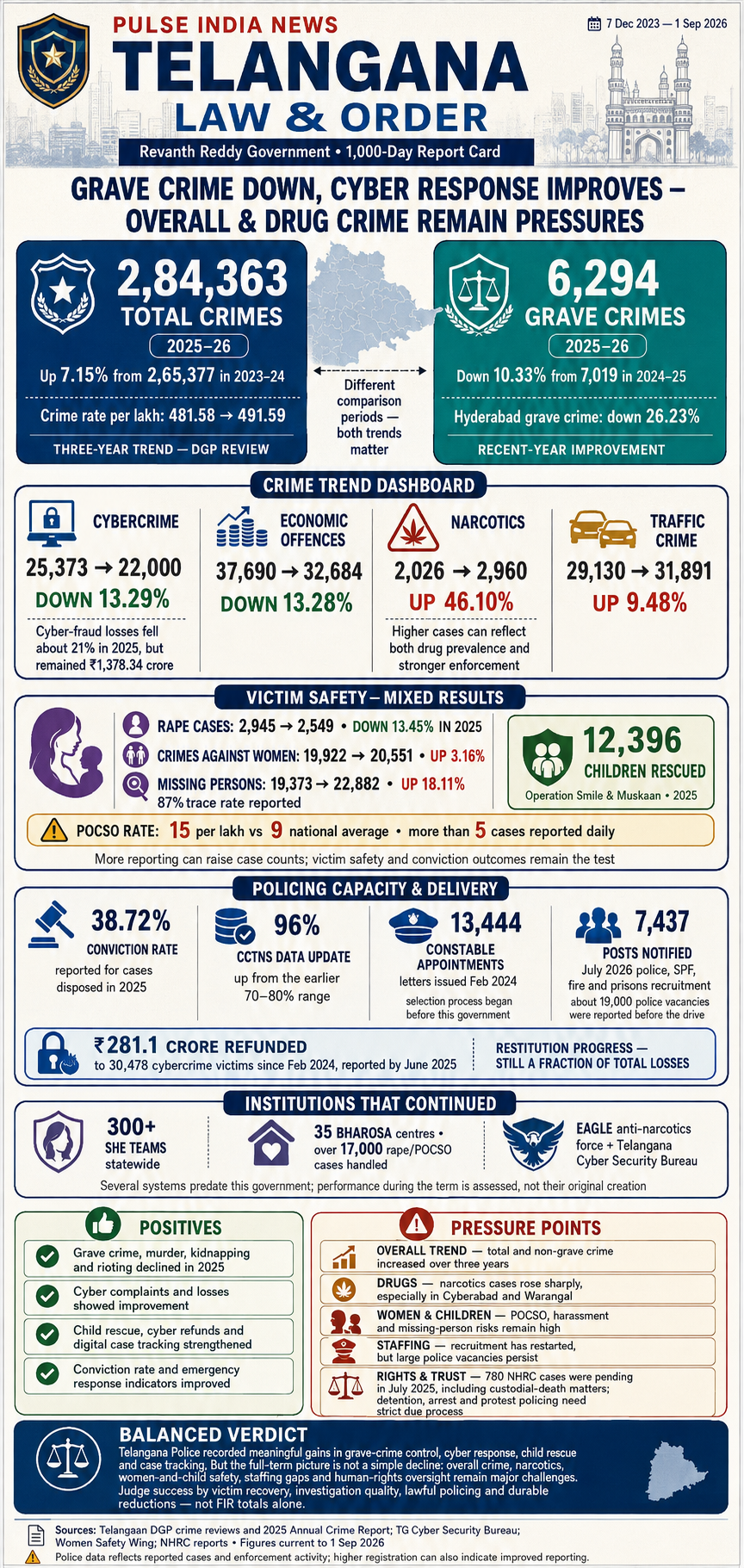
The latest police reviews show a genuinely mixed trend. Grave crime declined by 10.33% between 2024–25 and 2025–26, with Hyderabad recording a steeper fall. Cybercrime and economic-offence counts also declined in the comparison used by the DGP review, while cyber-fraud restitution, child-rescue operations and CCTNS updating improved.
At the same time, total recorded crime increased 7.15% from 2023–24 to 2025–26, narcotics cases rose by about 46% and traffic crime increased. Crimes against women and missing-person reports remained areas of concern even though rape cases fell in 2025. Reported crime reflects both incidence and willingness or ability to register cases, so FIR totals alone cannot establish success or failure. Investigation quality, conviction, victim recovery, staffing, lawful detention and human-rights oversight matter equally.
15Tourism, culture and sports
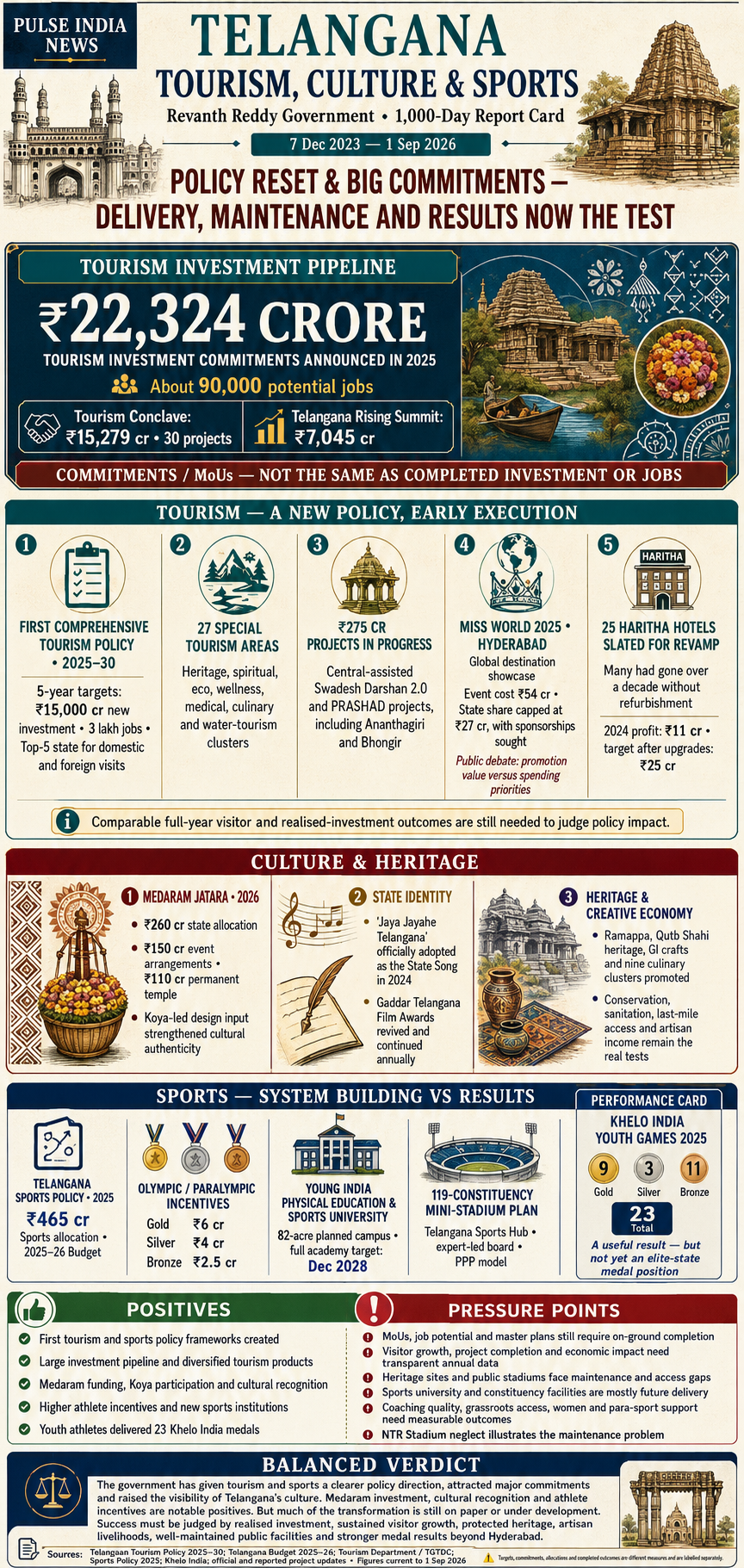
The government introduced Telangana’s first comprehensive Tourism Policy for 2025–30 and reported ₹22,324 crore in tourism investment commitments during 2025, with potential for around 90,000 jobs. It promoted special tourism areas, central-assisted destination projects, Haritha hotel renovation and major events. Medaram Jatara received a ₹260 crore allocation for the 2026 event and permanent temple work, while Koya participation improved cultural authenticity. The State Song and Gaddar Telangana Film Awards strengthened cultural recognition.
Sports Policy 2025 raised Olympic and Paralympic incentives and created new institutional structures, including the planned Young India Physical Education and Sports University. Telangana won 23 medals at the 2025 Khelo India Youth Games. Yet many tourism projects remain commitments, the sports campus is a future deliverable and maintenance gaps persist at public facilities. Visitor growth, realised investment, artisan income, coaching quality, grassroots access and sustained medal results are the appropriate outcome measures.
The fairest reading of the first 1,000 days is neither “complete transformation” nor “nothing delivered.” Telangana saw significant welfare transfers and institutional initiatives, alongside fiscal constraints and a large gap between announced ambition and completed public capacity.
Pulse India News verdict
The Revanth Reddy government’s clearest achievements are the crop-loan waiver, expansion of household support, fine-rice and ration-card coverage, Aarogyasri enhancement, teacher recruitment, the caste survey, SC sub-classification, gig-worker legislation and the Hyderabad Metro takeover. Economic growth remained strong and Telangana continued attracting major investment interest.
Its weakest areas are the incomplete pension and women’s cash-support promises, fee-reimbursement arrears, public-sector staffing gaps, unresolved irrigation liabilities, maintenance deficits and the limited on-ground completion of several mega projects. The government has established an ambitious pipeline, but pipelines are not outcomes.
Overall assessment: meaningful welfare and institutional progress, combined with uneven implementation and rising fiscal pressure. The next phase should be judged through completed homes and hospitals, functioning schools, filled vacancies, realised investments, reliable pensions, safer communities, measurable environmental recovery and transparent budget execution.
Editorial disclosure: This is an independent policy review based on information available up to September 1, 2026. Government claims, provisional estimates, investment commitments and reported outcomes are identified in context. Crime statistics refer to registered cases and enforcement data; higher registration can also reflect improved reporting. Figures may be revised by departments, auditors or courts.