📅 June 11, 2026 | By Pulse India News Desk
Hyderabad’s long-awaited Metro Rail expansion received a major boost after the Union Government indicated its willingness to participate in the ambitious Phase-II project through a 50:50 cost-sharing arrangement with the Telangana Government. The development could pave the way for one of the largest urban transport expansion projects in the country.
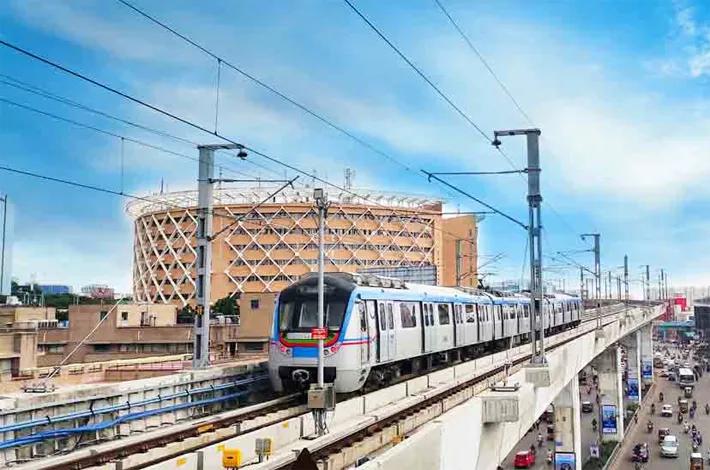
Union Housing and Urban Affairs Minister Manohar Lal Khattar reportedly informed Telangana representatives that the Centre has no objection in principle to Hyderabad Metro Phase-II and would positively examine the proposal submitted by the state government. However, final approval will depend on the evaluation of the Detailed Project Report (DPR) and technical assessments.
₹38,595 Crore Expansion Plan
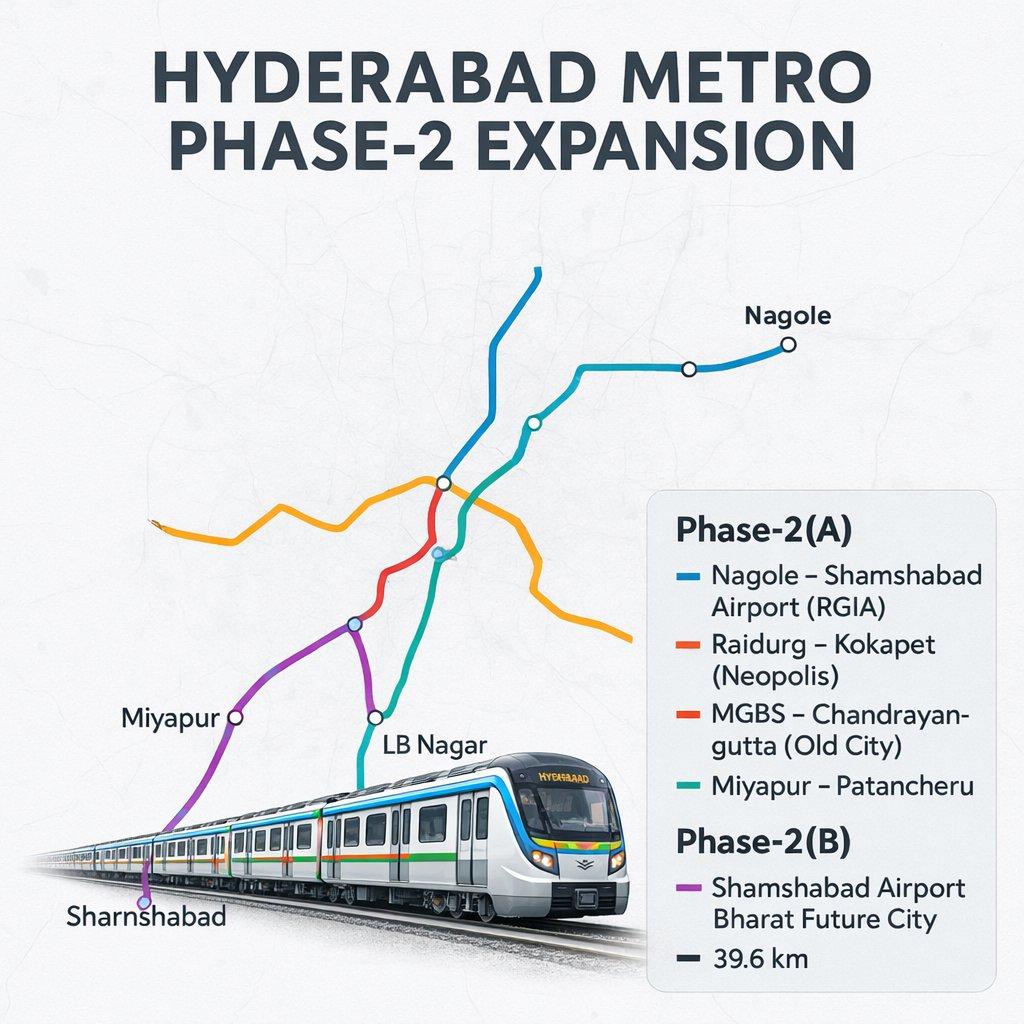
The Telangana Government has submitted a comprehensive DPR for Hyderabad Metro Phase-II, proposing a network expansion of approximately 122.9 kilometres across seven corridors at an estimated cost of ₹38,595 crore. The project aims to extend metro connectivity to several rapidly growing residential, commercial, and industrial zones across the city.
Chief Minister A. Revanth Reddy has been actively pursuing central approval for the project, emphasizing the urgent need for expanded mass transit infrastructure as Hyderabad continues to witness rapid urban growth and increasing traffic congestion.
🚇 Proposed Hyderabad Metro Phase-II Corridors
The proposed Hyderabad Metro Phase-II project aims to improve connectivity across the city’s rapidly growing residential, commercial and industrial zones. The Detailed Project Report (DPR) submitted by the Telangana Government includes seven major corridors covering 122.9 km. :contentReference[oaicite:0]{index=0}
| Corridor | Route | Length |
|---|---|---|
| Corridor IV | Nagole – Shamshabad RGIA Airport | 36.8 km |
| Corridor V | Raidurg – Kokapet Neopolis | 11.6 km |
| Corridor VI | MGBS – Chandrayangutta (Old City Corridor) | 7.5 km |
| Corridor VII | Miyapur – Patancheru | 13.4 km |
| Corridor VIII | LB Nagar – Hayathnagar | 7.1 km |
| Corridor IX | JBS – Medchal | 24.5 km |
| Corridor X | JBS – Shamirpet | 22.0 km |
The expansion will connect major growth hubs including the Airport, Kokapet, Neopolis, Old City, Medchal, Shamirpet, Patancheru and Hayathnagar, significantly improving public transport accessibility and reducing traffic congestion across Hyderabad. :contentReference[oaicite:1]{index=1}
Seven Corridors Planned
The proposed Phase-II network is expected to improve connectivity to key growth corridors, including western Hyderabad, the Old City, airport-bound routes, and emerging residential hubs. Officials believe the expansion will significantly reduce travel times and encourage greater use of public transport.
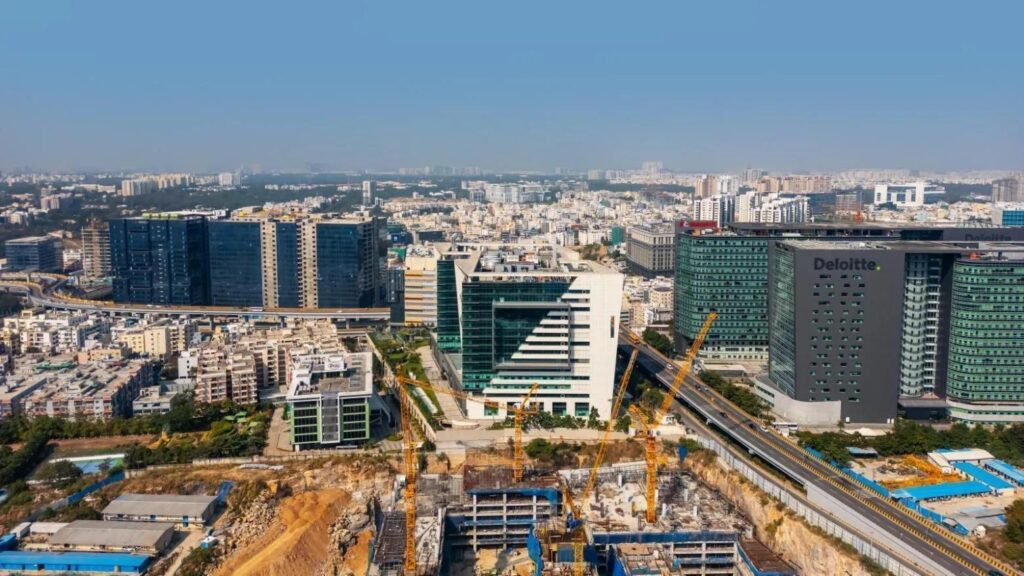
The Telangana Government has argued that Hyderabad’s expanding population and economic growth require a larger metro network capable of handling future transportation demand.
Centre to Review DPR Before Final Approval
While the Centre’s willingness to share project costs is being viewed as a positive sign, officials clarified that approval is not yet final. The Ministry of Housing and Urban Affairs will examine the DPR, technical specifications, financial viability, and implementation framework before granting formal clearance.
The project gained momentum after the Telangana Government moved to take control of Hyderabad Metro Phase-I operations, a step that was considered important for integrating future expansion plans under a unified framework.
What It Means for Hyderabad
If approved, Phase-II would transform Hyderabad’s public transportation landscape by improving connectivity to developing suburbs, business districts, educational institutions, and the airport corridor. Urban planners believe the expansion could reduce traffic congestion, lower pollution levels, and support the city’s long-term economic growth.
For lakhs of daily commuters, the project promises faster, safer, and more affordable travel options while strengthening Hyderabad’s position as one of India’s leading metropolitan cities.
As the DPR moves through the approval process, Hyderabad residents will be closely watching for the Centre’s final decision on a project that could shape the city’s transportation future for decades.
🔗 Related News
- West Bengal Fire Destroys 4,000 EVMs? Sabotage Angle Under Investigation
- India vs Afghanistan Test Preview 2026: Playing XI, Pitch Report and Prediction
- ICC Women’s T20 World Cup 2026 Full Schedule: Fixtures, IST Timings and Venues
- FIFA World Cup 2026 Full Schedule: Groups, Fixtures, Venues and Knockout Bracket