📅 May 13, 2026 | By Pulse India News Desk
China’s decision to approach the World Trade Organization (WTO) against India’s support measures for the solar and IT sectors is being viewed as much more than a routine trade dispute.
Analysts say the move reflects Beijing’s growing concern over India’s rapid manufacturing push and the broader global effort to reduce dependence on Chinese supply chains.
China has formally urged the WTO to establish a dispute panel against India, arguing that New Delhi’s tariffs, domestic manufacturing incentives and local sourcing requirements unfairly discriminate against Chinese products.
The dispute mainly targets sectors linked to:
- Solar energy equipment
- Electronics manufacturing
- Information technology hardware
🌍 Bigger Than a Trade Dispute
Behind the legal language of trade rules lies a much bigger geopolitical and economic story.
For nearly two decades, China dominated global manufacturing. From electronics and telecom equipment to solar panels and industrial machinery, Chinese factories became the backbone of the global supply chain.
That manufacturing dominance helped China generate massive export revenues, create millions of jobs and strengthen its global economic influence.
However, the global manufacturing environment has started changing rapidly over the past few years.
🔄 The Rise of “China Plus One”
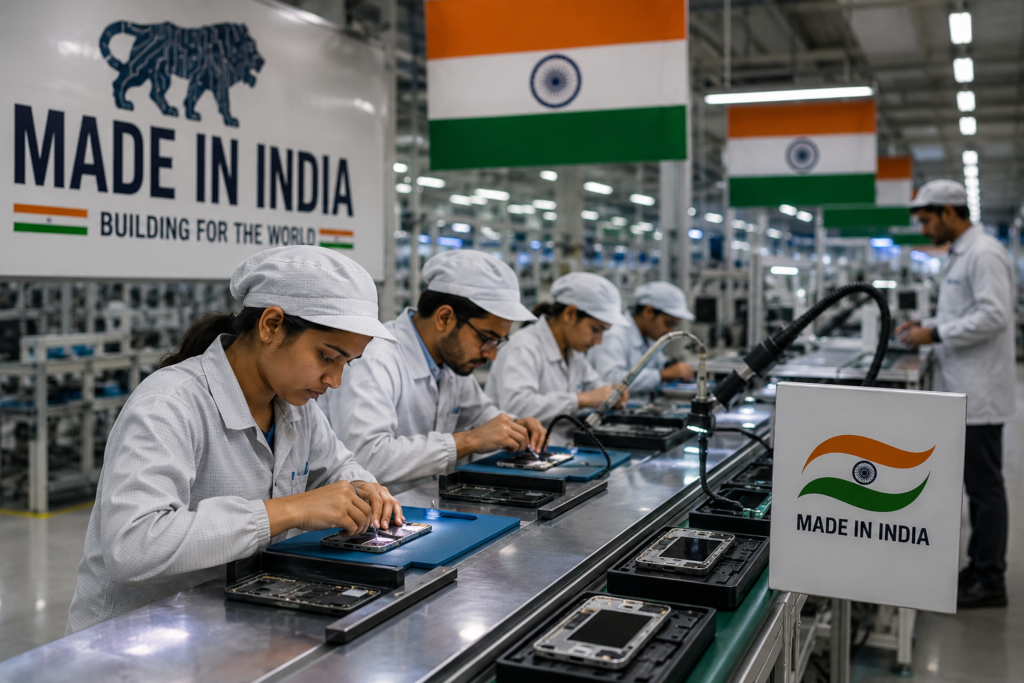
After the COVID pandemic, US-China trade tensions and rising geopolitical risks, many global companies began searching for alternatives to China-centric supply chains.
This strategy, commonly known as “China Plus One,” aims to diversify manufacturing into countries like India, Vietnam and Mexico instead of depending entirely on China.
India has emerged as one of the biggest beneficiaries of this shift.
Through initiatives like “Make in India” and Production Linked Incentive (PLI) schemes, New Delhi aggressively pushed companies to manufacture inside the country.
The government introduced incentives for sectors such as:
- Electronics
- Semiconductors
- Batteries
- Solar equipment
At the same time, tariffs on some imported goods were increased to encourage local production.
🏭 Why China Is Concerned
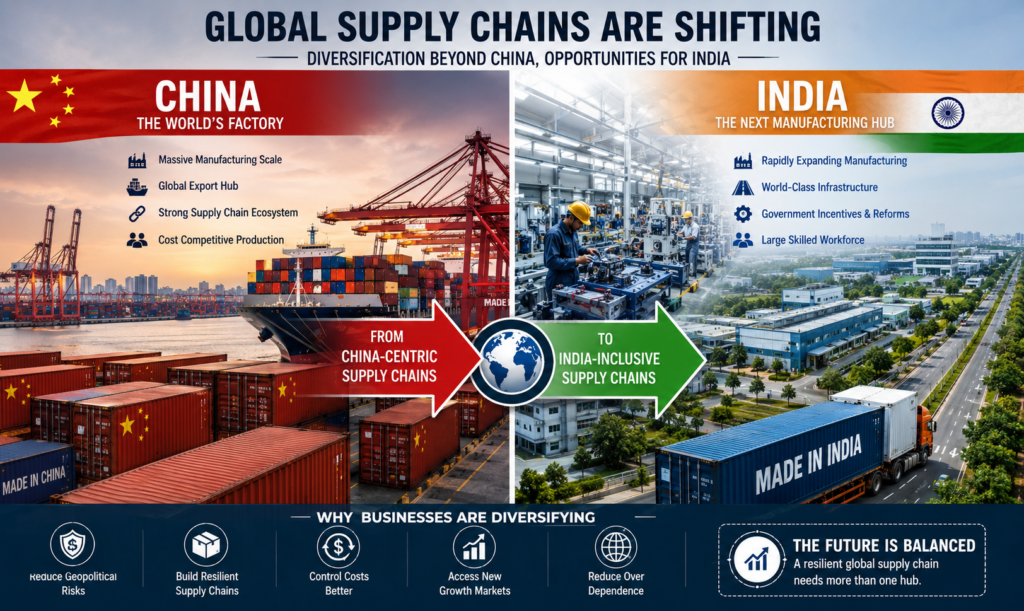
For Beijing, India is not just another market.
With over 1.4 billion people and one of the world’s fastest-growing economies, India represents a massive future manufacturing and consumer base.
If India successfully replaces Chinese imports with domestic production, China could gradually lose billions of dollars in export opportunities over the next decade.
The concern becomes even more serious because China’s own economy is currently facing pressure.
Economic growth has slowed compared to previous decades. The property sector remains under stress, while youth unemployment has become a growing issue.
In this environment, manufacturing exports remain extremely important for maintaining jobs and economic stability inside China.
☀️ Solar and Electronics at the Center
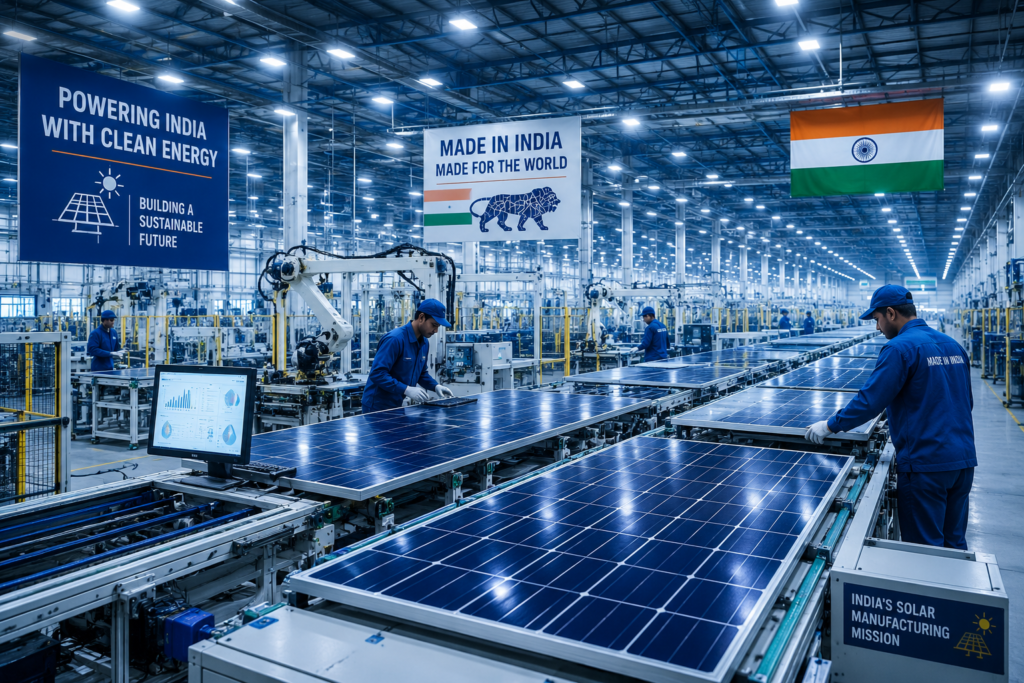
The solar sector has become one of the biggest battlegrounds.
China currently dominates the global solar supply chain, controlling a major share of solar panel, wafer and battery manufacturing.
India, however, has started investing heavily in domestic solar manufacturing capacity to reduce import dependence and strengthen energy security.
A similar shift is happening in electronics manufacturing.
Over the last decade, India’s smartphone assembly and electronics exports have grown significantly as global companies expand operations beyond China.
📊 India vs China Manufacturing Shift (2014–2024)
⚠️ China’s Bigger Fear
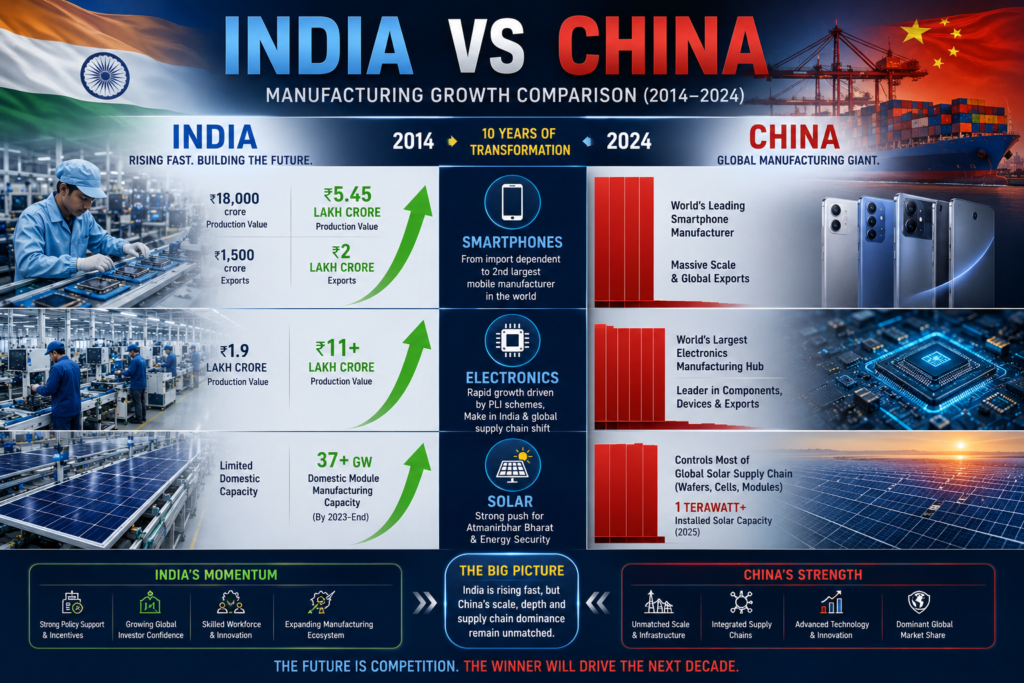
Despite India’s rapid growth, experts say the gap between the two countries still remains enormous.
China continues to dominate global manufacturing scale, advanced supply chains and export infrastructure.
However, Beijing’s concern is not about an immediate loss of dominance.
The real fear is gradual long-term erosion as more countries attempt to localise manufacturing and reduce strategic dependence on Chinese imports.
If India continues growing at the current pace, global companies may increasingly shift investments away from China over the next decade, especially in electronics, semiconductors and clean-energy manufacturing.
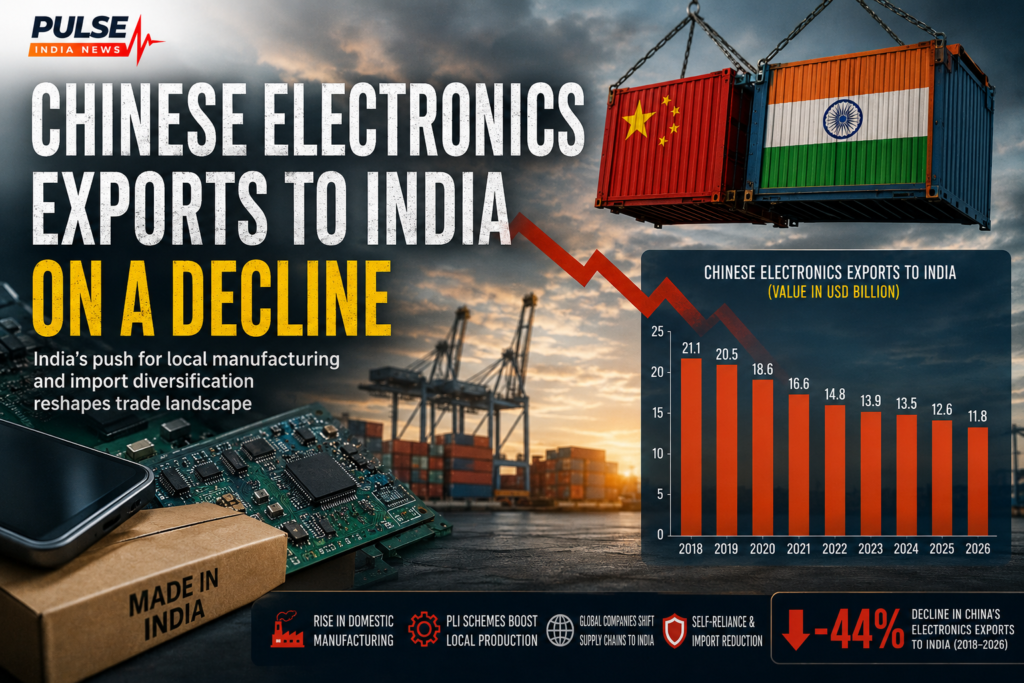
📉 Declining Chinese Electronics Exports to India
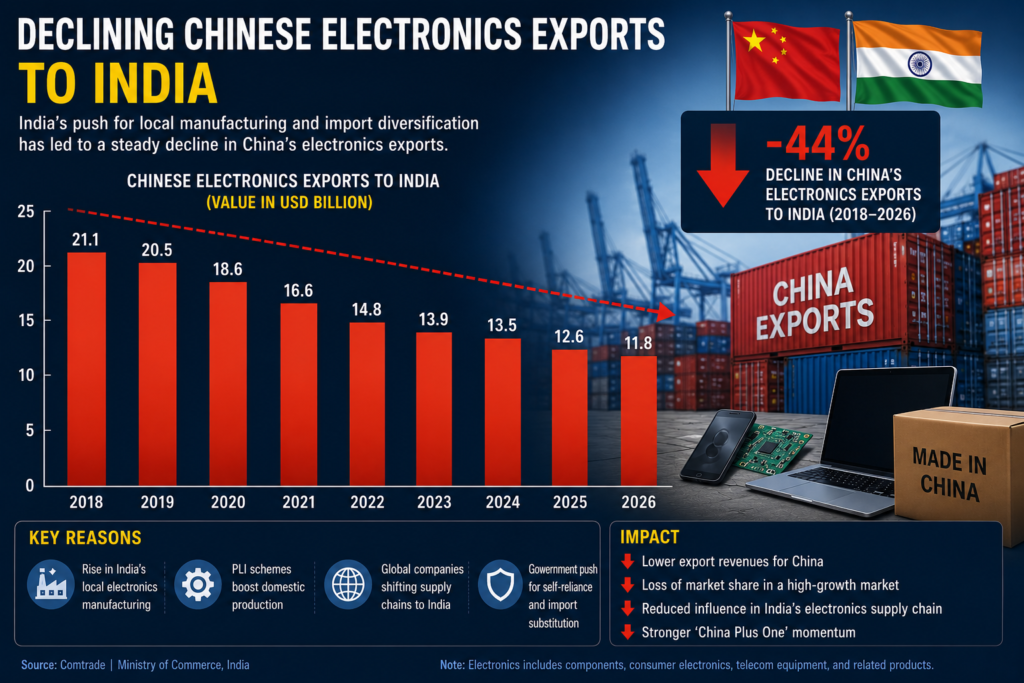
China’s concern is also linked to the gradual decline in its dominance over India’s electronics imports.
For years, India depended heavily on China for smartphones, telecom equipment, electronic components and consumer electronics.
However, the situation has slowly started changing under the “Make in India” initiative and Production Linked Incentive (PLI) schemes.
India rapidly expanded local smartphone and electronics manufacturing over the past decade.
Global companies such as Apple suppliers Foxconn, Pegatron and Wistron increased production inside India instead of exporting finished products from China.
Samsung also expanded its Indian manufacturing operations.
As domestic production increased, India’s dependence on imported electronics began declining in several sectors.
China still remains a major supplier of electronic components and industrial parts, but India is trying to gradually build deeper local supply chains.
For Beijing, this trend is strategically important because India is one of the world’s fastest-growing electronics markets.
If India successfully develops large-scale domestic manufacturing ecosystems, China could eventually lose export revenues, manufacturing contracts and long-term market influence in South Asia.
🧭 Why the WTO Case Matters
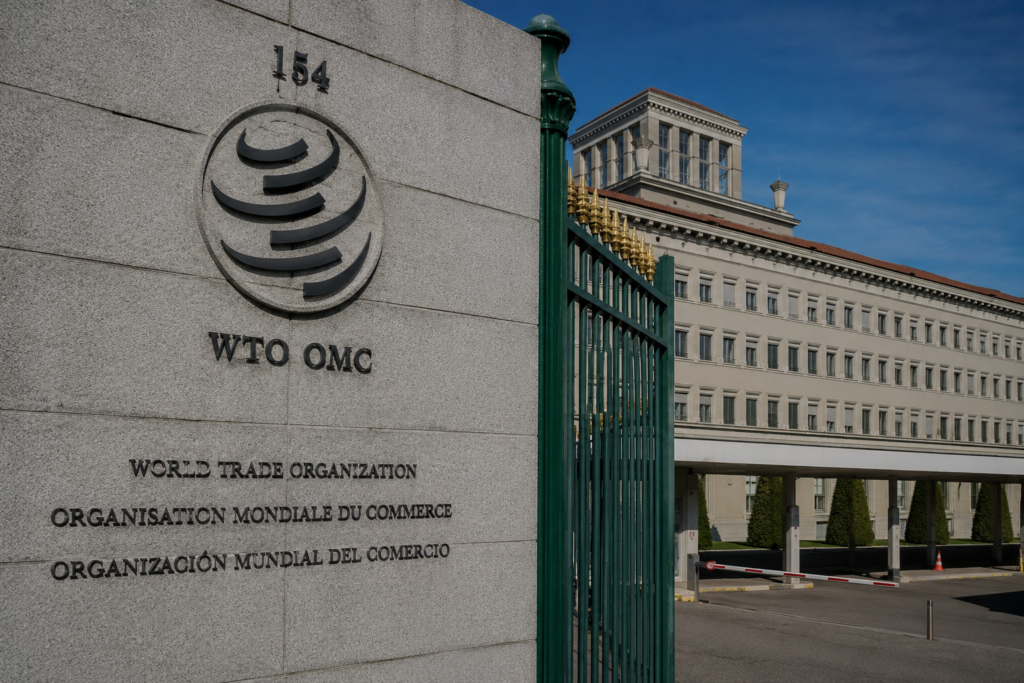
The WTO dispute is therefore being viewed as both an economic and strategic signal.
By challenging India’s policies, China is attempting to defend its export-driven manufacturing ecosystem while discouraging other nations from adopting aggressive localisation measures.
India, meanwhile, argues that building domestic manufacturing capability is essential for:
- Economic security
- Energy independence
- Supply-chain resilience
The dispute also highlights a broader global trend where traditional free-trade principles are increasingly colliding with modern industrial policies focused on strategic self-reliance.
As economic competition intensifies worldwide, the India-China manufacturing battle could become one of the defining industrial rivalries of the next decade.
🔗 Related News
- PM Modi’s 9-Point Plan to Reduce Imports and Boost India’s Self-Reliance
- India Approves SEZ for First Chip Fabrication Plant as Tata Plans ₹91,000 Crore Investment
- India’s Forex Reserves Become a Strong Shield Against Global Economic Risks
- Tejas Engine Gets Support Boost as India Plans First Domestic GE Aerospace Depot