📅 May 07, 2026 | By Pulse India News Desk
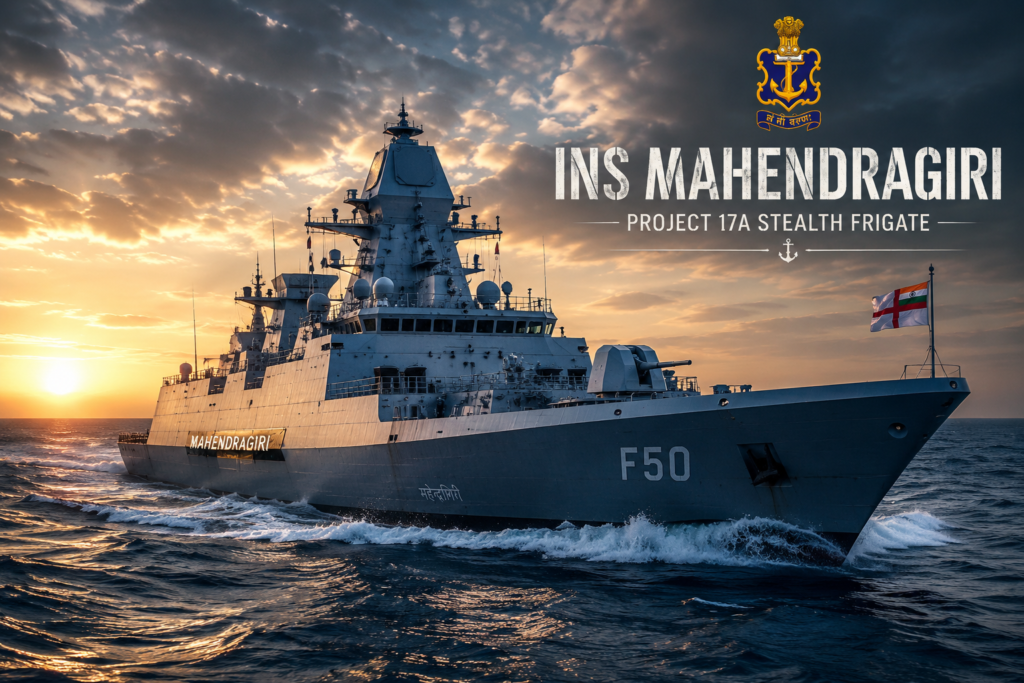
The Indian Navy has received INS Mahendragiri, the sixth stealth frigate built under India’s advanced Project 17A warship programme, in another step towards expanding the country’s indigenous naval capabilities.
The warship was built by Mazagon Dock Shipbuilders Limited (MDL) in Mumbai and is part of the Navy’s next-generation Nilgiri-class stealth frigates.
Its induction comes as India continues to modernise its naval fleet amid growing strategic competition in the Indian Ocean region and increasing focus on maritime security.
What is Project 17A?
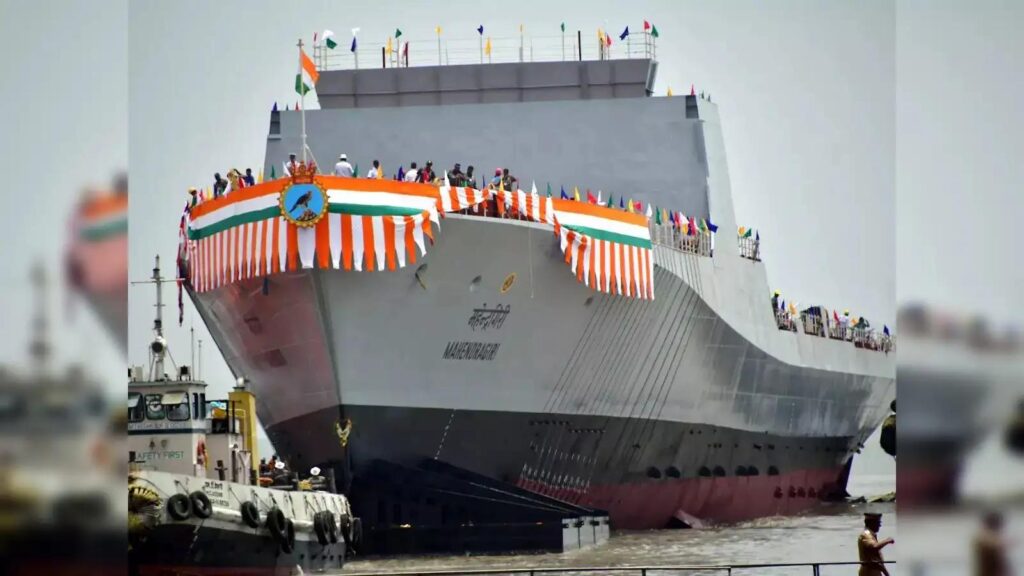
Project 17A is an Indian Navy programme aimed at building advanced stealth-guided missile frigates with improved combat capability and reduced radar visibility.
The project includes seven warships being constructed by:
- Mazagon Dock Shipbuilders Limited (Mumbai)
- Garden Reach Shipbuilders & Engineers (Kolkata)
The frigates are designed as upgraded successors to the earlier Shivalik-class warships, incorporating modern stealth shaping, integrated sensors and automated systems.
Indian defence officials say the programme is intended to improve the Navy’s operational flexibility across multiple combat scenarios.
⚓ INS Mahendragiri: Key Specifications
| Category | Details |
|---|---|
| Type | Guided-missile frigate |
| Displacement | 6,670 tonnes |
| Length | 149 m |
| Beam | 17.8 m |
| Draft | 5.22 m |
| Speed | 32 knots |
| Range |
2,500 nautical miles at 28 knots 5,500 nautical miles at 16–18 knots |
| Complement | 226 personnel — 35 officers and 191 sailors |
| Propulsion |
CODOG propulsion system 2 × HAL-General Electric LM2500+ gas turbines 2 × MAN Diesel 12V28/33D STC engines |
| Radar Systems |
IAI-BEL EL/M-2248 MF-STAR S-Band AESA radar Indra-TASL Lanza-N L-band air surveillance radar |
| Sonar | BEL HUMSA-NG active/passive sonar |
| Combat Suite | CMS-17A Combat Management System |
| Electronic Warfare |
DRDO Shakti EW suite with ESM/ECM Radar Finger Printing System |
| Decoys |
4 × Kavach decoy launchers 2 × NSTL Maareech torpedo-countermeasure systems |
| Anti-Air Weapons | 32 Barak-8 surface-to-air missiles in 4 × 8-cell VLS |
| Anti-Ship Weapons | 8 BrahMos anti-ship missiles in 1 × 8-cell VLS |
| Anti-Submarine Weapons |
2 × triple-tube torpedo launchers for Shyena torpedoes 2 × RBU-6000 anti-submarine rocket launchers |
| Guns |
1 × BHEL-OTO Melara 76 mm Strales naval gun 2 × AK-630M close-in weapon systems Multiple OFT 12.7 mm M2 remote-controlled guns |
| Aircraft | 1 × HAL Dhruv or Sea King Mk.42B helicopter |
| Aviation Facilities | Enclosed helicopter hangar for one multi-role helicopter |
What can INS Mahendragiri do?
INS Mahendragiri is designed for a range of maritime missions, including:
- Anti-air warfare
- Anti-submarine operations
- Surface combat missions
- Escort duties for carrier battle groups
- Long-range maritime deployments
The ship is equipped with a combination of missile systems, radar networks and electronic warfare equipment intended to help it operate in high-threat environments.
Key systems onboard include:
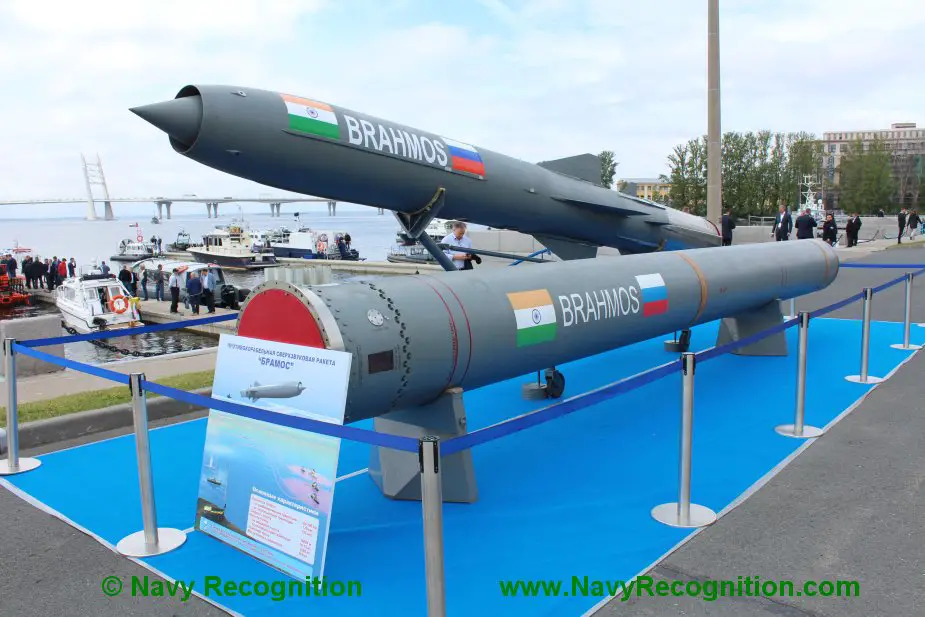
- 🚀 BrahMos supersonic cruise missiles
- 🛡️ Barak-8 air defence missile system
- 🌊 Anti-submarine warfare systems
- 🛰️ Advanced multifunction radar
- 🎯 Integrated electronic warfare suites
The frigate can also operate naval helicopters used for surveillance and anti-submarine missions.
Focus on indigenous defence manufacturing
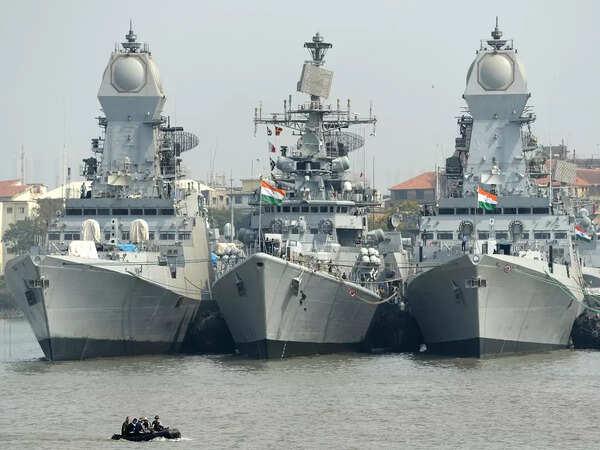
Indian officials say the warship reflects the country’s increasing focus on domestic defence production under the government’s Aatmanirbhar Bharat (self-reliant India) initiative.
A significant portion of the ship’s systems and equipment were sourced from Indian manufacturers.
India has been steadily expanding local production of military platforms in recent years, including:
- Aircraft carriers
- Destroyers
- Missile systems
- Submarines
- Surveillance technologies
The government has argued that indigenous manufacturing reduces import dependence while strengthening the domestic defence industry.
Why the Indian Ocean matters
India’s naval modernisation comes amid rising geopolitical competition in the Indo-Pacific region.
The Indian Ocean is considered strategically important because it carries a large share of global trade and energy shipments.
In recent years, India has increased its focus on:
- Maritime surveillance
- Sea lane protection
- Regional naval partnerships
- Countering expanding Chinese naval presence
Analysts say advanced stealth frigates like INS Mahendragiri are expected to play an important role in India’s future maritime strategy.
India’s wider naval expansion
The induction of INS Mahendragiri is part of a broader naval modernisation programme currently underway.
Several major projects are being developed simultaneously, including:
- INS Vikrant aircraft carrier programme
- Project 15B stealth destroyers
- Conventional and nuclear submarine projects
- Long-range missile integration programmes
The Indian Navy has previously said it aims to build a larger and more technologically advanced fleet capable of operating across the Indo-Pacific region.
Final analysis
INS Mahendragiri represents both a military and industrial milestone for India.
For the Navy, it strengthens frontline maritime capability with a modern multi-role stealth platform.
For India’s defence sector, it demonstrates growing domestic expertise in designing and building complex warships.
As regional competition in the Indo-Pacific intensifies, such platforms are expected to become increasingly important to India’s long-term strategic planning.