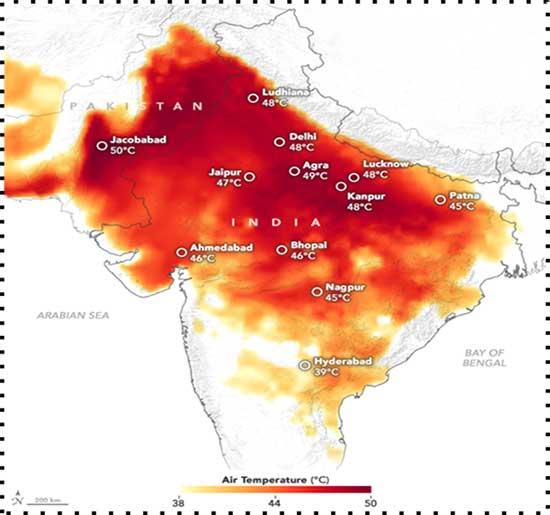
India is experiencing an unusually intense and widespread heatwave in April 2026, with temperatures rising sharply across both northern and central regions. Cities such as Hyderabad, Delhi, Nagpur, Jaipur, and Ahmedabad are already recording temperatures above 40°C, levels that are typically seen later in May or early June.
This early surge has caught many off guard. What would normally be the build-up phase of summer has instead turned into a full-blown heatwave, affecting daily life, health conditions, and energy demand across the country.
🌡️ An early shift into peak summer conditions
What makes this year different is not just the intensity of the heat, but its timing. In many parts of India, April is usually marked by rising temperatures but still offers occasional relief through pre-monsoon showers or cloud cover. However, in 2026, those transitional weather patterns are largely missing.
Cities like Nagpur and Ahmedabad are already nearing 45°C, while Delhi has crossed 41–42°C much earlier than expected. Hyderabad, too, is seeing persistent temperatures above 40°C, with little variation between days. This suggests that India has effectively entered peak summer conditions weeks ahead of schedule.
🌬️ Dry winds intensifying the heat across regions
A key factor behind this widespread heat is the dominance of hot, dry north-westerly winds sweeping across the subcontinent. Originating from arid regions in Rajasthan and beyond, these winds carry intense heat and low moisture.
As they move across states like Telangana, Maharashtra, Uttar Pradesh, and Delhi, they prevent any cooling effect that might otherwise come from humidity or cloud formation. The result is a sharp, dry heat that feels harsher on the body and accelerates temperature rise during the day.
☀️ Lack of rainfall and cloud cover worsening conditions
Another critical reason behind the current heatwave is the absence of rainfall activity. Normally, parts of India witness brief spells of pre-monsoon showers in April, which help moderate temperatures.
This year, however, skies have remained largely clear. Without clouds to block solar radiation or rain to cool the surface, land temperatures are rising continuously. Day after day, heat accumulates without interruption, creating a compounding effect that pushes temperatures higher.
A heatwave sweeping across India earlier than expected

While the heatwave is widespread, its impact is particularly severe in major urban centres. Cities like Hyderabad and Delhi are experiencing what meteorologists call the “urban heat island effect.”
In simple terms, concrete structures, asphalt roads, and reduced vegetation trap heat during the day and release it slowly at night. This prevents temperatures from dropping after sunset, leading to uncomfortable nights and continuous heat stress.
As a result, people are not getting relief even during nighttime hours, which significantly increases the risk of heat-related illnesses.
🌍 Climate patterns and El Niño adding to the intensity
Beyond immediate weather conditions, larger climate patterns are also playing a role. India is currently under the influence of developing El Niño conditions in the Pacific Ocean, which are often associated with hotter and drier weather across the Indian subcontinent.
El Niño years tend to suppress rainfall and increase temperatures, especially during the pre-monsoon period. Experts believe this could make the summer of 2026 not only hotter but also longer-lasting compared to recent years.
🔁 A continuous heat cycle with no immediate relief
What is making the situation more concerning is the lack of any significant weather system that could bring relief. According to forecasts, there are no strong rain-bearing systems expected in the immediate future.
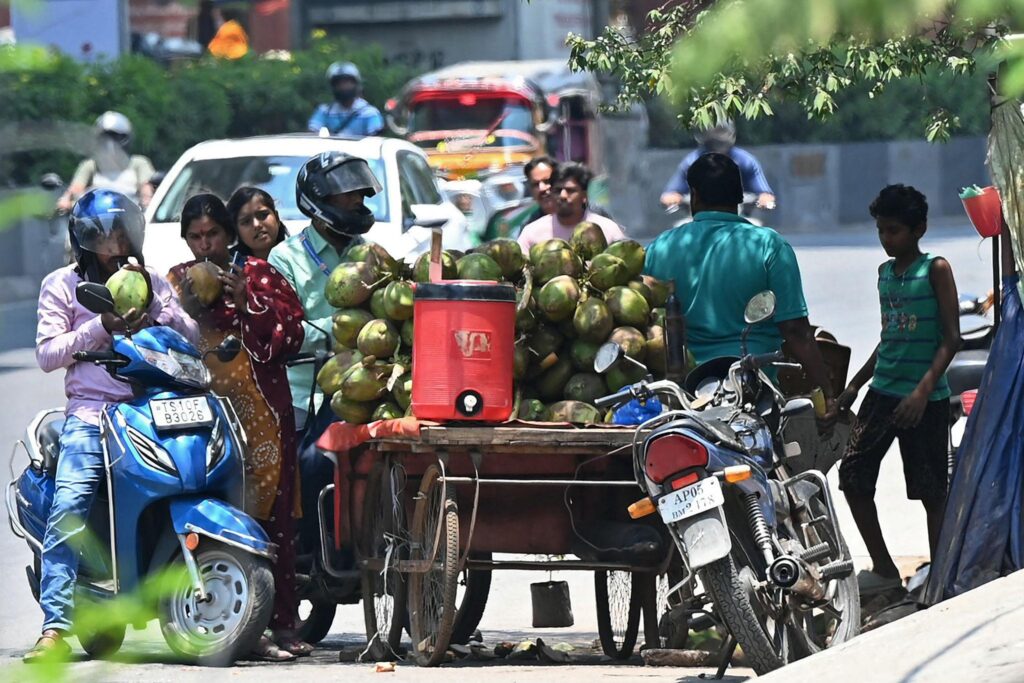
This means the current heatwave is likely to persist, with temperatures either remaining at high levels or increasing further. The absence of a “break” in the weather cycle is allowing heat to build continuously across large parts of the country.
📊 A nationwide pattern, not a local event
From central India’s Nagpur to western cities like Ahmedabad, and from Hyderabad in the south to Delhi in the north, the pattern is consistent — early, intense, and sustained heat.
This is no longer a localized phenomenon. Instead, it reflects a broader shift in how summer is unfolding across India, with multiple regions experiencing similar conditions simultaneously.
⚠️ Why this heatwave feels more severe than usual
The current heatwave stands out not just because of high temperatures, but because of how it behaves. It has arrived earlier than expected, persists throughout the day and night, and lacks any cooling interruptions.
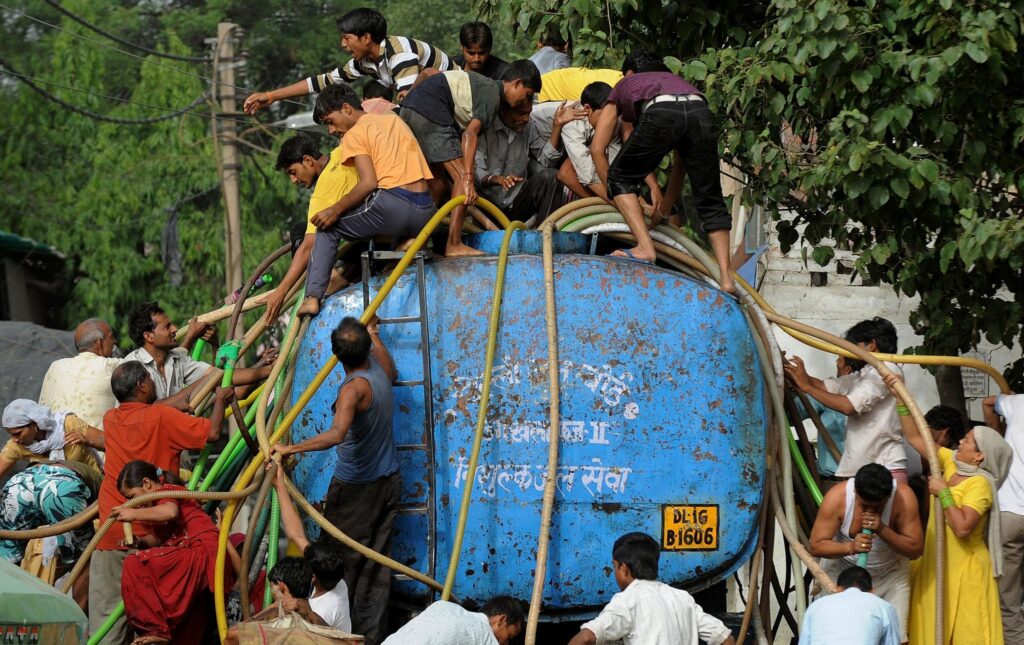
Combined with urban expansion and changing climate patterns, this creates a situation where the heat feels more intense, lasts longer, and affects more people than before.
🧠 Final Analysis
India’s April 2026 heatwave is the result of multiple factors coming together at once — persistent dry winds, absence of rainfall, urban heat retention, and broader climate shifts like El Niño.
Together, these elements have transformed what should have been a gradual transition into summer into an early and intense heatwave gripping much of the country.
📌 In simple terms, April in India is no longer behaving like April, it already feels like the peak of May.