📅 April 09, 2026 | By Pulse India News Desk
Modern warfare is entering a technology dominated phase, where success is no longer defined purely by firepower, but by speed of decision making, data integration, and autonomous capabilities.
From stealth bombers to AI-driven targeting systems and drone swarms, militaries are shifting toward distributed, intelligent, and network-centric combat architectures.
✈️ B-21 Raider & Stealth Strike Systems
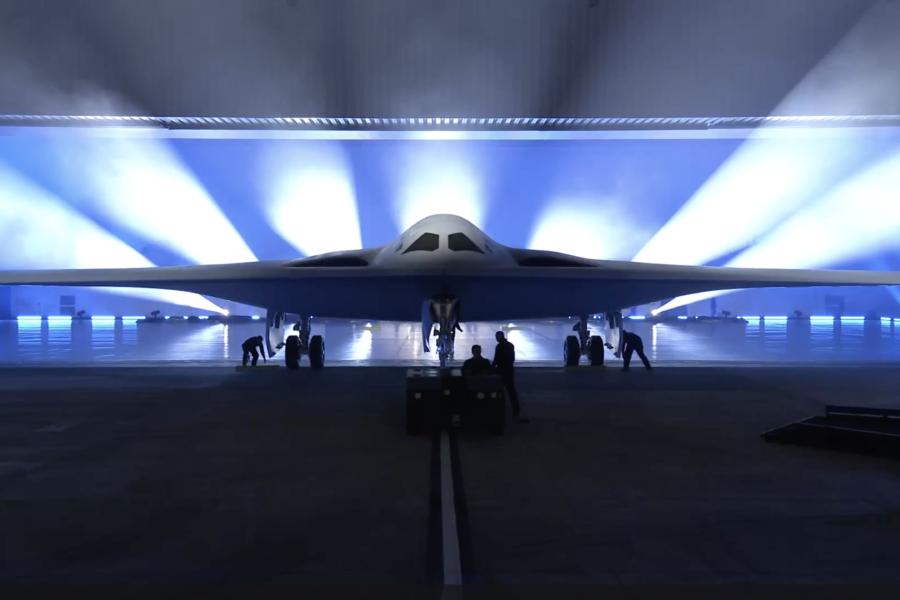
The B-21 Raider represents the next evolution in stealth strike capability, designed not just as an aircraft, but as a digitally integrated strike platform capable of operating in heavily defended airspace.
🔬 Key Technologies Explained
- Low-Observable Design:
Advanced shaping and radar-absorbing materials reduce detection across radar, infrared, and electromagnetic spectrums. This allows the aircraft to penetrate deep into enemy territory without early warning systems detecting it. - Open Architecture Avionics:
The aircraft uses modular software systems, enabling rapid upgrades without redesigning hardware. This ensures the platform stays relevant against evolving threats for decades. - Long-Range Penetration Capability:
Designed to operate across continents without refueling, allowing strategic strike missions from safe distances while avoiding enemy defenses. - Multi-Role Payload (Conventional + Nuclear):
Flexibility to carry both conventional precision weapons and nuclear payloads makes it a critical component of deterrence strategy.
⚖️ Section Insight (Pros & Challenges)
Pros:
- Deep strike capability in contested environments
- Future-proof via software upgrades
- High survivability
Challenges:
- Extremely high cost per unit
- Maintenance complexity of stealth coatings
- Vulnerability to next-gen radar (quantum / multi-static systems)
🌍 Where Countries Stand
- USA: Operational leader (B-21 entering service ~2026–2030)
- China: Developing H-20 stealth bomber (expected late 2020s)
- Russia: PAK DA program delayed, limited progress
- India: No stealth bomber yet; focusing on fighters (AMCA)
🤖 AI-Assisted Targeting & Edge Warfare
AI-assisted targeting is transforming warfare by enabling real-time threat detection using onboard processing, reducing dependency on centralized command systems.
⚙️ Key Technologies Explained
- Real-Time Threat Detection (Onboard AI):
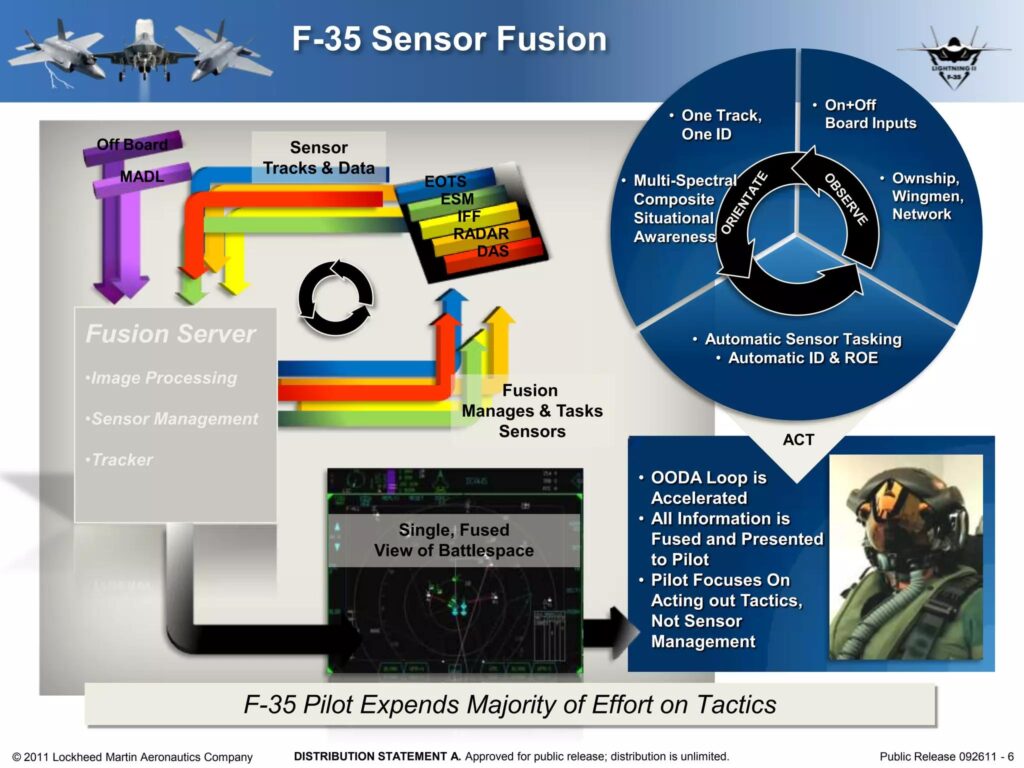
Sensors like EO/IR cameras and radar feed data into onboard processors, allowing platforms to identify threats instantly without external communication. This is critical in jammed or denied environments. - Sensor Fusion Systems:
Combines data from multiple sources (satellites, drones, radar) into a single operational picture, improving accuracy and reducing false alarms. - Automated Target Recognition (ATR):
AI models trained on massive datasets can identify vehicles, missile systems, and troop movements with high speed and accuracy. - Adaptive Targeting Algorithms:
Systems learn from evolving battlefield conditions, improving decision-making over time and adjusting targeting priorities dynamically.
⚖️ Section Insight (Pros & Challenges)
Pros:
- Decision speed reduced to seconds
- High accuracy in complex environments
- Reduced reliance on human operators
Challenges:
- Ethical concerns over autonomous strikes
- Risk of misidentification (false positives)
- Vulnerability to spoofing or adversarial attacks
🌍 Where Countries Stand
- USA: Leader (Project Maven, JADC2 integration by 2025+)
- China: Rapid scaling (AI warfare doctrine, 2030 goal)
- Israel: Highly operational (real-time strike systems in combat)
- Russia: Combat-tested but less advanced
- India: Emerging (DRDO AI programs, deployment by late 2020s)
🚁 Drone Warfare Expands Across Nations
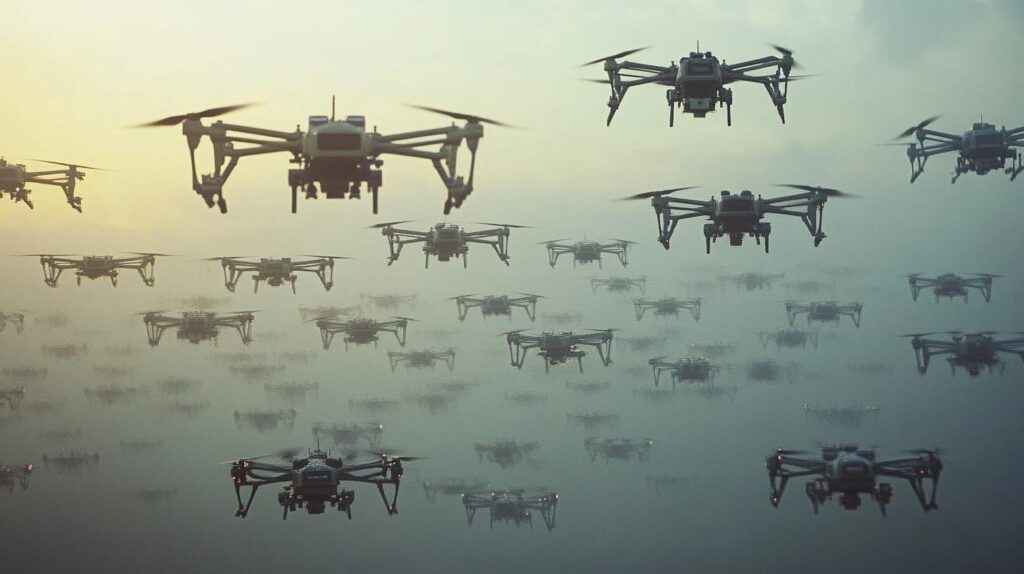
Unmanned systems are rapidly evolving into autonomous combat assets, capable of executing missions independently or in coordinated swarms.
⚙️ Key Technologies Explained
- AI-Powered Targeting in Drones:
Drones can now independently detect and track targets using onboard AI, reducing operator workload and enabling faster response times in dynamic combat environments. - Swarm Intelligence:
Multiple drones operate as a coordinated unit, sharing data and executing complex maneuvers like overwhelming air defenses or conducting distributed surveillance. - Loitering Munitions:
These drones hover over a battlefield, identify targets, and strike when conditions are optimal—combining surveillance and attack roles into a single platform. - Undersea Autonomous Vehicles (UUVs):
Used for detecting submarines, protecting underwater infrastructure, and conducting long-duration surveillance missions without human intervention.
⚖️ Section Insight (Pros & Challenges)
Pros:
- Low-cost force multiplier
- Reduced risk to human pilots
- High operational flexibility
Challenges:
- Vulnerable to electronic warfare (jamming/spoofing)
- Limited endurance for smaller drones
- Ethical concerns in autonomous strike roles
🌍 Where Countries Stand
- USA: Advanced ISR + combat drones (MQ-9, loyal wingman)
- China: Mass production + swarm tech leader
- Turkey: Combat-proven drones (Bayraktar TB2)
- Israel: Pioneer in UAV tech
- India: Growing rapidly (imports + indigenous drones like TAPAS)
- Russia: Shocked world by testing nuclear swarm drone which has unlimited range
🛫 Sixth-Generation Fighters & Network Warfare
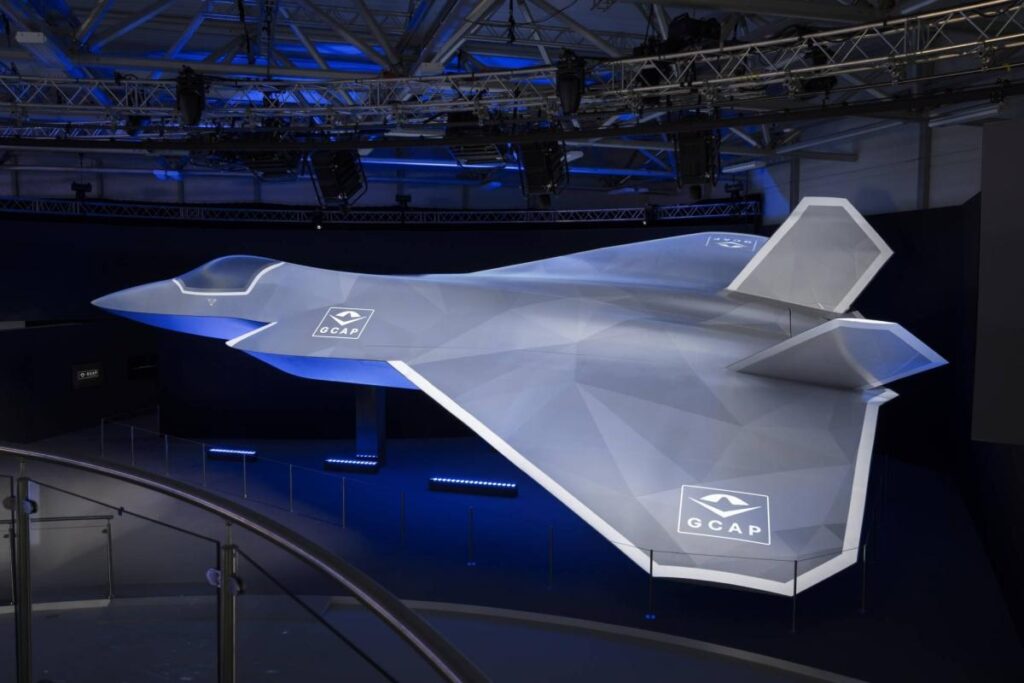
Sixth-generation fighters are evolving into networked combat systems, acting as airborne command centers rather than standalone aircraft.
⚙️ Key Technologies Explained
- AI Co-Pilot Systems:
AI assists pilots by managing sensors, suggesting maneuvers, and reducing cognitive overload during high-speed combat situations. - Loyal Wingman Drones:
Unmanned drones accompany fighter jets, performing tasks like reconnaissance, electronic warfare, or even absorbing enemy fire. - Sensor Fusion & 360° Awareness:
Integrates data from multiple platforms into a unified battlefield picture, allowing pilots to make faster and more informed decisions. - Directed Energy Weapons (Future):
Laser systems being developed for missile interception and precision targeting, offering near-instant engagement speeds.
⚖️ Section Insight (Pros & Challenges)
Pros:
- Dominance through information superiority
- Reduced pilot workload
- Multi-role flexibility
Challenges:
- Extremely high development costs
- Complex integration of AI and systems
- Dependence on secure data networks
🌍 Where Countries Stand
- EU: GCAP Active development (2035 target)
- United States: NGAD (Advanced but classified)
- France: FCAS (Under development)
- China: Testing prototypes
- India: AMCA (5th gen first, 6th gen later)
🧠 Final Analysis: The Rise of Intelligent Warfare
The battlefield is shifting toward autonomous, AI-driven, and network-centric systems, where:
- Speed of data processing defines victory
- Platforms act as nodes in a larger combat network
- Humans supervise rather than control every action
👉 Future wars will not just be fought with weapons but with algorithms, sensors, and real-time intelligence systems.
⚠️ Disclaimer: This article is an original analysis by Pulse India News based on publicly available defense developments, technology trends, and global military programs.