📅 March 30, 2026 | By Pulse India News Desk
🚨 India’s Biggest Indigenous Air Defence Push Yet
India’s ambitious Project Kusha has entered a decisive phase, with the Indian Air Force (IAF) approving the induction of five squadrons of the long-range air defence system.
This move signals a major shift towards self-reliance in advanced missile defence, reducing dependence on foreign platforms like the S-400.
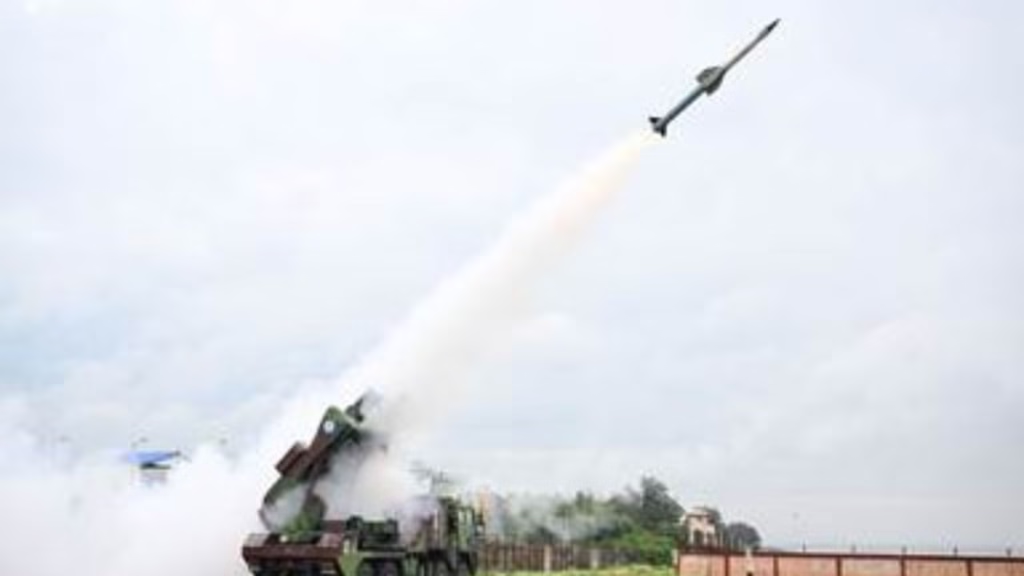
🚀 What Makes Project Kusha So Important?
Developed by DRDO, Project Kusha is designed as a multi-layered, long-range air defence system capable of neutralising:
- Fighter jets (including stealth aircraft)
👉 Advanced radar systems are expected to detect and track even low-observable (stealth) aircraft, ensuring early interception before they enter critical zones. - Cruise missiles
👉 These missiles fly at low altitudes and are hard to detect, but Kusha aims to counter them using precision tracking and quick-response interception. - Ballistic missile threats
👉 Designed to engage high-speed incoming missiles in mid or terminal phases, adding a crucial layer to India’s missile defence shield. - Drone swarms
👉 With modern warfare seeing increased drone usage, Kusha is expected to handle multiple small targets simultaneously.
Expected interception range: 150 km to 350+ km
👉 This wide range allows engagement of threats far from Indian airspace, reducing risk to key cities and military bases.
Designed to rival: S-400 & Patriot systems
👉 The goal is to match or exceed global standards while maintaining full indigenous control and customization.
As discussions around Project Kusha gather pace, many readers are asking how India’s upcoming indigenous air defence system compares with two of the world’s best-known missile shields — Russia’s S-400 Triumf and America’s Patriot. While Kusha is still under development, it is already being viewed as a major strategic programme that could reshape India’s long-range air defence posture in the coming years.
Project Kusha vs S-400 vs Patriot: Full Comparison
As India pushes ahead with Project Kusha, comparisons with globally known air defence systems like Russia’s S-400 Triumf and America’s Patriot are becoming more relevant. While Kusha is still in the testing and early production phase, it is being positioned as a long-range, multi-layered indigenous air defence system for the Indian Air Force. :contentReference[oaicite:1]{index=1}
| Feature | Project Kusha | S-400 Triumf | Patriot |
|---|---|---|---|
| Country of origin | India | Russia | United States |
| Developer / Manufacturer | DRDO-led indigenous programme | Almaz-Antey | Raytheon / Lockheed Martin ecosystem |
| System type | Long-range surface-to-air missile (SAM) / area air defence system | Long-range SAM / anti-air and anti-missile system | Air and missile defence system |
| Current status | Under development; reported to be entering active testing and early production | Operational and combat deployed | Operational and widely deployed |
| Planned / known range | Reported multi-layer ranges of about 150 km, 250 km and 350 km+ | Up to 400 km depending on missile used | Varies by interceptor; optimized especially for missile defence and medium/long-range area protection |
| Main threat types | Aircraft, cruise missiles, drones, and some ballistic missile threats | Aircraft, cruise missiles, drones, and ballistic missile threats | Tactical ballistic missiles, cruise missiles, advanced aerial threats, and aircraft |
| Role in air defence network | Expected to become India’s indigenous long-range shield between MR-SAM class systems and imported top-tier systems | Strategic long-range outer layer for area defence | Strong terminal air and missile defence layer, especially against ballistic missile threats |
| Mobility | Expected mobile launchers and radar-based networked deployment | Highly mobile road-mobile launchers and radars | Mobile launchers with radar and command units |
| Radar / tracking concept | Expected advanced indigenous radar and command-control integration | Multi-radar engagement architecture with long-range surveillance and fire-control support | Phased-array radar-based integrated tracking and interception network |
| Indigenous advantage | Very high – full Indian control over upgrades, supply chain, and future variants | Low for India – imported system | Low for India – imported foreign system |
| Operational maturity | Not yet operational | Mature and field-proven | Mature and widely battle-tested |
| IAF / user plan | Reportedly cleared for five squadrons by the IAF | Already inducted by India | Not operated by India |
| Best known strength | Self-reliance + customisation for Indian requirements | Very long engagement range and layered missile mix | Strong anti-missile focus and high operational credibility |
| Main limitation | Still unproven in operational service | Import dependence, geopolitics, and sustainment complexity | Expensive and not designed as a one-to-one substitute for every long-range air-defence role |
Note: Exact performance figures for Project Kusha are still evolving because the system has not yet entered full operational service. Some details above are based on recent open-source reporting and reported programme plans rather than final official specifications. :contentReference[oaicite:2]{index=2}
🛡️ IAF Clears 5 Squadrons – A Strategic Signal
The approval of five squadrons means:
- ✅ Strong confidence from the IAF
👉 The Air Force typically approves systems only after rigorous evaluation, indicating trust in Kusha’s potential performance. - ✅ Faster transition from testing to deployment
👉 Approval at this stage helps reduce delays and ensures smoother induction once trials are completed. - ✅ Boost to indigenous defence manufacturing
👉 Large-scale orders like this encourage domestic production, creating a strong defence industrial base in India.
Each squadron will include:
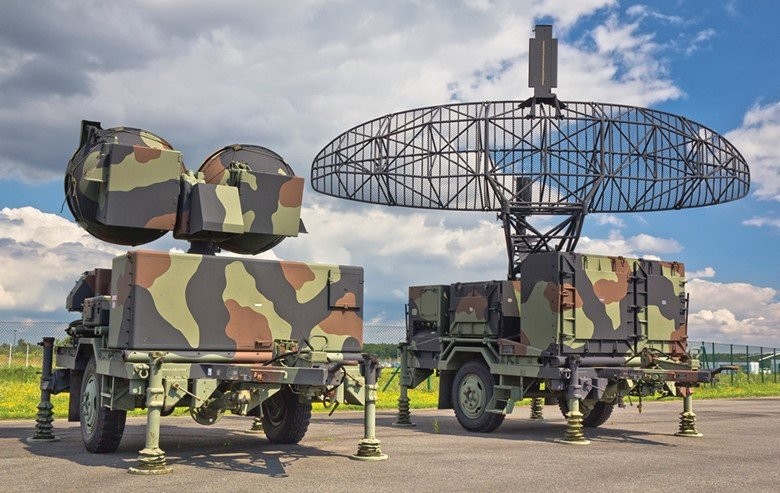
- Advanced radar systems
👉 These will act as the “eyes” of the system, detecting threats at long distances with high accuracy. - Mobile missile launchers
👉 Mobility ensures the system can be deployed across different terrains and remain less vulnerable to enemy targeting. - Integrated command and control units
👉 These systems coordinate detection, tracking, and interception in real-time for faster and smarter responses.
Why This Is a Game-Changer for India
Reduces Foreign Dependence
👉 India currently relies on imported systems like the S-400. Kusha will reduce long-term dependence and give India full control over upgrades and usage.
Builds a Layered Defence Shield
👉 Instead of relying on a single system, India is building multiple layers (Akash, S-400, BMD, Kusha) to ensure no threat slips through.
Future-Ready Warfare
👉 Kusha is being designed with evolving threats in mind, including stealth aircraft, electronic warfare tactics, and potential hypersonic weapons.
📊 What Comes Next?
- User trials by IAF
👉 Real-world testing under operational conditions will validate accuracy, response time, and reliability. - Gradual production scaling
👉 Manufacturing will increase step-by-step to meet squadron requirements without compromising quality. - Possible induction later this decade
👉 If trials succeed, Kusha could become operational within the next few years.
🧠 Final Word
Project Kusha is not just another missile system, it represents India’s strategic intent to control its own skies.
With IAF backing and production underway, India is steadily moving towards a fully indigenous, multi-layered air defence shield.