The idea of a simultaneous conflict with China and Pakistan has shaped Indian defence planning for years. It is one of the most demanding scenarios any military can face because it would force India to split attention, logistics, and combat power across two very different theatres at the same time.
On paper, India is not the richest or most heavily funded military among the three. SIPRI’s latest data for 2024 shows China spent an estimated $314 billion on defence, India $86.1 billion, and Pakistan about $10.2 billion. That means China alone outspends India by a very wide margin, while India still spends far more than Pakistan. In a pure budget comparison, a two-front challenge is serious because India would be balancing against one much larger military power and one persistent western adversary at once.
But wars are not decided by budgets alone. Geography, logistics, readiness, combat experience, and political objectives matter just as much.
Why a 2-front war would be so difficult
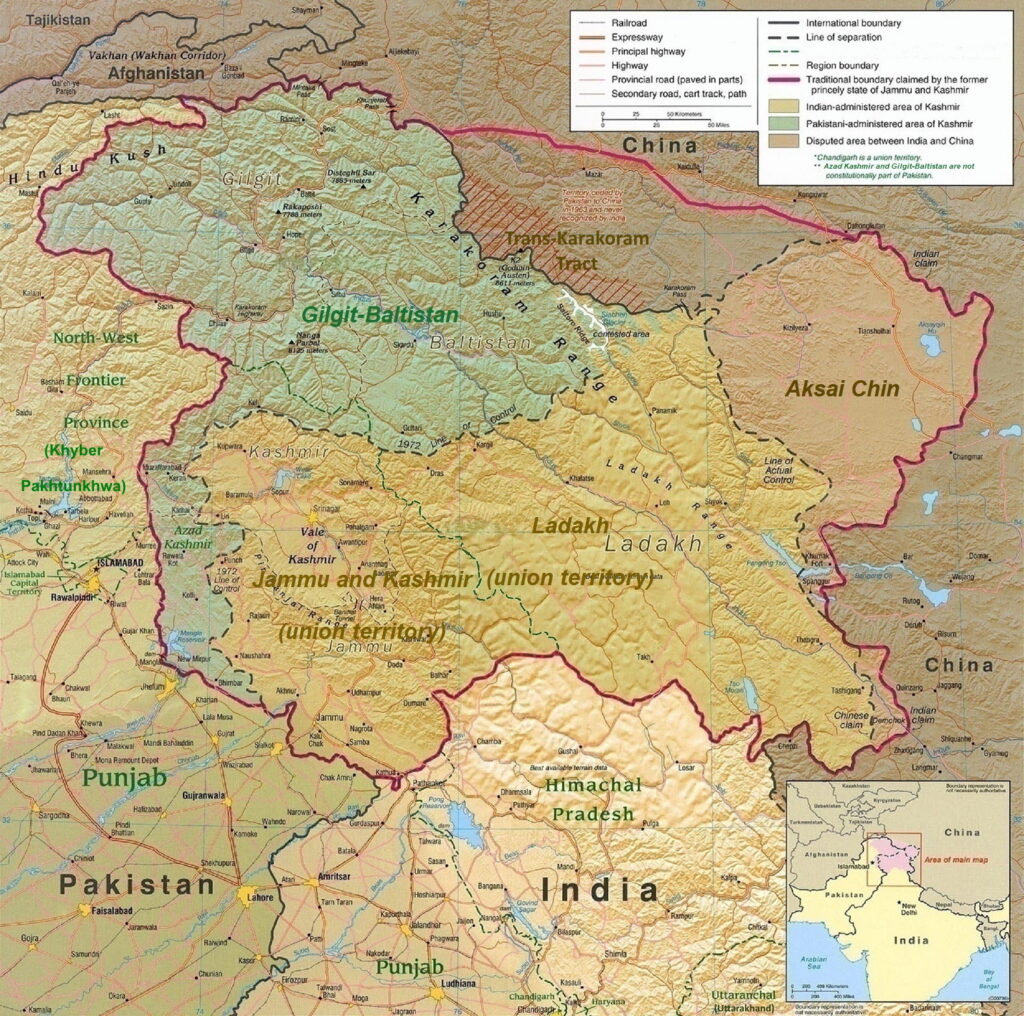
India’s land borders with the two adversaries are long and very different in character. Official Indian government data lists the Pakistan border at 3,323 km and the China border at 3,488 km. The western front is dominated by plains, deserts, riverine stretches, and built-up areas, while the northern front involves extreme altitude, mountains, sparse roads, and difficult weather. Fighting effectively in both at the same time would require different force structures, different logistics chains, and different operational tempos.
That is what makes this scenario uniquely hard. On the Pakistan front, mobility and firepower matter. On the China front, altitude, acclimatization, airlift, engineering support, and sustained logistics matter more.
Where India has real advantages
India’s biggest strength is that it is not starting from zero in either theatre. It already maintains active military focus on both fronts, and unlike many countries, it has long operational experience in high-altitude deployment. The government and armed forces describe Siachen as the world’s highest battlefield, and India has operated there for decades. India also runs the High Altitude Warfare School at Gulmarg, which the Ministry of Defence says trains selected personnel in all aspects of high-altitude mountain warfare and develops techniques for fighting in such terrain. That matters because a China conflict would not be fought in ideal conditions; it would be fought in some of the harshest terrain in the world.

India also has relevant combat experience that China does not possess at the same intensity in recent decades. The Kargil conflict in 1999 forced India to conduct high-altitude combat under severe pressure, and official Indian accounts still highlight how the war tested and refined joint operations, artillery employment, and air support in mountainous terrain.
Another Indian advantage is strategic positioning at sea. The Andaman and Nicobar Command was established as India’s first tri-service command, and official defence documents note the islands’ strategic importance near the entrance to the Malacca Strait. In a wider conflict involving China, this maritime geography gives India leverage far from the Himalayas by helping monitor and influence critical sea lanes.
Where India is vulnerable
The biggest structural challenge is still the China gap. China’s defence spending is much larger, and Beijing has steadily improved infrastructure in Tibet and Xinjiang. Multiple analyses have pointed to expanded roads, airfields, heliports, and logistics networks near the Indian frontier, which can shorten mobilization time and improve sustainment for PLA forces near the Line of Actual Control.
That matters because mountain warfare is not just about brave soldiers. It is about who can move troops, ammunition, fuel, drones, sensors, engineering units, and reserves faster into hostile terrain. China’s infrastructure build-up gives it a serious operational advantage on that front.
India also has to divide high-value assets carefully. Its strongest air power and precision capabilities cannot be everywhere at once. Even though the Rafale has strengthened the Indian Air Force, and official records confirm its induction into the IAF, the challenge in a 2-front contingency is allocation: how much air power goes west, how much north, and how much stays back for strategic reserve.
Pakistan’s role in a 2-front scenario
Pakistan’s military budget is far smaller than India’s, but its role in a 2-front war would not be to defeat India alone in a conventional contest. Its strategic value in such a scenario would be to force India to split resources, maintain large western deployments, and absorb pressure while China remains the larger long-term challenge. Pakistan’s geography also allows it to threaten sectors that are easier to access than the Himalayan front, which could create faster operational pressure even if the deeper strategic imbalance still favors India.
In other words, Pakistan’s usefulness in a 2-front contingency is not only its own strength. It is the burden it places on Indian planning.
Geography: India’s under-discussed edge
Even with these risks, geography is not entirely against India. On the western front, India operates closer to established infrastructure and major military bases. On the maritime side, India’s peninsular position and island territories provide reach into the Indian Ocean. Official Indian defence publications have repeatedly emphasized the importance of Andaman and Nicobar for the Malacca approaches. In a larger confrontation, maritime pressure can become part of deterrence because China’s economy and military logistics remain heavily tied to sea lines of communication.
This means a real 2-front strategy for India would not be only defensive on land. It would likely combine land containment, air power prioritization, and maritime signalling.
🚀 Modernization of Forces: India vs China
Beyond current strength, the real competition between India and China lies in how fast each country is modernizing its military capabilities. Future conflicts will depend not just on numbers, but on technology, integration, and speed of upgrades.
India’s Modernization Push
India is focusing on a mix of indigenous development and selective global procurement.
Key areas of modernization include:
- Rafale fighter jets improving air superiority and precision strike capability
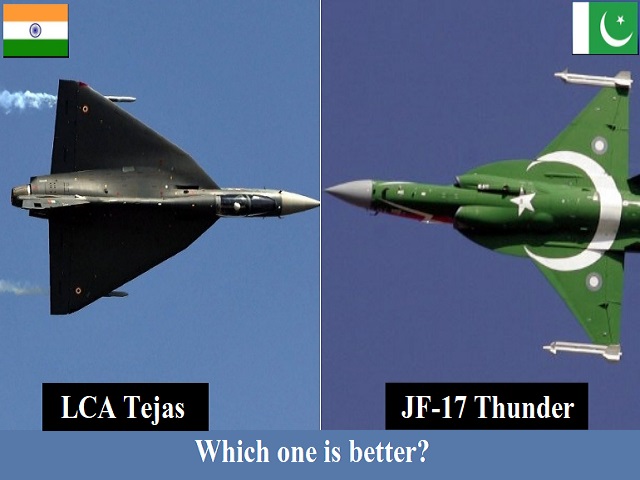
- Tejas Mk1A & upcoming Mk2 strengthening indigenous air power
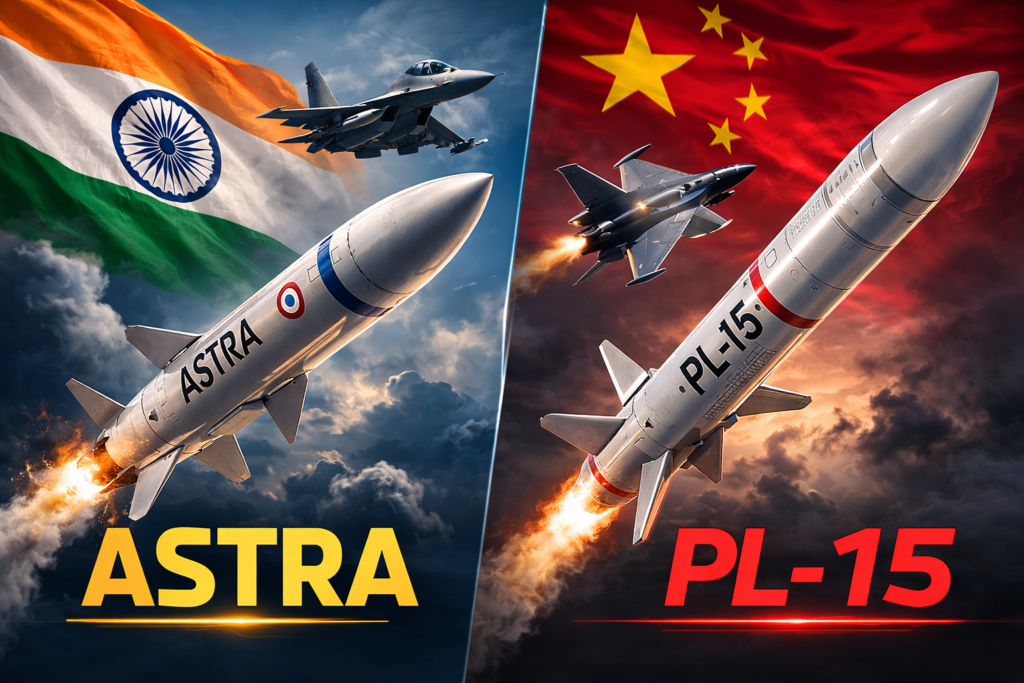
- Astra missile program (Mk1, Mk2, Mk3) for long-range air combat
- S-400 air defence system for multi-layered protection
- INS Vikrant aircraft carrier boosting naval projection
- Expansion of drone and surveillance systems
India is also working on Atmanirbhar Bharat (self-reliance) in defence manufacturing, aiming to reduce dependence on imports over time.
👉 India’s strength: Balanced modernization with focus on sustainability and independence
China’s Rapid Military Expansion
China is pursuing large-scale, high-speed military modernization with strong industrial backing.
Key developments include:
- Deployment of J-20 stealth fighters and next-gen aircraft programs
- Advanced PL-15 and hypersonic missile systems
- Expansion of the People’s Liberation Army Navy (largest in the world)
- Development of aircraft carriers and long-range strike capability
- Heavy investment in cyber warfare, AI, and space-based systems
- Rapid infrastructure development along border regions
China’s approach emphasizes scale, speed, and technological dominance.
👉 China’s strength: Faster execution and larger industrial capacity
What India’s strategy would likely be
India’s realistic strategy in a 2-front conflict would not be to pursue symmetrical dominance on both fronts at the same time. That would be too expensive and too risky. A more practical approach would be:
Contain Pakistan quickly enough to prevent major territorial losses, while concentrating higher-end attention and strategic reserves against China.
Use terrain, acclimatized troops, artillery, missiles, and air defence to deny gains in the Himalayas rather than chasing large offensive breakthroughs.
Exploit maritime leverage through the Indian Ocean and Andaman-Nicobar arc to widen the strategic cost for China.
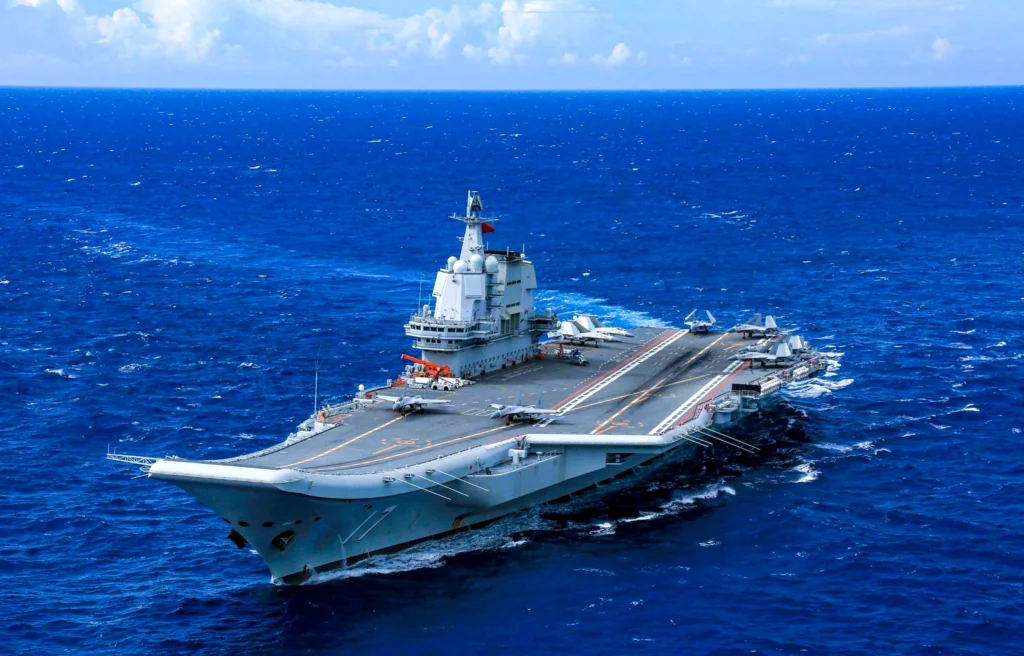
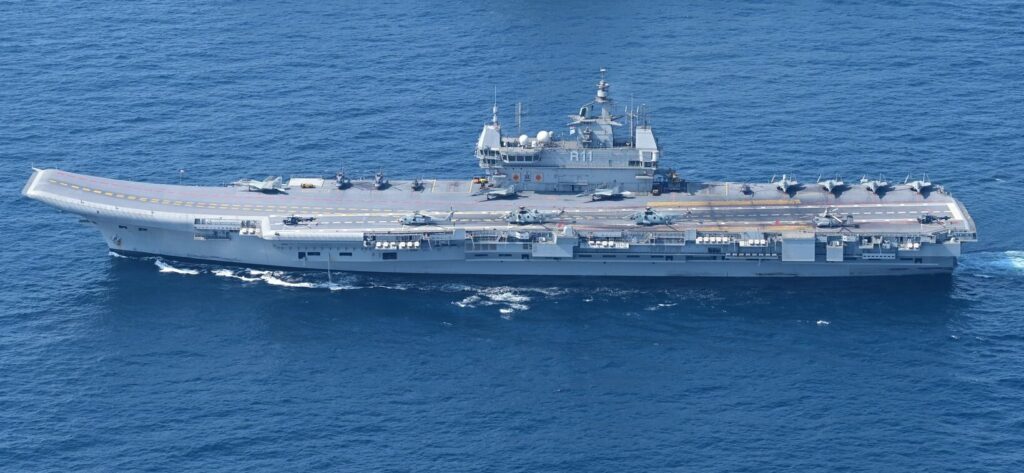
Naval dominance in the Indian Ocean could shape the outcome of a larger conflict
Rely on tri-service coordination and domestic logistics resilience rather than assuming a short war.
That broader approach is also consistent with India’s increasing emphasis on integrated operations and indigenous capability-building, which official defence communications have highlighted in recent years.
So, can India actually handle it?
The honest answer is: India can make a 2-front war extremely costly for both China and Pakistan, but it would still be one of the toughest military tests the country could face.
India’s strengths are real: operational experience, high-altitude specialization, strategic maritime position, and a military large enough to sustain pressure. China’s advantages are also real: higher spending, stronger border infrastructure, and deeper industrial capacity. Pakistan’s role would be to stretch India and force difficult trade-offs rather than win by itself.
So the most realistic conclusion is not that India would easily win or easily lose. It is that India’s objective in such a scenario would be to deny gains, hold critical sectors, absorb pressure better than expected, and raise the cost of conflict so high that the war becomes politically and militarily unattractive for the other side.
That is what modern deterrence really looks like.