Introduction
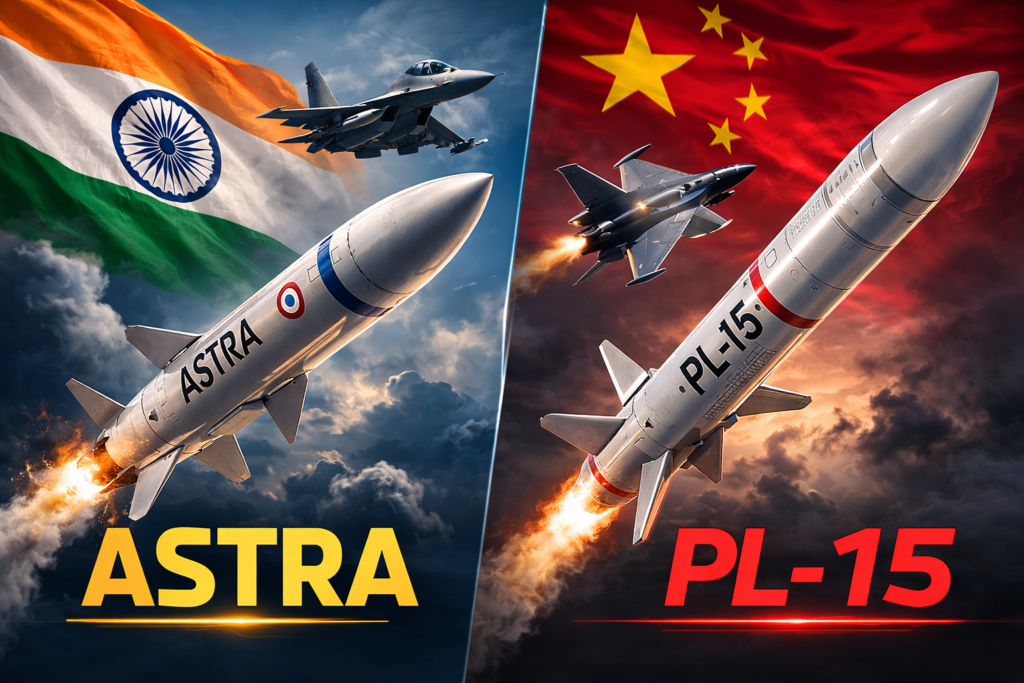
Modern air combat is increasingly dominated by beyond-visual-range (BVR) missiles, which allow fighter aircraft to engage targets at distances far beyond visual detection. Two of the most significant BVR missiles currently deployed in Asia are India’s Astra missile and China’s PL-15 missile.
India developed the Astra missile through the Defence Research and Development Organisation (DRDO) to strengthen indigenous defense capability and reduce reliance on imported air-to-air missiles. The PL-15, developed in China, is considered one of the most advanced long-range BVR missiles and is deployed on aircraft such as the J-20, J-10C, and JF-17 Block III.
Both missiles reflect the growing technological competition in Asian air power and play an important role in determining future air combat capabilities.
Development Background
Astra Missile (India)
The Astra missile program represents a major step toward India’s self-reliance in advanced air combat weapons.
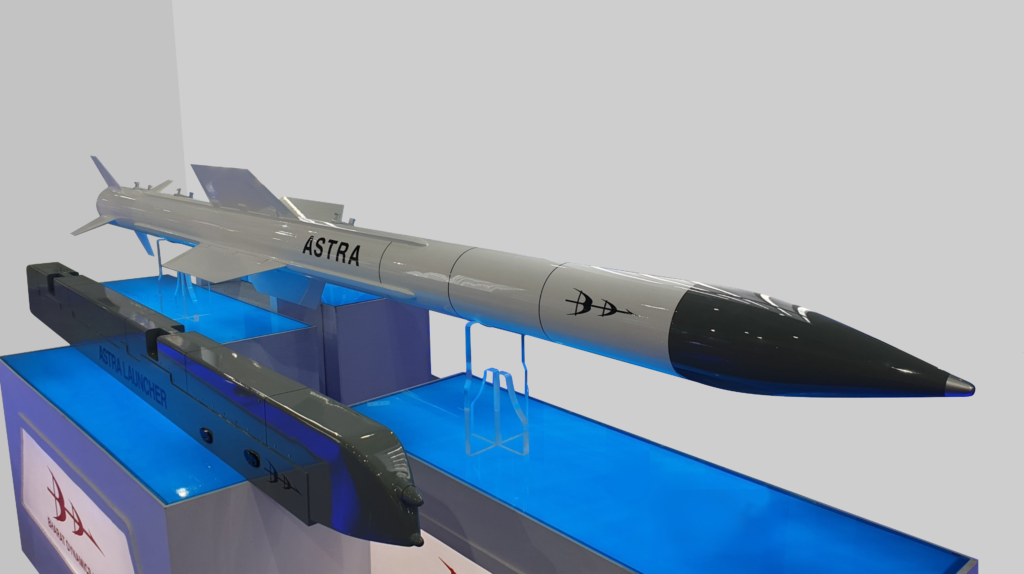
The Astra program includes multiple variants:
• Astra Mk1 – Currently operational with the Indian Air Force
• Astra Mk2 – Extended-range version under development
• Astra Mk3 (SFDR) – Future ramjet-powered long-range missile
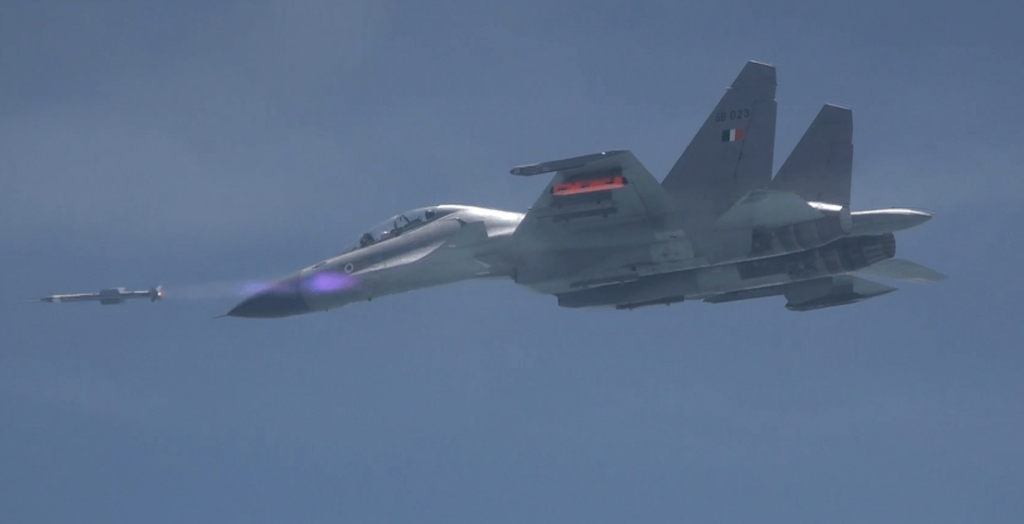
Astra Mk1 has already been integrated with the Su-30MKI and is expected to equip other aircraft such as Tejas Mk1A.
PL-15 Missile (China)
The PL-15 is China’s long-range air-to-air missile designed for advanced fighter aircraft.
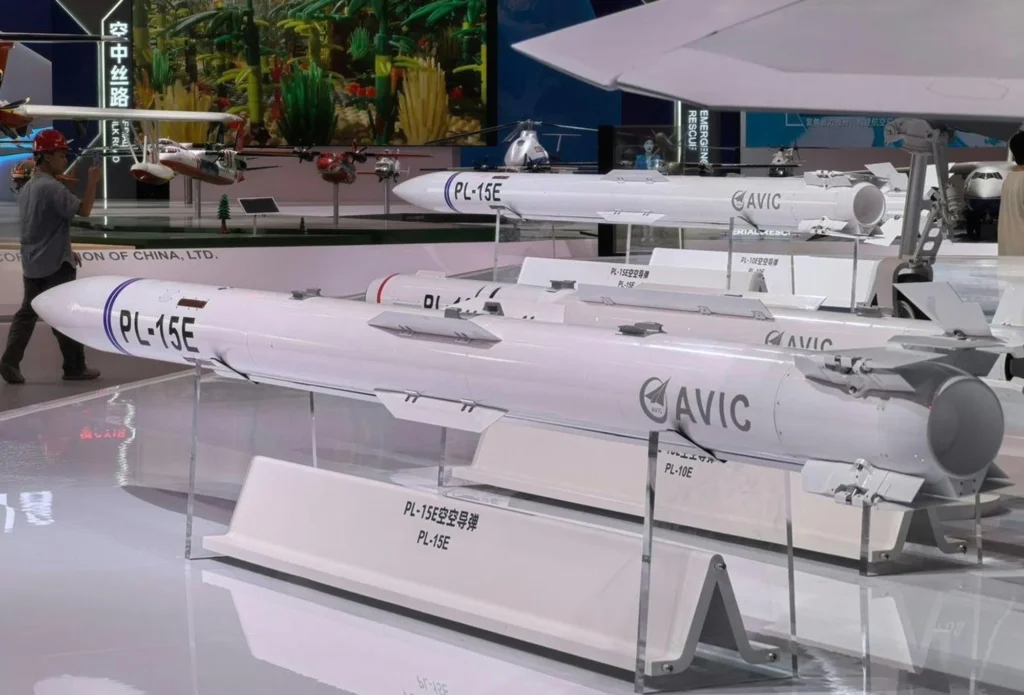
Key characteristics include:
• Long engagement range
• Active radar guidance
• Dual-pulse propulsion for sustained energy
• Compatibility with modern Chinese fighters
The PL-15 is believed to be designed to target high-value airborne assets such as AWACS aircraft, tanker aircraft, and enemy fighters.
Technology and Guidance Systems
Astra Missile Technology
The Astra missile uses active radar homing guidance, which allows the missile to independently track targets during the final phase of engagement.
Key features include:
• Inertial navigation during early flight
• Mid-course updates from the launching aircraft
• High-energy propulsion system
• Electronic counter-countermeasure capability
These technologies enable Astra to engage highly maneuverable aircraft in modern electronic warfare environments.
PL-15 Missile Technology
The PL-15 reportedly uses an AESA radar seeker, which is designed to improve target tracking and resistance to electronic jamming.
Other features include:
• Dual-pulse rocket motor
• Long-range engagement capability
• Network-centric targeting support
• Integration with advanced Chinese fighter aircraft
These capabilities allow the missile to engage targets at extended distances.
Astra vs PL-15 Specifications
Astra vs PL-15 Missile Specifications
| Feature | Astra Mk1 (India) | PL-15 (China) |
|---|---|---|
| Type | Beyond Visual Range Air-to-Air Missile | Beyond Visual Range Air-to-Air Missile |
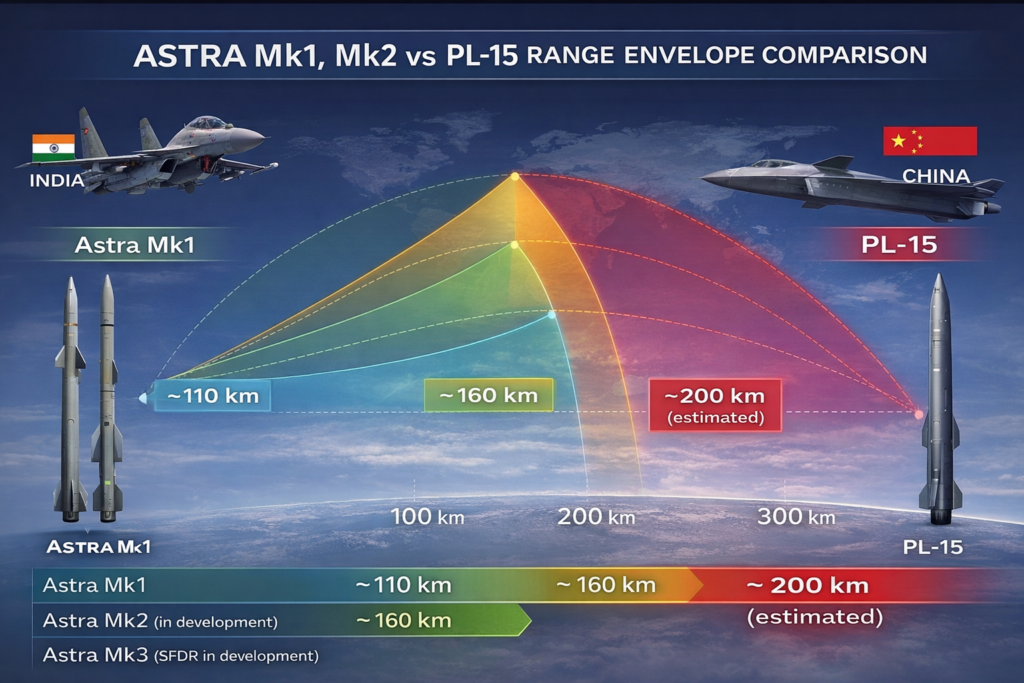
| Range | ~110 km | ~200 km (estimated) |
| Speed | Mach 4+ | Mach 4+ |
| Guidance | Active Radar Homing | AESA Radar Seeker |
| Launch Platforms | Su-30MKI, Tejas, future fighters | J-20, J-10C, JF-17 Block III |
| Developer | DRDO (India) | China Aerospace Science Industry Corporation |
| Status | Operational | Operational |
Real Battlefield History and Operational Performance
Astra Missile Operational Record
India’s Astra missile has been extensively tested by the Indian Air Force and has entered operational service with the Su-30MKI fleet. The missile has undergone multiple successful test launches against aerial targets under different combat scenarios.
During these tests, Astra demonstrated:
- High-speed interception capability
- Ability to engage maneuvering targets
- Compatibility with modern fighter radar systems
While the missile is now operational, publicly confirmed combat use of Astra in real air-to-air engagements has not been officially disclosed. Like many modern missiles, most performance data remains classified.
However, the Astra program is considered a major milestone for India’s indigenous missile development, reducing dependence on imported air-to-air missiles.
PL-15 Missile Operational Record
The PL-15 is deployed with several Chinese fighter aircraft including the J-20 stealth fighter and J-10C. The missile is also integrated into export platforms such as the JF-17 Block III.
The PL-15 has been widely reported as one of China’s most advanced long-range air-to-air missiles and is believed to provide extended engagement capability.
However, similar to Astra, verified real combat engagements involving PL-15 have not been publicly confirmed. Most information about its performance comes from military assessments, exercises, and test launches.
The Chinese-made PL-15E missiles failed during Operation Sindoor (May 2025) primarily because they were effectively neutralized by India’s robust, multi-layered air defense grid and superior electronic warfare (EW) capabilities. Rather than hitting their targets, these missiles were jammed, spoofed, or failed to engage, allowing Indian forces to recover largely intact, unexploded debris
Astra Mk2 and Astra Mk3: Future Capabilities
India is continuing to develop more advanced versions of the Astra missile.
Astra Mk2
The Astra Mk2 is expected to significantly extend the missile’s engagement range.
Expected improvements include:
• Range of approximately 160 km
• Improved propulsion system
• Better resistance to electronic warfare
• Compatibility with multiple Indian fighter aircraft
This variant will strengthen India’s long-range air combat capability.
Astra Mk3 (SFDR)
The Astra Mk3 is expected to use solid fuel ducted ramjet technology, allowing sustained propulsion throughout flight.
Estimated capabilities include:
• Range of 250–300 km
• Sustained high-speed flight
• Greater terminal maneuverability
• Capability to engage high-value airborne targets
If deployed successfully, Astra Mk3 could become one of the longest-range air-to-air missiles in the region.
Astra vs PL-15: BVR Combat Engagement Timeline
Modern fighter battles often occur at beyond-visual-range distances, where pilots rely on radar and long-range missiles.
Detection
The engagement begins when one aircraft detects the other using AESA radar, AWACS support, or networked sensors.
The aircraft that detects the opponent first gains a major tactical advantage.
Target Lock
Once detected, the aircraft begins continuous radar tracking and prepares a missile for launch.
Modern fighters can track multiple targets simultaneously.
Missile Launch
When the target enters the missile’s engagement range, the pilot launches the missile.
The missile initially follows inertial navigation guidance.
Mid-Course Guidance
During flight, the launching aircraft sends data-link updates to adjust the missile’s trajectory as the target maneuvers.
Terminal Phase
In the final stage of the engagement, the missile activates its active radar seeker and independently tracks the target.
Defensive Countermeasures
The defending aircraft may attempt to defeat the missile through:
• Electronic jamming
• High-G evasive maneuvers
• Chaff or decoy deployment
Interception or Self-Destruct
The engagement ends when the missile either:
• Intercepts the target
• Misses the target and self-destructs
• Runs out of fuel
Strategic Impact
Both Astra and PL-15 missiles demonstrate the growing importance of long-range missile technology in modern air combat.
For India, the Astra program strengthens indigenous defense manufacturing and technological independence.
For China, the PL-15 provides extended engagement capability for modern fighter aircraft.
As future variants such as Astra Mk2 and Astra Mk3 enter service, long-range missile capability will play an even greater role in shaping air power dynamics in Asia.
Conclusion
The comparison between Astra and PL-15 highlights the rapid evolution of air-to-air missile technology in the region. While the PL-15 currently offers extended engagement range, India’s Astra program demonstrates significant progress in indigenous missile development.
Future systems such as Astra Mk2 and Astra Mk3 could further enhance India’s long-range air combat capability and contribute to the balance of air power in Asia.
Related: Tejas Mk2 vs JF-17 Block III: Deep Analysis of South Asia Air Power