By Pulse India News | Updated: March 2026 | International Desk
LIVEDoha, Qatar | March 2026
Video source: YouTube/WION. Used for reporting purposes.
In one of the most dangerous escalations in recent years, Ras Laffan Industrial City, the world’s largest LNG hub, has come under direct attack. The strikes have not only damaged critical infrastructure but also triggered fears of a prolonged global energy crisis.
- Ras Laffan, world’s largest LNG hub, hit by missile strikes
- 17% LNG capacity affected, global supply concerns rise
- Oil and gas prices react sharply across markets
- India, Japan, China monitoring energy risks
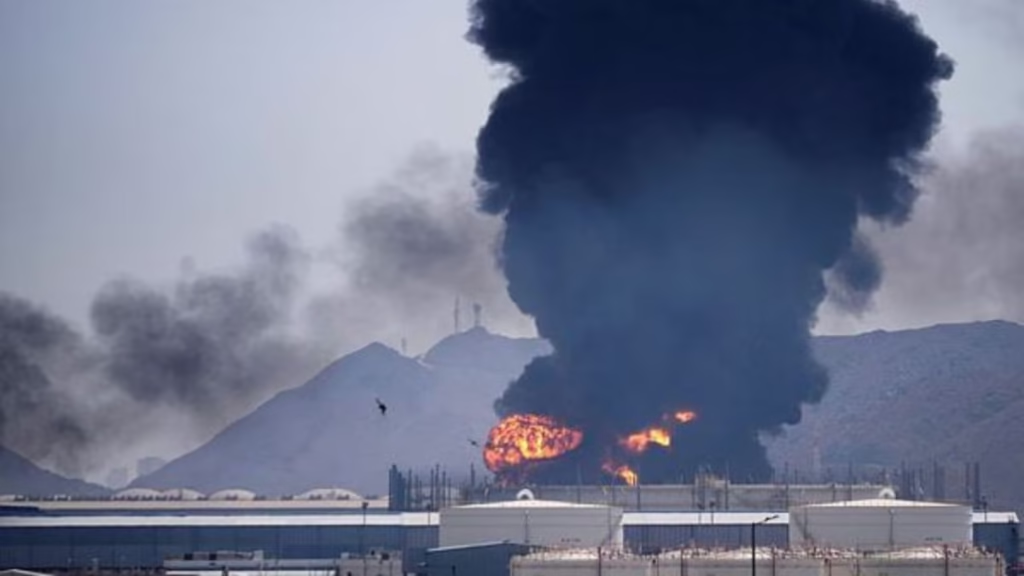
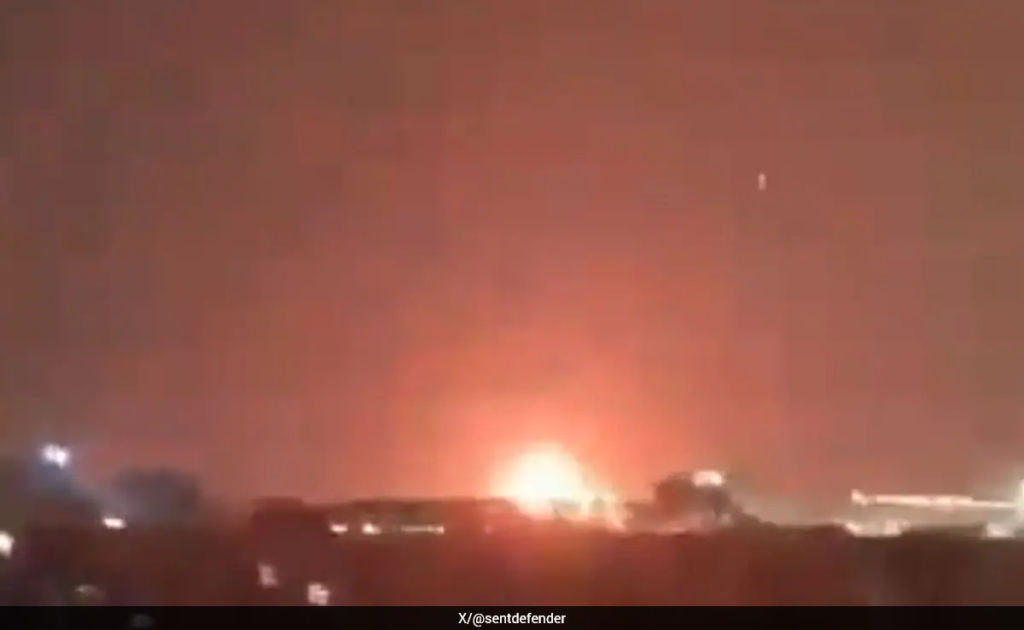
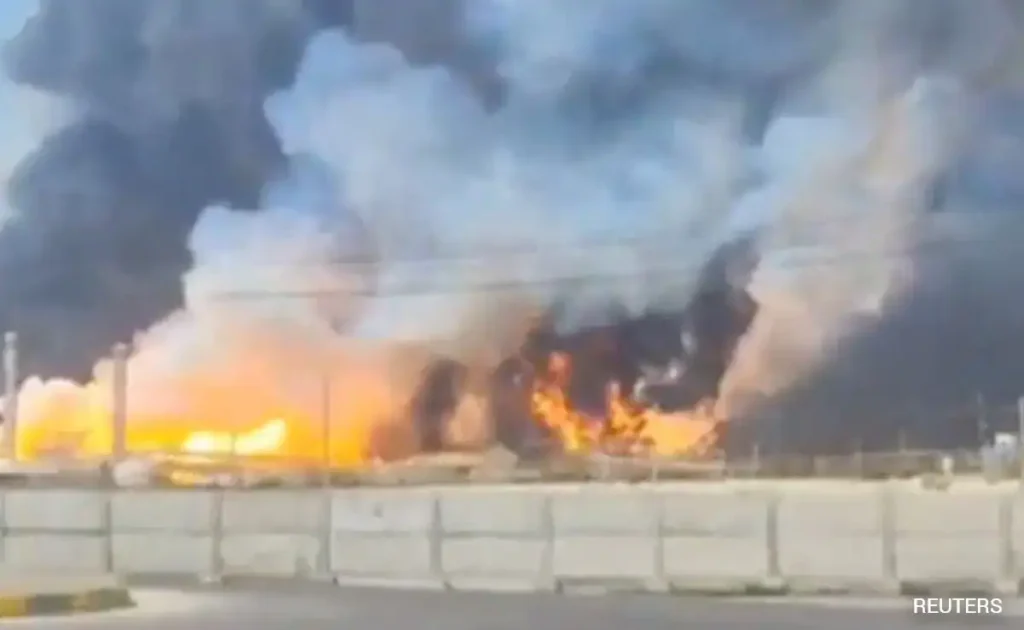
Missile strikes caused fires and shutdowns at Ras Laffan
How the Attack Happened (Detailed Timeline)
The attack was part of a rapidly escalating chain of events in the Middle East:
Phase 1: Initial Trigger
- Israel launched precision strikes on Iran’s South Pars gas field, the largest gas reserve in the world
- The strike targeted energy infrastructure, marking a shift in warfare strategy
Phase 2: Iran’s Retaliation
- Within hours, Iran issued a warning:
👉 “Any attack on our energy assets will be met with a direct response” - Iran launched ballistic missiles and armed drones targeting Gulf energy infrastructure
Phase 3: Ras Laffan Hit
- Multiple projectiles struck LNG processing units and storage area.
Satellite visuals indicated - Large-scale fires reported across sections of the facility
- Shutdown of multiple LNG processing trains
- Emergency evacuation of workers and staff
Phase 4: Immediate Shutdown
- QatarEnergy declared partial force majeure
- LNG exports slowed or halted temporarily
This is the first major attack directly targeting global LNG supply infrastructure
Damage Assessment (What Was Hit)
- 2 LNG trains severely damaged
- Gas-to-liquids (GTL) facility impacted
- Storage and loading infrastructure partially affected
- Around 17% of total LNG capacity lost (~12.8 mtpa)
💰 Estimated financial loss: $20 Billion annually
The Damage wiped out roughly 17% of Qatar’s LNG export capacity, or about 12.8 million metric tons annually, and repairs could take up to five years. Reuters also reported that force majeure is being considered on some contracts affecting buyers including China and South Korea – QatarEnergy CEO Saad al-Kaabi
 Qatar
Qatar
Qatar’s Prime Minister issued a strong statement after the attack, describing it as a serious threat to global energy security.
“This is a direct attack on global energy stability. We will take all necessary measures to protect our infrastructure and ensure supply continuity.”
QatarEnergy officials confirmed:
- “Extensive but controllable damage”
- Emergency teams are working on containment and restoration
 Iran
Iran
Iran’s Foreign Minister delivered a sharp warning, saying any further attacks on Iran’s energy assets would trigger a stronger response.
“If aggression against Iran’s energy assets continues, we will respond with zero restraint. All energy infrastructure in the region is within range.”
Iran framed the strike as “proportional retaliation”, signaling that it considers energy infrastructure a legitimate target if the conflict widens further.
 United States
U.S. leadership responded with caution and a warning against further escalation in the Gulf region.
“Any further escalation targeting global energy infrastructure will be met with a decisive response.”
Military analysts say the U.S. is:
- Increasing naval presence in the Gulf
- Monitoring Strait of Hormuz security closely
Asian buyers are now moving from observation to contingency planning. India is focused on energy-cost transmission, Japan on supply diversification, South Korea on contract reliability, and China on portfolio flexibility. Markets, meanwhile, are treating the Ras Laffan disruption as both an inflation shock and a strategic warning for the future of LNG security.
For the market angle, Reuters reported Brent briefly above $119 a barrel and a sharp jump in European gas prices after the strikes, while the IMF warned that a prolonged energy shock could increase inflation and lower growth.
 India
India
Indian officials and energy market participants have been watching the situation closely because Qatar remains one of India’s most important LNG suppliers. Any sustained reduction in Qatari cargoes would matter not only for import costs, but also for downstream sectors such as power generation, city gas distribution, fertilizers and industrial fuel use.
The main concern for India is not necessarily an immediate physical shortage, but the combination of tighter spot availability and higher prices. If the disruption continues, importers may be forced to source more cargoes at elevated international rates, adding pressure on domestic energy costs and inflation.
- Monitoring LNG cargo flows and contract performance
- Reviewing exposure to spot-market price spikes
- Assessing knock-on impact on fertilizer, power and household fuel economics
 Japan
Japan
Japan’s response has been shaped by its long-standing dependence on imported LNG. The strongest signal came from JERA, the country’s biggest power generator, which warned that a prolonged crisis would push buyers toward supply from the United States, Canada and other non-Middle East sources.
JERA said only a small share of its own shipments pass through the most vulnerable route, but its broader message was clear: if Middle East disruption persists, Asian utilities will have to diversify harder and compete more aggressively for Atlantic Basin cargoes.
- Utilities reviewing LNG inventories and alternative procurement plans
- Growing attention on North American LNG as a strategic hedge
- Diplomatic emphasis on de-escalation to stabilize shipping and prices
 South Korea
South Korea has emerged as one of the countries most exposed to the commercial fallout. Reuters reported that QatarEnergy may invoke force majeure on some long-term contracts, with South Korea named among the affected buyers. That has raised concern not just about price volatility, but also about scheduling certainty for utilities and industrial buyers.
For Seoul, the policy challenge is balancing near-term supply security with long-term diversification. In practical terms, that means checking reserve cover, reassessing cargo timing and preparing for a more competitive regional market if Qatari volumes remain constrained.
- Reviewing contractual exposure to Qatari LNG supply disruptions
- Evaluating reserve adequacy and import flexibility
- Preparing for stronger competition for replacement cargoes in Asia
 China
China
China’s role is especially important because it is one of the largest LNG importers in the world and was also named among buyers that could be affected by force majeure discussions. Even if Chinese state buyers can absorb some disruption through portfolio management, the wider market impact is significant.
A sustained outage at Ras Laffan would likely increase Chinese interest in alternative long-term supply and flexible spot options. It also reinforces Beijing’s strategic preference for diversified energy sourcing, including pipeline gas, domestic output growth and a broader global LNG portfolio.
- Watching contractual exposure to Qatar-linked supply interruptions
- Potential shift toward portfolio optimization and replacement cargoes
- Renewed emphasis on diversification across regions and fuels
Financial markets reacted immediately. Brent crude briefly traded above $119 a barrel before easing, while European gas prices surged sharply. Investors moved quickly from treating the conflict as a geopolitical headline to pricing it as a live inflation and supply-chain risk.
The concern was not limited to oil and gas. Reuters reported that rising energy costs pushed bond yields higher and deepened fears that central banks may have to keep policy tighter for longer if the shock persists. Equity markets weakened as traders weighed slower growth against renewed inflation pressure.
- Brent briefly moved above $119 per barrel
- European gas prices jumped sharply, with Reuters reporting gains of more than 20% and in one report about 35%
- Bond yields rose as inflation fears intensified
- Global equities weakened, while energy shares outperformed
The most important expert insight so far has come from the industry side rather than bank research. JERA’s Ryosuke Tsugaru warned that if the crisis drags on, buyers will increasingly turn to non-Middle East supply. That is a major signal because it suggests the market is already thinking beyond short-term disruption and toward structural realignment.
The IMF also warned that a prolonged rise in energy prices could lift inflation and reduce global growth. That matters because Ras Laffan is not a marginal facility — damage there affects a central pillar of the LNG trade. If the outage is lengthy, the effects may spread well beyond gas into food, shipping and industrial production costs.
In simple terms, analysts now see three layers of risk: immediate supply loss, medium-term contract disruption and long-term changes in how Asian buyers source LNG. That is why the Ras Laffan attack is being viewed not only as a military escalation, but as a turning point for energy security strategy.
Final Editorial Insight
This attack marks a turning point in modern warfare—where energy infrastructure is now a primary target.
The Ras Laffan strike has shown that:
- Global energy supply is highly vulnerable
- Regional conflicts can trigger worldwide economic shocks
The next few weeks will determine whether this remains a crisis—or escalates into a full-scale global energy emergency.