📅 March 29, 2026 | By Pulse India News Desk
🔰 Breaking Overview
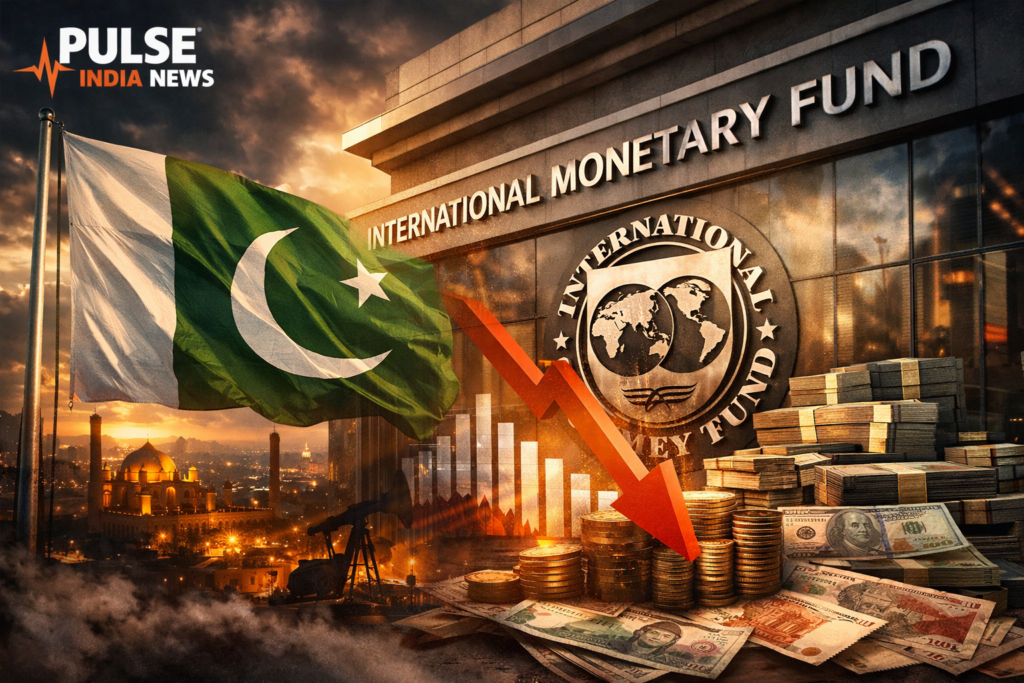
Pakistan has reached a staff-level agreement with the International Monetary Fund (IMF) for a $1.21 billion tranche, offering critical financial support as the country navigates a fragile economic recovery.
The agreement, part of Pakistan’s ongoing $7 billion bailout program, now awaits final approval from the IMF Executive Board — a step that is largely procedural but crucial for fund release.
💰 Full Breakdown of the IMF Package
The latest agreement includes:
- $1 billion under the Extended Fund Facility (EFF)
- $210 million under the Resilience and Sustainability Facility (RSF)
With this, total disbursements under the programme are expected to reach approximately $4.5 billion.
📊 Why This Deal Is Critical for Pakistan
Pakistan’s economy has been under sustained pressure over the past few years due to:
- Severe foreign exchange shortages
- High inflation levels
- Weak currency performance (Pakistani Rupee volatility)
- Heavy external debt obligations
The sharp surge in crude oil prices due to the Iran conflict has dealt a major blow to Pakistan’s already fragile economy, driving its foreign exchange reserves to alarming lows in recent times
This IMF tranche is expected to:
✔ Strengthen foreign exchange reserves
✔ Stabilize the Pakistani Rupee
✔ Improve investor sentiment
✔ Enable smoother import financing, especially for energy
📊 Economic Context
Pakistan’s economy has been under pressure due to a combination of domestic and global factors, including inflation, external debt obligations, and currency volatility.
The recent surge in crude oil prices amid the Iran conflict has added further strain on Pakistan’s already fragile economy, with foreign exchange reserves coming under increasing pressure.
This has made external financial support critical to maintaining economic stability.
📉 Signs of Economic Stabilisation
According to IMF observations, Pakistan has shown some progress in recent months:
- Inflation has moderated from earlier highs
- The current account deficit has narrowed
- Fiscal measures have improved financial discipline
These developments indicate gradual stabilisation, although the recovery remains sensitive to external shocks.
Pakistan debt statistics
Pakistan’s financial position is shaped by a combination of multilateral assistance and domestic borrowing. The figures below provide a snapshot of its exposure to IMF programmes, World Bank and ADB support, along with its foreign and domestic debt levels.
📊 Pakistan Debt & Loan Statistics
| Category | Key Stats |
|---|---|
| IMF Loans |
25 programmes since 1958 Current Programme: $7 Billion (2024–2027) Current Disbursement: ~$4.5 Billion (post approval) Outstanding IMF Credit: SDR 7.263 Billion |
| World Bank Loans |
Total Assistance: $48.3+ Billion Active Projects: 54 Current Commitments: $15.7 Billion |
| ADB Loans |
Total Support: $43.4 Billion Operations: 764 Loans, Grants & Projects |
| Foreign Debt | External Debt: PKR 26.0 Trillion (June 2025) |
| Domestic Debt | Domestic Debt: PKR 54.5 Trillion (June 2025) |
| Total Public Debt | PKR 80.6 Trillion (June 2025) |
⚠️ Major Risks Still Loom
Despite the positive momentum, Pakistan faces several external and internal risks:
Global Pressures
- Rising oil prices due to geopolitical tensions will effect Pakistan fuel needs and foreign reserves.
- Disruptions in global trade routes
- Volatility in international financial markets
Domestic Challenges
- Persistent inflation burden on citizens
- Weak industrial growth
- Political uncertainty affecting policy continuity
Any of these factors could derail recovery efforts if not managed effectively.
🏛️ IMF Reform Conditions: Tough Road Ahead
The IMF has made it clear that continued support depends on Pakistan implementing strict reforms, including:
- Expanding the tax net (bringing more sectors into taxation)
- Reducing government subsidies
- Strengthening energy sector reforms
- Maintaining tight monetary policy
- Improving governance and transparency
These measures, while necessary, may also lead to short-term economic pain for the public.
🧠 Expert View: Relief, But Not a Solution
Economists believe this IMF agreement provides short-term breathing space, but not a permanent solution.
Pakistan’s long-term stability depends on:
- Sustainable export growth
- Structural economic reforms
- Reduced reliance on external borrowing
Without these, the country risks falling into a cycle of repeated bailouts.
🔚 Conclusion
The $1.21 billion IMF deal is a crucial step in Pakistan’s economic recovery journey, but it is not the finish line.
While it stabilizes the immediate financial situation, the real challenge lies in deep structural reforms and long-term policy discipline.
The coming months will determine whether Pakistan can turn this relief into sustainable economic growth — or remain dependent on external support.