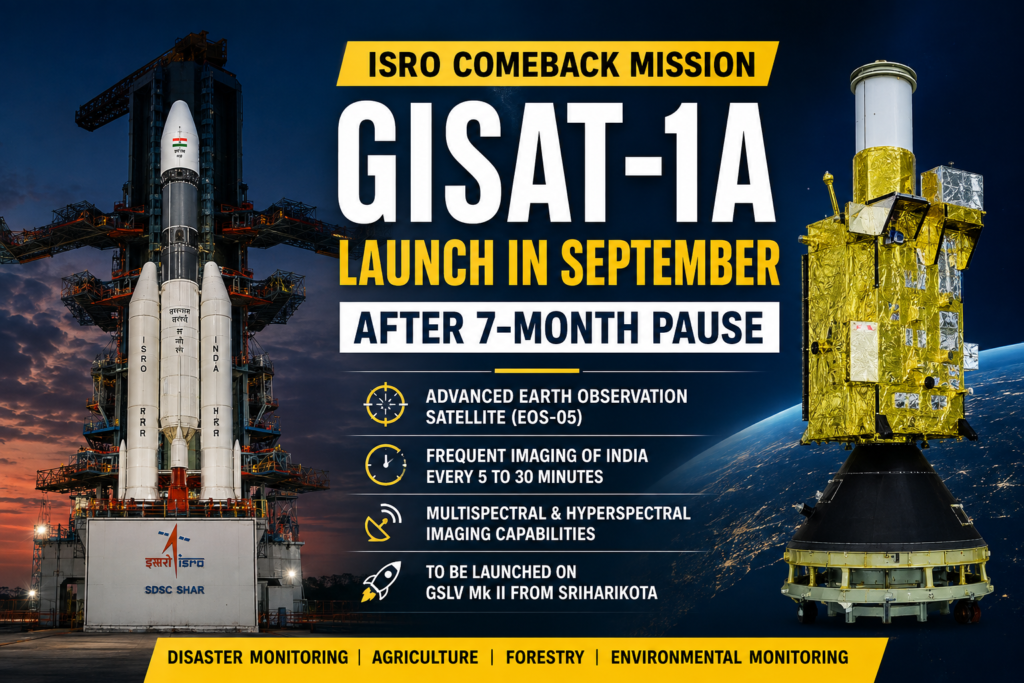
The GISAT-1A, also known as EOS-05, is designed to provide frequent Earth observation of the Indian subcontinent using multispectral and hyperspectral imaging, marking a significant return to flight for India’s space programme.
The Indian Space Research Organisation is preparing to return to launch operations in September 2026 with the long-awaited GISAT-1A Earth observation satellite, also designated EOS-05, bringing an end to a launch pause that has lasted roughly seven months.
According to the latest reported schedule, the mission is being targeted for the first week of September from the Satish Dhawan Space Centre at Sriharikota. The launch will be closely watched because it comes after a difficult period for India’s launch programme and could mark the beginning of a renewed mission cadence for ISRO.
Mission type: Earth observation
Expected launch: First week of September 2026
Launch site: Satish Dhawan Space Centre, Sriharikota
Launch vehicle: GSLV Mk II-class vehicle
Primary role: Frequent imaging of the Indian landmass and surrounding regions
Why the GISAT-1A Launch Matters
GISAT-1A is not simply another remote-sensing satellite. Its biggest advantage is expected to be its ability to observe large parts of the Indian subcontinent repeatedly from a high-altitude orbit, rather than waiting for a low-Earth-orbit satellite to pass over the same location again.
This capability could provide authorities with more frequent imagery during rapidly developing events such as cyclones, floods, forest fires, severe weather systems and other natural disasters. It can also support agricultural monitoring, forestry, environmental assessment and other applications requiring repeated observation of large geographical areas.
What GISAT-1A Is Designed to See
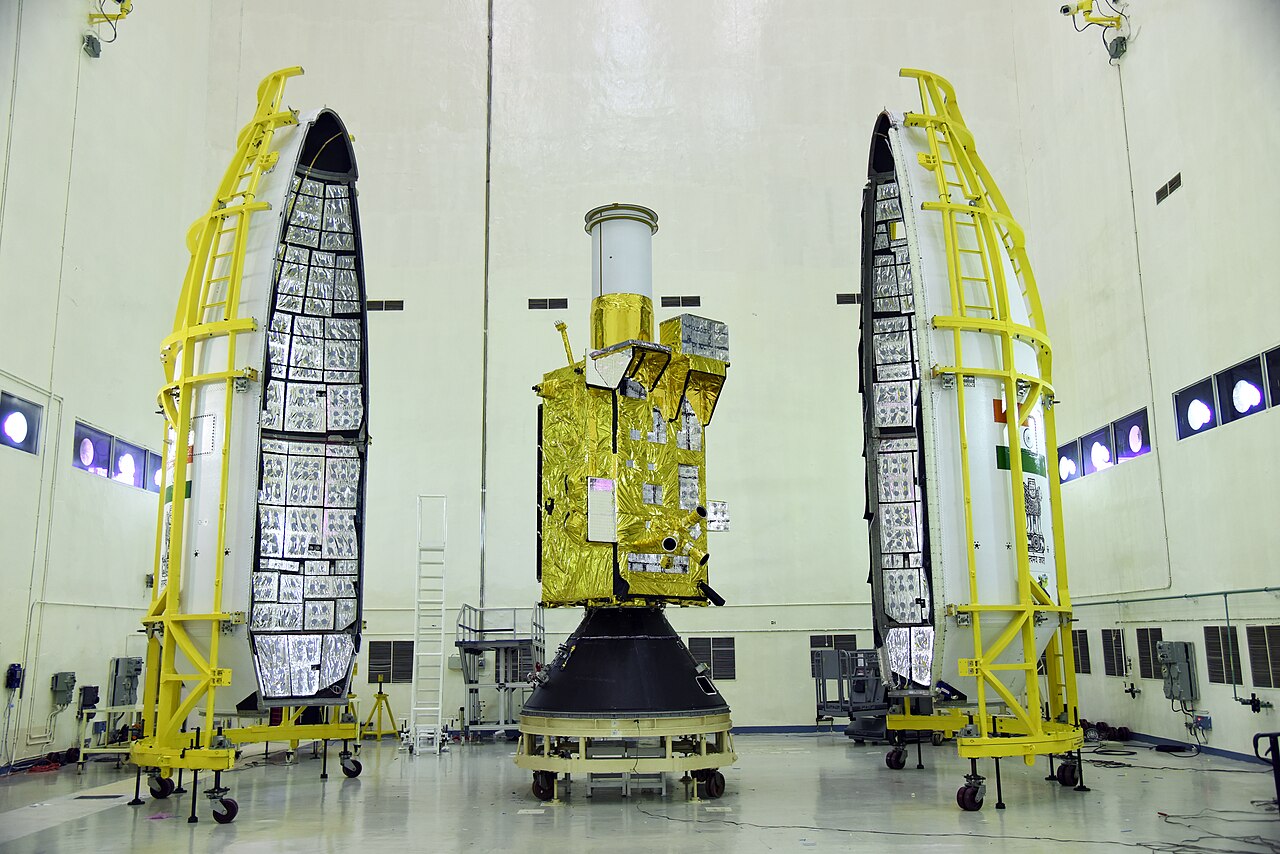
The GISAT family has been conceived to provide near-real-time imaging of large regions under cloud-free conditions. The spacecraft concept combines multispectral and hyperspectral sensors, allowing observations across visible, near-infrared and short-wave infrared wavelengths.
The spacecraft is expected to use a 700 mm Ritchey–Chrétien telescope along with array detectors covering Visible and Near-Infrared (VNIR) and Short-Wave Infrared (SWIR) bands. It is also designed around an agile platform with an electronically steerable antenna.
| Imaging Mode | Channels | Ground Resolution | Spectral Range |
|---|---|---|---|
| Multispectral VNIR | 6 | 42 metres | 0.45–0.875 μm |
| Hyperspectral VNIR | 158 | 318 metres | 0.375–1.0 μm |
| Hyperspectral SWIR | 256 | 191 metres | 0.9–2.5 μm |
The GISAT concept is designed to allow selected areas to be revisited at intervals of only a few minutes, while broader imagery of the Indian landmass can be refreshed far more frequently than is typically possible with conventional polar-orbiting Earth observation spacecraft.
From Earlier Launch Plans to September
GISAT-1A has faced repeated changes to its launch timetable. Earlier schedules had placed the mission in early 2026, while subsequent planning pointed to a launch later in the year. The latest reported target now places the mission in the first week of September 2026.
The revised timing is significant because ISRO has not conducted an orbital launch since January. The pause followed the PSLV-C62 mission on January 12, 2026, which failed to place its payloads into the intended orbit following a problem associated with the third stage.
That setback came after the PSLV-C61 mission in May 2025 also ended unsuccessfully. The difficult sequence has placed greater attention on ISRO’s return to routine launch operations.
GSLV to Carry GISAT-1A
GISAT-1A is expected to fly aboard a Geosynchronous Satellite Launch Vehicle (GSLV) Mk II-class rocket. The GSLV family is used by India for launching heavier spacecraft toward geosynchronous and geostationary missions and employs an indigenous cryogenic upper stage.
The Shadow of GISAT-1
GISAT-1A also represents a second chance for a mission concept that suffered a major setback five years ago.
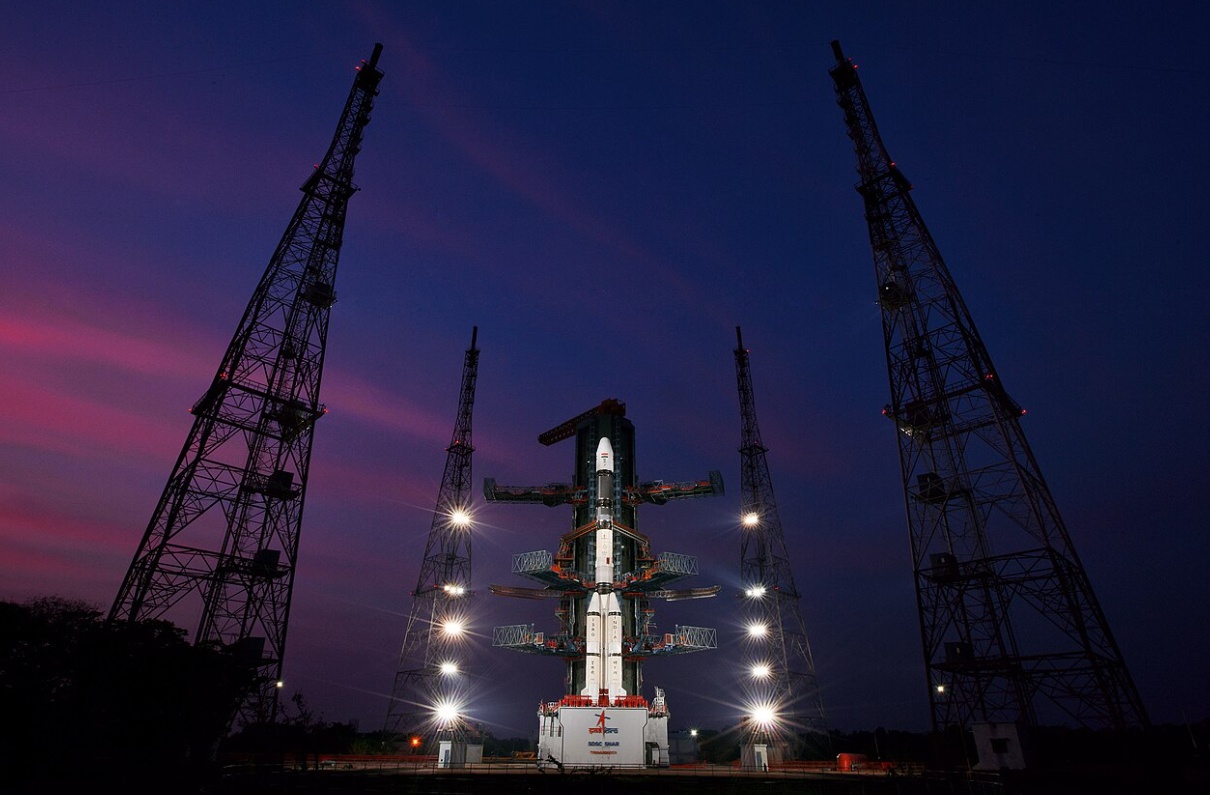
The original GISAT-1, later designated EOS-03, lifted off aboard GSLV-F10 from Sriharikota on August 12, 2021. However, the mission could not be completed after the cryogenic upper stage failed to ignite as planned, preventing the spacecraft from reaching its intended orbit.
GISAT-1A was subsequently developed to revive the geo-imaging capability that the earlier mission was intended to establish.
Most Earth observation satellites circle the planet in low-Earth orbit and see the same location only when their orbit brings them overhead. A geo-imaging spacecraft can continuously observe a broad region from a fixed position relative to Earth, making much faster revisits possible.
Disaster Management Could Be a Major Beneficiary
One of GISAT-1A’s most important potential roles is disaster monitoring. During a cyclone, for example, rapidly refreshed imagery could help track changing cloud systems, affected coastlines, flooding patterns and the evolution of conditions over large areas.
Similar observations could support the monitoring of forest fires, major floods and other rapidly changing events where conventional satellite revisit periods can limit the speed at which updated imagery becomes available.
Agriculture and forestry agencies could also benefit from hyperspectral observations capable of detecting differences in vegetation and land characteristics that are difficult to distinguish in ordinary photographs.
A Crucial Return to Flight for ISRO
The September mission will carry significance beyond GISAT-1A itself. A successful launch would restore momentum to India’s orbital launch programme after months without a mission and provide an important confidence boost ahead of several major spacecraft planned for the coming months.
Among the missions waiting in the pipeline is NVS-03, another satellite intended for India’s second-generation NavIC navigation constellation. Reporting in August indicated that both NVS-03 and GISAT-1A had reached advanced stages of launch preparation at Sriharikota.
The GISAT-1A launch will therefore be watched as both an Earth observation mission and a broader test of ISRO’s ability to restore a regular operational launch rhythm.
What Happens Next
ISRO is expected to proceed through the final spacecraft and launch-vehicle preparation cycle before confirming the precise launch date and time. As with any space mission, the schedule may still change depending on technical readiness, mission clearance and launch-range requirements.
If the September launch proceeds successfully, GISAT-1A could finally give India the high-frequency geostationary Earth observation capability envisioned when the GISAT programme was originally conceived.
For India’s space programme, however, the mission carries an additional message: after a prolonged pause and a difficult series of setbacks, ISRO is preparing to return to the launch pad.