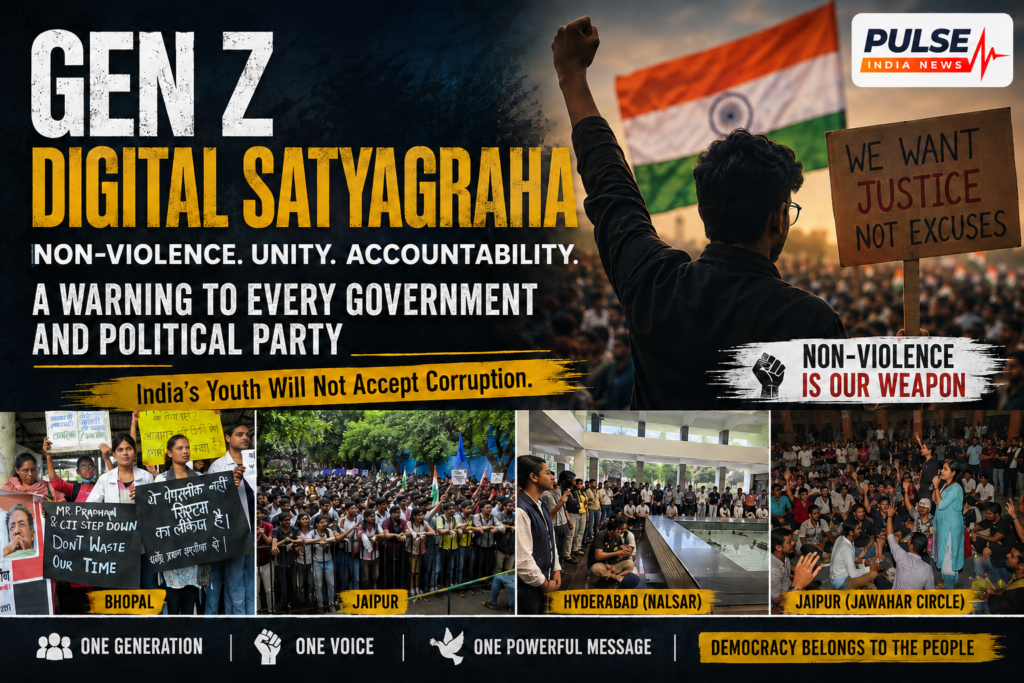
India’s young protesters demonstrated that non-violence is not weakness, patience is not surrender and electoral power does not place any government beyond public accountability. By combining Gandhian resistance with digital-age mobilisation, Gen Z delivered a warning that every political party should hear.
Published: July 26, 2026 | Analysis
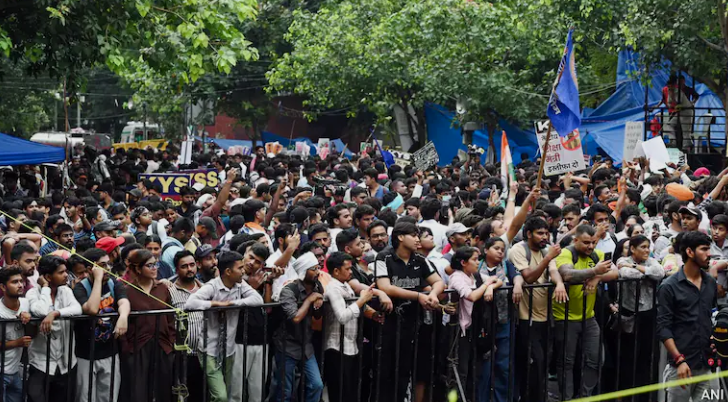
The resignation of one minister was the immediate outcome. The deeper development was the emergence of a generation willing to organise peacefully, question authority, document events and remain united until those in power responded.
New Delhi: Dharmendra Pradhan’s resignation as Union Education Minister will be recorded as a major political development. But history may remember the movement that preceded it for something much larger.
This was the moment a new generation of Indians discovered that democratic power does not exist only inside Parliament, ministries, party headquarters or election campaigns.
It also exists in the determination of ordinary citizens who gather peacefully, refuse to remain invisible and insist that institutions answer legitimate questions.
The protesters did not arrive with weapons. They came with placards, smartphones, water bottles, legal volunteers, medical assistance, humour, songs and an extraordinary refusal to give up.
Their most powerful weapon was non-violence.
India’s youth showed that non-violence is not silence. It is disciplined resistance that denies power an excuse to ignore the original demand.
A New Era of Protest Has Begun
Indian politics has entered a period in which governments can no longer assume that public anger will disappear simply because a controversy is denied, delayed or pushed out of the television news cycle.
Gen Z has grown up in a world where every citizen can record an incident, publish an account and speak directly to millions of people without waiting for permission from a political party or media organisation.
A protest that begins at one university, coaching centre or public square can reach the entire country within hours. A video from a detention bus can travel farther than an official press conference. A student’s testimony can become part of the national record before institutions have prepared their response.
That changes the balance between the governed and those who govern.
Political power still controls administration. But it can no longer completely control visibility, memory or the public narrative.
Gandhian Resistance With Gen Z Technology
The movement’s methods were modern, but its moral foundation was deeply Indian.
Mahatma Gandhi demonstrated that political authority can be confronted through satyagraha—through truth, endurance, sacrifice and disciplined non-violence.
The young protesters followed a comparable democratic path. They remained visible. They repeated their demands. They accepted discomfort. They returned after detentions. They supported strangers and continued despite exhaustion, uncertainty and pressure.
But this generation added something new to the old method.
It transformed the smartphone into a camera, newsroom, evidence locker, organising centre and megaphone.
Gandhi’s generation used marches, letters, public meetings and newspapers. Gen Z used peaceful gatherings, livestreams, Instagram Reels, memes and first-person videos. The technology changed, but the principle remained the same: make injustice visible and compel authority to confront it.
From Delhi to Campuses Across India
The power of the movement was not limited to the number of people standing at Jantar Mantar.
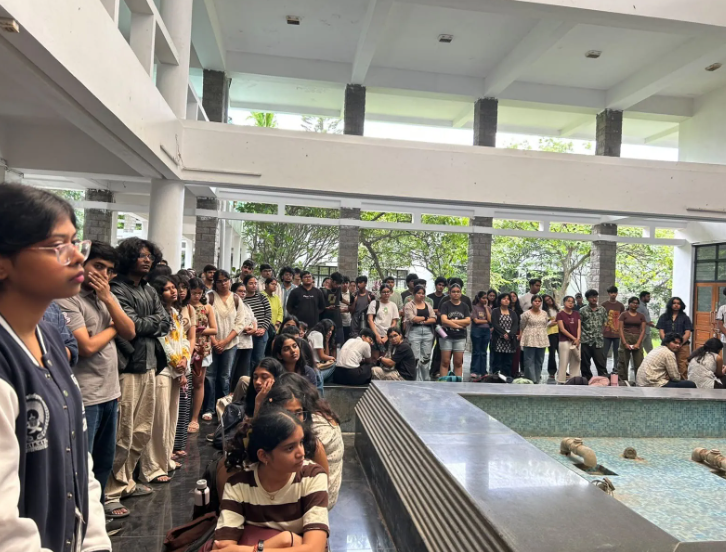
Its true strength was visible when students in other cities began acting in solidarity – holding gatherings, raising placards, observing fasts and turning what could have remained a Delhi protest into a national conversation.
Students did not need to belong to the same organisation, speak the same language or live in the same state. They were united by a common anxiety: that examinations determining the futures of millions must be fair, credible and protected from manipulation.
That shared concern created a movement larger than any single leader.
When students in Hyderabad expressed solidarity with protesters in Delhi, they sent a simple message: injustice experienced by one group of young Indians can become a concern for young people everywhere.
Humour Removed the Fear From Protest
The movement also rejected the belief that political seriousness must always look grim.
Protesters used costumes, satire, jokes, short videos and memes. They documented preparations, detentions and everyday life at protest sites.
This was not a rejection of seriousness. It was a new language of seriousness.
Humour helped young people communicate difficult issues without allowing fear to dominate the movement. It made political participation appear accessible rather than reserved for professional activists or established parties.
The message to other students was not merely, “Watch what is happening.”
It was: “You can participate too.”
Gen Z did not weaken protest by using memes. It made protest understandable to millions who might otherwise have remained outside politics.
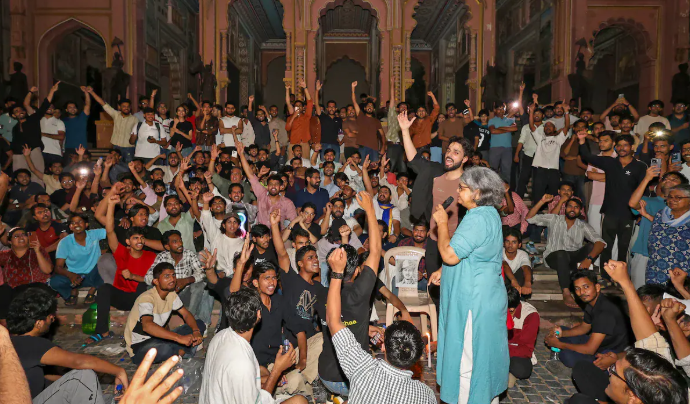
India’s Youth Refused to Accept Business as Usual
The movement should not be reduced to anger against one individual.
It represented a wider rejection of a political culture in which allegations of paper leaks, institutional failures or administrative negligence are sometimes treated as temporary controversies rather than threats to the lives and futures of students.
Young Indians invest years of study, family savings and emotional energy in competitive examinations. For many families, one examination is linked to an entire generation’s hopes of social and economic progress.
Any alleged manipulation of that system is therefore not a minor administrative problem. It strikes at the public’s trust in fairness.
The protesters demonstrated that Gen Z will not automatically accept explanations simply because they come from powerful institutions.
They will ask for evidence. They will compare statements. They will preserve videos. They will organise across cities. And they will continue questioning until a credible answer is given.
A Wake-Up Call to Every Government
This movement is a wake-up call not only for the Union government, but for every government in India.
It does not matter whether the party in power is the BJP, Congress, AAP, TMC, a regional party or a coalition. The democratic principle is the same.
Winning an election is not a licence to stop listening. A parliamentary majority is not permission to dismiss public suffering. Control over administration does not provide ownership over democratic institutions.
No political party should imagine that everything is permanently in its hands.
Governments hold office temporarily. The Constitution, institutions and democratic power belong to the people.
Public patience must never be mistaken for permanent submission. Silence must never be treated as consent. Electoral victory must never be confused with unlimited authority.
A generation that can organise itself, record everything and communicate nationally cannot be governed through indifference.
A Wake-Up Call to Every Political Party
Opposition parties should not assume that youth anger will automatically become support for them.
The same generation that questions the government will also question opposition parties, state governments, student organisations and protest leaders.
Gen Z is less willing to offer permanent loyalty merely because of ideology, family tradition, caste calculation or political branding.
It will judge parties by their actions, transparency and willingness to accept accountability.
Political leaders who attempt to appropriate genuine public movements without addressing their concerns may discover that this generation can identify opportunism as quickly as it identifies government failure.
The lesson is not that one party has lost and another has won.
The lesson is that citizens have rediscovered their own power.
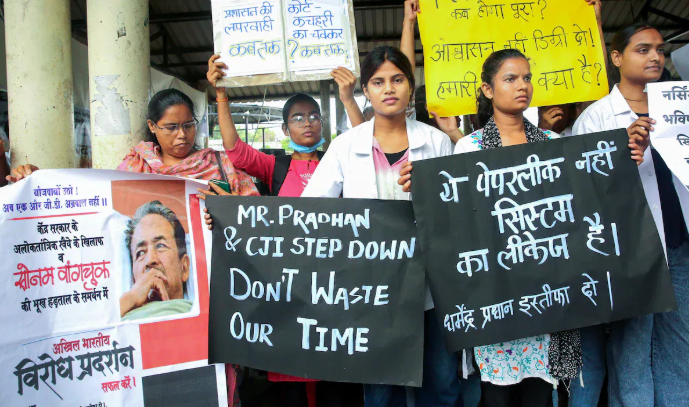
Non-Violence Was Not a Limitation – It Was the Weapon
Violence often gives governments an opportunity to shift attention away from the original grievance and towards questions of security and public order.
Non-violence denies power that diversion.
By remaining peaceful, protesters ensured that the public conversation remained focused on examination integrity, student futures and institutional accountability.
Their restraint became a source of moral authority.
Every peaceful gathering strengthened their argument. Every student sitting in solidarity expanded the movement’s legitimacy. Every citizen offering food, legal help or medical assistance turned individual anger into collective responsibility.
India’s youth showed that courage does not require destruction.
Revolution does not always arrive through violence. Sometimes it arrives through disciplined people who sit down, stand together and refuse to move away from the truth.
Violence can frighten a government for a night. Non-violent public unity can challenge its moral authority for an entire generation.
Smartphones Became Evidence Against Forgetfulness
In earlier movements, public memory depended heavily on newspapers, television cameras and official records.
In this movement, thousands of citizens created the record themselves.
Phones documented gatherings, detentions, speeches, alleged police action, volunteer work and moments of solidarity.
That footage made it more difficult for incidents to disappear into competing political claims.
Every recording carried a democratic message: citizens are watching, remembering and preserving evidence.
For governments accustomed to controlling the timing and format of official communication, this is a fundamental change.
The Resignation Became a Symbol
President Droupadi Murmu accepted Dharmendra Pradhan’s resignation from the Union Council of Ministers with immediate effect on July 25, following the advice of Prime Minister Narendra Modi.
Pralhad Joshi was assigned additional charge of the Ministry of Education.
Institutionally, the development represented a change in ministerial responsibility.
Politically, however, the resignation became a symbol of what sustained public mobilisation can achieve.
It showed that governments with strong parliamentary numbers are still answerable to democratic pressure outside Parliament.
It showed young people that political participation is not restricted to voting once every few years.
Democracy also means asking questions, gathering peacefully, demanding evidence, protecting one another and refusing to accept institutional silence.
This Was a Revolution in the Meaning of Protest
This was not a revolution against the Constitution.
It was a revolution conducted through constitutional democracy.
There was no attempt to seize institutions. The objective was to make institutions answerable.
There was no rejection of democracy. The protesters demanded that democracy function more honestly.
There was no celebration of violence. The movement showed that moral courage, public unity and persistent non-cooperation can themselves become revolutionary forces.
A placard and a smartphone worked together.
Gandhian discipline and Gen Z communication strengthened one another.
The streets created the pressure. Social media carried it across the country. Non-violence gave it legitimacy.
One Resignation Is Not the End
The resignation of a minister cannot by itself repair every weakness in India’s competitive examination system.
Alleged paper leaks, examination security, institutional transparency, student confidence and accountability require long-term reform.
A symbolic victory will have lasting meaning only when it produces stronger systems and protects future students from facing the same uncertainty.
Governments must therefore respond not only by changing personnel, but by changing procedures, strengthening safeguards and communicating transparently.
Protest movements must also remain committed to facts, constitutional methods, internal accountability and non-violence.
Democratic power carries responsibility on both sides.
To governments: authority is temporary, accountability is permanent.
To political parties: young Indians are not permanent vote banks and cannot be taken for granted.
To institutions: every examination result represents years of labour, sacrifice and family hope.
To India’s youth: you have shown that truth, unity and non-violence remain among democracy’s most powerful weapons.
This may be remembered not merely as the protest that preceded a minister’s resignation, but as the moment India’s digital generation rediscovered the revolutionary power of peaceful democratic resistance.