📅July 19, 2026 | By Pulse India News Desk
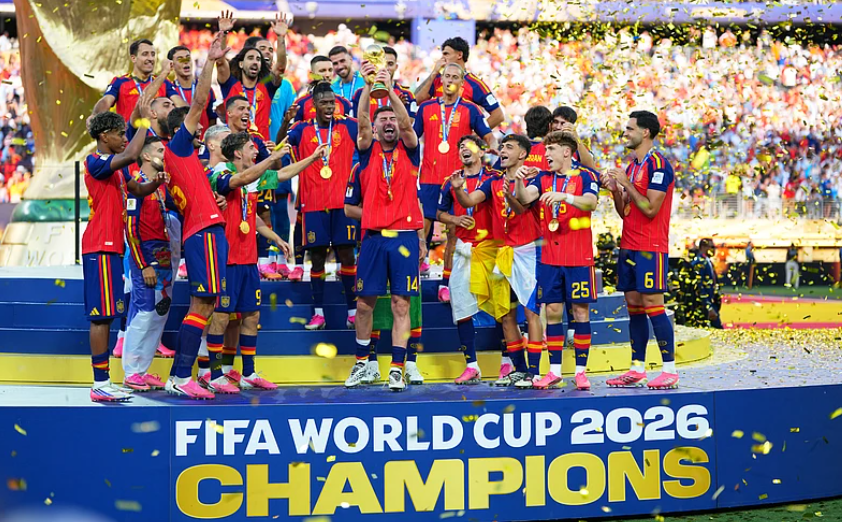
Spain celebrate with the FIFA World Cup trophy after defeating Argentina in the 2026 final in East Rutherford, New Jersey. AP/Julio Cortez
| Match | Spain vs Argentina |
| Competition | FIFA World Cup 2026 – Final |
| Venue | East Rutherford, New Jersey, United States |
| Date | July 19, 2026 |
| Final Score | Spain 1-0 Argentina after extra time |
| Goal | Ferran Torres 106′ |
| Player Of The Match | Rodri |
| Red Cards | Enzo Fernández 93′, Leandro Paredes after full-time |
| Result | Spain crowned FIFA World Cup 2026 champions |
Spain vs Argentina Review: Ferran Torres Wins World Cup Final Before Chaotic Post-Match Scenes
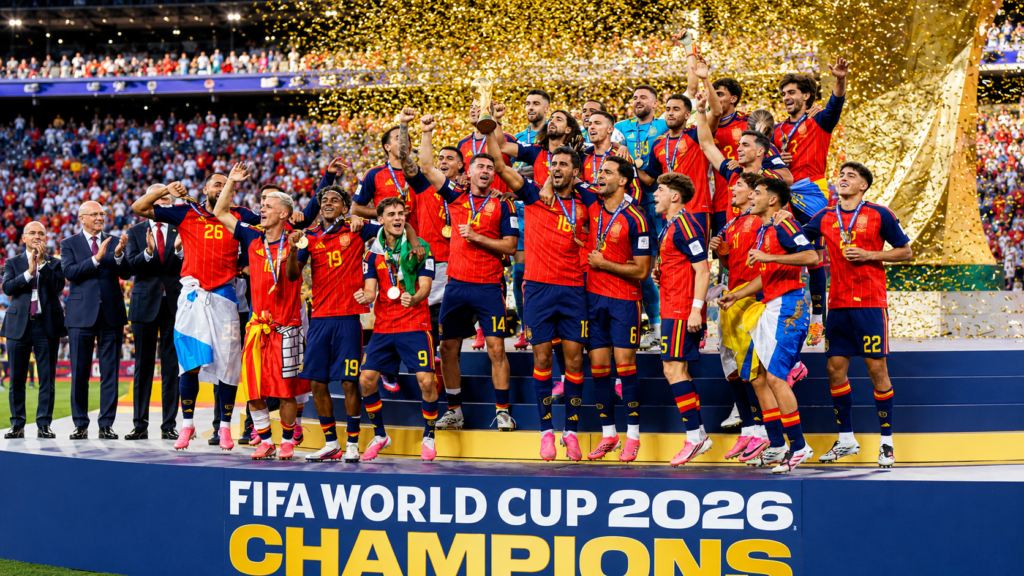
Spain were crowned FIFA World Cup 2026 champions after defeating Argentina 1-0 in extra time in a tense and increasingly volatile final in East Rutherford.
Ferran Torres scored the decisive goal in the 106th minute, meeting Nico Williams’ delivery with a controlled half-volley after Spain had dominated possession, territory and chances for most of the contest.
Argentina’s resistance was weakened when Enzo Fernández received a second yellow card in the 93rd minute. Emiliano Martínez produced a series of outstanding saves to keep the defending champions level, but Spain eventually found the breakthrough against 10 men.
The final whistle did not immediately bring calm. A confrontation involving players from both sides escalated into a wider melee, with Leandro Paredes shown a straight red card after full-time.
Spain controlled the final with 68% possession, 20 shots and 11 efforts on target. Argentina defended aggressively and relied heavily on Emiliano Martínez, but Enzo Fernández’s dismissal changed the balance of extra time. Ferran Torres then delivered the winning goal before the match ended amid confrontations and further disciplinary action.
Spain 1-0 Argentina: World Cup Final Review
The final was shaped by a clear tactical contrast. Spain wanted to control the ball, stretch the pitch and move Argentina’s midfield block from side to side. Argentina preferred a compact 4-4-2, attempted to close the centre and looked for direct transitions through Lionel Messi and Julián Álvarez.
Spain’s midfield structure gave Rodri a central platform from which to dictate the match. Dani Olmo and Fabián Ruiz advanced into the half-spaces, while Lamine Yamal and Álex Baena held wide positions to pull Argentina’s defensive line apart.
Argentina defended with intensity, but their aggression frequently crossed into fouls. Enzo Fernández, Rodrigo De Paul, Alexis Mac Allister and Nicolás González were asked to remain narrow and protect the centre, leaving Spain with space to circulate possession around the outside.
Spain Dominate Possession But Martínez Keeps Argentina Alive
Spain established control early and forced Argentina to defend for long periods. Their passing accuracy remained high, and repeated switches of play created opportunities for Pedro Porro and Marc Cucurella to support the attack.
Argentina struggled to generate sustained possession. Messi and Álvarez were often isolated, and the South American side failed to register a shot on target across the match.
Despite Spain’s dominance, Emiliano Martínez repeatedly denied them. The Argentina goalkeeper made 11 saves, producing the performance that carried his team into extra time.
Argentina Forced Into Early Changes
Argentina suffered a significant setback in the 44th minute when Lisandro Martínez was forced off with a thigh injury. Nicolás Otamendi replaced him in central defence.
Lionel Scaloni made another change at half-time, introducing Leandro Paredes for Nicolás González. The move added another combative midfielder but reduced Argentina’s natural width.
Paredes was booked in the 51st minute following a reckless challenge on Rodri and a confrontation involving Dani Olmo. The incident reflected the increasingly confrontational tone of the final.
Spain’s Substitutions Increase The Pressure
Luis de la Fuente refreshed Spain’s attack in the 62nd minute, introducing Pedri and Ferran Torres for Fabián Ruiz and Mikel Oyarzabal.
The changes gave Spain more movement between the lines and a fresher runner through the centre. Ferran repeatedly looked to attack the space between Argentina’s centre-backs, while Pedri helped Spain maintain possession under pressure.
Mikel Merino and Nico Williams followed in the 75th minute, replacing Dani Olmo and Álex Baena. Williams immediately widened the pitch and offered the direct acceleration Spain had occasionally lacked.
🟥 Enzo Fernández Sent Off In Extra Time
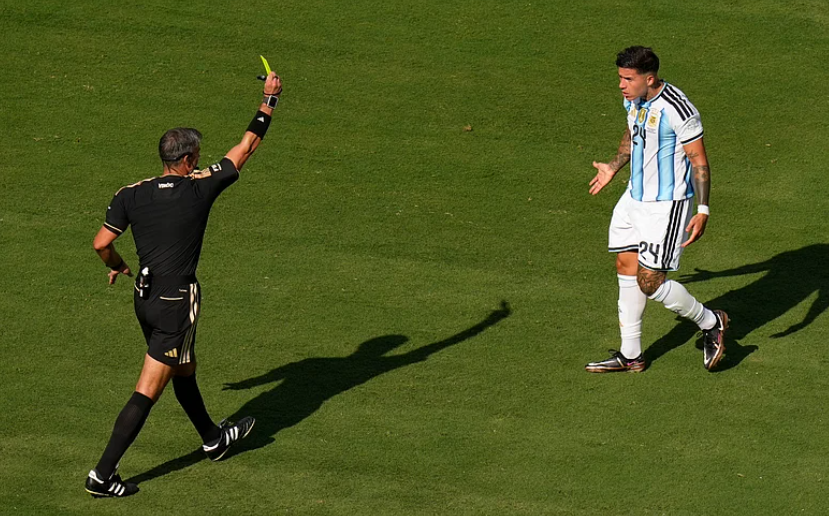
Referee Slavko Vinčić shows Enzo Fernández a yellow card during the World Cup final. AP/Seth Wenig
The decisive disciplinary moment arrived in the 93rd minute when Enzo Fernández committed a late challenge on Pau Cubarsí.
Having already been booked, the Argentina midfielder received a second yellow card and was dismissed, leaving his team to play the remainder of extra time with 10 men.
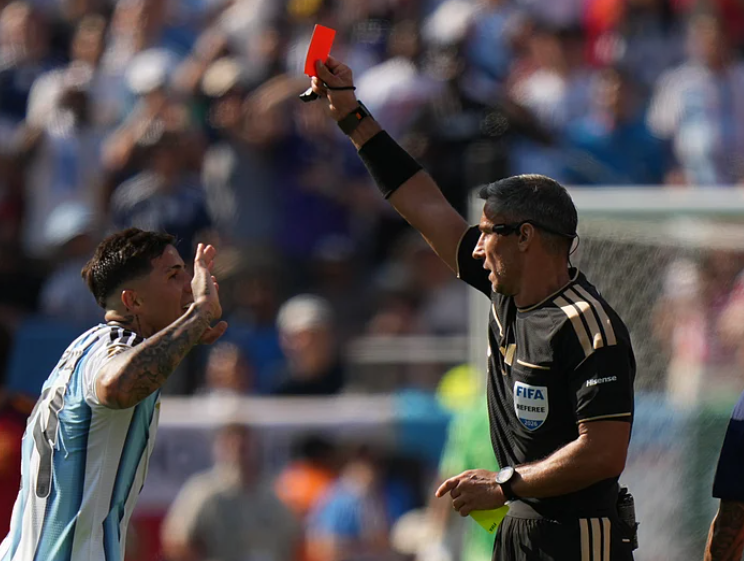
Enzo Fernández reacts after being sent off during extra time in the World Cup final. AP/Stephanie Scarbrough
The red card forced Argentina even deeper. Messi and Álvarez had little service, while Otamendi, Cristian Romero and Tagliafico were left to defend a constant stream of Spanish attacks.
⚽ Ferran Torres Scores The World Cup-Winning Goal
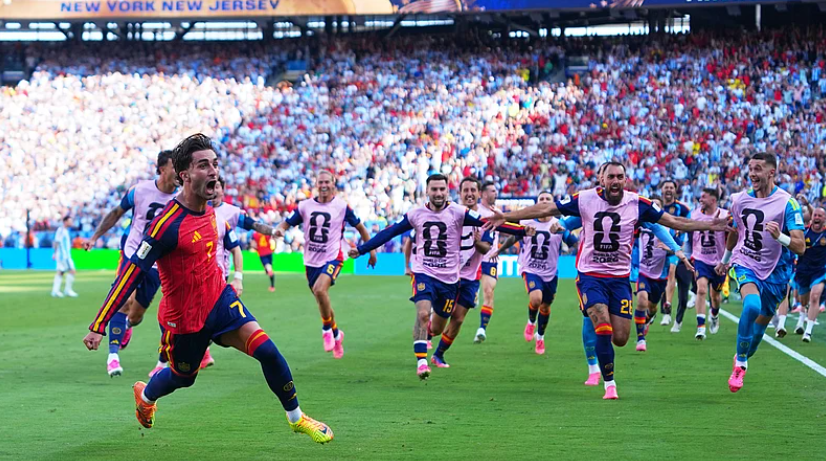
Ferran Torres celebrates after scoring Spain’s extra-time winner against Argentina in the FIFA World Cup 2026 final.
Spain finally broke through in the 106th minute. Nico Williams accelerated into space and delivered a precise ball into the attacking area.
Ferran Torres adjusted his body and connected with a controlled half-volley, directing the finish beyond Martínez to make it 1-0.
The goal rewarded Spain’s patience and the influence of their substitutes. Williams provided the penetration, while Ferran supplied the composure required in the biggest moment of the tournament.
Rodri Controls The Final
Rodri was the central figure in Spain’s tactical dominance. He protected the defence, directed possession and repeatedly recovered the ball before Argentina could launch meaningful counter-attacks.
His positioning allowed Spain’s full-backs and attacking midfielders to move forward with confidence. Whenever Argentina attempted to play directly toward Messi or Álvarez, Rodri was usually positioned to collect the second ball.
The midfielder also absorbed significant physical attention, particularly from Paredes and Argentina’s central midfielders, but continued to set Spain’s tempo deep into extra time.
🤬 Post-Match Confrontation Overshadows The Finish
The final whistle was followed by a confrontation between players from both teams as Spain began celebrating their victory.
Tensions increased when Nahuel Molina confronted Rodri. Eric García then became involved, before Leandro Paredes entered the incident and clashed with several Spain players.
The confrontation expanded rapidly, with substitutes and staff moving onto the field. Paredes was shown a straight red card after full-time, while Argentina coach Lionel Scaloni and members of his staff attempted to separate their players from the Spanish group.
The scenes created an unfortunate ending to a final that had already included numerous fouls, cautions and Enzo Fernández’s extra-time dismissal.
Argentina’s Unsportsmanlike Conduct On And Off The Field
Argentina’s behaviour during the closing stages and after the final whistle drew criticism. Repeated confrontations, aggressive challenges and protests toward the referee damaged the team’s discipline at a crucial moment.
Enzo Fernández’s second booking reduced Argentina to 10 men in extra time, while Leandro Paredes’ involvement in the post-match confrontation resulted in another red card. Cristian Romero’s reported refusal to acknowledge members of the presentation party also added to the impression of poor sportsmanship after defeat.
Competitive intensity is expected in a World Cup final, but players are still responsible for maintaining control and respecting opponents, officials and the medal ceremony. Argentina’s reaction ultimately distracted from Spain’s victory and from the efforts of their own players across the tournament.
Post-match footage from the Spain vs Argentina FIFA World Cup 2026 final.
⏱️ Spain vs Argentina Match Timeline
📋 Formations And Starting XIs
Starting XI: Unai Simón; Pedro Porro, Pau Cubarsí, Aymeric Laporte, Marc Cucurella; Rodri; Dani Olmo, Fabián Ruiz; Lamine Yamal, Mikel Oyarzabal, Álex Baena.
Key Substitutes: Pedri, Ferran Torres, Mikel Merino and Nico Williams.
Tactical Approach: Spain used Rodri as the midfield anchor, pushed Olmo and Ruiz into advanced positions and stretched Argentina through Yamal, Baena and overlapping full-backs.
Starting XI: Emiliano Martínez; Gonzalo Montiel, Cristian Romero, Lisandro Martínez, Nicolás Tagliafico; Rodrigo De Paul, Enzo Fernández, Alexis Mac Allister, Nicolás González; Lionel Messi, Julián Álvarez.
Key Substitutes: Nicolás Otamendi and Leandro Paredes.
Tactical Approach: Argentina defended in a narrow block, attempted to reduce space around Spain’s midfield and looked for direct transitions toward Messi and Álvarez.
📊 Spain vs Argentina Match Statistics
| Statistic | Spain | Argentina |
|---|---|---|
| Final Score | 1 | 0 |
| Total Shots | 20 | 3 |
| Shots On Target | 11 | 0 |
| Ball Possession | 68% | 32% |
| Passing Accuracy | 90% | 78% |
| Corner Kicks | 9 | 4 |
| Fouls Committed | 21 | 24 |
| Yellow Cards | 0 | 5 |
| Red Cards | 0 | 2 |
| Goalkeeper Saves | 0 | 11 |
⭐ Top Performers
Rodri: Controlled midfield, protected Spain against transitions and dictated the tempo throughout the final.
Ferran Torres: Came from the bench and scored the goal that won the World Cup.
Nico Williams: Added decisive pace and supplied the assist for Ferran’s winner.
Emiliano Martínez: Made 11 saves and almost carried Argentina through extra time.
Pau Cubarsí: Defended calmly, progressed the ball and drew the challenge that led to Enzo’s dismissal.
Lamine Yamal: Stretched Argentina’s defensive structure and remained a constant threat from the right.
How Spain Won The World Cup Final
Spain remained committed to their style even when the goal did not arrive during normal time. They continued moving the ball quickly, used the full width of the pitch and trusted their substitutes to change the rhythm.
Their patience was matched by defensive discipline. Argentina’s forwards were prevented from building meaningful combinations, and Unai Simón did not face a shot on target.
The dismissal of Enzo accelerated Spain’s control, but the foundations of victory had been established much earlier through Rodri’s midfield authority, the movement of Spain’s attacking players and the team’s ability to recover possession immediately.
Where The Final Went Wrong For Argentina
Argentina were unable to create a sustained attacking threat. Messi and Álvarez received too little support, while the midfield spent most of the match reacting to Spain’s possession.
The defensive approach kept the score level for a long period, but it depended on Martínez producing an exceptional performance and the outfield players maintaining complete discipline.
Enzo’s red card removed that balance. Argentina then lost another layer of control after the final whistle when emotions spilled into a confrontation.
Spain Crowned FIFA World Cup 2026 Champions
Spain lift the trophy after winning the FIFA World Cup 2026 final against Argentina. AP/Julio Cortez
Spain’s victory completed a tournament defined by possession control, coordinated pressing and the impact of a technically gifted generation.
The final also demonstrated the depth of the squad. Ferran Torres and Nico Williams combined for the winning goal after beginning the match on the bench, while Pedri and Mikel Merino helped Spain maintain control as the contest moved into extra time.
For Argentina, the defeat ended their attempt to retain the World Cup. Their resistance was substantial, but they were ultimately unable to match Spain’s control or maintain the discipline required in extra time.
Spain defeated Argentina 1-0 after extra time to win the FIFA World Cup 2026 final.
Spain dominated possession and chances but were repeatedly denied by Emiliano Martínez. The final changed decisively when Enzo Fernández was sent off in the 93rd minute.
Ferran Torres scored the winner in the 106th minute from Nico Williams’ assist, rewarding Spain’s patience, depth and technical superiority.
The post-match confrontation and Paredes’ red card created an ugly conclusion, but the footballing verdict was clear: Spain were the better team and deserved to be crowned world champions.
Goal: Ferran Torres 106′
Assist: Nico Williams
Player Of The Match: Rodri ⭐
Major Turning Point: Enzo Fernández’s red card
Spain Status: FIFA World Cup 2026 champions
Argentina Status: Runners-up
Post-Match Red Card: Leandro Paredes
Spain vs Argentina Spain 1-0 Argentina FIFA World Cup 2026 Final Spain World Cup Champions Ferran Torres Goal Nico Williams Rodri Lamine Yamal Lionel Messi Enzo Fernandez Red Card Leandro Paredes Red Card World Cup Final Fight Spain Argentina Review World Cup Match Review