📅July 18, 2026 | By Pulse India News Desk
India Space Sector
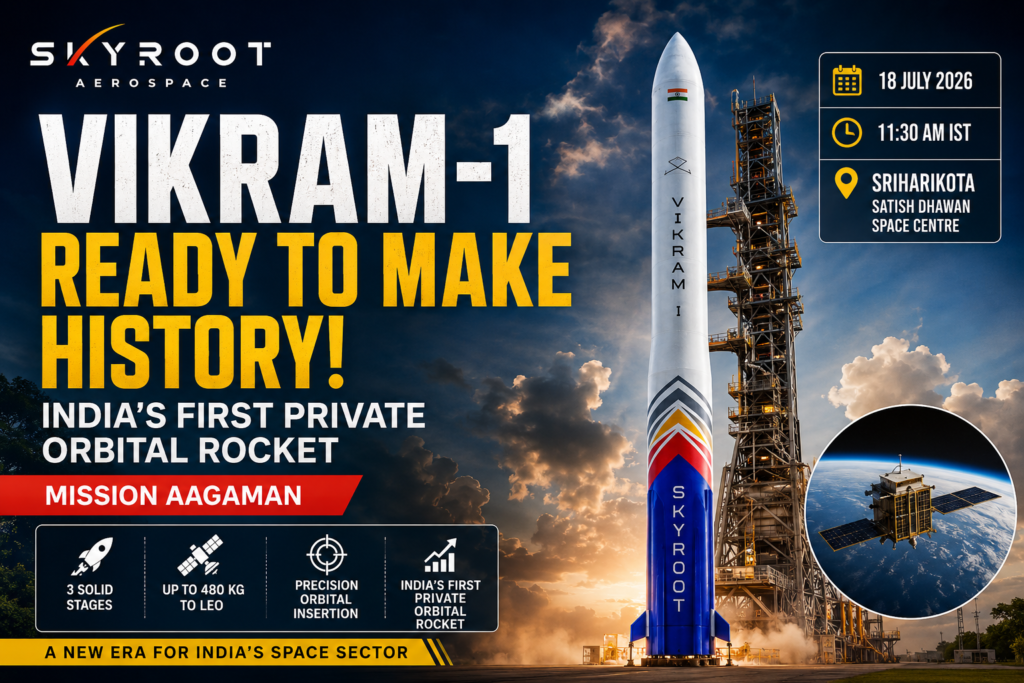
Skyroot Aerospace is preparing to launch Vikram-1 under Mission Aagaman, marking a defining moment for India’s private space industry and its ambitions in the global small-satellite launch market.
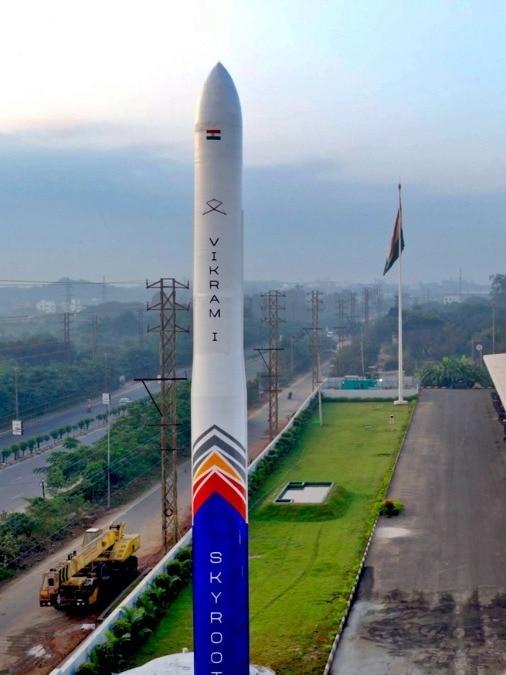
India is preparing to enter a new era of commercial spaceflight. Hyderabad-based Skyroot Aerospace is set to attempt the maiden orbital flight of Vikram-1, a privately developed rocket designed to place small satellites into Earth orbit.
The mission, named Mission Aagaman, is expected to become one of the most significant milestones since India opened its space sector to private participation. A successful flight would demonstrate that an Indian private company can design, build and launch an orbital-class rocket from Indian soil.
Vikram-1 Launch Date and Time
Launch schedules may change because of weather conditions, technical checks or range-clearance requirements.
What Is Vikram-1?
Vikram-1 is a multi-stage orbital launch vehicle developed by Skyroot Aerospace for the growing small-satellite market. Unlike a suborbital rocket that briefly reaches space before returning to Earth, an orbital launch vehicle must achieve the speed and altitude required to place a payload into a stable orbit.
The rocket is designed to offer satellite operators a dedicated and flexible launch option instead of requiring them to wait for available space aboard a much larger vehicle.

Vikram-1 Specifications
| Specification | Details |
|---|---|
| Rocket height | Approximately 24 metres |
| Diameter | Approximately 2.2 metres |
| Lift-off mass | Around 33 tonnes |
| Main configuration | Three solid-propellant stages |
| Final orbital system | Liquid-fuel Orbital Adjustment Module |
| LEO payload capacity | Up to approximately 480 kg |
| SSO payload capacity | Up to approximately 290 kg |
| Primary market | Small satellites and dedicated commercial missions |
| Vehicle type | Expendable orbital launch vehicle |
Vikram-1 is not merely another rocket. It represents the arrival of a privately led orbital-launch capability within India’s expanding space ecosystem.
How the Rocket Works
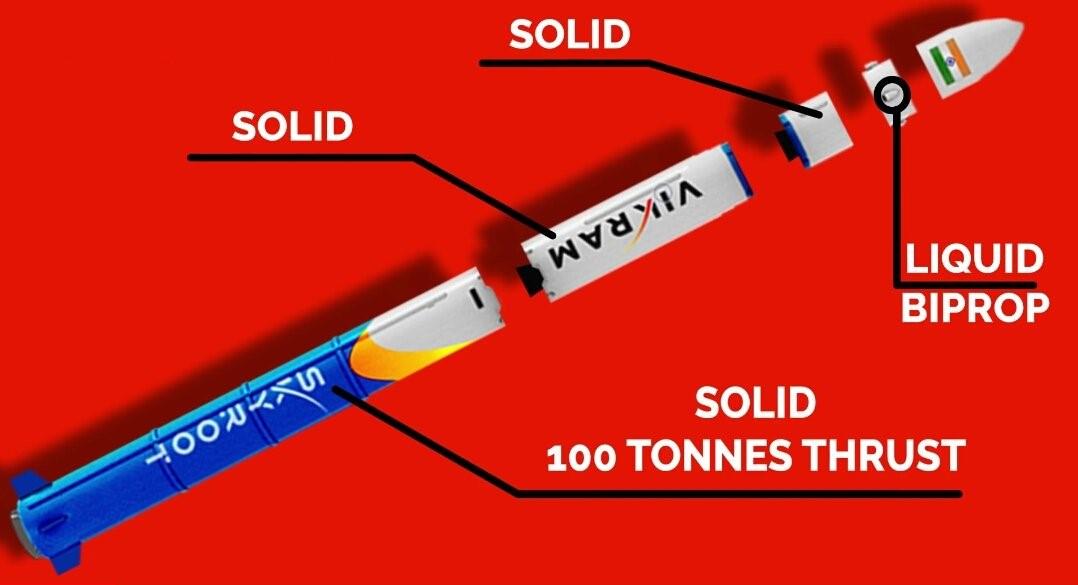
Vikram-1 uses three solid-propellant stages to generate the thrust required during lift-off and ascent. Solid motors are relatively compact and can provide powerful, immediate thrust without the complex fuel-management systems required by many liquid engines.
After the main stages complete their work, an upper orbital module is intended to perform precise manoeuvres before payload deployment. This arrangement gives the vehicle greater flexibility in placing satellites into their intended orbits.
What Mission Aagaman Will Test
The maiden flight is expected to validate several critical systems under real launch conditions. Ground testing can confirm individual components, but only a full flight can reveal how the complete vehicle performs during the extreme vibration, pressure, speed and temperature changes of an orbital mission.
Propulsion
Performance of the solid motors and upper orbital module during ascent.
Stage Separation
Safe and precisely timed separation of the rocket’s different stages.
Navigation
Accuracy of guidance, navigation and flight-control systems.
Avionics
Reliability of flight computers, sensors, telemetry and communications.
Orbital Insertion
The vehicle’s ability to achieve its planned trajectory and orbital conditions.
Payload Deployment
Opening of the payload fairing and successful satellite release.
The Vikram Rocket Family
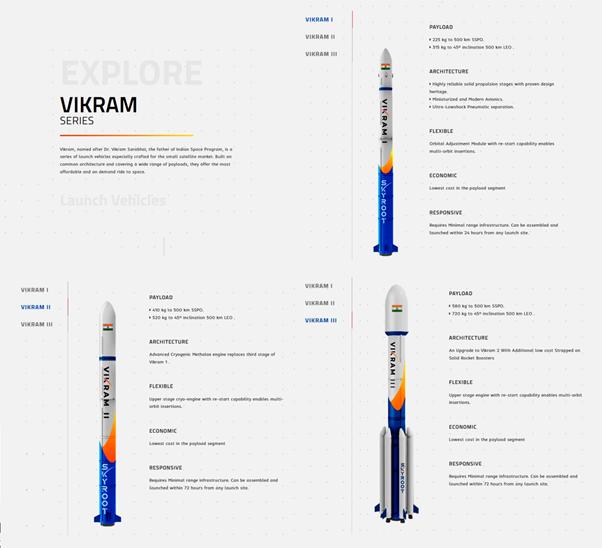
Vikram-1 is part of a broader family of launch vehicles planned by Skyroot Aerospace. The company’s strategy is to offer rockets with different payload capacities so that customers can select a vehicle suited to their satellite size, destination and mission requirements.
Why Vikram-1 Is Important for India
India’s orbital-launch programme has historically been led by the Indian Space Research Organisation. ISRO has built an internationally respected launch capability through vehicles such as the PSLV, GSLV and LVM3.
Vikram-1 does not replace that national capability. Instead, it expands India’s overall launch ecosystem by creating a commercial option for smaller missions and specialised customers.
- Private orbital capability: It could make Skyroot the first Indian private company to complete an orbital launch.
- Commercial opportunities: Indian and international satellite operators could gain another launch option.
- Faster access to space: Dedicated small-rocket missions could reduce dependence on rideshare availability.
- Technology development: The mission can strengthen domestic expertise in propulsion, materials, avionics and manufacturing.
- Investment confidence: A successful flight could encourage further investment in India’s private space startups.
From Vikram-S to Vikram-1
Skyroot Aerospace achieved an important breakthrough in November 2022 when its Vikram-S suborbital rocket reached space during Mission Prarambh. That flight enabled the company to test several technologies, including propulsion, vehicle structures, avionics and launch operations.
Vikram-1 is a substantially more demanding mission. Reaching orbit requires far greater speed, more complex staging and highly accurate trajectory control. The transition from a suborbital demonstration to an orbital launch therefore represents a major technological leap.
Suborbital vs Orbital Flight
A suborbital rocket reaches space but does not gain enough horizontal velocity to remain around Earth.
An orbital rocket must accelerate to roughly several kilometres per second and place its payload on a stable path around the planet. That makes Vikram-1 far more complex than the earlier Vikram-S mission.
A Growing Market for Small Satellites
Demand for compact satellites has increased as governments, universities and private companies deploy constellations for Earth observation, communications, navigation, climate monitoring, scientific research and Internet connectivity.
Small launch vehicles are designed to address this market by offering dedicated missions, customised orbital destinations and potentially shorter launch timelines. However, the sector remains highly competitive, and long-term success will depend on reliability, cost, manufacturing efficiency and launch frequency.
What Happens After the Maiden Flight?
Even if the mission performs as planned, Skyroot will need to carefully analyse flight data before moving towards regular commercial launches. Engineers are expected to review propulsion performance, structural loads, navigation accuracy, telemetry quality and stage-separation behaviour.
The findings could lead to design refinements and further qualification tests. Building a dependable launch business requires more than one successful mission; it requires repeated flights, predictable schedules and confidence from satellite customers.
The Beginning of India’s Private Orbital Era
Vikram-1 carries more than satellites and flight instruments. It carries the expectations of India’s emerging private space industry.
A successful Mission Aagaman would demonstrate that India’s private companies are capable of progressing from experimental space missions to full orbital-launch operations. Whatever the final outcome of its maiden flight, Vikram-1 has already become an important symbol of India’s rapidly evolving space economy.
Do you think private companies will transform India’s space industry?
Share your views and follow Pulse India News for the latest updates on Mission Aagaman and Vikram-1.