📅 April 25, 2026 | By Pulse India News Desk
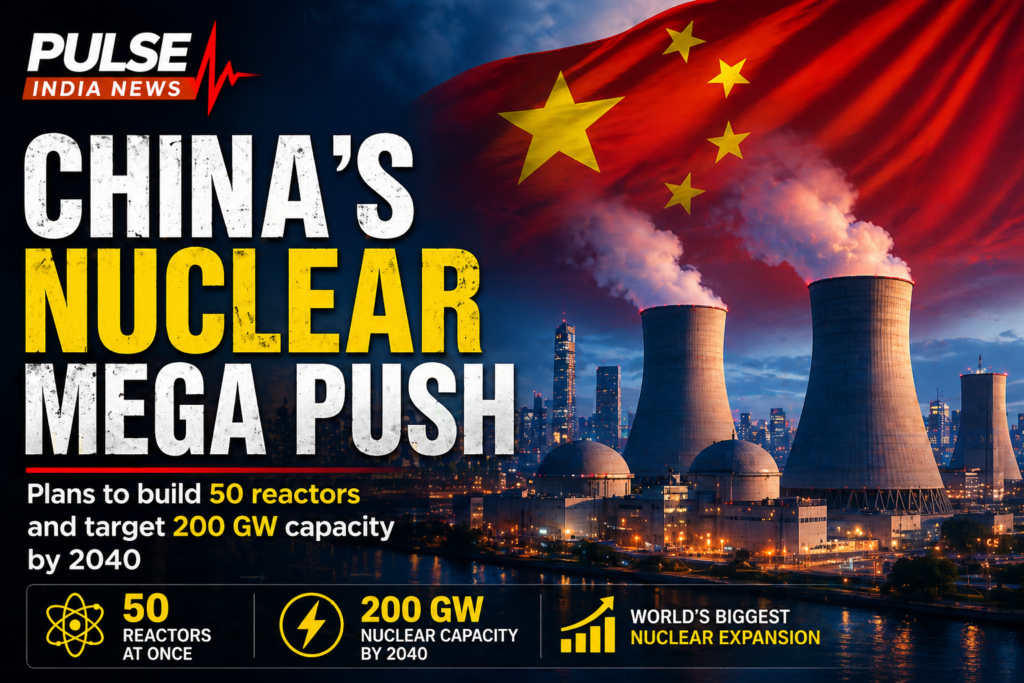
China has announced a major expansion of its nuclear energy programme, saying it now has the capability to build up to 50 nuclear reactors simultaneously as the country races to secure long-term energy supplies and reduce dependence on coal.
The announcement was made by the China Nuclear Energy Association, which said Beijing is rapidly increasing investment in atomic energy to meet rising electricity demand from industries, electric vehicles, artificial intelligence infrastructure and mega cities.
China’s Nuclear Push
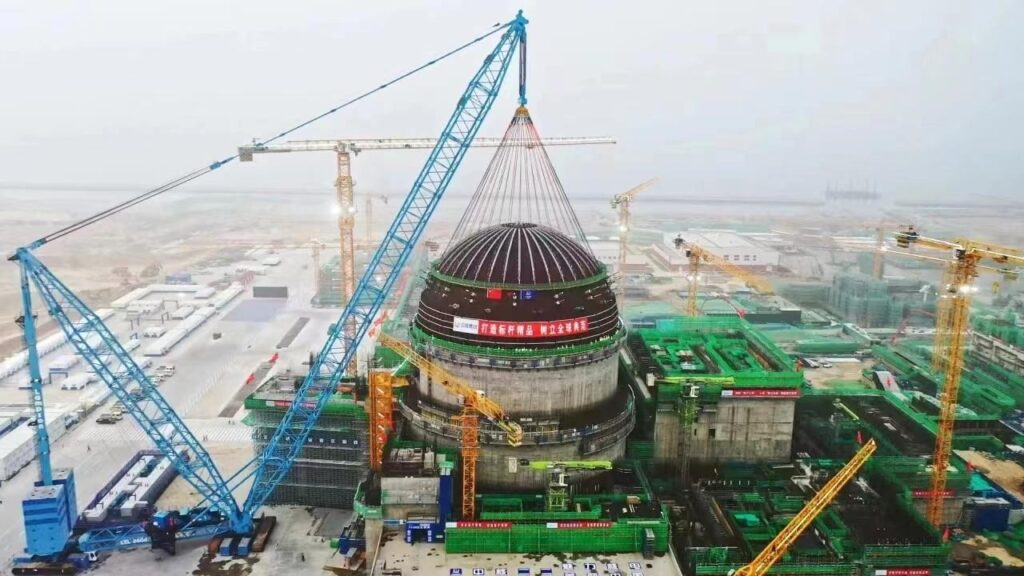
China currently operates around 60 nuclear reactors, while another 36 reactors are under construction, the highest number for any country in the world.
Chinese authorities have also approved several additional reactors as part of a broader plan to dramatically increase nuclear power generation over the next 15 years.
Beijing’s long-term target is ambitious:
- Current operational nuclear capacity: around 66 GW
- Target by 2040: 200 GW
If achieved, China could become the world’s largest producer of nuclear energy, overtaking the United States.
Why China Is Expanding Nuclear Power
China remains heavily dependent on coal for electricity generation. However, rising pollution levels, climate targets and growing electricity consumption are forcing Beijing to diversify its energy mix.
Nuclear power offers several advantages:
- Stable 24/7 electricity supply
- Lower carbon emissions
- Reduced dependence on imported fuel
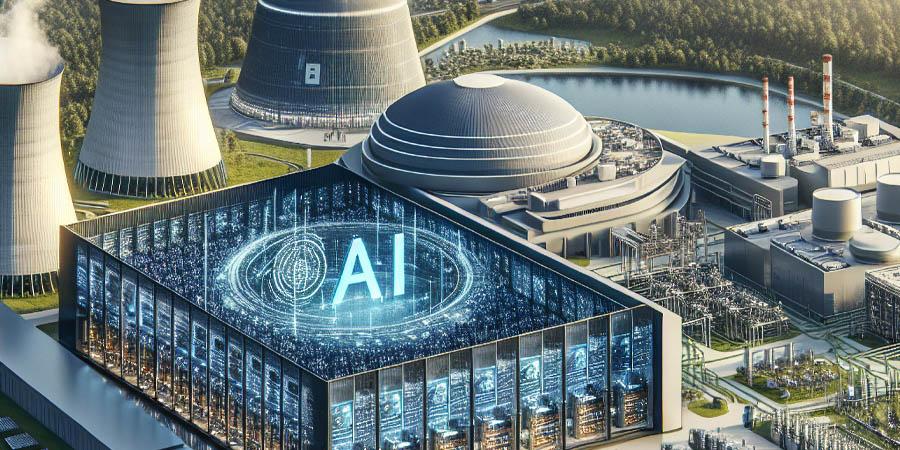
- Reliable energy for AI data centres and manufacturing
Experts say renewable sources like solar and wind are growing rapidly in China, but they cannot always provide uninterrupted electricity for heavy industries and large urban centres.
That is where nuclear energy becomes critical.
⚡ How India Compares
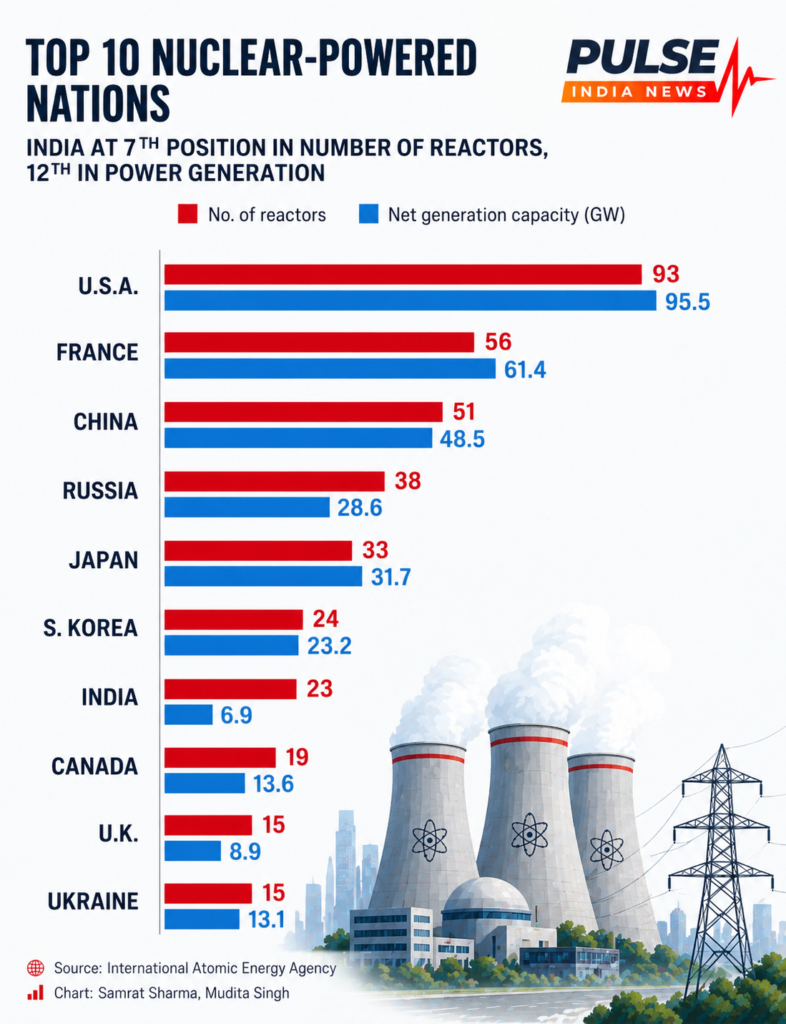
China’s massive nuclear expansion highlights the growing gap between India and China in atomic energy generation. While India continues to expand its nuclear programme steadily, China has moved at a much faster pace with aggressive investments, faster approvals and large-scale reactor construction.
India has been expanding its nuclear energy programme, but at a slower pace due to regulatory approvals, land acquisition challenges, financing constraints and higher project costs. China, meanwhile, has adopted a rapid expansion strategy backed by strong state funding and large-scale industrial capacity.
China’s Technological Ambition
Chinese officials say the country has significantly improved its domestic nuclear technology capabilities over the past decade.
China is now investing heavily in:
- Third-generation nuclear reactors
- Small Modular Reactors (SMRs)
- Advanced fuel technologies
- Fourth-generation reactor systems
The country is also trying to position itself as a major exporter of nuclear technology in Asia, Africa and the Middle East.
Global Impact
China’s aggressive nuclear expansion could reshape the global energy market over the next two decades.
Analysts say the move could:
- Reduce China’s coal consumption
- Increase global competition in nuclear technology
- Strengthen China’s energy security
- Accelerate the global shift toward low-carbon energy
The announcement comes at a time when several countries are reconsidering nuclear power as part of their clean energy transition strategies amid rising electricity demand worldwide.
🔗 Related News
- NavIC “Clock Crisis” After IRNSS-1F Failure: ISRO Adopts Dual Strategy
- Japan Offers Mogami-Class Stealth Frigates to India with Co-Production Plan
- DRDO Plans 800 km Range BrahMos-ER Integration for India’s Future P-77 Submarines
- World’s Top 7 Naval Powers by Total Fleet Tonnage in 2026
- G20 Satellite Expected to Launch in 2027, Says ISRO Chief