📅April 08, 2026 | By Pulse India News Desk
🌍 A Ceasefire That Raised More Questions Than Answers
The ceasefire between the United States and Iran has brought a temporary halt to escalating tensions in the Middle East. But beyond the immediate relief, the sequence of events leading up to the agreement has triggered a far more uncomfortable question in global strategic circles:
👉 Did the United States step back under pressure – or did it deliberately avoid a larger, costlier war?
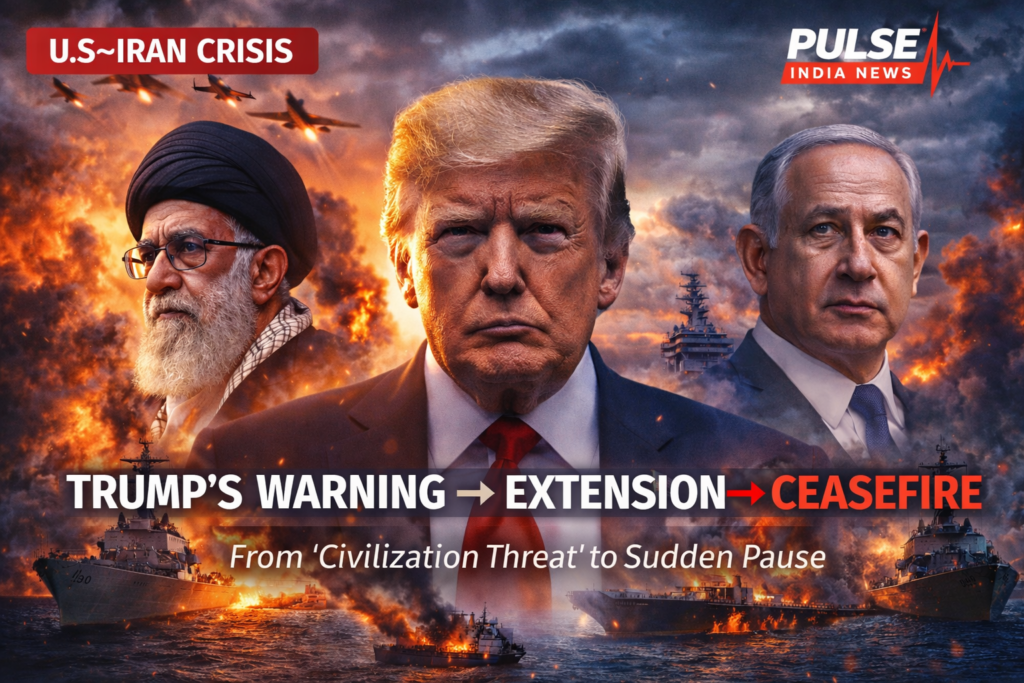
A closer look at the timeline, particularly President Donald Trump’s own public statements, reveals a story of strong warnings, shifting deadlines, and eventually, a negotiated pause.
🕒 Timeline: From Strong Warnings to Extension and Ceasefire
As tensions began rising toward the end of February 2026, concerns centered around the Strait of Hormuz, a critical artery for global oil supply. By February 28, the situation had escalated into a visible military standoff, with naval movements and regional alerts increasing sharply.
In the days that followed, President Donald Trump adopted an increasingly aggressive public tone, signaling that the United States was prepared for decisive action.
🕒 Trump Escalation Timeline
From early warnings to a last-minute ceasefire, Trump’s messaging moved from pressure and brinkmanship to a sudden diplomatic pause.
Trump’s messaging at this stage was aimed at showing military readiness and deterring any further disruption around the Strait of Hormuz. The tone was firm, projecting that Washington was prepared to escalate if necessary.
The warning sharpened the crisis narrative. By this point, the administration’s public posture suggested that continued disruption could trigger a strong American response.
This was the clearest signal yet that the White House wanted Iran — and the wider region — to believe escalation was still possible.
This was Trump’s most explosive public warning of the crisis, tied to a hard deadline over Iran’s next move. The statement triggered global alarm because it suggested the possibility of massive escalation if no deal was reached in time.
Just hours after the threat peaked, Washington backed away from immediate escalation and accepted a two-week pause, marking the sharpest turn in the entire crisis timeline.
🗣️ Trump’s Statements: From Pressure to Peace Narrative
President Trump’s public messaging itself reflects this transition.
In the early phase of the crisis, his tone was uncompromising. He warned that the United States would act decisively if its strategic interests were challenged. These statements were designed to project strength and deter further escalation.
However, by the time the ceasefire was announced, the tone had changed significantly. Trump described the agreement as a “big day for world peace”, while simultaneously calling it a “total and complete victory” for the United States.
This dual messaging — claiming both peace and victory – has been interpreted by analysts as an attempt to balance domestic political optics with the realities of de-escalation.
⚔️ The Hidden Pressures Behind the Shift
Behind the shift from warning to ceasefire, several layers of pressure appear to have been building simultaneously.
💣 Military Reality
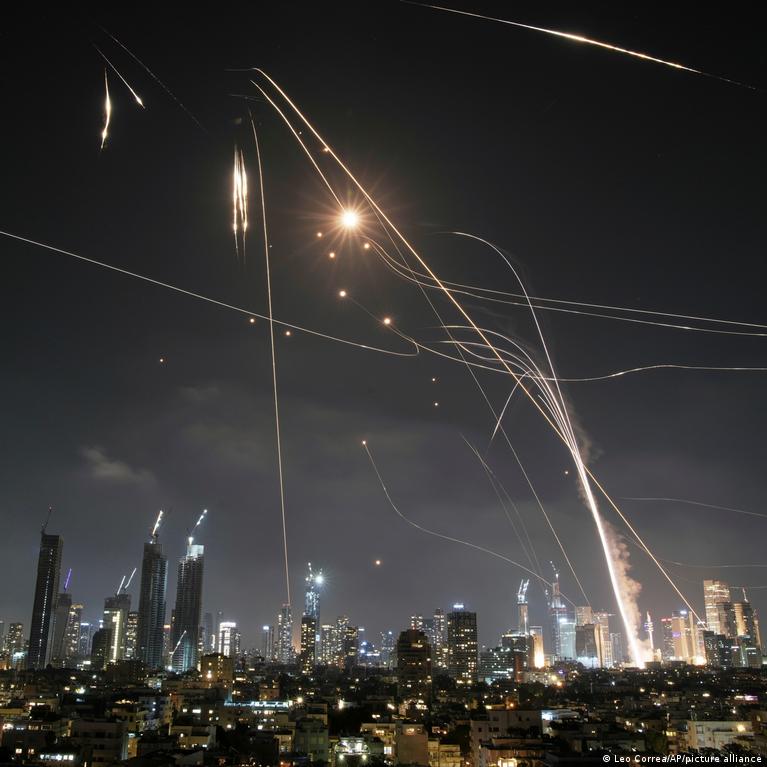
During the escalation phase, reports and expert commentary pointed toward intensive use of interceptor systems in the region. While official figures remain undisclosed, defense analysts have raised concerns about the sustainability of such deployments in a prolonged conflict.
The implication was clear: a full-scale war could significantly stretch resources and escalate unpredictably.
📉 Economic Strain and Inflation Risks
The crisis also unfolded at a time when the U.S. economy was already navigating inflation concerns. Any disruption in the Strait of Hormuz, through which a significant portion of global oil flows – had the potential to trigger a sharp rise in energy prices.
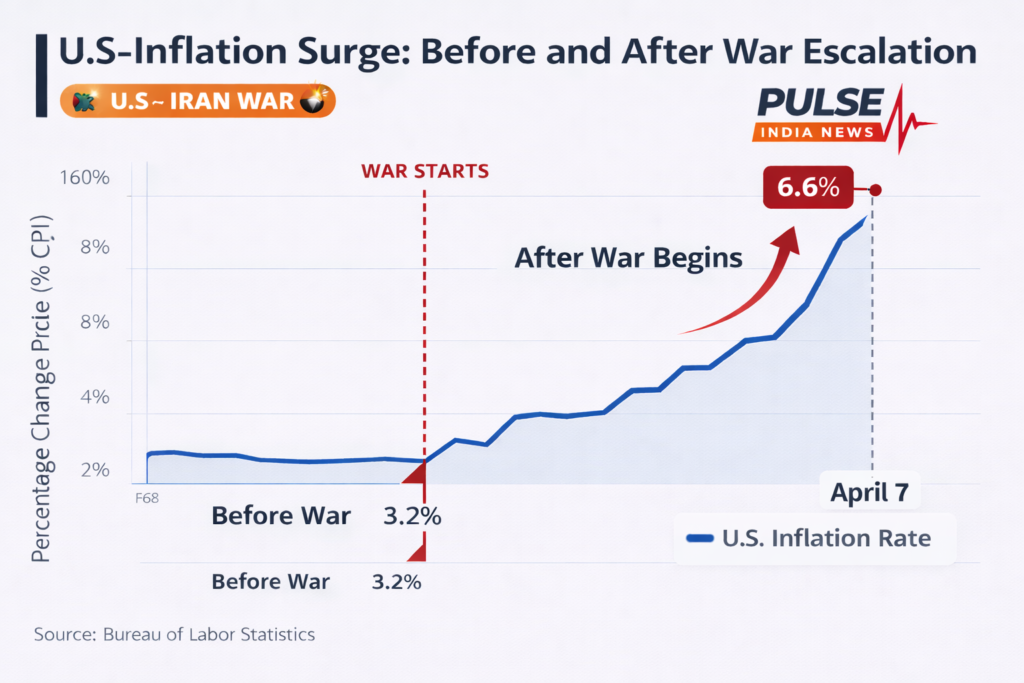
Such a spike would not only impact global markets but also directly affect domestic fuel costs in the United States, creating additional economic pressure.
🗳️ Political Heat Ahead of 2026 Elections
With the 2026 U.S. elections approaching, the political environment added another layer of complexity.
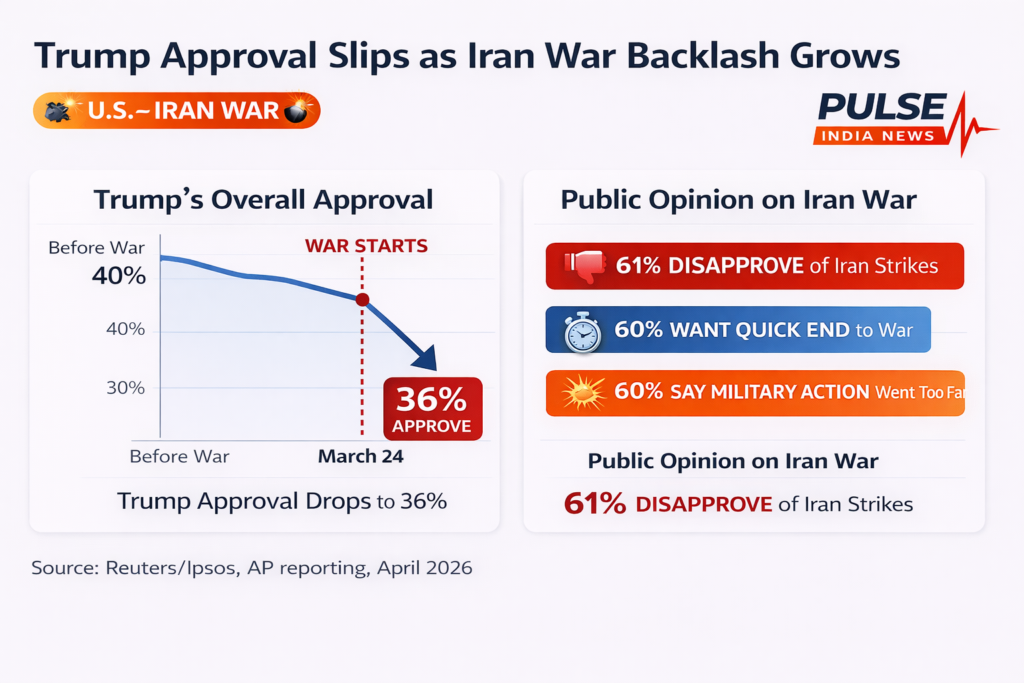
Sections of Trump’s own political base were reportedly cautious about entering another large scale conflict. Public sentiment, reflected in opinion trends during the crisis, suggested limited appetite for prolonged military engagement.
In such a scenario, a full escalation risked becoming not just a foreign policy challenge, but a domestic political liability.
🌍 Gulf and Global Economic Pressure
The role of global economic stakeholders cannot be ignored.
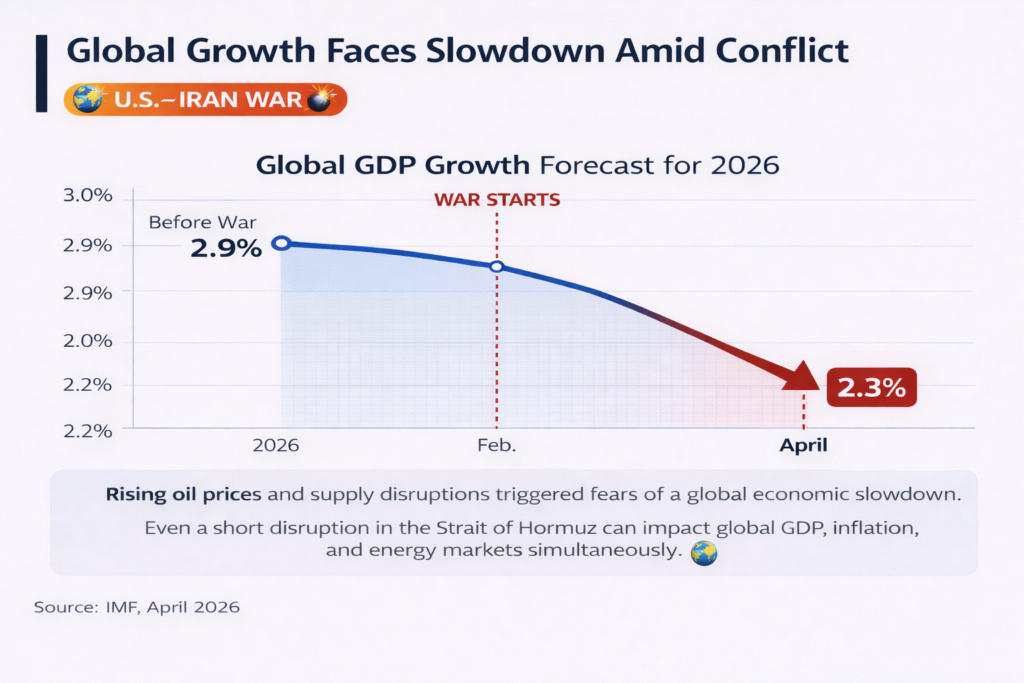
Countries in the Gulf region, along with major energy-dependent economies, had strong incentives to push for de-escalation. A prolonged disruption in oil flows would have triggered a global economic shock, affecting everything from fuel prices to inflation worldwide.
Diplomatic pressure, both direct and indirect, is believed to have intensified during this period.
🌐 A Face-Saving Exit?
Another widely discussed perspective is that the ceasefire offered a mutual face-saving mechanism.
Rather than forcing a clear winner or loser, the agreement allowed both sides to step back while maintaining their respective narratives. The United States could claim strategic success, while Iran could assert that it had not backed down.
Such outcomes are not uncommon in high-stakes geopolitical standoffs, where perception often matters as much as reality.
🌐International Backing:NATO and QUAD stay out
Another critical factor shaping the course of events was the lack of broad international military backing for escalation.
Despite rising tensions, there was no formal commitment from key blocs such as NATO or the Quadrilateral Security Dialogue (QUAD) to directly participate in any potential military action
🌐 International Backing: NATO & QUAD Stay Out
Even as Donald Trump pushed allies to help secure the Strait of Hormuz, major Western and Indo-Pacific partners stopped short of joining the war directly. The broader pattern was clear: support for de-escalation, diplomacy and shipping security — but no open rush into a U.S.-led military escalation.
NATO
Alliance reluctanceAccording to AP, Trump’s anger toward NATO deepened after alliance members did not back his push for direct help around Hormuz. That became one of the clearest signs that Washington was not getting the broad allied military participation it wanted.
Italy
No ships without U.N.Deputy Prime Minister Matteo Salvini said Rome was not considering such a deployment unless there was clear U.N. authorization. Reuters also reported that Italy had denied U.S. aircraft access to Sigonella air base for Middle East operations, underscoring European caution over direct involvement.
United Kingdom, France, Germany & Europe
Ceasefire over escalationRather than lining up behind expanded military action, European leaders publicly urged diplomacy, protection of civilians and a longer-term settlement. The message from Europe was political support for de-escalation — not military entry into another front.
Australia
Support for peace, not war expansionReuters reported that Albanese, although initially supportive of U.S. actions, grew openly concerned about the war’s direction and called for clearer objectives and de-escalation. Trump, in response, complained that Australia, along with Japan and South Korea, had not provided enough support.
Japan
Diplomacy firstPrime Minister Sanae Takaichi spoke directly with Iran’s president after the ceasefire, urging secure passage through Hormuz and stressing a swift diplomatic solution. For Tokyo, the immediate priority was energy security and stability — not entering the war.
QUAD Reality
No joint military entryWhat emerged instead was a pattern: Australia criticized escalation, Japan emphasized diplomacy and shipping security, and India’s public posture centered on managing economic fallout from the crisis. In practical terms, that meant the QUAD did not turn into a war coalition.
While individual countries expressed concern and called for restraint, the absence of collective military alignment suggested a clear hesitation among major powers to be drawn into a wider conflict.
For Washington, this meant that any escalation risked becoming a largely unilateral effort, increasing both strategic and political costs. In modern geopolitical conflicts, coalition support often plays a crucial role – not just militarily, but also in shaping global legitimacy.
👉 The lack of such backing added to the pressure for de-escalation and diplomatic resolution, reinforcing the shift from confrontation to ceasefire.
Iran’s Position: No Surrender Narrative
Iran has presented the ceasefire as evidence of its strategic resilience.
Officials emphasized that the pause is conditional and does not represent any compromise on core interests. This framing strengthens Iran’s domestic narrative and reinforces its position in the region.
Israel’s Position: Conflict Still Active
Israel’s response highlights the incomplete nature of the ceasefire.
While supporting the agreement, Israeli leadership made it clear that broader security operations continue, particularly in other regional theaters. This underscores the reality that the ceasefire addresses only one dimension of a much wider conflict.
🧠 Final Analysis: Retreat or Restraint?
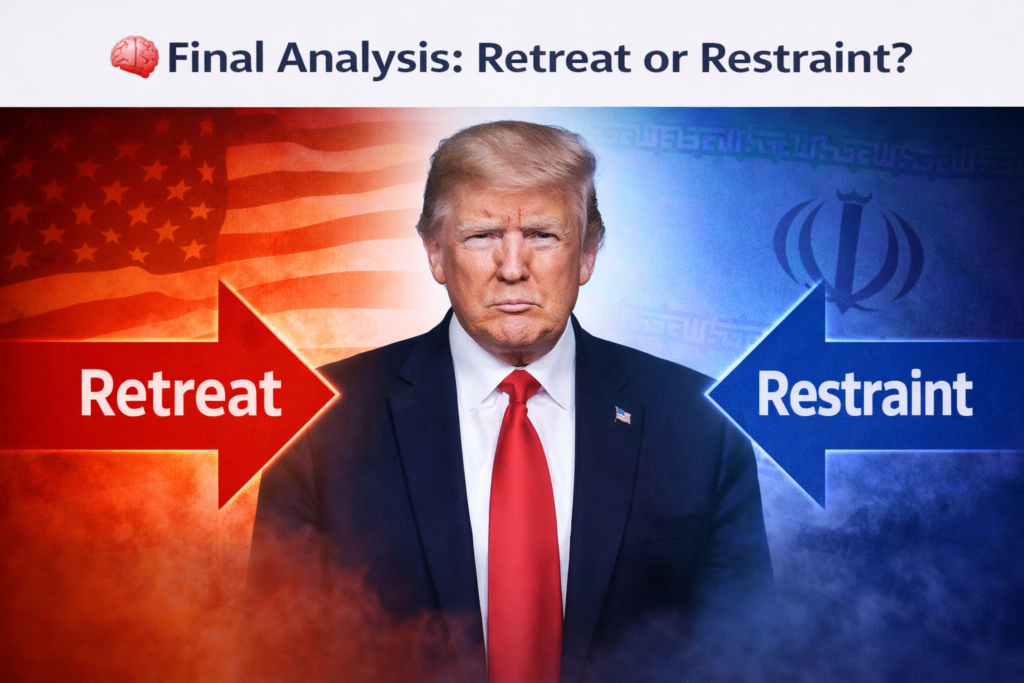
The question of whether the United States “lost” the confrontation depends largely on perspective.
From one angle, the shift from strong warnings to ceasefire suggests that Washington faced constraints — military, economic, and political — that limited escalation.
From another, the decision can be seen as a calculated move to avoid a costly and unpredictable war, particularly in a region where escalation could have far-reaching consequences.
⚖️ The Reality: No Clear Winner
What is clear is that:
The United States avoided immediate escalation
Iran maintained its strategic posture
Israel continues its operations
👉 No side achieved a decisive outcome
🧾 Conclusion
The U.S.–Iran ceasefire is not the end of a conflict, it is a pause within a larger geopolitical contest.
Trump’s shift from warning to negotiation reflects not just diplomacy, but the complex interplay of military limits, economic risks, and political realities.
👉 Whether this moment is remembered as a strategic retreat or a smart restraint will ultimately depend on what happens next.
🔗 Related News
- U.S–Iran Ceasefire 2026: Leaders Reactions and Global Impact Explained
- 30K Drone vs $4M Missile: How Iran Is Forcing the U.S. Into a Billion-Dollar War
- Project Kusha: India’s Next-Gen Air Defence Shield Explained
- Astra vs PL-15: Inside the High-Stakes Missile Race in Asia
- Indian Navy’s ‘Urja Suraksha’ Mission: Securing Oil Routes in Hormuz