📅 Updated: March 25, 2026 | By Pulse India News Desk
In a major strategic move to safeguard India’s energy security, the Indian Navy has launched a special maritime operation in the Strait of Hormuz, one of the world’s most critical oil transit routes, amid escalating conflict in West Asia.
⚓ Operation “Urja Suraksha” Begins
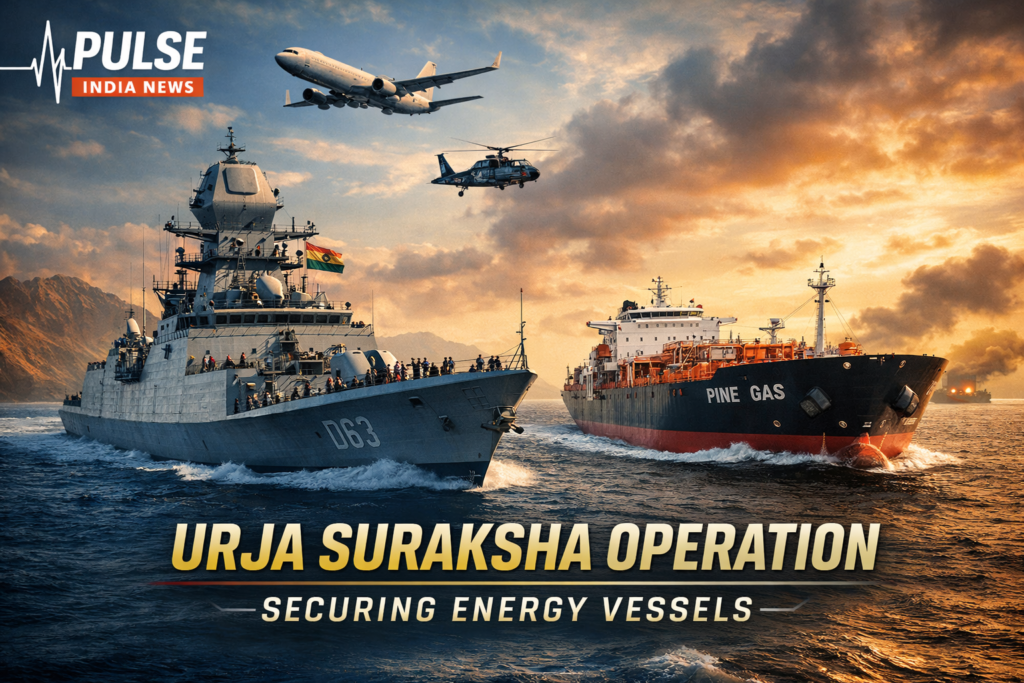
According to defence sources, the Indian Navy has initiated “Operation Urja Suraksha”, deploying multiple frontline warships to protect Indian-flagged vessels carrying essential energy supplies like crude oil, LNG, and LPG.
The mission is being conducted with high caution and minimal publicity, focusing on ensuring the safe passage and evacuation of Indian cargo ships navigating through the conflict zone.
Indian Navy deployed Guided-Missile Destroyers, Stealth Frigates (Shivalik / Talwar-class), Corvettes (Kamorta / Kora-class) and Fleet Support Ships / Tankers to Provide mid-sea refuelling and logistics support, ensuring continuous naval presence without returning to base.
🚢 22 Critical Indian Vessels Identified
Authorities have identified around 22 India-bound ships currently operating in or near the Strait of Hormuz. These include:
- LNG carriers
- LPG tankers
- Crude oil vessels
These ships are considered high priority, as they carry fuel critical to India’s energy needs.
🛡️ Warships Escorting Fuel Carriers
The Indian Navy has deployed more than five warships in and around the region to escort these vessels safely. The operation has already seen success, with Indian LPG carriers such as Pine Gas and Jag Vasant safely navigating the strait under naval protection.
This move comes as maritime threats including drone attacks, mines, and missile risks—continue to rise in the region.
🌍 Why Strait of Hormuz Matters
The Strait of Hormuz is one of the most important global energy chokepoints:
- Nearly 20% of the world’s oil supply passes through it
- It connects the Persian Gulf to global markets
- Any disruption impacts global fuel prices and supply chains
Due to the ongoing war and tensions involving Iran, shipping activity has dropped significantly, with several vessels stranded or operating under high risk.
⚠️ Rising Threats in the Region
The situation in the region has worsened in recent weeks:
- Iran has tightened control over the strait
- Several ships have faced attacks or restrictions
- Naval mines and drone threats have increased risks for commercial shipping
The crisis has already disrupted global trade and pushed oil prices higher, raising concerns of a prolonged energy crisis.
India’s Strategic Response
India’s decision to deploy naval assets highlights its commitment to:
- Protect national energy supply
- Ensure safety of Indian sailors
- Maintain uninterrupted trade routes
The Navy had already positioned ships in the Arabian Sea and Gulf of Oman in anticipation of such risks, showing a proactive approach to maritime security.
🔥 Final Take
As tensions continue to escalate in the Middle East, India’s Operation Urja Suraksha marks a decisive step in protecting its economic and energy interests.
With global energy markets under pressure and the Strait of Hormuz turning into a high-risk zone, the role of naval forces will be crucial in ensuring safe and secure shipping lanes in the coming weeks.