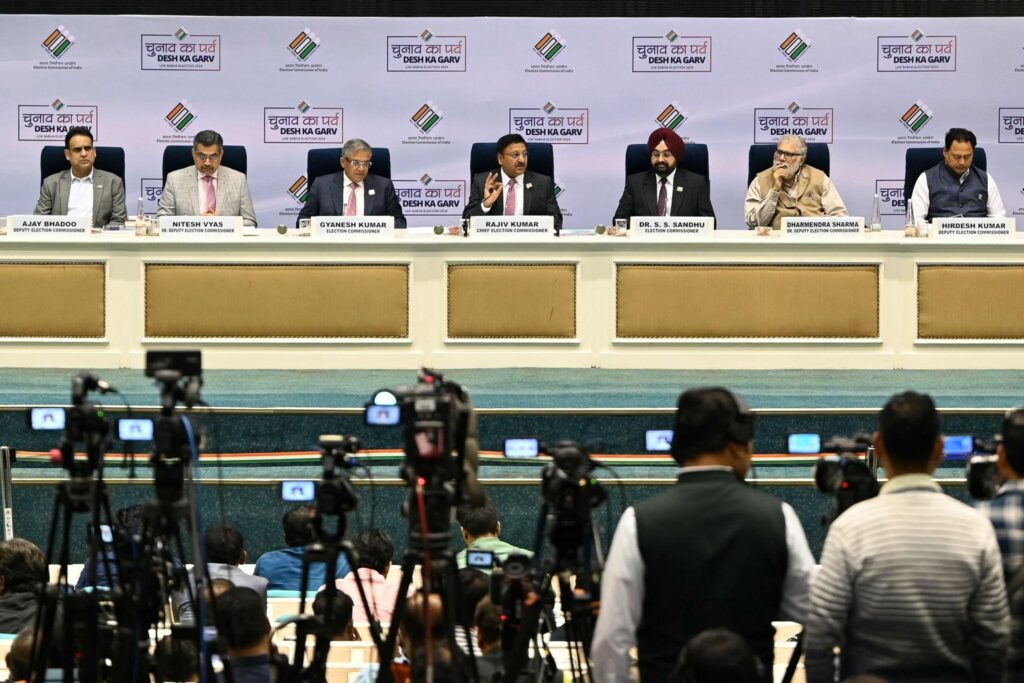
The Election Commission of India has officially announced the 2026 Assembly Election Schedule, setting the stage for a major democratic exercise across several states.
According to the announcement made at a press conference in New Delhi, voting will be conducted in multiple phases, with counting scheduled shortly after polling concludes.
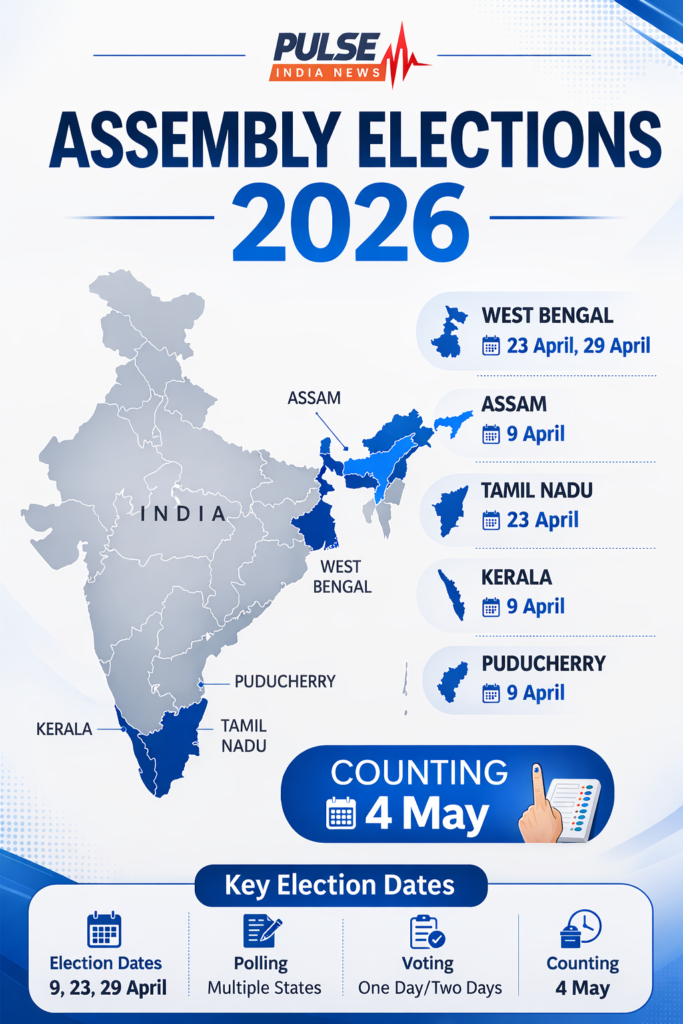
These elections are expected to draw national attention as several politically significant states go to the polls.
Key Election Dates
The Election Commission released the following important dates:
| Event | Date |
|---|---|
| Election Notification | April 3, 2026 |
| Last Date for Nominations | April 10, 2026 |
| Scrutiny of Nominations | April 11, 2026 |
| Last Date for Withdrawal | April 13, 2026 |
| Polling Dates | April 25 – May 5, 2026 |
| Counting of Votes | May 10, 2026 |
With the announcement of the schedule, the Model Code of Conduct has come into effect immediately across the poll-bound states.
States Going to Elections in 2026
Four major states will hold legislative assembly elections:
| State | Total Assembly Seats |
|---|---|
| Tamil Nadu | 234 |
| Kerala | 140 |
| West Bengal | 294 |
| Assam | 126 |
In total, 794 assembly seats will be contested across these states.
Multi-Phase Polling Expected
Officials stated that elections will be conducted in multiple phases to ensure smooth security arrangements and proper deployment of polling personnel.
Security forces will be deployed across sensitive regions to maintain law and order during polling.
Electronic Voting Machines (EVMs) and VVPAT machines will be used in all polling stations.
Political Parties Begin Campaigns
Following the announcement, major political parties are expected to begin full-scale election campaigns. Parties will soon release candidate lists and launch rallies across constituencies.
The elections are likely to witness intense political competition, as parties attempt to secure majority control in the respective state assemblies.
Importance of the 2026 Elections
These elections are considered significant because:
- Several states have large voter populations
- Results could influence national political momentum
- Major parties will test their organizational strength before future national elections
Political analysts expect voter turnout to remain high, especially in states known for strong electoral participation.